
The THE World University Rankings 2026 includes 109 UK universities: three in the global top ten, 11 in the top 100 and 26 in the top 200. In the QS World University Rankings 2027, Imperial College London is joint 2nd in the world, Oxford 4th, Cambridge 6th and UCL joint 8th. International students can attend any university licensed to sponsor Student visas, but fees vary several-fold: from $23,762 (£17,975) a year for a bachelor's at the University of Greenwich to $93,270 (£70,554) for medicine at Cambridge. Bachelor's degrees take three years in England, Wales and Northern Ireland and usually four in Scotland, and applicants with a Russian, Kazakh or other CIS school certificate almost always need a preparatory year.
This guide covers the types of UK universities and how to check they are legitimate, rankings with dates and sources, 2026/27 and 2027/28 fees, how much money you need at the start, entry routes from the CIS, visa rules for 2026–2027 and a month-by-month plan.
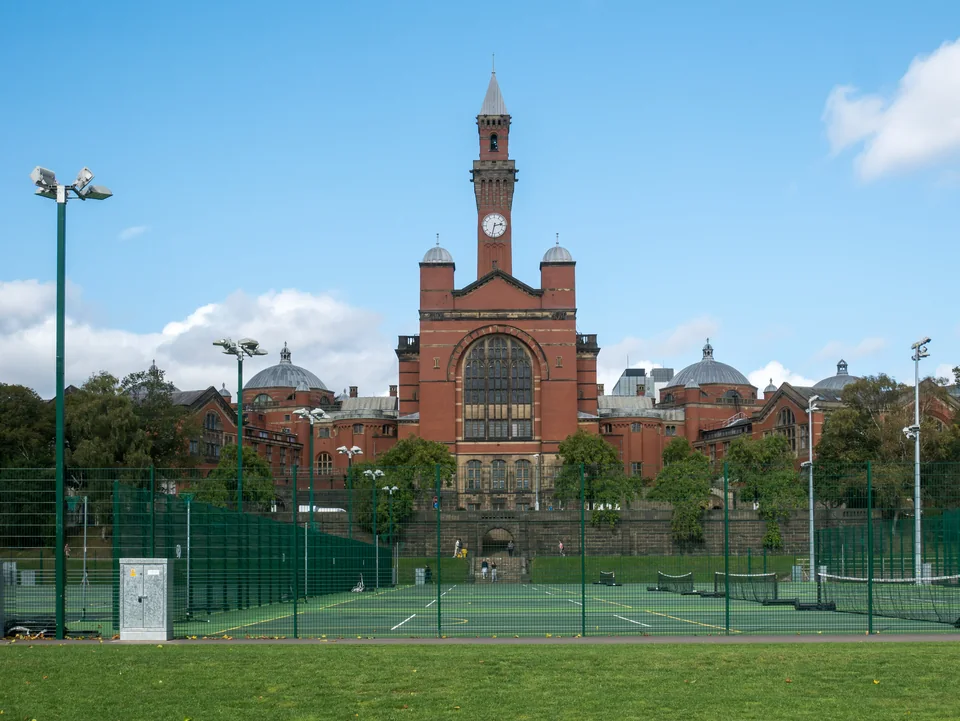
Types of UK universities
"University" is a protected title; "college" can mean anything from a sixth-form school to part of Oxford.
| Group | Examples | What it means for you |
|---|---|---|
| Ancient universities (pre-19th century) | Oxford, Cambridge, St Andrews, Glasgow, Aberdeen, Edinburgh | Very selective; Oxbridge has an early deadline, admissions tests and interviews |
| Russell Group — 24 research universities | Imperial, UCL, LSE, King's, Manchester, Edinburgh, Warwick, Bristol | Strong research and employer recognition, but membership says nothing about a specific course. See Russell Group universities |
| Other research universities | St Andrews, Lancaster, Bath, Leicester, Surrey, Sussex, Reading | Often as strong in specific subjects, and cheaper |
| Modern (post-1992) universities | Greenwich, Westminster, Kingston, Coventry, Nottingham Trent, Sheffield Hallam | Applied courses, placement years, lower entry requirements and fees |
| Private universities | University of Buckingham, University of Law, BPP University | Narrow focus (law, business), accelerated formats — compare whole-programme cost |
| Specialist institutions | London Business School, LSHTM, Royal Veterinary College, University of the Arts London, conservatoires | Single-subject; some offer postgraduate study only |
How to check a university is genuine and can sponsor you
- Degree-awarding status. In England, check the Office for Students (OfS) Register; in Scotland, Wales and Northern Ireland, the lists of recognised bodies linked from GOV.UK.
- Student sponsor licence. A Student visa needs a CAS from an institution on the Register of licensed sponsors: students, which is updated almost daily.
- Who awards the degree. Pathway centres and private colleges sometimes teach on behalf of a university; confirm which institution awards the degree and where you will study.
UK university rankings: what they show
| University | THE 2026 | QS 2027 | City |
|---|---|---|---|
| University of Oxford | 1 | 4 | Oxford |
| University of Cambridge | =3 | 6 | Cambridge |
| Imperial College London | 8 | =2 | London |
| UCL | 22 | =8 | London |
| University of Edinburgh | 29 | — | Edinburgh |
| King's College London | 38 | — | London |
| London School of Economics | 52 | — | London |
| University of Manchester | 56 | — | Manchester |
| University of Bristol | =80 | — | Bristol |
| University of Glasgow | 84 | — | Glasgow |
| University of Birmingham | =98 | — | Birmingham |
| University of Sheffield | =108 | — | Sheffield |
| University of Leeds | 118 | — | Leeds |
| University of Warwick | =122 | — | Coventry |
| University of Southampton | 129 | — | Southampton |
THE 2026 was published in October 2025 and remains the latest edition. QS 2027 was released on 18 June 2026; we show only the positions QS named in its official results summary. Use rankings to build a long list, not to decide: compare subject-level data, the Teaching Excellence Framework (TEF) and National Student Survey (NSS) results in England, and each course page.
England, Scotland, Wales and Northern Ireland
| Feature | England | Scotland | Wales | Northern Ireland |
|---|---|---|---|---|
| Bachelor's length | 3 years | Usually 4; strong applicants may enter year two | 3 years | 3 years |
| Home student fees | Up to $12,942 (£9,790) in 2026/27 and $13,286 (£10,050) in 2027/28 | SAAS pays for eligible Scottish students | Own rules | Own rules |
| International fees | Set by each university, no cap | Set by each university | Set by each university | Set by each university |
| Visa rules | UK-wide | UK-wide | UK-wide | UK-wide |
Fee caps apply only to home students. See universities in Scotland and universities in London.
What studying in the UK costs
Tuition examples
| University and course | Year | Annual international fee |
|---|---|---|
| University of Greenwich, most bachelor's courses | 2026/27 | $23,762 (£17,975) |
| University of Glasgow, arts and social sciences | 2027/28 | $37,378 (£28,275) |
| University of St Andrews, arts and sciences | 2026/27 | $43,955 (£33,250) |
| LSE, bachelor's | 2027/28 | $40,188–55,390 (£30,400–41,900) |
| Imperial, Computing (BEng) | 2026/27 | $60,149 (£45,500) |
| Aston University, medicine | 2027/28 | $62,132 (£47,000) |
| University of Cambridge, medicine and veterinary | 2027/28 | $93,270 (£70,554) plus college fee |
Some universities fix international fees for the whole course (LSE, Edinburgh, Cambridge); others raise them annually (St Andrews, typically 3–5%). Laboratory and clinical courses cost more — at Glasgow the 2027/28 gap between arts and science bands is $7,182 (£5,433) a year. MBAs are priced differently — see MBA in the UK.
How much money you need at the start
For the visa you show first-year tuition (minus any deposit paid) plus nine months of living costs, and you pay the visa fee and the Immigration Health Surcharge for the whole visa. Visas for courses of 12 months or more cover the course plus one month before and four months after.
| Item | Greenwich, London, 3 years (2026/27) | Glasgow arts, 4 years (2027/28) | LSE economics, 3 years (2027/28) |
|---|---|---|---|
| First-year tuition | $23,762 (£17,975) | $37,378 (£28,275) | $55,390 (£41,900) |
| Living costs at the visa rate from 30 Nov 2026, 9 months | $18,679 (£14,130) | $14,313 (£10,827) | $18,679 (£14,130) |
| Visa fee | $738 (£558) | $738 (£558) | $738 (£558) |
| Immigration Health Surcharge | about $3,590 (£2,716) for ~3.5 years | about $4,616 (£3,492) for ~4.5 years | about $3,590 (£2,716) |
| Total at visa stage | about $46,770 (£35,379) | about $57,045 (£43,152) | about $78,397 (£59,304) |
Not included: flights, the TB certificate required for nationals of Russia, Kazakhstan, Uzbekistan, Belarus and other CIS countries, housing deposits and first-week costs. Funds must be held for 28 consecutive days, ending no more than 31 days before you apply. Kazakhstan is on the list of countries whose nationals need not submit evidence of funds upfront, though UKVI may still ask for it. Full budgets: cost of studying in the UK.
Scholarships
- University awards, e.g. Imperial Inspires ($19,830 / £15,000 a year for international students for the whole course) and Glasgow's World Changers ($9,254–13,220 / £7,000–10,000 a year off fees). Competitive and limited.
- Chevening, for one-year master's courses: 2027/28 applications close on 6 October 2026; Russian citizens may apply only if they live outside Russia.
- More in scholarships in the UK.
How to apply from Russia, Kazakhstan and the CIS
Undergraduate routes
| Route | Length | When it fits | Risks |
|---|---|---|---|
| Foundation year | 1 year | After 11th grade | Not every foundation is accepted everywhere: Imperial accepts only a few named programmes for Computing; LSE considers only UK-delivered foundation programmes |
| International Year One | 1 year in place of year one | After 11th grade, if ready for first-year workload | Usually leads to year two at a partner university |
| A-levels or IB | 2 years | After grade 9–10; for medicine and the most selective universities | Longer and costlier but accepted everywhere |
| A year at a home university | 1 year | Current university students | Not accepted everywhere; strong grades needed |
See foundation year in the UK, UK university after 11 years of school and bachelor's degrees in the UK.
UCAS: up to five choices, one personal statement and a reference; you cannot apply to both Oxford and Cambridge in one undergraduate cycle, and medicine allows at most four choices. See applying to UK universities.
Admissions tests apply only to some courses: the UCAT for medicine and dentistry (required by 50 UK universities for 2027 entry; the BMAT no longer runs), TMUA and ESAT for Imperial maths and engineering, and Oxbridge's own tests — see Oxbridge admissions.
Master's and English
Master's applications go directly to universities, which publish grade conversions for each country; many courses close when full, so apply in the autumn or winter before you start. For degree-level courses universities assess English themselves: each university, and often each course, sets an overall IELTS Academic (or other accepted test) score plus a minimum in each of the four components. Medicine and law ask for more — Sheffield medicine, for example, requires IELTS 7.5 with at least 7.0 in each component. Take exact figures from the course page. See English tests for the UK Student visa.
Visa and work rules for 2026–2027
| Rule | Current position |
|---|---|
| Visa fee | $738 (£558) from outside the UK |
| Immigration Health Surcharge | $1,026 (£776) per year of visa |
| Living-cost funds | Now $2,021 (£1,529) a month in London and $1,548 (£1,171) elsewhere; from 30 November 2026, $2,075 (£1,570) and $1,590 (£1,203), for up to 9 months |
| When to apply | No earlier than 6 months before the course; decisions usually within 3 weeks |
| Work during studies | Degree level: up to 20 hours a week in term, full time in vacations |
| Dependants | For master's courses starting on or after 1 January 2024, only PhD/research students or government-sponsored students |
| Graduate visa | 2 years if you apply by 31 December 2026, 18 months from 1 January 2027, 3 years after a PhD |
See UK Student visa and working while studying and the Graduate Route.
Building your shortlist in six steps
- Set the goal: research, fast entry to work, a licensed profession or the lowest budget.
- Decide your preparatory route — it determines where you can apply.
- Shortlist 10–12 courses, not universities, comparing requirements, modules, placements and NSS data.
- Cost the whole course, including real living costs and visa charges.
- Cut to five UCAS choices: one or two ambitious, two realistic, one safe.
- Check scholarship deadlines, often earlier than application deadlines.
Timeline for 2027 and 2028 entry
| When | What to do |
|---|---|
| By 15 October 2026, 18:00 UK time | UCAS for Oxford, Cambridge, medicine, dentistry and veterinary courses |
| By 13 January 2027, 18:00 UK time | UCAS equal-consideration deadline for most courses |
| From 25 February 2027 | UCAS Extra if all five choices are unsuccessful |
| By 30 June 2027 | Late UCAS applications; after that, Clearing (opens 2 July 2027) |
| Spring–summer 2027 | Meet conditions, receive CAS, hold funds for 28 days, apply for the visa |
| September 2027 | Start; arrive no earlier than one month before the course |
If you finish school in 2027, plan a preparatory year in 2027/28 and year one in autumn 2028.
Common mistakes
- Choosing by overall rank instead of comparing courses.
- Not checking the sponsor licence and accepted foundations.
- Budgeting tuition only — at the visa stage our examples need $46,770–78,397.
- Comparing Scotland and England per year, not per course.
- Missing the 2026–2027 changes: higher funds from 30 November 2026 and an 18-month Graduate visa from 1 January 2027.
- Filling UCAS with five equally selective choices.
FAQ
In THE 2026: Oxford (1st in the world), Cambridge (=3rd), Imperial (8th), UCL (22nd), Edinburgh (29th) and King's College London (38th). In QS 2027: Imperial joint 2nd, Oxford 4th, Cambridge 6th and UCL joint 8th.
Bachelor's fees run from $23,762 (£17,975) a year at Greenwich (2026/27) to over $60,000 on some Imperial courses; medicine from $62,132 (£47,000) to $93,270 (£70,554). At the visa stage our examples require $46,770–78,397 including living costs and charges.
Usually not; you need a foundation year, International Year One, A-levels, the IB or a year at a home university.
No. Fee caps and loans apply to home students, and SAAS funds only eligible Scottish students. Scholarships or Chevening can reduce costs.
Yes, on the Graduate visa with no job offer: two years if you apply by 31 December 2026, 18 months from 1 January 2027, three years after a PhD.
First-year tuition (minus any deposit already paid) plus nine months of living costs: $2,021 (£1,529) a month in London and $1,548 (£1,171) elsewhere for applications up to 29 November 2026, and $2,075 (£1,570) and $1,590 (£1,203) from 30 November 2026. The money must be held for 28 consecutive days, ending no more than 31 days before you apply.
No — it is no longer offered. Oxford, Cambridge, Imperial and other schools require the UCAT. See studying medicine in the UK.
Sources
- Times Higher Education — World University Rankings 2026
- QS — World University Rankings 2027 results
- Russell Group — our universities
- GOV.UK — check if a degree is officially recognised
- GOV.UK — Register of licensed sponsors: students
- GOV.UK — Student visa
- GOV.UK — money you need and differential evidence countries
- GOV.UK — family members
- GOV.UK — Immigration Health Surcharge
- GOV.UK — Immigration Rules Appendix Student
- GOV.UK — Statement of changes HC 584
- GOV.UK — Graduate visa
- GOV.UK — TB test countries
- UCAS — 2027 entry deadlines
- UCAT Consortium — universities
- University of Greenwich — fees 2026/27
- University of Glasgow — international fees and scholarships
- University of St Andrews — international fees 2026–2027
- LSE — table of fees 2027/28 (PDF)
- LSE — entry requirements
- Imperial — Computing (BEng)
- Aston University — Medicine MBChB, 2027 entry
- University of Sheffield — Medicine MBChB English requirements
- University of Cambridge — international fees 2027
- University of Edinburgh — rest-of-UK fees 2026/27 and 2027/28
- Chevening — Russia
Dollar amounts use the ECB reference rates of 24 September 2026 (€1 = $1.1367 = £0.85986, so £1 ≈ $1.3220), rounded.
University profiles: Oxford, Cambridge, Imperial, Edinburgh, Manchester, Leeds, Sheffield, St Andrews, Lancaster. More on the country: studying in the UK.
During the free initial consultation, we clarify your goal, profile, timing, and budget and identify the next realistic step. Apply
Next steps
- Bachelor's Degree in the UK: Structure, Full Cost and How to Get In for 2027
- Foundation Year in the UK: Types, Entry Requirements, Costs and Progression
- English Tests for the UK Student Visa in 2026: When You Need IELTS for UKVI, Which SELTs Count and Where to Take Them
- MBA in the UK: Top Business Schools, 2026–2027 Fees, Admission Requirements and Visa Rules
- Universities in Germany for International Students: Types, Fees and How to Choose
- Universities in the USA for International Students: Types, 2026/27 Costs and How to Build Your List
