
A Student visa holder on a degree-level course at a university with a track record of compliance may work up to 20 hours a week in term time and full time during official vacations; below degree level the limit is 10 hours. The National Living Wage from April 2026 is $17 (£12.71) an hour for workers aged 21 and over, so 20 hours brings in about $335 (£254) a week before deductions. After graduating you can stay on the Graduate Route and work without a sponsor: two years if you apply on or before 31 December 2026, 18 months if you apply from 1 January 2027, and three years after a PhD. The visa costs $1,240 (£937) plus a health surcharge of $1,370 (£1,035) per year. To stay longer you must move to a Skilled Worker visa, usually paying at least $55,240 (£41,700), or $44,240 (£33,400) for new entrants.
Rules were checked against the Immigration Rules, the student sponsor guidance and GOV.UK on 24 September 2026. Dollar amounts use the ECB cross rate of 29 September 2026, £1 ≈ $1.325. For the visa itself see our UK Student visa guide; for an overview see studying in the UK.
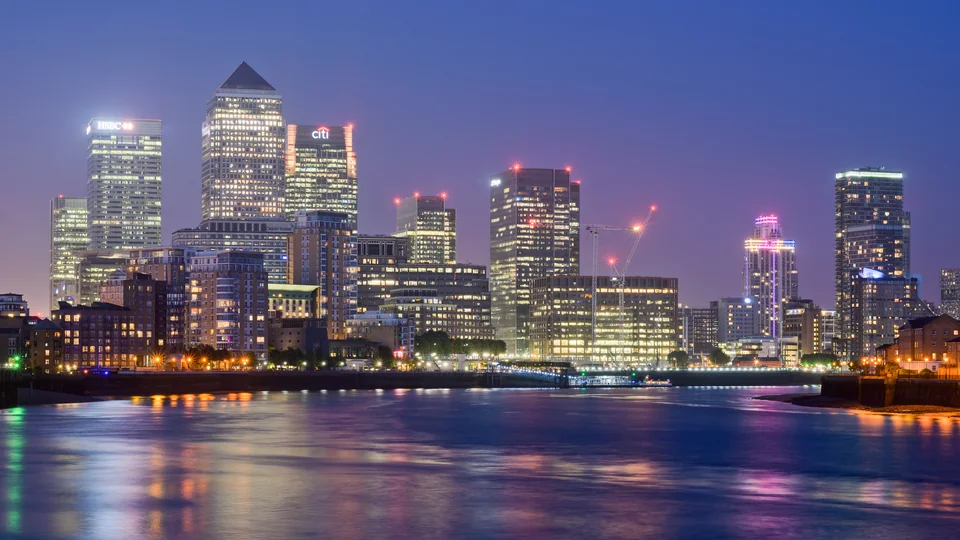
Three visas, three sets of work rights
| Student visa | Graduate visa | Skilled Worker | |
|---|---|---|---|
| Sponsor needed | No | No | Yes, a licensed employer |
| Hours | Up to 20 a week in term (degree level), 10 below degree; full time in vacations | Unlimited | Full-time sponsored role |
| Self-employment | Not allowed | Allowed | No (additional work only in set cases) |
| Salary rule | At least the legal minimum wage | None | $55,240 (£41,700) or the occupation's going rate; from $44,240 (£33,400) for some |
| Length | Course plus 2–4 months | 2 years (apply by 31.12.2026), 18 months (from 01.01.2027), 3 years after a PhD | Per contract; fees differ for up to and over 3 years |
| Fee | $740 (£558) + $1,030 (£776) surcharge a year | $1,240 (£937) + $1,370 (£1,035) surcharge a year | $1,080–2,470 (£819–1,865) + $1,370 (£1,035) surcharge a year |
How much you can work while studying
Appendix Student (ST 26.1) sets the conditions printed on your visa:
- Full-time degree-level study at a higher education provider with a track record of compliance: 20 hours a week in term time, full time outside term.
- Full-time below-degree study (such as Foundation) at such a provider: 10 hours a week in term, full time in vacations.
- Part-time and all other study: no work.
Your university defines term and vacation dates and must tell you what they are. The sponsor guidance treats the period before your course starts and after it ends as vacation if your visa is already valid. A one-year master's usually spends the summer on the dissertation, which is often term time in the university calendar, so check before taking full-time shifts.
The limit applies to each week of term across all employers, not as a monthly average. An assessed work placement that forms part of the course sits outside the limit and is normally capped at a third of the course.
What is not allowed
- Self-employment or running a business, including freelancing on platforms.
- Working as a professional sportsperson or sports coach, or as an entertainer.
- Filling a permanent full-time vacancy.
The exception: once you have applied for a Graduate visa after successfully completing your course, or for a Skilled Worker visa within three months of your course end date, you may start a permanent full-time job while the application is pending (ST 26.6), provided you are on a degree-level course at a track-record university and applied while holding Student permission.
Pay, tax and National Insurance
| Age | Minimum hourly rate from 1 April 2026 |
|---|---|
| 21 and over (National Living Wage) | $17 (£12.71) |
| 18–20 | $14 (£10.85) |
| Under 18 | $11 (£8) |
The Personal Allowance for 6 April 2026 to 5 April 2027 is $16,650 (£12,570). Twenty hours a week at the minimum wage over 30 term weeks is about $10,070 (£7,600), below that threshold. Your employer deducts tax through payroll.
You can apply for a National Insurance number only once you are in the UK with the right to work; it takes up to about four weeks, and you can start work before it arrives if you have proved your right to work. Check your eVisa in your UKVI account first — the number may already be there.
Realistic earnings
| Scenario | Hours | Rate | Before deductions |
|---|---|---|---|
| 20 hours a week, 30 term weeks | 600 | $17 (£12.71) | ≈ $10,100 (£7,626) |
| 12 hours a week, 30 term weeks | 360 | $17 (£12.71) | ≈ $6,060 (£4,576) |
| Full time for 6 vacation weeks (37.5 hours) | 225 | $17 (£12.71) | ≈ $3,790 (£2,860) |
The University of Manchester estimates $19,660 (£14,840) for a 41-week undergraduate year, so even the maximum covers roughly half of living costs and none of tuition. Expected earnings also do not count towards visa funds. See cost of studying in the UK.
Where students find work
- Campus and students' union jobs fit around the timetable and the hours limit.
- The careers service lists part-time roles, internships and graduate schemes, checks CVs and runs mock interviews. Large employers recruit for graduate schemes in the autumn, a year ahead.
- Retail, hospitality and warehouses, especially before Christmas. Confirm hours in writing; breaching visa conditions is your risk.
- Tutoring and delivery platforms — careful: if the platform treats you as self-employed rather than as a worker, that breaches Student visa conditions.
Who qualifies for the Graduate Route
- You are in the UK and hold a Student visa when you apply.
- You have successfully completed a UK bachelor's, master's, PhD or another eligible course (for example a PGCE or the Legal Practice Course), and your university has reported completion to the Home Office.
- Your university is a licensed sponsor with a track record of compliance.
- You studied in the UK for at least 12 months if the course is longer than that, or for the whole course if shorter. Holidays and weekends away do not break this.
You do not need to wait for graduation or a certificate. Foundation, English language and below-degree courses do not lead to a Graduate visa.
Two years or 18 months: timing your application
| Level | Apply on or before 31 December 2026 | Apply from 1 January 2027 |
|---|---|---|
| Bachelor's, master's | 2 years | 18 months |
| PhD and other doctorates | 3 years | 3 years |
- A master's running September 2025 to September 2026: if your university reports completion in the autumn, you can apply before the end of the year and get two years. Ask when the university notifies the Home Office — sometimes only after the exam board meets.
- Courses ending in 2027: expect 18 months and start looking for sponsored work early, because the visa cannot be extended.
- Student visa expiring first: you can only apply while your Student visa is valid. After a course of 12 months or more you usually have four extra months — do not leave it to the last day.
Graduate visa costs and rights
| Item | Amount |
|---|---|
| Application fee | $1,240 (£937) |
| Surcharge, 2 years | $2,740 (£2,070) |
| Surcharge, 18 months | $2,060 (£1,552.50): one annual charge plus half for the remaining 6 months |
| Surcharge, 3 years | $4,110 (£3,105) |
Decisions usually take up to eight weeks; you can stay in the UK while you wait, but travelling abroad before the decision withdraws the application.
You can work in most jobs, look for work, be self-employed, volunteer and travel. You cannot claim most benefits or work as a professional sportsperson, and you may only study on a course that is not eligible for a Student visa. A partner and children can stay only if they were already your dependants on the Student visa (or a child was born in the UK during your visas).
Moving on to a Skilled Worker visa
The Graduate visa cannot be extended. Most people who stay switch to Skilled Worker, which needs:
- a job offer and Certificate of Sponsorship from a licensed employer;
- an occupation listed as higher skilled;
- a salary of at least $55,240 (£41,700) or the occupation's going rate, whichever is higher;
- English at B2 — met by a UK degree taught in English.
New entrant rate. You can be paid 70% of the going rate, but at least $44,240 (£33,400), if you are under 26, are on a Student visa at bachelor's level or above (or were in the last two years), or are on a Graduate visa (or were in the last two years). Total time on this basis, including Graduate visa time, is capped at four years.
Cost of switching inside the UK: $1,250 (£943) for up to three years, $2,470 (£1,865) for longer, plus $1,370 (£1,035) surcharge per year.
A year-by-year plan
- First term: get a National Insurance number if you plan to work; find 8–12 hours of campus work.
- Second year (or early in a master's): apply for summer internships in autumn and winter; attend careers fairs.
- Final year: apply for graduate schemes from September and check sponsors on the register.
- After completion is reported: apply for the Graduate visa while your Student visa is valid, mindful of 31 December 2026.
- During the Graduate visa: secure a role that qualifies for Skilled Worker and switch before expiry.
Common mistakes
- Working over 20 hours in one term week and counting on the average.
- Treating the master's summer as vacation without checking the calendar.
- Freelancing or signing up as self-employed on a delivery platform.
- Counting future earnings in visa funds or the core budget.
- Waiting for the graduation ceremony and missing the two-year window.
- Leaving the UK while the Graduate application is pending.
FAQ
Up to 20 a week in term time on degree-level courses at a track-record university, full time in official vacations; 10 hours below degree level; none for part-time study.
No. Student visa conditions prohibit self-employment and running a business, and that includes freelancing through online platforms. Be careful with tutoring and delivery apps: if the platform treats you as self-employed rather than as a worker, taking that work breaches your visa conditions. Self-employment becomes possible once you switch to the Graduate visa.
Your employer deducts tax through PAYE, but the first $16,650 (£12,570) of income in a tax year is tax-free (the Personal Allowance). Twenty hours a week at the minimum wage during term usually stays below that threshold; if a wrong tax code leads to overpayment, you can reclaim it from HMRC.
Two years if you apply on or before 31 December 2026, 18 months from 1 January 2027, three years after a PhD. It cannot be extended.
The application fee is $1,240 (£937), and you also pay the Immigration Health Surcharge of $1,370 (£1,035) for each year of the visa. For a two-year visa the surcharge is $2,740 (£2,070), for the 18-month visa that applies to applications from 1 January 2027 it is $2,060 (£1,552.50), and for the three-year visa after a PhD it is $4,110 (£3,105). Both amounts are paid when you apply, so the total upfront cost is $3,980 (£3,007), $3,300 (£2,489.50) or $5,350 (£4,042) respectively.
No. The Graduate visa needs no job offer or sponsor, and while you hold it you can work without hour limits or be self-employed. You must be in the UK on a Student visa, have successfully completed an eligible course that your university has reported to the Home Office, and apply before your Student visa expires. A sponsor becomes necessary only if you want to stay longer by switching to a Skilled Worker visa, because the Graduate visa cannot be extended.
Usually $55,240 (£41,700) or the going rate, but recent graduates and under-26s can be paid 70% of the going rate with a floor of $44,240 (£33,400).
Sources
- Appendix Student, work conditions (ST 26) — checked 24.09.2026
- Student sponsor guidance: sponsorship duties — checked 24.09.2026
- Graduate visa (full guide) — checked 24.09.2026
- Skilled Worker visa (full guide) — checked 24.09.2026
- National Minimum Wage rates, Income Tax rates, National Insurance number — checked 24.09.2026
- Student visa, Immigration Health Surcharge — checked 24.09.2026
- University of Manchester: cost of living 2026/7 — checked 24.09.2026
- Exchange rate: ECB, 29.09.2026
Next steps
- Cost of Studying in the UK in 2026/27: International Tuition Fees, Living Costs, Visa Charges and a First-Year Budget
- UK Student Visa in 2026: CAS, 28-Day Funds, TB Test, Fees and Applying from Russia, Kazakhstan and Central Asia
- Studying in the UK for international applicants
- Bachelor's Degree in the UK: Structure, Full Cost and How to Get In for 2027
- Foundation Year in the UK: Types, Entry Requirements, Costs and Progression
- English Tests for the UK Student Visa in 2026: When You Need IELTS for UKVI, Which SELTs Count and Where to Take Them
