
In 2024/25, U.S. colleges and universities hosted 1,177,766 international students, including graduates on Optional Practical Training (OPT). That is 6.1% of all students in U.S. higher education (IIE Open Doors). International applicants can enroll at almost any accredited institution that is certified to issue the Form I-20, but prices vary enormously: from $18,600 in annual tuition at a four-year CUNY college in New York City to more than $100,000 for a full year at a private research university. About half of international students (51.5%) pay mainly from personal and family funds, and 19.3% receive most of their funding from their U.S. institution.
This guide explains the main types of U.S. institutions, three checks to run before you apply, where international students cluster, what the 2026/27 year costs at named universities, which schools give need-based aid to international students, and how to build an application list for fall 2027.
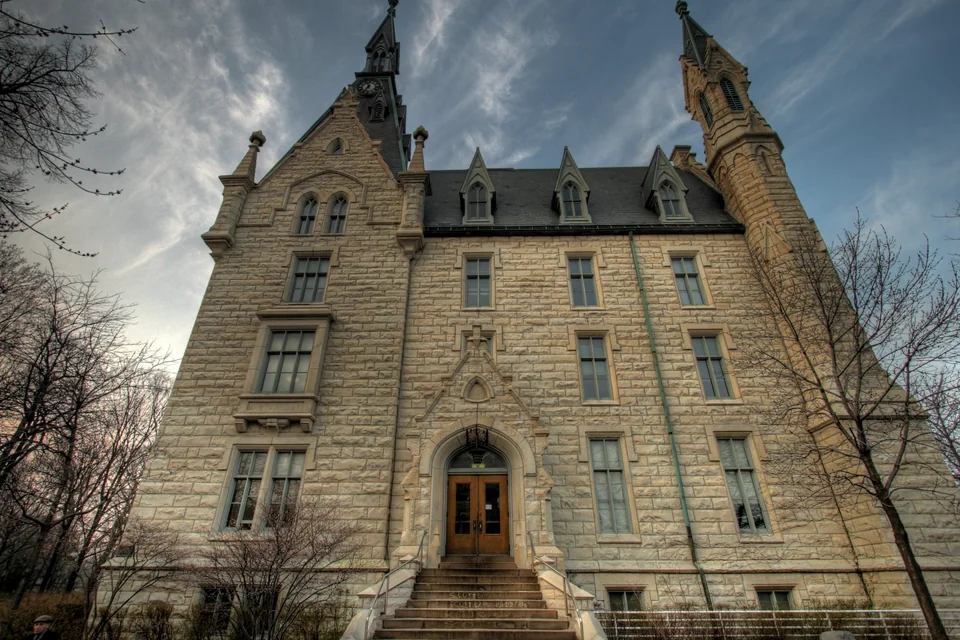
International students in the U.S.: key figures
| Indicator | 2024/25 |
|---|---|
| International students, including OPT | 1,177,766 (+4.5% year on year) |
| Share of all U.S. students | 6.1% |
| New international students | 277,118 (−7.2%) |
| Undergraduate / graduate / OPT | 357,231 / 488,481 / 294,253 |
| Leading states | California 139,351; New York 137,799; Texas 97,043; Massachusetts 84,097 |
| Leading institutions | NYU 27,532; Northeastern 22,465; Columbia 20,733 |
| Most popular fields | Math and computer science 25.9%; engineering 18.4%; business 13.6% |
| Leading places of origin | India 363,019; China 265,919; South Korea 42,293 |
Two takeaways. First, international students are concentrated in a few states and large private universities, which is why we publish separate guides to California, New York and Boston. Second, new international enrollment fell in 2024/25 and visa screening has become stricter, so build extra time into your plan. Our F-1 student visa guide covers the visa steps.
Types of U.S. institutions
In the U.S., "college" usually means higher education, not a vocational school. The type of institution shapes price, class size, research access and your chances of financial aid.
| Type | What it is | Examples | Best for | Watch for |
|---|---|---|---|---|
| Private research university | Undergraduate, graduate and PhD programs, large labs and endowments | Harvard, MIT, Columbia, Northeastern, Tulane | Strong applicants; students who need need-based aid | Budget of roughly $92,000–103,000 before aid; admit rates from 4% |
| Public flagship | A state's main research university | UCLA, University of Michigan, University of Kansas | Engineering, IT, business, large campus life | International students pay nonresident rates and rarely get need-based aid |
| Regional public university | State university focused on undergraduate and applied programs | UCF, CSU Long Beach, UMass Boston, Towson | Limited budgets and career-focused degrees | Nonresident price, merit scholarships, location |
| Liberal arts college | Small, mostly undergraduate institution with small classes | Earlham, Ripon, St. Norbert, Albright | Broad education and close contact with faculty | Whether your major exists, scholarships, remote locations |
| Specialized school | Art, film, music, design, aviation | New York Film Academy, Berklee, Parsons | Students committed to a creative field | Portfolio or audition, program accreditation |
| Community college | Two-year associate degree and transfer pathway | California Community Colleges, CUNY | Starting cheaper or building English first | Transfer agreements, housing, total time to a bachelor's degree |
If you are weighing a two-year start, see our guide to transferring to a U.S. university.
Three checks before you apply
Accreditation. Independent accrediting agencies review institutional quality, and the U.S. Department of Education publishes the DAPIP database of accredited institutions. An unaccredited degree may not be recognized by employers or other universities.
SEVP certification. Only schools certified by the Student and Exchange Visitor Program can issue the Form I-20 needed for an F-1 visa. Accreditation alone is not enough: an accredited online program does not qualify you for a student visa.
Your home country's rules. Some governments restrict cooperation with specific foreign institutions. For Russian citizens, the Russian Ministry of Justice lists several U.S. institutions as "undesirable organizations," including Bard College, Brigham Young University, Yale University, George Washington University, UC Berkeley, Tufts University and its Fletcher School, Stanford University, and three Harvard units (the Kennedy School, the Ukrainian Research Institute and the Davis Center for Russian and Eurasian Studies); Harvard University as a whole is not listed. Involvement with such organizations can create legal risk for Russian citizens under Russian law, so StudyU does not publish admission profiles for the listed universities. The designation does not affect citizens of other countries.
Top U.S. universities in the THE World University Rankings 2026
Rankings help you rule out weak options, but they do not choose a program for you. These are the U.S. universities in the top 20 of the Times Higher Education World University Rankings 2026 (the next edition is expected in autumn 2026).
| Rank | University | State | International share of students |
|---|---|---|---|
| 2 | Massachusetts Institute of Technology (MIT) | Massachusetts | 33% |
| =3 | Princeton University | New Jersey | 23% |
| =5 | Harvard University | Massachusetts | 27% |
| =5 | Stanford University | California | 25% |
| 7 | California Institute of Technology (Caltech) | California | 33% |
| 9 | University of California, Berkeley | California | 25% |
| 10 | Yale University | Connecticut | 24% |
| 14 | University of Pennsylvania | Pennsylvania | 26% |
| 15 | University of Chicago | Illinois | 39% |
| 16 | Johns Hopkins University | Maryland | 34% |
| =18 | Cornell University | New York | 26% |
| =18 | University of California, Los Angeles | California | 15% |
| 20 | Columbia University | New York | 42% |
Just outside the top 20 are Duke University (28th) and NYU (=31st). THE counts all students, including graduate students. International shares in first-year undergraduate classes are usually lower: international citizens make up 12.9% of Princeton's fall 2026 entering class, and 16% of Harvard's fall 2025 class applied from outside the U.S. (Harvard counts by home address, not citizenship).
Where international students study
| State | International students, 2024/25 | Largest hosts | StudyU guide |
|---|---|---|---|
| California | 139,351 | USC 17,884; UC Berkeley 12,020; UCLA 10,769; UC San Diego 10,545 | Universities in California |
| New York | 137,799 | NYU 27,532; Columbia 20,733; University at Buffalo 9,033; Cornell 8,790 | Universities in New York |
| Texas | 97,043 | University of North Texas 12,982; UT Dallas 10,280; UT Arlington 7,864 | — |
| Massachusetts | 84,097 | Northeastern 22,465; Boston University 12,845; Harvard 8,110 | Universities in Boston |
Big cities offer internships and employers, but housing is most expensive there. The same major in a Midwestern or Southern college town can cost tens of thousands of dollars less per year.
What a year costs
According to the College Board, average published tuition and fees in 2025/26 (the latest College Board figures) were $31,880 at public four-year institutions for out-of-state students, $45,000 at private nonprofit four-year institutions, and $4,150 at public two-year colleges for in-district students. International students almost always pay nonresident rates, and housing, food, insurance and personal costs come on top.
Compare the full cost of attendance, not tuition alone.
| Institution | What the figure covers | Amount per year |
|---|---|---|
| CUNY four-year colleges, New York (2026/27) | F-1 tuition at $620 per credit; 30 credits = $18,600, excluding fees and living costs | $18,600 + living costs |
| UMass Boston (2026/27) | Nonresident tuition and mandatory fees, excluding housing | $40,366 |
| University of Central Florida (2026/27) | Full budget for non-Florida residents, 28 credits | $43,832 |
| CSU Long Beach, California (no academic year stated on the page) | Tuition, fees, living expenses and insurance for international undergraduates | $47,204 |
| Manhattan University, New York (2026/27) | Direct costs: tuition, fees, housing, meals | $74,530 |
| University of California (2027/28 estimate for new nonresidents) | Full on-campus budget, system average | $90,100 |
| MIT (2026/27) | Full cost of attendance | $92,760 |
| Northeastern University (2026/27) | Full first-year budget | $98,322 |
| Columbia University (2026/27) | Full cost of attendance | $99,774 |
| New York University (2026/27) | Full cost of attendance | $100,998 |
| University of Southern California (2026/27) | Full on-campus budget | $103,162 |
For a line-by-line budget and the funds you must document for the I-20, see the cost of studying in the USA; for dorms and rentals, see student housing in the USA.
Which universities give need-based aid to international students
There is no tuition-free bachelor's degree for international students, but several wealthy private universities meet full demonstrated need with grants. The key question is whether your request for aid affects your admission decision.
| Policy | Meaning | Universities (official sites, 2026) |
|---|---|---|
| Need-blind for all applicants | Asking for aid does not affect admission; 100% of demonstrated need is met | Harvard, Yale, Princeton, MIT, Dartmouth, Brown (first-year students from fall 2025) |
| Need-aware for international applicants | Ability to pay can affect the admission decision; admitted students receive full need | Columbia, Penn, Cornell, Stanford |
| Need-based aid only for U.S. citizens and permanent residents | International students pay full price or receive merit awards | Boston College, Boston University, Northeastern; the University of California says international students are eligible for very few scholarships |
| Merit scholarships | A discount for grades and achievements, regardless of family income | UMass Boston: up to $10,000 a year for international students with a GPA of 3.3 or higher; Manhattan University automatically considers all admitted students |
Request aid when you apply. Columbia and Penn state that international students who do not apply for aid at admission cannot receive it later. Our guide to financial aid for international students explains the CSS Profile and the documents you need.
Building a list that fits your situation
A workable list usually has 8–12 schools. Start with two questions: how much can your family pay each year without aid, and how strong is your academic profile?
| Your situation | Where to start | What to check |
|---|---|---|
| Strong profile, cannot pay full price | Need-blind universities plus 1–2 schools with generous merit aid | Testing, essays, aid deadlines (usually the same as admission deadlines) |
| Budget under $50,000 a year, no aid needed | Regional public universities, CUNY, CSU, UMass | Full budget with housing, availability of your major, direct admission to the major |
| Budget $70,000–100,000 a year | Private universities in big cities, public flagships | Internships, co-op programs, access to your major |
| Average grades or English below requirements | University pathway programs, community college with transfer | Transfer guarantees, which credits transfer, total length of study |
| Creative field | Specialized schools and arts faculties | Portfolio requirements, audition dates |
| Graduate study | Departments and supervisors rather than overall rank | Assistantship funding |
Always include at least one school your family can definitely afford and where admission is highly likely. That option protects your year if other applications fall through.
What undergraduate applications require
Most private universities accept the Common App, which lists more than 1,100 member colleges. The University of California, CUNY and MIT use their own portals. A standard application includes:
- transcripts for grades 9–12 (or your system's equivalent) with certified English translations and an explanation of the grading scale;
- a school profile and counselor report;
- one or two teacher recommendations;
- a main essay and each college's supplemental questions;
- an activities list (up to 10 entries on the Common App);
- an English test (TOEFL, IELTS or Duolingo) if your school does not teach in English;
- SAT or ACT scores where required;
- a portfolio for creative programs;
- the CSS Profile and family income documents if you request aid.
You must write your own application and essays. Northeastern, for example, explicitly forbids any part of the application from being completed by paid agents or consultants. An adviser can help with strategy, your school list, deadlines and documents, but the writing must be yours.
Testing for fall 2027 entry. The SAT or ACT is required at Harvard, Yale, Penn, Brown, Dartmouth, Cornell and MIT. Princeton and Columbia remain test-optional for the 2026/27 cycle but will require scores from applicants entering in fall 2028. The University of California does not consider SAT or ACT scores at all. See SAT or ACT for a comparison and applying to U.S. universities for the full process. If you are finishing an 11-year school system, read U.S. university after 11 years of school.
Fall 2027 application calendar
| When | What to do |
|---|---|
| Spring–summer 2026 | Take English and SAT/ACT tests, draft your list, start essays. EducationUSA advises beginning research 12–18 months before enrollment |
| August 1, 2026 | University of California application opens; the Common App refreshes for the new season around the same time |
| October 1 – November 30, 2026 | University of California filing period |
| November 1, 2026 | Early Decision and Early Action deadlines at Harvard, Yale, Princeton, MIT, Columbia, Penn, Brown, Dartmouth, Cornell |
| January 1–5, 2027 | Regular Decision deadlines at most private universities |
| March – early April 2027 | Admission and aid decisions |
| May 1, 2027 | Enrollment confirmation and deposit |
| May–August 2027 | Form I-20, SEVIS fee, F-1 visa interview, housing |
The university decides on admission, its financial aid office decides on grants, and a U.S. consulate decides on the visa. An admission letter does not guarantee a visa, and admission does not mean the university will cover your costs.
Working during and after your studies
F-1 students may work on campus within an hours limit; off-campus work is possible only through Curricular Practical Training (CPT) or OPT in their field. You cannot fund your degree through part-time work. See working while studying and OPT.
Common mistakes
- Comparing tuition instead of the full budget. Housing and food alone add $20,000–26,000 a year in New York City: $26,438 at NYU and $25,400 at Pace.
- Applying only to famous names. With admit rates of 4–8%, even strong applicants can end up without an offer.
- Not requesting aid at the start. Need-aware universities will not consider aid requests from international students after admission.
- Confusing accreditation with SEVP certification. Without SEVP certification, a school cannot issue an I-20.
- Ignoring home-country restrictions. Check whether your government restricts ties with a particular institution.
- Choosing a school without your major. Popular majors such as computer science can have separate admission or internal selection after the first year.
- Leaving payments to the last minute. Application fees, deposits and the CSS Profile are paid from abroad; Russian families can read our guide on paying for studies abroad from Russia.
University guides on StudyU
Ivy League and top research universities: Harvard, Penn, Cornell, Caltech, University of Chicago, Duke. An overview of all eight Ivies is in our Ivy League admissions guide.
New York: NYU, New York Film Academy. California: UCLA, Caltech. The full list of U.S. institutions we work with is on our Study in the USA page.
FAQ
In 2024/25 there were 1,177,766, including graduates on OPT — 6.1% of all U.S. higher education students. Another 16,913 international students enrolled online from abroad.
In the THE World University Rankings 2026, MIT ranks highest among U.S. universities (2nd), followed by Princeton, Harvard and Stanford. For a specific major, subject rankings and the program itself matter more than the overall position.
No university is free for international students. A need-based grant at Harvard, Princeton, MIT or Dartmouth can cover the full cost, but admit rates there are 4–6%. Plan a budget that works without a grant.
The full 2026/27 budget ranges from about $44,000 at a regional public university (UCF: $43,832) to $92,000–103,000 at a private research university. The cheapest big-city option is CUNY: $620 per credit for F-1 students plus living costs.
For 2026, Harvard, Yale, Princeton, MIT, Dartmouth and Brown (first-year applicants) say they are need-blind for all applicants. Columbia, Penn, Cornell and Stanford consider international applicants' need, but meet full need for those they admit.
It depends on the university. For fall 2027, the SAT or ACT is required at Harvard, Yale, Penn, Brown, Dartmouth, Cornell and MIT, optional at Princeton and Columbia, and not considered by the University of California.
Yes. U.S. universities accept foreign secondary school diplomas for first-year admission. You will need translated transcripts, English test results, essays, recommendations and, at some schools, SAT or ACT scores.
Sources
- IIE Open Doors — Fast Facts 2025 and leading institutions 2024/25 — checked 24 September 2026
- Times Higher Education — World University Rankings 2026 — checked 24 September 2026
- College Board — Trends in College Pricing 2025 — checked 24 September 2026
- U.S. Department of Education — DAPIP, EducationUSA, Common App — checked 24 September 2026
- Costs: CUNY, UMass Boston, UCF, CSU Long Beach, Manhattan University, University of California, MIT, Northeastern, Columbia, NYU, USC — checked 24 September 2026
- Aid and testing policies: Harvard, Yale, Princeton, Dartmouth, Brown, Columbia, Penn, Cornell, Stanford, Boston College, Boston University, UMass Boston, MIT, Northeastern, University of California — checked 24 September 2026
- Russian Ministry of Justice — list of undesirable organizations — checked 24 September 2026
All amounts are in U.S. dollars as published by the institutions; no currency conversion was needed.
During the free initial consultation, we clarify your goal, profile, timing, and budget and identify the next realistic step. Apply
Next steps
- Financial Aid for International Students in the USA: Need-Based Grants, Merit Scholarships and Assistantships
- Ivy League Admissions for International Students: The Eight Universities, Admit Rates, Costs and How to Apply for Fall 2027
- US University After 11 Years of School: How to Apply From an 11-Year System
- Transferring to a US University: Eligibility, Credit Transfer and 2027 Deadlines
- How to Pay for Studies Abroad from Russia: What Works in 2026
- Studying in the USA for international applicants
