
If your country's school system ends after 11 years, as in Russia, Kazakhstan or Belarus, you can still enter a US bachelor's degree directly, without a foundation year. US universities accept a school-leaving certificate if it qualifies you for university in your home country, and 11-year certificates meet that test. The difficulty is the calendar, not the "missing" twelfth grade: you apply in November–January of your final year, before you have the certificate, so universities read your transcript for the upper grades and your school sends final results in the summer. Applicants living in Russia also have to sit the SAT abroad, because College Board has no test centres there.
Below: what exactly you need from your school, how to handle translations and national exams, a grade-by-grade plan, fallback routes if you are running late (a gap year, community college, conditional admission) and the mistakes that most often cost school-leavers a year.
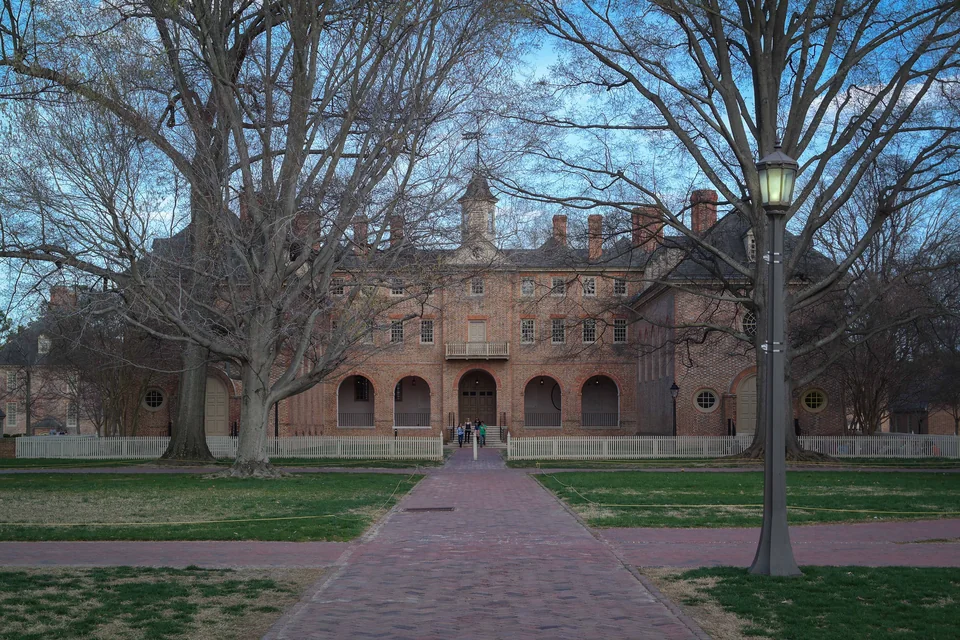
At a glance: 11 years of school and a US university
| Question | Answer | Basis |
|---|---|---|
| Are 11 years enough? | Yes, if your certificate qualifies you for university at home | University of California rule for international applicants |
| Is a foundation year needed? | No; that is a UK model — in the US you enter the first year directly | MIT, Harvard and UC requirements mention no preparatory year |
| Which grades count? | Upper grades; UC asks for records from grade 9 | UC; Common App School Report |
| When is the certificate needed? | After admission: your school sends final results | Harvard: by 1 July |
| Do national exams replace the SAT? | Rarely, and results usually arrive after deadlines | Dartmouth and Harvard rules |
| Where to take the SAT? | Not in Russia or Belarus; for 7 November 2026: Kazakhstan 45 centres, Uzbekistan 34, Georgia 15, Armenia 6 | College Board test-centre search |
| Age at the start | 17–18 is normal for a first-year student | — |
Why 11 years of school is not a problem
American high school has 12 grades, and you will still read online that an 11-year graduate is "a year short". For US undergraduate admission that is not the case. The University of California states the rule for international applicants directly: complete secondary education and earn a certificate that allows you to be admitted to a university in your home country. Neither MIT, nor Harvard, nor UC requires a foundation programme of the kind UK universities expect.
What matters is content, not years. Universities look at which subjects you took, how demanding they were and how you did. UC sets a grade threshold for non-residents — a 3.4 GPA in academic courses — plus country-specific requirements. Private universities publish no cut-off but compare you with other applicants from your school and country.
What you need from your school
In the US system, your school takes part in the application alongside you. Common App gives it a separate role, the counsellor, who sends the School Report, transcript and school profile. Many schools in 11-year systems have no such post, so agree early who will take it: a deputy head for academics, a form tutor or another staff member with access to grades.
| What is needed | When | Who does it |
|---|---|---|
| Transcript for grades 9–10 and the first half of grade 11 | For early or regular deadlines (November–January) | School: an official record of grades on letterhead, translated per each university's rules |
| School Report and school recommendation | With the application | School official via Common App or the university portal |
| Two teacher recommendations | With the application | Teachers; MIT asks for a maths or science teacher and a humanities teacher |
| Mid-year grades of the final year | January–February | School; MIT collects them with its February Updates & Notes (FUN) form in mid-February |
| Final grades and certificate | June–July | School; Harvard by 1 July |
If your school does not issue official mid-year grades in the final year, that is not a disaster: Harvard says the Midyear Report can then be skipped. Tell the university in advance.
Translations and apostille
Transcripts and recommendations in another language must be translated, and rules differ. Harvard allows an English teacher to translate (but not the applicant), with the translator's name and the original attached. Penn requires certified translations and says third-party evaluations and GPA recalculations are not needed. Pace accepts translations attested by the school or an approved agency. So collect the rules for every university on your list first, then order translations, so you do not pay twice.
US universities rarely require an apostille at the application stage. If a university or evaluation agency asks for one, in Russia the regional education authority issues it for RUB 2,500 (about $30).
National exams, olympiads and the SAT
US universities almost never accept a national school exam as a substitute for the SAT, with two caveats.
- Dartmouth requires testing and lets applicants from schools outside the US meet it with final results of a national exam standardised across the country. Predicted results are not accepted, and if results arrive after February, Dartmouth asks you to choose another option. For a student in the final year of an 11-year system, where national exam results appear in summer, that means current-year results will not work.
- Harvard requires the SAT or ACT but, in exceptional cases when the tests are inaccessible, accepts AP, IB, A-level or national leaving exam results. The committee does not expect "extraordinary measures" to reach a test centre, but if you realistically can take the SAT or ACT, it still expects you to.
National exams still matter indirectly: they shape the final grades on your certificate, which the university sees in the summer. Olympiads and competitions go into the honours section of Common App with the level (school, regional, national, international) and your result.
With the SAT, the challenge is logistics. For the autumn 2026 dates, College Board's search shows no centres in Russia or Belarus. For 7 November it lists centres in Kazakhstan (45), Uzbekistan (34), Azerbaijan (16), Georgia (15), Kyrgyzstan (7) and Armenia (6). Registration costs $111. Which test to choose: SAT or ACT. Applicants in Kazakhstan, Uzbekistan or Kyrgyzstan can test in their own country.
English: how much and when
Each university sets its own threshold. MIT strongly recommends a test for applicants not educated in English: minimum IELTS 7.0, TOEFL 90 (or 5 on the new 1–6 scale for tests from 21 January 2026), Duolingo English Test 120. Penn says competitive applicants usually have IELTS 7.0+ and Duolingo 130+. Harvard does not require an English test. ETS lists the TOEFL iBT fee as $325 in Russia and $175 in Kazakhstan. Aim to finish English testing by the end of grade 10 or the summer before grade 11, leaving the autumn for the SAT and essays.
Plan from grade 9 to grade 11
| When | What to do |
|---|---|
| Grades 9–10 | Keep grades steady in core subjects; universities see them. Pick one or two activities and stay with them for years rather than collecting a list in grade 11 |
| Spring–summer after grade 10 | Take TOEFL, IELTS or Duolingo; sit full practice SAT and ACT tests; draft a list of universities; start the main essay |
| September of grade 11 | Agree the transcript and School Report with your school; ask two teachers for recommendations; register for an SAT abroad if needed |
| October–November | SAT in early October or November (in 2026: 3 October and 7 November; October registration closed on 22 September); early applications by 1 November; UC by 30 November |
| December–January | SAT on 5 December if needed; regular applications in early January (Harvard 1 January, MIT 4 January); aid forms |
| February–April | Mid-year grades; decisions |
| May | Choose a university by 1 May, pay the deposit |
| June–July | Final exams; certificate and final school report; I-20, SEVIS fee, visa |
| August | Enter the US no earlier than 30 days before the programme start |
The tightest window is June–July, when final exams overlap with visa appointments. Russian nationals must interview in Warsaw or Astana, so fit the trip around the exam calendar early. Visa details: F-1 student visa.
Running late? Four fallback routes
1. A gap year and applying with final results. You can finish school, receive your certificate and apply the following autumn as a first-year applicant. You gain time for the SAT and English and apply with final grades. The risk: if you study at a university during that year and earn credit, you may be classed as a transfer applicant. Cornell treats anyone who has earned 12 or more semester hours of college credit after high school as a transfer applicant, with different deadlines and competition. Before enrolling somewhere "for a year", check how it changes your category.
2. Community college, then transfer. Two years at a community college, then transfer as a junior. It is cheaper: at Santa Monica College, F-1 students pay $486 per unit from fall 2026, about $11,700 a year at 12 units per semester, excluding housing. The University of California is especially open to California community college students: UC says three out of four transfer applicants from those colleges are admitted (an overall figure, not specific to international students).
3. Conditional admission with English study. If your grades qualify but your English score does not, some universities offer a conditional offer. At the University of Dayton, such students take a placement test, study full-time in the Intensive English Program, and are fully admitted after completing it or reaching the required test score. It adds a term or two of fees, not a year of waiting.
4. Starting elsewhere and transferring later. This works if the goal is a US degree rather than the first year in the US. But selective universities have few transfer places: Harvard admits about 12 transfer students a year from more than 2,000 applications. See transferring to a US university.
What it costs a family
| Item | Amount |
|---|---|
| Applying to 8–12 universities | Usually $75–95 per application at selective universities (MIT $75, Harvard $95) |
| SAT abroad | $111 plus travel |
| TOEFL iBT | $325 in Russia, $175 in Kazakhstan |
| A year at a public university (UCF, 2026–27, out-of-state, incl. housing and food) | $43,832 |
| A year at a private university (MIT, 2026–27, before aid) | $92,760 |
| A year of tuition at a community college (Santa Monica College) | about $11,700 excluding housing |
| SEVIS fee and visa fee | $350 + $185 |
Aid for international students varies enormously: MIT and Harvard admit need-blind and meet full need, while the University of Michigan offers no aid to students on temporary visas. See the cost of studying in the USA and financial aid for international students. Families paying from Russia should use only legal routes: how to pay for studies abroad from Russia.
Common mistakes
- Starting from zero in the final year. By 1 November you need English, the SAT, essays and your school on board. Spring of grade 10 is the sensible start.
- Your school hears about it in December. School documents are the slowest part of the file.
- Hoping a national exam will replace the SAT. Results arrive after decisions, and the few universities that accept national exams want final results.
- Translating your own transcript. Harvard forbids it; Penn and Pace require certified or attested translations.
- Converting grades with an online GPA calculator. Penn asks you not to recalculate; report grades as issued unless a university gives instructions.
- Enrolling at a home university "for a year" without checking your category. Credits can make you a transfer applicant, with different competition and deadlines.
- A visa interview in the middle of final exams. Plan the trip before or right after exams.
How StudyU can help
Only the initial consultation is free. University selection, a plan for grades 10–11, SAT and English strategy, coordination with your school, translations, essays and support through the visa stage are provided under an agreement with StudyU. Admission decisions are made by universities, aid decisions by universities or funders, visa decisions by the US consulate. See also bachelor's degrees in the USA, applying to US universities, studying abroad from Kazakhstan and Study in the USA.
FAQ
Yes. US universities accept a secondary school-leaving certificate if it qualifies you for university at home. No foundation year is required; you apply during your final year, and your school sends the certificate after graduation.
Upper-school grades: the University of California from grade 9, other universities usually grades 9–11 with mid-year grades of the final year. They look at rigour and consistency, not just the average.
Usually not. Penn explicitly asks applicants not to recalculate grades, and UC asks you to report them as issued. Convert only if a university gives its own instructions or requires an evaluation agency report.
At most universities, no. Dartmouth accepts final results of national standardised exams, but they must arrive by the end of February, while final-year results in 11-year systems usually appear in summer. Harvard considers national exams only in exceptional cases when the SAT or ACT is inaccessible.
Abroad: there are no centres in Russia. For 7 November 2026, College Board lists 45 centres in Kazakhstan, 34 in Uzbekistan, 16 in Azerbaijan, 15 in Georgia and 6 in Armenia. Registration costs $111 and closes about two weeks before the test.
Yes; many students from 11-year systems start at 17, and the universities in this guide publish no minimum age for first-year students. Check the university's rules for under-18s — housing contracts, parental signatures, medical consent — before paying the deposit.
Apply where deadlines are later (for example, universities with rolling admission), start at a community college, or take a gap year and apply with final results. In the last case, check that studying at a university in the meantime does not turn you into a transfer applicant.
Sources
- University of California: international applicants and transfer overview — checked 24 September 2026
- Harvard: application requirements, international applicants, transfer — checked 24 September 2026
- MIT: deadlines, tests and English, 2026–27 cost — checked 24 September 2026
- Dartmouth: testing; Cornell: transfer applicants — checked 24 September 2026
- Penn; Pace; University of Michigan; Common App first-year guide — checked 24 September 2026
- College Board: SAT dates, international fees, test-centre search; ETS: TOEFL iBT fees — checked 24 September 2026
- UCF cost of attendance; Santa Monica College fees; University of Dayton IEP — checked 24 September 2026
- US Department of State: designated NIV processing posts; student visa; ICE: SEVIS fee — checked 24 September 2026
- Tax Code of the Russian Federation, art. 333.33 (apostille fee) — checked 23 September 2026; Bank of Russia rate on 24 September 2026: $1 = RUB 84.3969
Next steps
- Bachelor's Degree in the USA: How It Works, What It Costs and How to Apply for 2027
- Financial Aid for International Students in the USA: Need-Based Grants, Merit Scholarships and Assistantships
- Transferring to a US University: Eligibility, Credit Transfer and 2027 Deadlines
- Applying to US Universities: Step-by-Step Plan, Documents and 2027 Deadlines
- How to Pay for Studies Abroad from Russia: What Works in 2026
- Study Abroad from Kazakhstan: Where and How in 2026
