
US federal student aid (Pell Grants, federal loans, the FAFSA) is not available to F-1 students: the Department of Education's handbook lists F-1, F-2 and M-1 visas among the ineligible categories. International students are funded by universities, in three main ways. The first is need-based grants based on family finances; only a small group of institutions meets the full demonstrated need of international students, among them MIT, Harvard, Yale, Princeton, Dartmouth, Amherst and Bowdoin. The second is merit scholarships for grades or talent: the University of Kansas, for example, gives international first-year students $8,000–16,000 a year based on high school GPA. The third, at master's and PhD level, is paid assistantships with tuition waivers. Home-country government programs, athletic scholarships and private awards complete the picture but rarely cover the whole budget.
Below: how each type of aid works, what specific universities promise international students in 2026, which forms and deadlines apply, how to read an aid offer, and where families most often lose money. Checked against official university and agency pages on 24 September 2026.
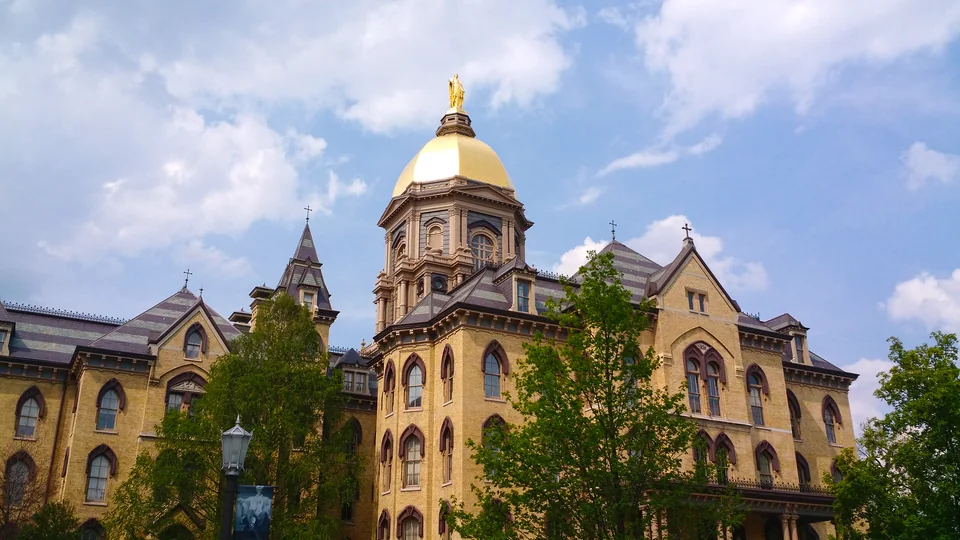
Five sources of funding
| Source | Awarded for | Who decides | Documents | Best fit |
|---|---|---|---|---|
| Need-based grant | The gap between the cost of attendance and what the family can pay | University financial aid office | CSS Profile or the university's own form, parents' tax and bank records | Strong applicants whose families cannot pay the full price |
| Merit scholarship | Grades, SAT or ACT scores, creative or athletic achievement | Admissions office or scholarship committee | Usually just the admission application, sometimes an extra essay | Applicants above the median profile of that university |
| Assistantship or fellowship | Teaching, research or administrative work; research potential | Department | Graduate application, references, sometimes a separate form | Master's and PhD students |
| Athletic scholarship | Athletic level | Coach and athletics department | NCAA Eligibility Center registration, video, athletic résumé | Athletes a team wants to recruit |
| External programs | Foundation or government criteria | Foundation or your government | Per program rules | Citizens of countries that run such programs |
EducationUSA, the State Department's advising network, warns that most scholarships cover only part of study and living costs and that some are not available to first-year international students. Build the financial plan on what the family can definitely pay, and treat aid as a way to close the gap. Our guide to the cost of studying in the USA shows how that total is built at six institutions.
Need-blind, need-aware and full need
These three terms decide how much an aid request affects admission and how much you receive.
- Need-blind: admissions does not consider whether you need aid. Very few universities apply this to international students.
- Need-aware: financial need is a factor in the admission decision. This is the norm for international applicants because aid budgets are limited.
- Full need: the university commits to meeting 100% of demonstrated need for every admitted student who applies. Need-aware universities can also meet full need.
Bowdoin states on its international page that it is one of only eleven US colleges and universities that are need-blind and meet full need for every admitted student, including international students. Here is what several of them officially say:
| University | Policy for international students | Forms and deadlines |
|---|---|---|
| MIT | Need-blind admission and 100% of demonstrated need for all admitted students who apply; aid is need-based only, with no merit awards | CSS Profile and parents' tax documents through IDOC; parents living outside the US submit their home-country tax return with an English translation. Deadlines: 30 November for Early Action, 15 February for Regular Action |
| Harvard University | Same admission and aid processes for all applicants regardless of citizenship. For families with typical assets: income below $100,000 means no parent contribution; up to $200,000, aid covers at least full tuition | One set of instructions for all countries |
| Yale University* | Need-blind for all applicants and 100% of demonstrated need; international students get the same need-based aid, including allowances for housing, meals and two round trips a year | Financial aid deadlines differ from US applicants' (e.g. 1 December for international Early Action) |
| Princeton University | Need-blind; international students' full need is met as for US students; grants instead of loans since 2001 | Princeton Financial Aid Application, free |
| Dartmouth College | Need-blind admission extended to all international citizens; no parent contribution for families with incomes of $65,000 or less and typical assets; full tuition without loans up to $125,000 | CSS Profile per Dartmouth instructions |
| Amherst College | Need-blind for everyone and 100% of calculated need for international students; the average international aid award in 2025-26 was more than $84,000 | International applicant requirements on the aid office pages |
| Bowdoin College | Need-blind for international students; full need met without loans | CSS Profile; the ISFAA and IACAC forms are no longer accepted |
* Yale University was designated an "undesirable organization" in Russia in July 2025. Participation carries legal risk for Russian citizens, so we do not recommend it to them; the designation does not affect citizens of other countries.
Income thresholds here are university benchmarks for "typical assets", not guarantees. Property other than the family home, a business, savings or a sibling in college change the calculation.
Read the fine print. Many affordability programs are written for US students only. Boston University, for example, meets 100% of need without loans for first-year students from 2026-27, but only for US citizens and permanent residents. Before listing a university as "generous", find the sentence about international students on its aid page.
How universities calculate your need
The formula: cost of attendance minus the expected family contribution equals demonstrated need. The difficulty lies in how the university estimates the family contribution.
What you will be asked for: both parents' income for the last year, tax documents, savings and accounts, property other than the main home, business interests, and the number of children and other dependents. If parents are divorced, some universities require a separate profile from the noncustodial parent.
CSS Profile. A College Board form used by many private universities. It costs $25 for the first school and $16 for each additional one. Automatic fee waivers apply only to students living in the United States, and College Board offers no other waivers, although some universities have their own. Bowdoin, for example, asks applicants who cannot pay to contact its aid office after admission.
IDOC. College Board's service for collecting tax documents. A family in Russia can submit a 3-NDFL tax return or an employer's income and tax certificate, bank statements and English translations. The university decides which documents it accepts, so read each set of instructions.
Currency conversion. Amounts on the form are in dollars. Use one exchange rate for every line and state it in the comments: mismatches between the form and supporting documents are a common reason for extra requests.
Merit scholarships
Merit scholarships reward achievement regardless of family income. International students most often receive them at mid-ranked private universities and at public universities that want to attract strong students.
Automatic awards by table. The University of Kansas publishes this scale for first-year students:
| Scholarship | High school GPA (4.0 scale) | Amount |
|---|---|---|
| KU Excellence | 3.95–4.00 | $16,000 a year, $64,000 over four years |
| KU Distinction | 3.85–3.94 | $14,000 a year |
| KU Achievement | 3.70–3.84 | $12,000 a year |
| KU Performance | 3.50–3.69 | $10,000 a year |
| KU Access | 3.25–3.49 | $8,000 a year |
Conditions: apply by 1 May for fall entry, enroll in at least 12 credits each semester, and keep a KU GPA of 3.0 to renew. Awards last until the first bachelor's degree or eight semesters.
Automatic consideration without a table. The University of Dayton considers every international applicant for a merit scholarship of up to $34,000 a year without a separate application and says most international first-year students receive one. It does not offer full-tuition scholarships. With tuition at $51,910, the best case reduces the tuition bill to $17,910.
Test-linked awards. Some universities set scholarship thresholds by SAT or ACT score. The University of Alabama's 2027 automatic awards for international first-year students are $24,000 a year for an SAT of 1360–1410 and $28,000 for 1420–1600, with applications and official scores due by 4 December. For choosing between tests, see SAT or ACT.
To compare merit offers, subtract the award from the full cost of attendance, not from tuition, and multiply by the number of years with an allowance for price increases. A $34,000 award at a $74,000 university and a $12,000 award at a $52,000 university leave similar balances.
Graduate funding: assistantships and fellowships
At graduate level most funding comes from the department. EducationUSA lists four forms: fellowships, teaching assistantships (TA), research assistantships (RA) and administrative assistantships.
- TA and RA positions usually bring a full or partial tuition waiver and a monthly stipend in exchange for teaching sections, grading or lab work.
- Fellowships pay a stipend with little or no work obligation and are more common in PhD programs.
- Partial tuition waivers without a stipend are common in master's programs.
Two visa details matter. An assistantship generally counts as on-campus employment, capped at 20 hours a week during term (see working while studying and OPT). And the amount you must document for the I-20 changes: UCF Global states that funding requirements differ for students offered an assistantship or fellowship. You need an official award letter, not a supervisor's promise.
External programs and athletic scholarships
Home-country government scholarships. Kazakhstan's Bolashak program published news on 23 September 2026 about expanding cooperation with US universities; check the current program rules, eligible universities and return obligations. For US universities in the StudyU catalog, see studying in the USA.
Fulbright funds graduate study and research in the US, but competitions are run country by country through the US embassy or a Fulbright commission. Check whether a competition is open in your country this year.
Athletic scholarships. According to the NCAA, athletic scholarships are available in Division I and partial scholarships in Division II. International athletes register with the NCAA Eligibility Center and approach coaches directly.
Loans. Private education loans for international students exist, but the lender sets the terms and cosigner requirements. Universities guarantee neither a loan nor a rate.
Timeline
| When | What to do |
|---|---|
| Summer before senior year | Build a list by international aid policy (need-blind, need-aware with full need, merit) and run each university's net price calculator. See also applying to US universities |
| September–October | Gather parents' income for the previous year, translate documents, choose an exchange rate |
| November | Early deadlines: MIT's financial documents for Early Action by 30 November; Yale's* international Early Action aid deadline 1 December; University of Alabama's scholarship deadline 4 December 2026 |
| January–February | Regular deadlines: MIT by 15 February. Graduate programs often set earlier funding deadlines; the department lists the date |
| March–April | Admission decisions arrive with aid offers; compare net costs |
| By 1 May | University of Kansas deadline for fall scholarships; common enrollment deposit deadline |
Harvard explains why deadlines matter: if the aid application is complete on time, the aid decision arrives with the admission decision. Late applicants are still considered without penalty, but you would be comparing offers blind.
How to read an aid offer
- Grants and scholarships do not have to be repaid. Check how many years they cover and what renewal requires.
- Loans must be repaid. Princeton and Bowdoin, for example, build aid without loans, but other universities may include one.
- Work is expected campus earnings within the 20-hour weekly limit, not money in your account.
- Expected family and student contribution is what you pay each year.
- Outside scholarship policy: whether the university reduces its grant if you win external funding.
If your family's finances change sharply, for instance after a currency collapse, contact the aid office with documents. The university may revise its calculation, but the decision is its own.
Common mistakes
- Counting on the FAFSA or federal grants, which are closed to F-1 students.
- Confusing need-blind for US applicants with need-blind for international applicants.
- Applying for aid everywhere. At need-aware universities an aid request affects admission, so the list should mix policies.
- Comparing scholarship sizes instead of four-year net costs.
- Missing merit renewal conditions: minimum GPA, full-time enrollment, semester limits.
- Using one exchange rate on the form and another in the documents.
- Bringing an informal scholarship message instead of an official letter to the visa interview.
FAQ
Yes, from universities, foundations or their own governments, not from the US government. Generous need-based aid for international students is limited to a few universities; merit scholarships are much more common.
Admissions decides without considering whether you need aid. Only a handful of universities, such as MIT, Harvard, Yale (designated undesirable in Russia, see the note above), Princeton, Dartmouth, Amherst and Bowdoin, officially apply this to international applicants.
$25 for the first school and $16 for each additional one. Automatic fee waivers are only for students living in the US. Some universities help directly, and Princeton uses its own free form.
It is possible but exceptional: through full-need universities when family income is low, or through funded PhD programs. Merit awards, even large ones, usually cover part of tuition; the University of Dayton states that it does not offer full-tuition scholarships.
Yes. A grant or assistantship confirmed by an official letter is listed on the I-20 as a funding source, so the family documents a smaller amount. Promises and "expected" awards do not count. The visa stage is covered in our F-1 student visa guide.
Yes, if there are new facts: a change in income, a better offer from another university, higher costs. Write to the aid office with documents. The university may decline, especially if the aid already follows its formula.
Less often than for undergraduates and in a different form: assistantships and partial tuition waivers at department level. PhD students are funded more often; students in professional master's programs usually pay themselves.
Sources
- Federal Student Aid Handbook 2026-2027, Vol. 1, Ch. 2, checked 24 Sep 2026
- EducationUSA: financing undergraduate study and graduate study, checked 24 Sep 2026
- MIT Admissions: access and affordability and how to apply for aid, checked 24 Sep 2026
- Harvard College: financial aid and international applicants, checked 24 Sep 2026
- Yale Admissions: international students and affordability, checked 24 Sep 2026
- Princeton: international students and cost and aid, checked 24 Sep 2026
- Dartmouth: universal need-blind policy, Amherst: international applicants, Bowdoin: international students, checked 24 Sep 2026
- Boston University: cost of attendance and BU Promise, checked 24 Sep 2026
- CSS Profile: cost, fee waivers, if you cannot pay, checked 24 Sep 2026
- University of Kansas: scholarships, University of Dayton: international undergraduate scholarships, University of Alabama: 2027 automatic merit scholarships, checked 24 Sep 2026
- UCF Global: I-20 funding, NCAA: scholarships, Bolashak, checked 24 Sep 2026
Next steps
- Applying to US Universities: Step-by-Step Plan, Documents and 2027 Deadlines
- Working While Studying in the USA and OPT: On-Campus Jobs, CPT, OPT and STEM OPT Under the 2026 Rules
- SAT or ACT: Which Test to Take for US Admission in 2026–27
- Cost of Studying in the USA in 2026: Tuition, Living Costs and a Realistic First-Year Budget
- Studying in the USA for international applicants
- F-1 Student Visa for the USA in 2026: I-20, Fees, Where to Interview and the New Fixed Period of Stay
