
In the first year the simplest option is a university residence hall, and some universities require it: Indiana Tech requires first- and second-year students to live on campus, and Jacksonville University has a three-year residency requirement. A residence hall room for 2026-27 costs from $8,750 at the University of Central Florida to $10,550–18,010 at the University of Illinois Chicago, often plus a mandatory meal plan of $4,300–9,000 a year. An off-campus apartment gives independence but usually means a 12-month lease, a security deposit and large move-in payments, and without US credit history you may need a guarantor. A homestay suits community college students in expensive cities: Santa Monica College estimates about $1,541 a month including two meals a day.
Below: a comparison of options, real 2026-27 prices, how university and private rental contracts work, what state laws protect, how to avoid rental scams and when to book what. Prices and rules checked on official pages on 24 September 2026.
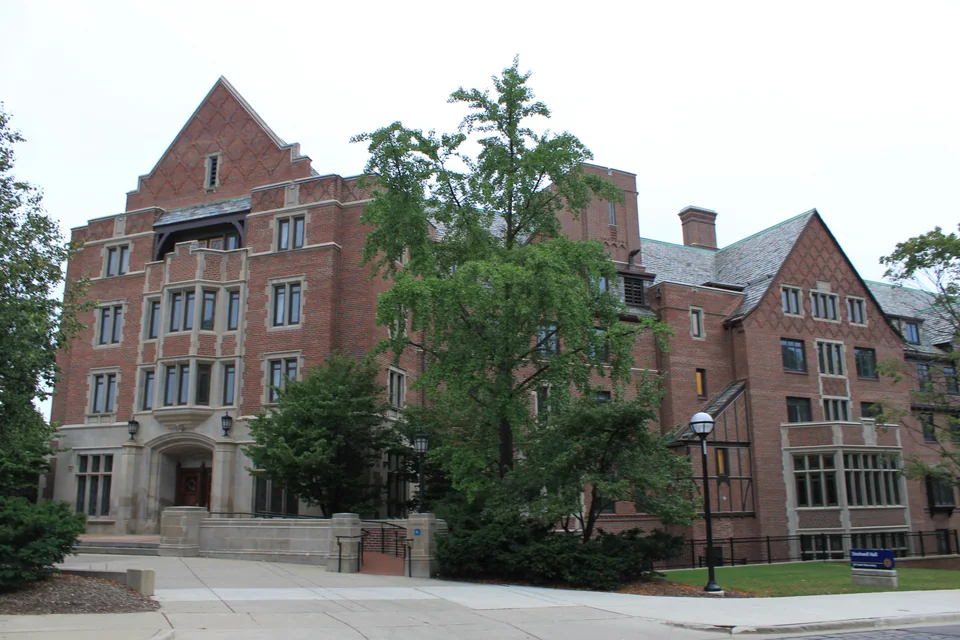
Housing options and who they suit
| Option | What it is | Contract | Pros | Cons |
|---|---|---|---|---|
| Residence hall | Double or single room, shared bathroom on the floor or in a suite | Academic year, fall and spring | Close to everything; no credit history or guarantor; meals sorted | Roommates, mandatory meal plan, breaks cost extra |
| On-campus suite or apartment | Several bedrooms with a shared kitchen or living room | Usually academic year, more often for upper-year and graduate students | More privacy, you can cook | Pricier than a residence hall, fewer places |
| Off-campus apartment or room | Rented from a private owner or management company | Often 12 months | Independence, sometimes cheaper | Deposit, utilities, furniture, credit checks |
| Homestay | A room with an American family, often with meals | Monthly, through an agency or the college | Language practice, meals, support | House rules, commute |
| Family and graduate housing | University-owned apartments | Usually 12 months | Works for families with F-2 dependents | Few units, waiting lists |
| Fraternity or sorority house | A room in a student organization's house | Per organization rules, usually from the second year | Community, sometimes cheaper than halls | Membership, dues and house rules |
On-campus prices for 2026-27
| Institution and city | Option | Price per academic year |
|---|---|---|
| University of Central Florida, Orlando | Residence hall / food (COA estimate) | $8,750 / $6,170 |
| University of Illinois Chicago | Double room, Commons West | $10,550; $14,831 with the base meal plan |
| University of Illinois Chicago | Single rooms, from Commons West to an ARC semi-suite | $11,808–18,010; $16,089–22,291 with meals |
| Adelphi University, New York (Long Island) | Double room | $13,380 ($6,690 per semester) |
| Manhattan University, New York | Double room / standard meal plan | $11,550 / $7,980 |
| Harvard University | Housing / food | $14,250 / $8,942 |
Meal plans. Many residence halls require one. At UIC residents of all halls except four must select a meal plan; at Adelphi every resident student must. The difference between "room" and "room and meals" at UIC is about $4,300 a year; Manhattan University's standard plan is $7,980. If you follow a special diet, check dining options before choosing a building.
Related charges. UIC charges a $50 housing application fee and an $80 technology fee each semester. Adelphi and Manhattan University require a $300 housing deposit, Indiana Tech $350.
How university housing contracts work
A residence hall contract usually covers only two semesters. At UIC for 2026-27 that means 23 August–12 December 2026 and 10 January–8 May 2027; interim housing over winter break is a separate request with extra charges. For summer you either sign a separate contract or move out.
Before signing, check:
- move-in and move-out dates and whether you can stay during breaks;
- what the price includes: internet, utilities, furniture, laundry;
- whether the meal plan is mandatory and whether you can opt out;
- cancellation terms: the deadline to cancel without penalty and what happens if your visa is delayed;
- community rules: guests, alcohol, quiet hours, cooking in rooms.
The main risk for international students is a mismatch between the contract and visa dates. You may enter the US no earlier than 30 days before your I-20 program start date, while halls often open only a few days before classes. If you arrive earlier, book a hotel or temporary housing in advance.
Mandatory on-campus living
Some universities require on-campus living for the first years:
- Indiana Tech requires first- and second-year students, as well as international students attending through agencies that require it, to live in campus housing. An exemption may be granted, for example, to students who are 21 or older before their first semester.
- Jacksonville University has a three-year residency requirement.
If you planned to save with an off-campus apartment, find the university's residency or live-on requirement before building a budget.
Off-campus apartments: costs and payments
University estimates show the order of magnitude. UCF's cost of attendance allows $9,918 a year for off-campus housing and $3,970 for food. Santa Monica College estimates $1,541 a month for a homestay with two meals. In large cities rents are much higher, so check listings for the specific neighborhood.
Move-in payments. State laws limit what a landlord can take up front:
| State | What a landlord may collect at move-in | Deposit return |
|---|---|---|
| Massachusetts | First month's rent, last month's rent, a security deposit of no more than one month's rent, and the cost of a new lock | Within 30 days after the tenancy ends, with interest; the deposit must be held in a separate interest-bearing account |
| New York | A deposit of no more than one month's rent; a landlord cannot take both a deposit and last month's rent; no more than $20 for a credit and background check | Within 14 days after move-out for non-regulated units |
Budget also for utilities, internet, furniture, renter's insurance and commuting. In Massachusetts a landlord who takes a security deposit should give you a statement of condition within 10 days, and you have 15 days to add any damage you find: this protects your deposit.
Credit history and guarantors. US landlords check credit history. New students have none, and an SSN is issued to F-1 students only with authorized employment. A landlord may therefore ask for a US-based guarantor, several months' rent in advance or a guarantor company. Before agreeing to a large prepayment, check whether it is lawful in your state and get a signed lease.
The lease. Often 12 months, frequently August to July. Breaking a lease is usually expensive; the lease sets the terms. Whether you may sublet for the summer depends on the lease and state law.
Roommates, furniture and the first weeks
Roommates. In residence halls the university matches roommates by questionnaire: sleep schedule, noise, guests, habits. Answer honestly. Off campus, students find roommates through university groups and the off-campus housing office. It is better for all roommates to sign the lease, so each is responsible for their share.
Furniture and basics. Residence halls are usually furnished with a bed, desk and wardrobe; you buy bedding, towels, kitchenware and a lamp. Off-campus apartments are often unfurnished, so setup takes a noticeable sum in the first month. Many students sell items at the end of the academic year.
Utilities and insurance. Included in residence hall prices. In an apartment you set up electricity, internet and sometimes gas and water yourself, and without US credit history companies may ask for a deposit. Renter's insurance is usually not required by law, but a lease may require it.
Homestay
Homestays are common for community college and language program students without residence halls. Santa Monica College bases its visa budget on a homestay with two meals a day. A family provides a room, meals and help with adaptation and English, but has house rules on curfews, guests and kitchen use. Arrange it through the college or a reputable agency and get a written agreement on price, term and notice.
Housing for families
If your spouse or children come on F-2 visas, the university raises the amount you must document: UCF adds $3,000 per dependent, and Santa Monica College estimates $19,901 per dependent for nine months. Not every university has family housing, and waiting lists are long. Apply as soon as you are admitted and look off campus in parallel.
Avoiding rental scams
The Federal Trade Commission describes the typical scam: a fake listing with low rent, an "owner abroad" who cannot show the property, pressure to decide fast, and a request to pay an application fee, deposit or first month's rent by Western Union or MoneyGram wire, gift cards or cryptocurrency. Such payments are almost impossible to recover.
How to protect yourself:
- search through your university's off-campus housing office and established management companies;
- check the address and owner: if the same property is advertised under a different name or listed for sale, it is a red flag;
- do not pay before signing a lease and viewing the property, in person or by live video with someone inside;
- pay only by legal methods to the account named in the lease. See how to pay for studies abroad from Russia.
Timeline
| When | Step |
|---|---|
| While choosing universities | Check residency requirements and hall prices on the housing pages |
| Right after admission | Apply for housing and pay the deposit; late applicants may miss preferred rooms |
| After receiving the I-20 | Match move-in dates with the program start and visa timing |
| 2–3 months before departure | If going off campus, start searching with the off-campus housing office and prepare documents for landlords |
| One month before departure | Confirm move-in; arrange the first nights if arriving early |
| October–November | Apply for winter break housing if you are not going home |
| Spring | Decide on summer housing and the next academic year |
Housing is part of the full annual cost, and campus jobs cover only part of living expenses (see working while studying and OPT). Universities in the StudyU catalog are listed on studying in the USA. For the full budget see the cost of studying in the USA and, for entry dates, the F-1 student visa guide.
Common mistakes
- Waiting for the visa before applying for housing. Applications and deposits come earlier.
- Budgeting only for the room and forgetting the mandatory meal plan.
- Forgetting that hall contracts do not cover breaks.
- Renting from a listing without viewing and wiring money to an "owner abroad".
- Signing a 12-month lease without a summer plan.
- Not reading deposit return terms and not photographing the apartment at move-in.
FAQ
It depends on the university. Indiana Tech requires the first two years, Jacksonville University three, and many universities have no requirement. Check the housing or residential life pages.
In 2026-27, roughly $8,750–18,000 per academic year for the room in our examples, plus $4,300–9,000 for meals. Big-city and private universities cost more.
Yes, but it is harder. Landlords may ask for a US guarantor, rent in advance or a guarantor company. Your university's off-campus housing office knows which companies work with international students.
Hall contracts usually end before winter break and in May. Many universities offer winter housing for an extra fee; for summer you extend the contract or find another option.
Yes, if your spouse and children hold F-2 visas. You will need family housing or an off-campus rental, and the I-20 amount will increase.
It depends on the state. Massachusetts and New York cap it at one month's rent. In Massachusetts a landlord may also collect first and last month's rent and the cost of a new lock, and must return the deposit with interest within 30 days after the tenancy ends.
Sources
- University of Illinois Chicago: Housing Rates 2026-2027, checked 24 Sep 2026
- Adelphi University: Housing Costs 2026-2027, checked 24 Sep 2026
- Manhattan University: Tuition and Fees 2026-2027, checked 24 Sep 2026
- UCF: Cost of Attendance 2026-2027 and UCF Global: I-20 expenses, checked 24 Sep 2026
- Harvard College: Cost of Attendance 2026-2027, checked 24 Sep 2026
- Santa Monica College: International Student Tuition & Fees, checked 24 Sep 2026
- Indiana Tech: housing for international students and Jacksonville University: Residential Life, checked 24 Sep 2026
- Massachusetts Attorney General: landlord and tenant rights and New York Attorney General: residential tenants' rights guide, checked 24 Sep 2026
- FTC: rental listing scams, checked 24 Sep 2026
- Social Security Administration: F-1 students and SSNs, checked 24 Sep 2026
Next steps
- Working While Studying in the USA and OPT: On-Campus Jobs, CPT, OPT and STEM OPT Under the 2026 Rules
- Cost of Studying in the USA in 2026: Tuition, Living Costs and a Realistic First-Year Budget
- F-1 Student Visa for the USA in 2026: I-20, Fees, Where to Interview and the New Fixed Period of Stay
- How to Pay for Studies Abroad from Russia: What Works in 2026
- Studying in the USA for international applicants
- University of Central Florida (UCF)
