
The Ivy League is an athletic conference of eight old private universities in the northeastern U.S.: Brown, Columbia, Cornell, Dartmouth, Harvard, the University of Pennsylvania (Penn), Princeton and Yale. The name confers no official "elite" status, but all eight are among the most selective universities in the world: in their latest admission cycles they admitted between roughly 4% (Columbia, Harvard) and 8.4% (Cornell) of applicants. A full 2026/27 year costs from $94,624 (Princeton) to about $100,000. Five of the eight consider international applicants without regard to whether they need financial aid, and all eight meet the full demonstrated need of the students they admit.
Below: a table of all eight with admit rates, costs, testing and deadlines; how they differ; how selection works; how to plan a fall 2027 application; and what applicants from outside the U.S. should know.
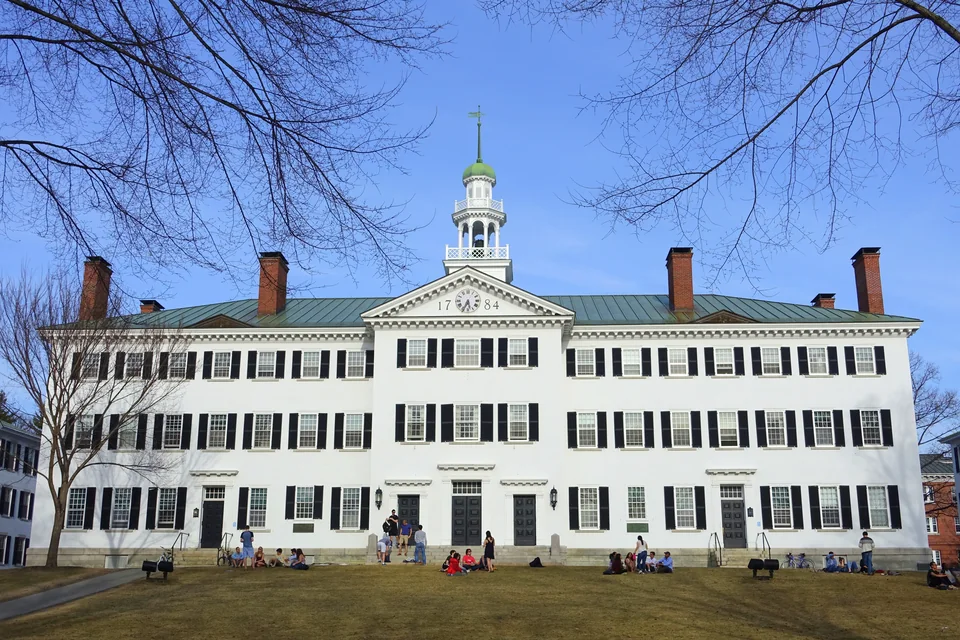
The eight Ivy League universities at a glance
| University | Location | THE 2026 | Admit rate | 2026/27 budget | Aid policy for international applicants | SAT/ACT for fall 2027 | Early / regular deadline |
|---|---|---|---|---|---|---|---|
| Harvard | Cambridge, MA | =5 | 4.2% (fall 2025) | $95,134–100,134 | Need-blind | Required | REA Nov 1 / Jan 1 |
| Yale | New Haven, CT | 10 | 4.7% (fall 2025) | $94,100 excl. books and personal costs | Need-blind | Required | SCEA Nov 1 / Jan 2 |
| Princeton | Princeton, NJ | =3 | 5% (fall 2024) | $94,624 | Need-blind | Optional | SCEA Nov 1 / Jan 1 |
| Columbia | New York, NY | 20 | 4% (fall 2024) | $99,774 | Need-aware | Optional | ED Nov 1 / Jan 1 |
| Penn | Philadelphia, PA | 14 | 4.9% (fall 2025) | $99,082 | Need-aware | Required | ED Nov 1 / Jan 5 |
| Brown | Providence, RI | 65 | 5.6% (fall 2026) | $99,984 | Need-blind | Required | ED Nov 1 / Jan 5 |
| Dartmouth | Hanover, NH | 180 | 6.0% (fall 2025) | $98,946 | Need-blind | Required, with alternatives | ED Nov 1 / Jan 2 |
| Cornell | Ithaca, NY | =18 | 8.4% (fall 2025) | $99,734 | Need-aware | Required | ED Nov 1 / Jan 2 |
Key: REA is Harvard's Restrictive Early Action and SCEA is Single-Choice Early Action — both non-binding. ED is binding Early Decision: if admitted, you withdraw your other applications. Need-blind means an aid request does not affect admission; need-aware means it does. All eight meet 100% of demonstrated need for admitted students.
Admit rates come from Common Data Sets and university reports for the cycle shown, and for Columbia and Princeton from the federal College Navigator database for fall 2024. Yale's budget is tuition ($72,500) plus food and housing ($21,600) from its Common Data Set; the others are full costs of attendance from university websites. THE ranks are from the Times Higher Education World University Rankings 2026.
What the Ivy League is not
The name comes from sports, not rankings. MIT, Stanford, Caltech, the University of Chicago and Johns Hopkins are not in the Ivy League, although they outrank several Ivies. Conversely, Brown (65th) and Dartmouth (180th) sit lower in THE's overall ranking because they are smaller and focused on undergraduates, while overall rankings weight research volume heavily. For an undergraduate, small size is often an advantage.
How the eight differ
| University | Undergraduate features | May suit |
|---|---|---|
| Harvard | Humanities, social and natural sciences, engineering; 16% of the fall 2025 class applied from outside the U.S. (by home address) | Students who want wide choice and a research environment |
| Yale | Strong humanities, arts and law; residential college system | Non-Russian applicants who value humanities and small seminars (see the note on Russian law below) |
| Princeton | Small, undergraduate-focused; applicants submit a graded written paper | Students who want close contact with faculty |
| Columbia | New York City; Core Curriculum in Columbia College and a separate engineering school | Students who want a big city and internships |
| Penn | Four undergraduate schools, including Wharton (business) and Nursing; you apply to a specific school | Students with a clear direction, especially business |
| Brown | Open Curriculum with no required core; Brown says 100% of its faculty teach undergraduates | Independent students who want to design their program |
| Dartmouth | The smallest Ivy, on a campus in a small town, with a strong undergraduate focus | Students who want campus life and small classes |
| Cornell | A large university with colleges from engineering and agriculture to hotel administration | Students who want applied and technical fields |
How selection works
All eight use holistic review: academic preparation in the context of your school, testing, essays, recommendations, activities and what you will bring to the community. None publishes minimum scores. Harvard notes that most applicants have outstanding records, so grades rarely distinguish one application from another, even though they remain the foundation.
Academics. Admissions officers look at grades, course rigor and class rank. Your counselor's report and school profile are the main way to explain a non-U.S. grading scale and curriculum. Penn accepts predicted results if final results are not yet available. Harvard asks for translations of non-English documents but does not require a professional translator — an English teacher's signed translation is acceptable.
Activities and grades from outside the U.S. The Common App allows up to 10 activities. Two or three areas with visible growth and results carry more weight than a long list of clubs: an independent research project, results in national or international olympiads, an app with real users, a job, or a volunteer project you started yourself. The Ivies do not require you to convert your grades into a U.S. GPA; they read them in the context of your school, which is why a clear school profile matters.
Testing. For fall 2027 entry, the SAT or ACT is required at Harvard, Yale, Penn, Brown, Dartmouth and Cornell. Princeton and Columbia are test-optional this cycle but will require scores from applicants entering in fall 2028. Dartmouth lets students at schools outside the U.S. meet the requirement in one of five ways: SAT/ACT, three AP exams, IB predictions, A-level predictions, or final results of a standardized national exam (predicted national results do not count, and results arriving after February require another option). Harvard accepts alternatives only in exceptional cases where testing is inaccessible. See SAT or ACT.
English. Harvard does not require an English test but accepts scores. Yale requires one from applicants with fewer than two years of English-medium schooling; Princeton from non-native speakers at non-English-medium schools (TOEFL, IELTS Academic, Duolingo or PTE Academic). Columbia also accepts InitialView or Vericant interviews.
Essays and recommendations. The Common App essay, each university's supplements, two teacher recommendations and the counselor report. Princeton also asks for a graded written paper.
Interviews. Alumni interviews are offered where possible, not to everyone. Harvard states that not having an interview does not hurt your application.
Choosing an early round
You can apply early to only one Ivy, and the rules differ.
- Restrictive Early Action (Harvard) and Single-Choice Early Action (Yale, Princeton) are non-binding: decisions usually arrive in mid-December and you can reply by May 1. In exchange, early applications to most other private U.S. universities are restricted; each university lists its exceptions.
- Early Decision (Columbia, Penn, Brown, Dartmouth, Cornell) is binding: if admitted with sufficient aid, you withdraw other applications. If you need aid and the school is need-aware, understand the cost before committing.
Common Data Sets show the size of early rounds: Penn admitted 1,266 of 9,503 Early Decision applicants, Cornell 1,889 of 10,057 and Dartmouth 768 of 3,552.
Cost and financial aid
Sticker prices are almost identical at $94,600–100,000 a year. What a family actually pays depends on demonstrated need, calculated from income and asset documents.
- Need-blind for all, including international applicants: Harvard, Yale, Princeton, Dartmouth and Brown (first-year applicants from fall 2025). Harvard and Yale say families with typical assets earning under $100,000 a year pay nothing, and those under $200,000 pay no tuition.
- Need-aware for international applicants: Columbia, Penn and Cornell. They meet full need for admitted students but admit fewer who need aid. Penn warns that limited funds mean some qualified candidates will not be admitted and advises families who can pay not to apply for aid.
- Apply for aid at the start. Columbia and Penn state that international students who do not request aid when applying cannot receive it later, including in future years.
Common Data Sets show the scale: in 2025/26 Yale awarded institutional aid to 459 international undergraduates, averaging $84,185; Penn to 448, averaging $80,607. Columbia reports an average international aid award of $79,375. Columbia, Princeton and Brown do not include loans in aid packages. Harvard states that all its aid is need-based, so do not expect large merit scholarships in the Ivy League. See financial aid for international students.
A note for Russian citizens
Russia's Ministry of Justice added Yale University to its list of "undesirable organizations" in July 2025; the list also includes three Harvard units (the Kennedy School, the Ukrainian Research Institute and the Davis Center for Russian and Eurasian Studies), though not Harvard University itself. Under Russian law, involvement with listed organizations can create legal risk for Russian citizens. This does not apply to citizens of other countries. For this reason StudyU does not publish a Yale admission profile.
Pros and trade-offs
What the Ivies offer: need-based grants that can make them cheaper than an unfunded public university; small seminars and research access for undergraduates; strong alumni networks and international name recognition.
What to weigh: admit rates of 4–8% make outcomes unpredictable even for strong applicants; preparation takes at least 18 months to two years; the sticker price is about $100,000 a year; workloads are heavy; and several campuses are in small towns — Hanover, Ithaca, Princeton — far from a major city.
Fall 2027 preparation plan
| When | What to do |
|---|---|
| Grades 9–10 | Take demanding courses; build one or two activities with measurable results: research, olympiads, a project, a job |
| Winter–spring of the penultimate year | Take the SAT/ACT and an English test; retake by autumn if needed |
| Spring of the penultimate year | Build a list of 8–12 schools: 2–4 Ivies or peers and 5–8 less selective options, including some your family can afford without aid |
| Summer | Write your main essay, ask two teachers for recommendations, collect translated transcripts and a school profile |
| By November 1, 2026 | Early round at one Ivy; aid documents by each school's deadline (Princeton: November 9) |
| January 1–5, 2027 | Regular round |
| Late March – early April 2027 | Regular decisions and aid offers |
| By May 1, 2027 | Choose a university and pay the deposit |
| May–August 2027 | I-20 and F-1 visa (visa guide) |
For the general process, see applying to U.S. universities and U.S. university after 11 years of school.
Tips for applicants from outside the U.S.
- Explain your school. Ask your counselor to include a school profile with the grading scale, advanced subjects and university placement.
- Plan testing early. SAT and ACT centers are not available in every country or city; check the College Board and ACT websites and plan travel and a backup date if needed.
- Handle payments early. Application fees (Columbia: $85) and the CSS Profile are paid from abroad. Harvard and Columbia offer fee waivers if the fee is a hardship. Russian families can read paying for studies abroad from Russia.
- Keep realistic options. With admit rates of 4–8%, even strong applicants may receive no Ivy offer.
Alternatives to the Ivy League
Peer-level universities outside the eight include MIT (2nd in THE 2026, same aid terms for international applicants as for U.S. citizens), Stanford (=5th), Caltech (7th), the University of Chicago (15th), Johns Hopkins (16th), Duke (28th) and Northwestern (30th). Large universities with gentler admission include NYU and UCLA. For an overview of all institution types, see universities in the USA for international students.
Common mistakes
- Treating the Ivy League as a ranking. It is an athletic conference; MIT and Caltech are not members.
- Applying early to two Ivies. Early-round rules forbid it.
- Not requesting aid out of fear. At need-blind schools it does not affect admission, and you cannot ask later.
- Writing a generic motivation letter. Admissions officers want a specific story about you.
- Using last year's testing rules. Princeton and Columbia change their policies from fall 2028.
FAQ
Eight: Brown, Columbia, Cornell, Dartmouth, Harvard, the University of Pennsylvania, Princeton and Yale. MIT, Stanford and Caltech are not.
In recent cycles, Harvard had the lowest admit rate (4.2% for fall 2025), followed by Columbia (4% for fall 2024), Yale (4.7%) and Penn (4.9%). Cornell's is the highest at 8.4%.
The full 2026/27 budget ranges from $94,624 at Princeton to about $100,000 at Columbia, Brown and Cornell. With need-based aid, families pay less — sometimes nothing.
Yes, if the university determines that your family cannot pay. Harvard and Yale charge nothing to families with typical assets earning under $100,000. Aid is need-based and awarded only after admission.
For fall 2027, six of eight require it: Harvard, Yale, Penn, Brown, Dartmouth and Cornell. Princeton and Columbia do not yet, but will for applicants entering in 2028.
Yes. You will need translated transcripts, a school profile, SAT or ACT scores where required, English proficiency, essays and recommendations. Harvard, for example, says it has no quotas by citizenship or school location.
The early round closes November 1, 2026; the regular round January 1–5, 2027, depending on the university. Submit aid documents with your application.
Sources
- Admission statistics and Common Data Sets: Harvard, Yale CDS 2025–26, Penn CDS 2025–26, Brown, Dartmouth CDS 2025–26, Cornell CDS 2025–26, NCES College Navigator (Columbia, Princeton) — checked 24 September 2026
- 2026/27 costs: Harvard, Princeton, Columbia, Penn, Brown, Dartmouth, Cornell — checked 24 September 2026
- Aid for international students: Harvard, Yale and new income thresholds, Princeton, Columbia, Penn, Brown, Dartmouth, Cornell — checked 24 September 2026
- Testing and deadlines: Harvard, Yale testing and deadlines, Princeton testing and deadlines, Columbia testing and deadlines, Penn, Brown testing, ED and RD, Dartmouth testing and deadlines, Cornell — checked 24 September 2026
- Times Higher Education — World University Rankings 2026 — checked 24 September 2026
- Russian Ministry of Justice — list of undesirable organizations — checked 24 September 2026
All amounts are in U.S. dollars as published by the universities.
During the free initial consultation, we clarify your goal, profile, timing, and budget and identify the next realistic step. Apply
Next steps
- Financial Aid for International Students in the USA: Need-Based Grants, Merit Scholarships and Assistantships
- US University After 11 Years of School: How to Apply From an 11-Year System
- Applying to US Universities: Step-by-Step Plan, Documents and 2027 Deadlines
- SAT or ACT: Which Test to Take for US Admission in 2026–27
- How to Pay for Studies Abroad from Russia: What Works in 2026
- F-1 Student Visa for the USA in 2026: I-20, Fees, Where to Interview and the New Fixed Period of Stay
