
More than twenty London universities appear in the THE World University Rankings 2026. Three are in the global top 50 — Imperial College London (8th), UCL (22nd) and King's College London (38th) — with LSE just outside at 52nd. International fees vary enormously: a bachelor's degree at the University of Greenwich costs $23,762 (£17,975) a year in 2026/27, LSE charges $40,188 (£30,400) to $55,390 (£41,900) in 2027/28, and some Imperial courses exceed $60,000. Living costs are higher too: the Student visa currently requires $2,021 (£1,529) a month in London against $1,548 (£1,171) elsewhere, and for applications from 30 November 2026 $2,075 (£1,570) — $18,679 (£14,130) for nine months — against $1,590 (£1,203).
Below: the types of London universities, a ranking and fee table, budget maths, housing and transport, and an application timeline for 2027 and 2028 entry.
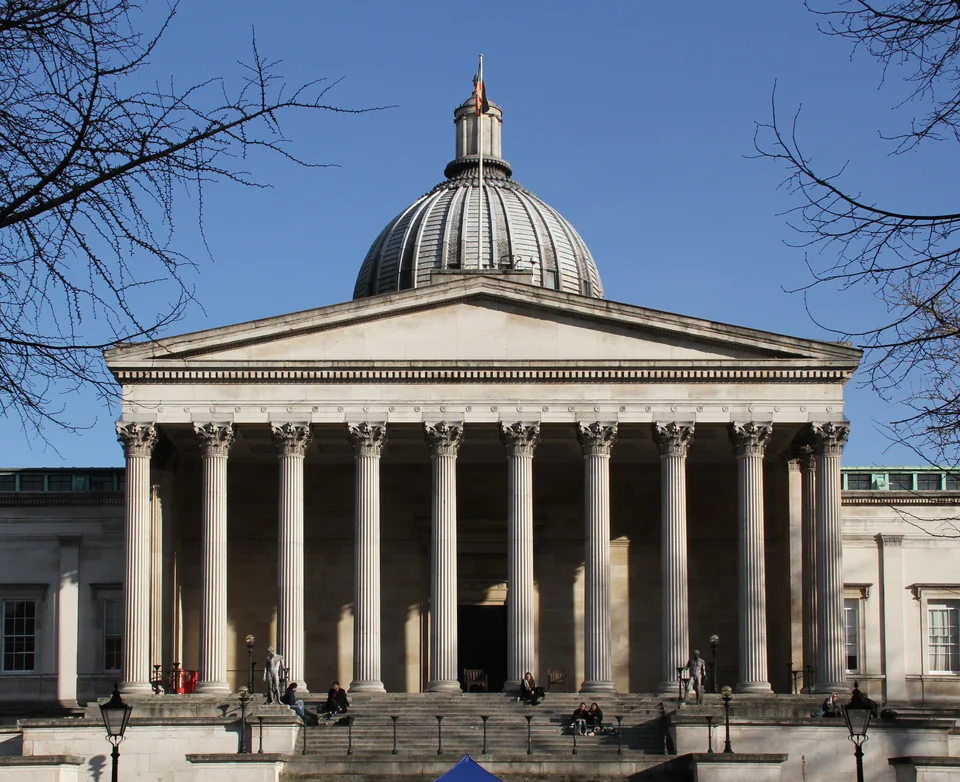
Types of universities in London
| Group | Examples | Best for | Watch out for |
|---|---|---|---|
| Multi-faculty Russell Group universities | UCL, King's College London, Queen Mary | Wide course choice and a strong name | High requirements, especially for economics, law and medicine |
| Leading specialists | Imperial (science, engineering, medicine, business), LSE (economics, social sciences, law) | Students whose interests match the profile | Courses outside the profile simply do not exist; very selective |
| University of London colleges and specialist schools | Birkbeck, City St George's, Royal Holloway, SOAS, Goldsmiths, LSHTM, Royal Veterinary College | Strong departments in specific fields | Varied profiles; some campuses are outside central London |
| Modern (post-1992) universities | Greenwich, Westminster, Kingston, Middlesex, London South Bank, East London, London Metropolitan | Applied courses, placements, lower fees | Lower global rankings but much cheaper |
The University of London is a federation of 17 independent institutions rather than a single university. Members include UCL, King's College London, LSE, Queen Mary, Birkbeck, Brunel, City St George's, Royal Holloway, SOAS, Goldsmiths, London Business School and the Royal Veterinary College; each admits its own students and awards its own degrees. Imperial is not a member. London Business School teaches only postgraduate programmes and MBAs — see MBA in the UK.
Rankings and international share
Positions are from the THE World University Rankings 2026 (published October 2025); student numbers and international share are from the same ranking.
| University | THE 2026 | Students | International |
|---|---|---|---|
| Imperial College London | 8 | 21,340 | 60% |
| UCL | 22 | 47,520 | 63% |
| King's College London | 38 | 34,410 | 52% |
| London School of Economics | 52 | 12,625 | 72% |
| Queen Mary University of London | =134 | 25,135 | 46% |
| City St George's, University of London | 301–350 | 20,905 | 41% |
| Birkbeck, University of London | 301–350 | 7,420 | 43% |
| Brunel University of London | 401–500 | 15,410 | 53% |
| Royal Holloway, University of London | 401–500 | 12,155 | 33% |
| SOAS University of London | 401–500 | 5,395 | 41% |
| Goldsmiths, University of London | 501–600 | 8,195 | 48% |
| Middlesex University | 501–600 | 14,860 | 49% |
| Royal Veterinary College | 501–600 | 2,305 | 40% |
| University of Greenwich | 601–800 | 22,915 | 54% |
| London South Bank University | 601–800 | 14,425 | 40% |
| London Metropolitan University | 601–800 | 12,395 | 64% |
| Kingston University | 801–1000 | 15,980 | 44% |
| University of Westminster | 801–1000 | 19,530 | 51% |
| University of Roehampton | 801–1000 | 11,170 | 61% |
| University of East London | 1001–1200 | 18,135 | 57% |
| University of West London | 1201–1500 | 16,885 | 61% |
| University of the Arts London | 1501+ | 20,785 | 59% |
Some strong specialist institutions get no overall THE position: the London School of Hygiene and Tropical Medicine, London Business School and Trinity Laban appear only as data "reporters". University of the Arts London sits in the 1501+ band even though it is one of the best-known art and design schools in the world — the overall table barely reflects creative subjects. Rankings mostly measure research and reputation; for undergraduates the course, entry requirements, placements and price matter more.
London or another city?
| Factor | London | Other English and Scottish cities |
|---|---|---|
| Internships and employers | Highest concentration in finance, consulting, tech, media | Fewer, but Manchester, Edinburgh, Birmingham and Leeds have large markets |
| Living costs | Highest; higher visa rate | Lower; from 30 November 2026 the visa rate is $485 (£367) a month less |
| University choice | Every type of university in one city | Usually one or two strong universities per city |
| Student life | Campuses blend into the city | More compact campuses and student towns |
Compare with universities in Scotland, the Russell Group and profiles of Manchester, Leeds and Sheffield.
What studying in London costs
Tuition
| University and course | Year | Annual international fee |
|---|---|---|
| University of Greenwich: most bachelor's courses | 2026/27 | $23,762 (£17,975) |
| University of Greenwich: nursing | 2026/27 | $25,646 (£19,400) |
| LSE: all undergraduate programmes | 2027/28 | $40,188 (£30,400) to $55,390 (£41,900), fixed for the course |
| LSE: BSc Economics | 2027/28 | $55,390 (£41,900) |
| Imperial: Economics, Finance and Data Science | 2026/27 | $56,448 (£42,700) |
| Imperial: Computing (BEng) | 2026/27 | $60,149 (£45,500) |
| Imperial: Medicine (MBBS/BSc) | 2026/27 | $77,467 (£58,600) |
Imperial has not yet set 2027 fees (its course pages say "Not set"), so 2026/27 rates are shown as a guide. UCL, King's and Queen Mary publish fees on each course page.
Scholarships. Fully funded places are rare, but partial awards exist. For 2027/28 Imperial offers international undergraduates the Imperial Inspires scholarship — $19,830 (£15,000) a year for the length of the course on participating courses in Engineering, Natural Sciences, Medicine and the Business School; competition is strong. See scholarships in the UK.
Three-year tuition totals: Greenwich about $71,300 (£53,925); LSE $120,600–166,200 (£91,200–125,700); Imperial at 2026/27 rates $169,300–180,500 (£128,100–136,500).
Living costs
- Visa requirement: currently $2,021 (£1,529) a month in London; for applications from 30 November 2026, $2,075 (£1,570) for up to nine months, i.e. $18,679 (£14,130). Elsewhere it is $1,548 (£1,171) now and $1,590 (£1,203) from 30 November 2026.
- Real spending: LSE advises budgeting at least $2,049 (£1,550) a month; rent is the biggest item.
- What counts as London: the City of London and the 32 London boroughs. Some universities with "London" in their name teach outside this area — Royal Holloway's main campus is in Egham, Surrey — so ask the university's visa team which rate it will state for your course before you move money into your account.
Transport and work
Students living in a London borough during term and enrolled at a TfL-registered institution can get an 18+ Student Oyster photocard: 30% off Travelcards and bus and tram season tickets, for a $29 (£22) fee. Undergraduates qualify on a full-time course of at least 14 weeks with 15 or more taught hours a week, Monday to Friday; full-time postgraduates are also eligible. On degree-level courses the Student visa allows up to 20 hours of work a week in term time and full-time work in vacations — see working while studying and the Graduate Route.
Housing
University halls are the easiest first-year option: you sign before arrival, bills are usually included and you live with other first-years. The University of London also runs intercollegiate halls for students of its member institutions. From year two most students move into shared flats; the further out, the lower the rent and the higher the commute. See student housing in the UK. Book halls as soon as you accept an offer, compare commute times and travel zones, and budget for 12 months rather than nine.
How to apply
- After 11th grade you almost always need a foundation year, International Year One, A-levels or the IB. Not every foundation suits every university: Imperial accepts only a few named programmes for Computing, while LSE considers only UK-delivered international foundation programmes and may set its own admissions assessment.
- Undergraduate applications go through UCAS: up to five choices and one personal statement — see applying to UK universities.
- Admissions tests: Imperial uses the TMUA or ESAT for a number of maths, computing and engineering courses and the UCAT for medicine.
- Master's applications go directly to universities; popular courses at UCL, LSE, King's and Imperial close when full, so apply early.
- English: each university, and often each course, sets its own threshold — an overall IELTS Academic (or other accepted test) score plus a minimum in each component. Medicine, law and reading-heavy courses ask for more than technical and applied ones; take exact figures from the course page. See English tests for the UK Student visa.
Timeline for 2027 and 2028 entry
| When | What to do |
|---|---|
| By 15 October 2026, 18:00 UK time | UCAS for medicine, dentistry, veterinary (with UCAT 2026), Oxford and Cambridge |
| October 2026–January 2027 | Master's applications at UCL, LSE, King's, Imperial — early rounds |
| By 13 January 2027 | UCAS for other undergraduate courses |
| February–May 2027 | Decisions, English test, firm and insurance choices; book halls after accepting |
| No earlier than 6 months before the course | Visa: CAS, funds held 28 days ($18,679 / £14,130 living costs in London plus first-year tuition), TB certificate for most CIS nationals |
| September 2027 | Arrival — no earlier than one month before a course longer than six months |
If you finish school in 2027, plan a foundation year in 2027/28 and year one in autumn 2028. See UK Student visa.
Common mistakes
- Choosing by the word "London" in the name. Brunel, Royal Holloway and Kingston are separate universities with their own profiles; Royal Holloway's campus is outside London.
- Budgeting at the visa minimum. LSE recommends at least $2,049 (£1,550) a month.
- Missing the 30 November 2026 increase in required funds.
- Applying to Imperial or LSE outside their profile. Imperial has no law degree, LSE no engineering.
- Booking housing after the visa. Popular halls are often allocated by then.
- Counting on a two-year Graduate visa. From 1 January 2027 it is 18 months.
FAQ
In THE 2026: Imperial (8th), UCL (22nd), King's College London (38th) and LSE (52nd). The strength of your specific course matters more: in art, veterinary science or public health, specialist institutions lead even though they rank low or not at all overall.
Undergraduate fees run from $23,762 (£17,975) a year at Greenwich (2026/27) to $55,390 (£41,900) for LSE economics (2027/28) and over $60,000 on some Imperial courses. Living costs for the visa are $2,021 (£1,529) a month now and $2,075 (£1,570) for applications from 30 November 2026.
Usually not; you need a foundation year, International Year One, A-levels or the IB, or a completed first year at a home university.
A federation of 17 independent institutions, including UCL, King's College London, LSE, Queen Mary, SOAS, Birkbeck and Brunel. Each admits students and awards degrees itself. Imperial is not a member.
The London rate applies to study in the City of London and the 32 boroughs. If your campus is outside, as with Royal Holloway in Egham, ask the university's visa team which rate it will state for your course.
Yes, within limits: on degree-level courses the Student visa allows up to 20 hours a week in term time and full-time work in vacations. London has the most part-time jobs and internships in the UK, but earnings cover part of living costs, not tuition.
Sources
- Times Higher Education — World University Rankings 2026
- University of London — federation
- University of London — intercollegiate halls
- LSE — table of fees 2027/28 (PDF)
- LSE — living costs
- LSE — entry requirements
- Imperial — Economics, Finance and Data Science
- Imperial — Computing (BEng)
- Imperial — Medicine 2027
- Imperial — Imperial Inspires 2027/28
- Imperial — ESAT and TMUA admissions tests
- University of Greenwich — fees 2026/27
- Transport for London — 18+ Student Oyster photocard
- GOV.UK — Student visa: money you need
- GOV.UK — Statement of changes HC 584
- GOV.UK — Immigration Rules Appendix Student
- GOV.UK — Student visa
- UCAS — 2027 entry deadlines
Dollar amounts use the ECB reference rates of 24 September 2026 (€1 = $1.1367 = £0.85986, so £1 ≈ $1.3220), rounded.
See also UK universities for international students and studying in the UK.
During the free initial consultation, we clarify your goal, profile, timing, and budget and identify the next realistic step. Apply
Next steps
- English Tests for the UK Student Visa in 2026: When You Need IELTS for UKVI, Which SELTs Count and Where to Take Them
- MBA in the UK: Top Business Schools, 2026–2027 Fees, Admission Requirements and Visa Rules
- Working While Studying in the UK and the Graduate Route: 20 Hours a Week, Tax, and Two Years or 18 Months After Graduation
- Russell Group Universities: All 24 Members, Rankings, Fees and How International Students Get In
- Studying in the UK for international applicants
- City St George’s, University of London
