
The Russell Group is an association of 24 research-intensive UK universities, from Oxford and Cambridge to Queen's University Belfast. It is not a ranking and not a quality mark for any particular course: it lobbies government on behalf of its members, while each university sets its own admissions rules and fees. Even so, all 11 UK universities in the top 100 of the THE World University Rankings 2026 are members. International undergraduates at member universities pay from $37,378 (£28,275) a year for arts and social sciences at Glasgow to $93,270 (£70,554) for medicine at Cambridge, and applicants with a school certificate from Russia, Kazakhstan or most other CIS countries usually need a preparatory year first.
This guide lists every member with its THE 2026 position and international share, shows published fees for 2026/27 and 2027/28, explains when membership matters and when it does not, and sets out an application timeline for 2027 and 2028 entry.
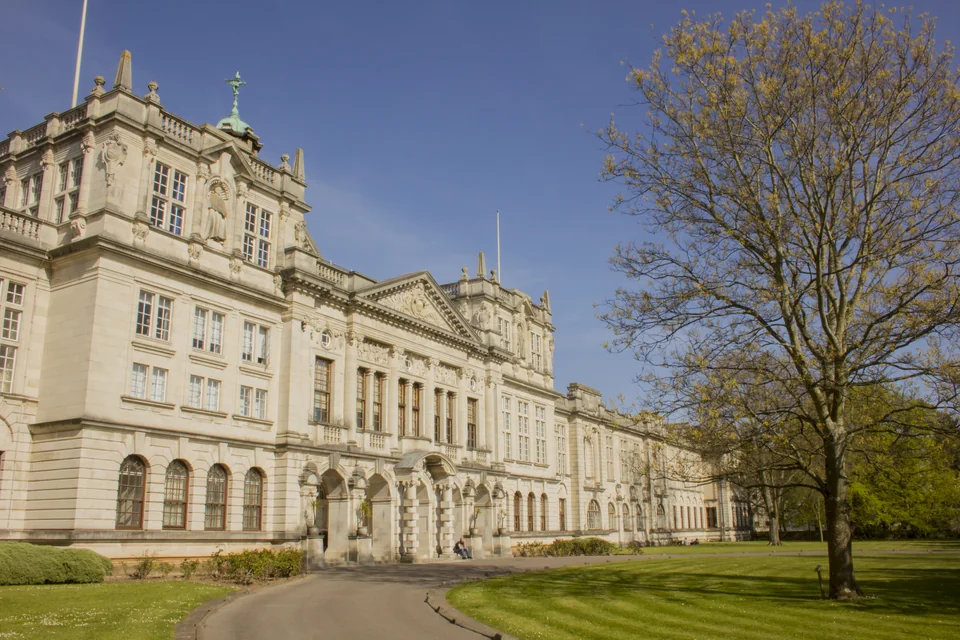
What the Russell Group is — and what it is not
The group started in 1994, when vice-chancellors of large research universities began meeting at the Russell Hotel in London. Its last expansion was in 2012, when Durham, Exeter, Queen Mary University of London and York joined. Membership has been stable at 24 ever since, covering all four nations of the UK.
The association publishes these figures about its members:
| Indicator | Russell Group figure |
|---|---|
| Students across the 24 universities | more than 750,000 |
| New students each year | more than 200,000 from the UK and abroad |
| Working graduates in highly skilled jobs 15 months after graduating | 82% |
| Share of the UK's doctors and dentists trained at member universities | 3 in 4 |
Three things the group does not do:
- It does not admit students. You apply to a specific university through UCAS or directly, and that university decides. Membership plays no role in your application.
- It does not rank or accredit courses. In England, teaching quality is assessed through the regulator's Teaching Excellence Framework (TEF) and the National Student Survey (NSS).
- It does not set fees. International fees differ between members and can double within one university depending on the subject.
The "British Ivy League" label is catchy but imprecise. The Ivy League is an athletic conference of eight private US universities; the Russell Group is an advocacy body for public research universities. What they share is strong recognition among employers. For the US comparison, see our guide to Ivy League admissions.
All 24 Russell Group universities with THE 2026 rankings
Positions and student statistics come from the THE World University Rankings 2026, published in October 2025 and still the latest edition. "International" is the share of students from outside the UK as reported in the same ranking.
| University | Location | THE 2026 | Students | International |
|---|---|---|---|---|
| University of Oxford | Oxford, England | 1 | 22,005 | 43% |
| University of Cambridge | Cambridge, England | =3 | 21,045 | 38% |
| Imperial College London | London | 8 | 21,340 | 60% |
| UCL | London | 22 | 47,520 | 63% |
| University of Edinburgh | Edinburgh, Scotland | 29 | 35,350 | 49% |
| King's College London | London | 38 | 34,410 | 52% |
| London School of Economics (LSE) | London | 52 | 12,625 | 72% |
| University of Manchester | Manchester, England | 56 | 43,470 | 46% |
| University of Bristol | Bristol, England | =80 | 29,680 | 35% |
| University of Glasgow | Glasgow, Scotland | 84 | 34,075 | 45% |
| University of Birmingham | Birmingham, England | =98 | 34,145 | 35% |
| University of Sheffield | Sheffield, England | =108 | 29,305 | 41% |
| University of Leeds | Leeds, England | 118 | 35,600 | 39% |
| University of Warwick | Coventry, England | =122 | 26,515 | 44% |
| University of Southampton | Southampton, England | 129 | 24,355 | 46% |
| Queen Mary University of London | London | =134 | 25,135 | 46% |
| University of Liverpool | Liverpool, England | 143 | 26,770 | 33% |
| Newcastle University | Newcastle, England | 144 | 26,400 | 28% |
| University of Nottingham | Nottingham, England | =145 | 35,470 | 28% |
| University of York | York, England | =154 | 20,330 | 29% |
| University of Exeter | Exeter, England | =170 | 29,280 | 29% |
| Durham University | Durham, England | 175 | 21,470 | 34% |
| Queen's University Belfast | Belfast, Northern Ireland | =198 | 21,900 | 49% |
| Cardiff University | Cardiff, Wales | 201–250 | 27,880 | 24% |
What the table tells you:
- The spread inside the group is wide. More than 200 places separate the top and bottom members. Durham and Exeter sit below St Andrews, which is not a member, and Lancaster (=184) is only a few places behind them.
- Five members are in London, two in Scotland and one each in Wales and Northern Ireland; the other 15 are in English cities where living costs are lower than in the capital. See our guides to universities in London and universities in Scotland.
- International intake varies. Students from outside the UK are the majority at LSE and UCL but under a third at Cardiff, Newcastle and Nottingham.
If you see a different position quoted for the same university, it is probably from QS. QS leans more heavily on academic and employer reputation surveys, while THE weights research and teaching indicators, so one university can sit dozens of places apart in the two tables. Check any figure against the ranking's official page and note which edition it comes from.
How much Russell Group universities cost
There is no group-wide tariff. Each university sorts courses into fee bands: laboratory subjects cost more than classroom subjects, and clinical medicine costs most. These are fees the universities themselves have published for international students.
| University and course | Year | Annual international fee |
|---|---|---|
| Glasgow: arts and social sciences | 2027/28 | $37,378 (£28,275) |
| Glasgow: science, engineering and medical-veterinary-life sciences | 2027/28 | $44,561 (£33,708) |
| Glasgow: veterinary medicine (BVMS) | 2027/28 | $51,120 (£38,670) |
| LSE: all undergraduate programmes | 2027/28 | $40,188 (£30,400) to $55,390 (£41,900) |
| Imperial: Economics, Finance and Data Science | 2026/27 | $56,448 (£42,700) |
| Imperial: Computing (BEng) | 2026/27 | $60,149 (£45,500) |
| Cambridge: humanities and social sciences / STEM / medicine and veterinary | 2027/28 | $40,715 (£30,798) / $61,965 (£46,872) / $93,270 (£70,554) plus a college fee |
| Edinburgh: medicine (MBChB, 6 years) | 2027/28 | $78,921 (£59,700) |
Reading these figures:
- Fixed or rising. LSE, Edinburgh and Cambridge fix the international fee from the year you start; elsewhere it may rise each year under the university's fee policy.
- Imperial has not yet set 2027 fees (its course pages say "Not set"), so the table shows 2026/27 rates as a guide. Budget for a possible increase.
- Cambridge charges international students an annual college fee on top of tuition; the amount depends on the college.
- Living costs come on top. For the Student visa you must show up to nine months of funds: $2,021 (£1,529) a month in London and $1,548 (£1,171) elsewhere for applications up to 29 November 2026, then $2,075 (£1,570) and $1,590 (£1,203) from 30 November 2026. LSE itself advises budgeting at least $2,049 (£1,550) a month.
For comparison, the University of Greenwich in London charges international undergraduates $23,762–25,646 (£17,975–19,400) a year in 2026/27. Over three years, the gap on the same subject can exceed the cost of a master's year. Our cost of studying in the UK guide breaks down a full budget.
Scholarships exist but are targeted. Glasgow's World Changers Global Excellence award cuts international fees by $9,254 (£7,000) a year in arts and social sciences and $13,220 (£10,000) in science, engineering and medical subjects, subject to progress. Imperial's Imperial Inspires scholarship is worth $19,830 (£15,000) a year for the whole course. Both are competitive and set by the university. More options: scholarships in the UK.
Russell Group or a strong non-member?
Membership signals research volume, not the quality of a particular undergraduate course. Several non-members outrank some members overall or in specific subjects.
| Non-member | THE 2026 | Why consider it |
|---|---|---|
| University of St Andrews | =162 | Scotland's oldest university, ranked above Durham and Exeter |
| Lancaster University | =184 | Collegiate campus university |
| University of Leicester | =192 | Strong medicine and sciences |
| Bath, Surrey, Sussex, Reading | 201–300 | Strong applied and business courses, often cheaper than members |
When membership matters:
- Investment banking, strategy consulting and large law firms traditionally concentrate campus recruitment on a limited set of universities, dominated by members.
- Research careers and PhDs — more research groups, labs and funded doctoral places.
- Recognition abroad, if you plan to work outside the UK.
When it hardly matters:
- Applied professions and courses with a placement year, where department–industry links count more.
- Tight budgets, where fee and living-cost differences outweigh brand value.
- Staying on after graduation: the Graduate Route is the same for every licensed sponsor.
Compare courses, not logos: entry requirements, modules, placement options, NSS results and graduate outcomes for that subject.
How to apply from Russia, Kazakhstan and other CIS countries
Undergraduate
A Russian or Kazakh school certificate after 11 years does not usually give direct entry to year one; UK pupils study a year longer and take A-levels. Typical routes:
| Route | Length | Best for | Watch out for |
|---|---|---|---|
| International foundation year | 1 year | 11th-grade graduates | Not every foundation is accepted by every university — check the accepted list |
| International Year One | 1 year in place of year one | Students ready for first-year workload | Usually leads to year two at non-members or less selective members |
| A-levels or IB | 2 years | Those starting after grade 9–10 or aiming at the most selective universities | The safest route for Oxbridge, Imperial, LSE and medicine |
| A year at a home university | 1 year | Current university students | Some members accept the school certificate plus a strong first year |
Imperial, for example, accepts only a handful of named preparatory programmes for Computing, such as UCL's UPCSE. LSE considers only international foundation programmes delivered by UK institutions, not every one suits every degree, and it may ask foundation or university-year applicants to sit its admissions assessment. See foundation year in the UK and applying to UK universities.
Applications go through UCAS: up to five choices and one personal statement. You cannot apply to both Oxford and Cambridge in the same undergraduate cycle — see Oxbridge admissions.
Master's
No extra year is needed: you apply directly with a bachelor's degree. Most members publish country-specific grade conversions for Russia, Kazakhstan and other countries, and the required average can differ noticeably between members, so read the page for your own country. Many programmes fill on a rolling basis, so early applications have more choice. For an overview of the country, see our UK study guide.
English
Each university, and often each course, sets its own English threshold: an overall IELTS Academic (or other accepted test) score plus a minimum in each of the four components. Medicine, law and text-heavy courses ask for more — Sheffield medicine, for example, requires IELTS 7.5 with at least 7.0 in each component. Take the exact figures from the course page, not from general overviews. See English tests for the UK Student visa.
Timeline for 2027 and 2028 entry
This table was compiled on 24 September 2026: for autumn 2027 entry, the first deadline is three weeks away.
| When | What to do |
|---|---|
| By 15 October 2026, 18:00 UK time | UCAS deadline for Oxford, Cambridge, medicine, dentistry and veterinary courses. For 2027 medicine you must have sat the UCAT: the last test day was 24 September 2026 |
| October–December 2026 | Complete other UCAS applications; apply to master's courses in early rounds |
| By 13 January 2027, 18:00 UK time | Equal-consideration deadline for most undergraduate courses |
| January–May 2027 | Decisions, firm and insurance choices, English test if still needed |
| Spring–summer 2027 | Meet offer conditions, receive your CAS, apply for the visa no earlier than six months before the course starts |
| Summer 2027 | No offers? UCAS Extra (from 25 February 2027) and Clearing (from 2 July 2027) — few places at the most selective universities |
If you finish school in 2027, the realistic path is a foundation year in 2027/28 and year one in autumn 2028. For 2028 medicine, you will sit the UCAT in summer 2027.
Common mistakes
- Treating membership as a guarantee of course quality. Durham and Exeter rank below non-member St Andrews in THE 2026.
- Filling all five UCAS choices with equally selective members. Include at least one choice with requirements below your predicted results.
- Not checking whether your foundation is accepted. A year on the wrong programme will not open the door.
- Comparing annual fees without course length. Scottish degrees usually take four years, English ones three.
- Ignoring the new visa funds rule. For applications from 30 November 2026 you must show $18,679 (£14,130) for nine months in London and $14,313 (£10,827) elsewhere, up from £13,761 and £10,539 — see UK Student visa.
- Counting on a two-year Graduate visa. Applications from 1 January 2027 get 18 months (three years for PhD graduates); everyone starting in 2027 falls under the new rule.
FAQ
Twenty-four: Birmingham, Bristol, Cambridge, Cardiff, Durham, Edinburgh, Exeter, Glasgow, Imperial, King's College London, Leeds, Liverpool, LSE, Manchester, Newcastle, Nottingham, Oxford, Queen Mary, Queen's University Belfast, Sheffield, Southampton, UCL, Warwick and York. The list has not changed since 2012.
Only loosely. Both are well known to employers, but the Ivy League is an athletic conference of eight private US universities, whereas the Russell Group is an association of 24 public research universities. It has no say over admissions or fees.
Among members that have published 2027/28 fees, the lowest in our sample is Glasgow's arts and social sciences band at $37,378 (£28,275) a year. Scottish degrees usually last four years, so compare the full course cost.
Usually not. You need a foundation year, International Year One, A-levels or IB, or a year at a university at home. Some members, such as LSE, consider a successfully completed first year at university or at least five AP subjects instead of a foundation year; this is stated in their country requirements.
No, but it ranks =162 in THE 2026, above members Exeter, Durham, Cardiff and Queen's Belfast.
No. The Graduate Route is identical for all licensed sponsors: two years if you apply by 31 December 2026 and 18 months if you apply from 1 January 2027.
On each university's international or country page and on the course page itself. The Russell Group runs Informed Choices, a guide for UK pupils choosing A-level subjects, but for an applicant from abroad the deciding document is the university's requirement for your country and qualification.
Sources
- Russell Group — our universities
- Russell Group — for students and key figures
- BBC News — four universities join the Russell Group (2012)
- Times Higher Education — World University Rankings 2026
- University of Glasgow — international fees 2026/27 and 2027/28
- LSE — table of fees 2027/28 (PDF)
- LSE — undergraduate entry requirements
- Imperial — Economics, Finance and Data Science
- Imperial — Computing (BEng)
- University of Cambridge — international fees 2027
- University of Edinburgh — medicine fees 2027/28
- University of Greenwich — fees 2026/27
- UCAS — 2027 entry deadlines
- GOV.UK — Student visa and Graduate visa
- GOV.UK — Student visa: money you need
- University of Edinburgh — fixed fees for international students by year of entry
- University of Sheffield — Medicine MBChB English requirements
- GOV.UK — Statement of changes HC 584 (new funds levels from 30 November 2026)
Dollar amounts use the ECB reference rates of 24 September 2026 (€1 = $1.1367 = £0.85986, so £1 ≈ $1.3220), rounded.
During the free initial consultation, we clarify your goal, profile, timing, and budget and identify the next realistic step. Apply
Next steps
- Foundation Year in the UK: Types, Entry Requirements, Costs and Progression
- English Tests for the UK Student Visa in 2026: When You Need IELTS for UKVI, Which SELTs Count and Where to Take Them
- Applying to UK Universities for 2027: A Step-by-Step Plan for International Students
- Scholarships in the UK in 2026: Chevening, Gates Cambridge, Clarendon and University Awards — What Applicants from Russia, Kazakhstan and Central Asia Can Get
- Ivy League Admissions for International Students: The Eight Universities, Admit Rates, Costs and How to Apply for Fall 2027
- Lancaster University
