
From a Russian school, the route into Imperial College London runs through A-levels, the IB or an approved foundation programme: the Russian Attestat is not on Imperial's list of accepted qualifications, and Imperial has no foundation year of its own. Undergraduates apply through UCAS by 15 October 2026 for Medicine and by 13 January 2027 (6pm UK time) for all other courses. Most courses require the ESAT or TMUA, which has two windows for 2027 entry, in October and January. As of 24 September 2026, overseas fees for 2027 entry had not been set; students who started in 2026 pay $56,450–77,470 (£42,700–58,600) a year. Imperial teaches only science, engineering, medicine and business, and it is joint 2nd in the QS World University Rankings 2027.
| At a glance | Details |
|---|---|
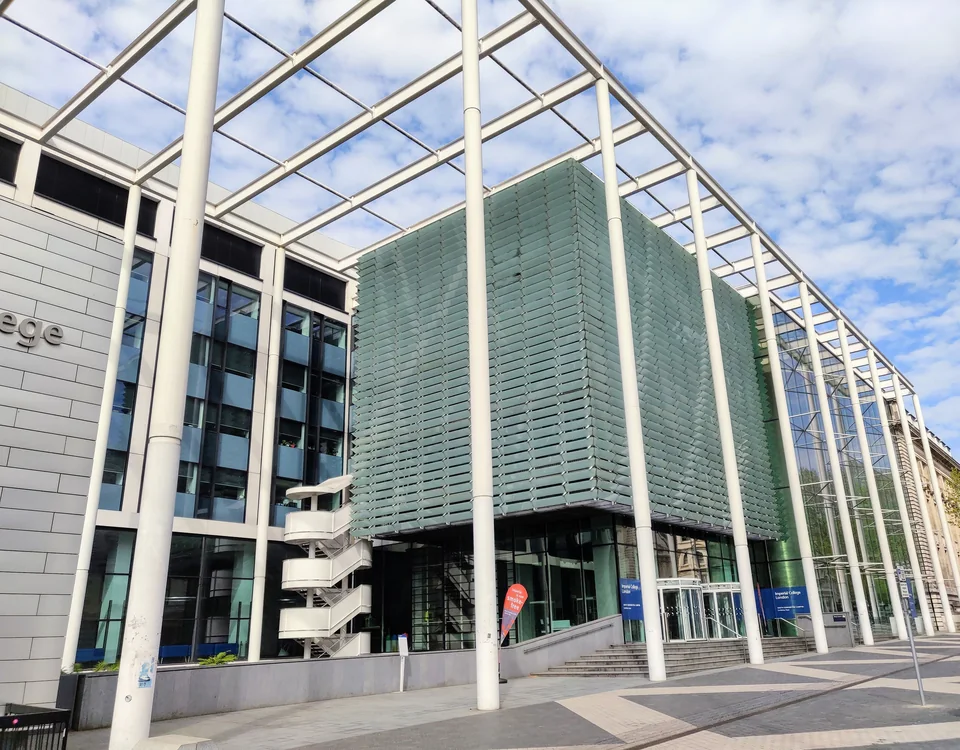
| Location and campuses | London: main campus in South Kensington, White City research campus, medical campuses at partner hospitals |
| Rankings | QS 2027: =2nd; THE 2026: 8th; ARWU 2026: 29th |
| Faculties | Engineering, Natural Sciences, Medicine, Imperial Business School |
| UCAS deadlines for 2027 entry | Medicine 15 October 2026; all other courses 13 January 2027 |
| Tests | ESAT or TMUA (two sittings: October 2026 and January 2027); UCAT for Medicine |
| English | standard level IELTS 6.5 (no element below 6.0); higher level 7.0 (no element below 6.5); Duolingo and IELTS Online accepted |
| Overseas fees | 2027 entry not yet set; 2026 entry $56,560 (£42,700), $60,270 (£45,500) or $77,630 (£58,600) (Medicine) |
| International scholarship | Imperial Inspires: at least 300 awards of $19,830 (£15,000) a year for 2027 entry |
| Housing | first-year undergraduates who apply on time are offered a hall place; 2026/27 rents $200–565 (£150–425) a week |
| Living in London | $21,670–22,530 (£16,392–17,042) for nine months at an average spending level, Imperial's 2026 estimate |
What you can study
Programmes sit in four faculties:
- Engineering: aeronautics, bioengineering, chemical, civil and environmental, electrical and electronic, mechanical engineering, materials, earth science and engineering, computing, and the Dyson School of Design Engineering;
- Natural Sciences: chemistry, life sciences, mathematics, physics;
- Medicine: the six-year MBBS, Medical Biosciences and graduate-entry medicine;
- Imperial Business School: an undergraduate degree in economics, finance and data science, plus master's programmes and the MBA.
Bachelor's degrees take three years (BSc, BEng) or four with an integrated master's (MSci, MEng); some add a year in industry or abroad. Most taught master's last a year and PhDs three to four years.
Is Imperial right for you? The case for and against
| In its favour | Worth weighing |
|---|---|
| A focused STEM, medicine and business university where you choose your course from day one | No humanities and few social science programmes |
| At least 300 international scholarships of $19,870 (£15,000) a year for 2027 entry | Overseas fees rise each year of study, capped at CPI inflation |
| Two sittings for ESAT and TMUA, including January | The Russian Attestat is not accepted, and Imperial has no foundation programme of its own |
| Duolingo and IELTS Online accepted | London is the most expensive UK city to live in |
| Central London campus next to the South Kensington museums | Halls are guaranteed only in the first year; most students rent privately afterwards |
Imperial is a strong choice if you have settled on engineering, physics, computing, mathematics, chemistry, life sciences, medicine or maths-heavy economics and want an intensive scientific environment. If you have not chosen a field yet or want to combine technical and humanities subjects, compare it with other London universities in our guide to universities in London. The study in the UK page gives the national overview.
Entry from a Russian or Kazakh school
The Russian Attestat is not among the school qualifications Imperial accepts for undergraduate entry. Imperial's page for applicants from Russia and Central Asia says that if your qualification is not listed, you may be considered after an accepted foundation programme or an accepted qualification from an external provider. Imperial does not run its own foundation year.
Practical routes:
- A-levels. The minimum for Economics, Finance and Data Science is A*AA with an A* in Mathematics; the typical offer is A*AA or A*A*A. Engineering and physics courses ask for similar levels, usually with Mathematics and Physics.
- The IB. For the same course, 39 points with 7 in Higher Level Mathematics and 6, 6 in two other Higher Level subjects.
- An approved foundation programme. For the Business School's undergraduate degree, Imperial accepts UCL's Undergraduate Preparatory Certificate for Science and Engineering (at least 80% overall, in Mathematics and in two other subjects) and the University of Warwick's International Foundation Programme in Science and Engineering. Other departments set their own list and grades on each course page.
Applicants from Kazakhstan should check whether their qualification appears on Imperial's accepted list; if not, the same A-level, IB or approved foundation routes apply. Our guide to the Foundation year in the UK explains how to choose a programme.
Deadlines, tests and interviews for 2027 entry
When to apply
| What | Deadline |
|---|---|
| UCAS submissions open | 1 September 2026 |
| MBBS Medicine and Graduate Entry Medicine | 15 October 2026, 6pm |
| All other courses (equal consideration date) | 13 January 2027, 6pm |
| Imperial's UCAS institution code | I50 |
Applications received after 13 January are considered only if places remain on the course. See our guide to applying to UK universities for UCAS and the personal statement.
Admissions tests
| Department | Test |
|---|---|
| Aeronautics, Chemical, Civil and Environmental, Electrical and Electronic, Mechanical Engineering, Dyson School, Physics, Life Sciences | ESAT |
| Computing (including joint Mathematics and Computing), Mathematics, Business School undergraduate degree | TMUA |
| MBBS Medicine | UCAT |
| Graduate Entry Medicine | GAMSAT or UCAT |
| Bioengineering, Chemistry, Materials, Earth Science and Engineering, Medical Biosciences | no test |
ESAT and TMUA have two sittings for 2027 entry:
- window 1: booking 20 July to 28 September 2026, test 12–16 October 2026;
- window 2: booking 26 October to 21 December 2026, test 4–8 January 2027.
UCAT testing for 2027 entry ran from 13 July to 24 September 2026. Imperial stresses that a high score does not guarantee an offer and a low score does not mean automatic rejection: the test is weighed alongside grades and the personal statement.
All dates in this section apply to 2027 entry. If the January window is out of reach, plan for 2028 entry: the structure stays the same, and Imperial publishes the new dates on its deadlines page.
Interviews
Most departments interview applicants who look strong on their UCAS application and admissions test. The department emails you at the address on your UCAS form and says whether you can attend online. Formats vary: a panel with one or two staff members, or a recruitment day with a group task, discussion or written test. Medicine uses Multiple Mini Interviews.
Action plan
| Period | Step |
|---|---|
| By summer 2026 | Choose a course; check A-level, IB or foundation and English requirements |
| July – September 2026 | Medicine: sit UCAT. ESAT/TMUA courses: choose a sitting |
| By 15 October 2026 | Submit UCAS for Medicine |
| 12–16 October 2026 or 4–8 January 2027 | Take ESAT or TMUA |
| September 2026 – January 2027 | Answer the Imperial Inspires essay if invited |
| By 13 January 2027 | Submit UCAS for all other courses |
| Spring – summer 2027 | Meet offer conditions, apply for halls before the guarantee deadline, obtain the CAS |
English: standard and higher levels
Each course states which level it requires. Main tests:
| Test | Standard level | Higher level |
|---|---|---|
| IELTS Academic (test centre, UKVI or Online) | 6.5, no element below 6.0 | 7.0, no element below 6.5 |
| Duolingo English Test | 115, no subscore below 105 | 125, no subscore below 115 |
| LanguageCert Academic | 70, no element below 65 | 75, no element below 70 |
Scores must be no more than two years old at the course start date. Imperial does not accept IELTS One Skill Retakes; you need the scores from a single sitting. You can apply without a result, which then becomes an offer condition. Accepting Duolingo and IELTS Online makes things easier for applicants far from a test centre; see English tests for a UK student visa.
Fees
As of 24 September 2026, overseas fees for 2027 entry are listed as "Not set" on course pages. The 2026 entry rates are the best guide:
| Courses, 2026 entry | Overseas fee, first year |
|---|---|
| Mathematics; Business School undergraduate degree | $56,450 (£42,700) |
| Engineering, Physics, Chemistry, Life Sciences | $60,150 (£45,500) |
| MBBS Medicine | $77,470 (£58,600) |
For continuing students, the overseas fee rises each year by no more than average CPI inflation. Some courses also involve extra costs such as field trips, books and protective clothing; each department publishes a list.
A first year at $60,270 (£45,500) with average living costs comes to about $82,680 (£62,542); for Medicine, about $100,000 (£75,642). Flights, the visa and the health surcharge are extra.
Housing and living in London
Imperial offers a place in halls to all first-year undergraduates who meet its conditions, above all applying for accommodation on time (by 17 July for 2026 entry). A specific room type is not guaranteed. Hall rents in 2026/27 range from $200 to $565 (£150–£425) a week depending on room and building. From the second year most students rent privately; see student housing in the UK.
Imperial's 2026 estimate for one student:
| Spending level | Per month | For nine months |
|---|---|---|
| Lower | $1,670 (£1,264) | $15,040 (£11,375) |
| Average | $2,410–2,500 (£1,821–1,893) | $21,670–22,530 (£16,392–17,042) |
| Upper | $2,800 (£2,118) | $25,190 (£19,055) |
Imperial suggests setting aside up to $1,980 (£1,500) for first-year start-up costs such as housing deposits and flights. For the visa you must show $2,080 (£1,570) a month for nine months, the London rate for applications from 30 November 2026: $18,680 (£14,130).
Scholarships for international students
- Imperial Inspires. For 2027 entry Imperial is offering at least 300 scholarships of $19,830 (£15,000) a year for the whole course to international students paying the Overseas fee. Full-time undergraduate courses and selected taught master's in all four faculties are eligible. You apply for your course through UCAS or My Imperial; if your course offers the scholarship and you meet the minimum requirements, you are invited to answer an extra essay question.
- President's PhD Scholarships fund doctoral study; Imperial lists them among awards open to applicants from Russia and Central Asia.
- Chevening funds one-year master's degrees on behalf of the UK government. For 2027/28, Russian citizens could apply only if they lived outside Russia; this cycle closes on 6 October 2026, and the next one is announced on chevening.org.
Imperial or the relevant funder decides on scholarships. Other options are listed in our guide to scholarships in the UK.
Master's degrees and PhDs
Taught master's applications go directly to Imperial, not through UCAS. Departments run application rounds with fixed closing dates, and earlier rounds have more places. Imperial advises visa applicants to apply by 18 June of the start year at the latest, though many courses close sooner. For example, the MSc Computing for 2027 entry has rounds closing on 6 January, 10 March and 28 April 2027, requires a first-class degree in a subject without substantial computing content, and cost international students $60,810 (£46,000) in 2026/27.
For 2027/28 the application fee is $120 (£90) per master's application, rising to $170 (£125) for Business School MSc programmes and $200 (£150) for the MBA; a waiver can be requested in cases of financial hardship. For Russian degrees, Imperial expects a four-year Bakalavr or five-year Specialist Diploma with an average of 4.5/5 or better; for a PhD, a Magistr with at least 4/5, with 4.5 preferred. The thresholds for Kazakhstan are the same, or 3.6/4 on a four-point scale. Most programmes do not require the GRE or GMAT.
Visa and post-study work
With Imperial's CAS you apply for the Student visa. You pay a visa fee of $740 (£558) and the Immigration Health Surcharge of $1,030 (£776) per year. You must hold the unpaid part of first-year fees plus $18,720 (£14,130) for living in London (the rate from 30 November 2026) for 28 consecutive days. If you live in Russia or Kazakhstan, you also need a TB test certificate. Decisions on applications from outside the UK usually take about three weeks, and UK Visas and Immigration makes them.
After graduating you can apply for the Graduate visa: 18 months for applications made from 1 January 2027 and three years for doctoral graduates. See the UK Student visa and working while studying and the Graduate Route.
What matters for applicants from Russia and the CIS
Advantages:
- The January ESAT/TMUA sitting and the January UCAS deadline give more time than Oxford or Cambridge.
- Duolingo and IELTS Online are accepted, so you do not need to travel to a test centre.
- Imperial has a Russian-speaking student society.
- Imperial Inspires is open to all international students regardless of nationality.
Challenges:
- The Russian Attestat is not accepted, and Imperial has no foundation programme of its own.
- London is expensive: even the lower budget is $1,670 a month.
- Fees and deposits cannot be paid with Russian cards; see how to pay for studies abroad from Russia.
- The 2027 fee is announced late, so budget for an increase.
Common mistakes
- Waiting until January to apply for Medicine. The MBBS deadline is 15 October.
- Missing test booking. For 2027 entry, booking for the October ESAT/TMUA sitting closes on 28 September 2026 and for January on 21 December. If you miss the first window, book the second as soon as it opens on 26 October.
- Combining IELTS scores from different sittings. One Skill Retakes are not accepted.
- Counting on halls after the first year. The guarantee applies only to first-year students.
- Picking a foundation programme at random. Imperial accepts only the programmes listed on each course page.
Rankings
| Ranking | Position |
|---|---|
| QS World University Rankings 2027 | =2 |
| THE World University Rankings 2026 | 8 |
| ARWU 2026 | 29 |
The spread reflects methodology: QS gives more weight to reputation and international mix, while ARWU counts Nobel laureates and papers in a narrow set of journals. Compare Imperial with Oxford, Cambridge and the University of Edinburgh.
FAQ
Can I apply to Imperial straight after school in Russia?
Not with the Attestat alone. You need A-levels, the IB or an approved foundation programme such as UCL's UPCSE or Warwick's IFP where the course page lists them.
What are the 2027 deadlines?
Medicine by 15 October 2026 and all other courses by 13 January 2027, 6pm UK time. ESAT and TMUA can be taken in October or January.
How much does Imperial cost?
Fees for 2027 entry have not yet been set. Students starting in 2026 paid $56,450–60,150 (£42,700–45,500) a year, and $77,470 (£58,600) for Medicine. Average living costs in London come to about $21,670–22,530 for nine months.
What IELTS score does Imperial require?
Standard-level courses ask for 6.5 with at least 6.0 in each element, higher-level courses 7.0 with at least 6.5. The Duolingo English Test is accepted instead, at 115 or 125.
Does Imperial offer undergraduate scholarships to international students?
Yes. Imperial Inspires offers at least 300 scholarships of $19,870 (£15,000) a year for the whole course for 2027 entry. An invitation to write the scholarship essay follows your course application.
Can I count on a place in halls?
Yes for first-year undergraduates who meet the conditions, including applying for halls on time. A specific hall or room type is not guaranteed.
Does StudyU help with Imperial applications?
Under a service agreement we help you choose a course and an A-level, IB or foundation route, plan ESAT or TMUA, and prepare your personal statement, scholarship application and visa documents. Imperial decides on admission and scholarships; UK Visas and Immigration decides on visas.
Sources
- Imperial: Deadlines (UCAS and tests for 2027 entry)
- Imperial: Admissions tests, Interviews
- Imperial: Russia and Central Asia
- Imperial: Economics, Finance and Data Science BSc, 2027 entry
- Imperial: Undergraduate tuition fees 2026-27 by faculty
- Imperial: English language requirements
- Imperial: Living costs
- Imperial: Accommodation guarantee and 2026-27 hall comparison
- Imperial Inspires scholarships
- Imperial: Postgraduate application fee, Dates and deadlines, Accepted qualifications, MSc Computing
- Chevening: Russia
- GOV.UK: Student visa money, Immigration Health Surcharge, TB test countries, Graduate visa
- QS: Imperial College London, THE: Imperial College London, ARWU 2026
Dollar amounts are converted at the ECB reference rate of 29 September 2026 (£1 = $1.3247) and rounded to the nearest $10.
If you want to know whether you can make the January ESAT or TMUA sitting and which Imperial courses fit your profile, send us a request.
During the free initial consultation, we clarify your goal, profile, timing, and budget and identify the next realistic step.
Next steps
- Foundation Year in the UK: Types, Entry Requirements, Costs and Progression
- English Tests for the UK Student Visa in 2026: When You Need IELTS for UKVI, Which SELTs Count and Where to Take Them
- Working While Studying in the UK and the Graduate Route: 20 Hours a Week, Tax, and Two Years or 18 Months After Graduation
- Scholarships in the UK in 2026: Chevening, Gates Cambridge, Clarendon and University Awards — What Applicants from Russia, Kazakhstan and Central Asia Can Get
- How to Pay for Studies Abroad from Russia: What Works in 2026
- Studying in the UK for international applicants
