
For a first-year international student the simplest start is university halls: a contract for the academic year, heating, electricity and internet included, and no UK guarantor or credit history needed. For 2026/27 that means, for example, $170–315 (£129.92–239.40) a week in Glasgow and $645–1,400 (£487–1,060) a month in the University of Manchester's self-catered halls; in London, Imperial estimates college accommodation at about $330 (£250) a week. Private purpose-built student accommodation (PBSA) and rooms in shared houses come next — and since 1 May 2026 private renting in England has new rules: no fixed terms, no rent before the agreement is signed, and deposits capped at five weeks' rent.
Figures were checked on university websites and GOV.UK on 24 September 2026; dollars use the ECB cross rate of 29 September 2026, £1 ≈ $1.325. For an overview see studying in the UK.
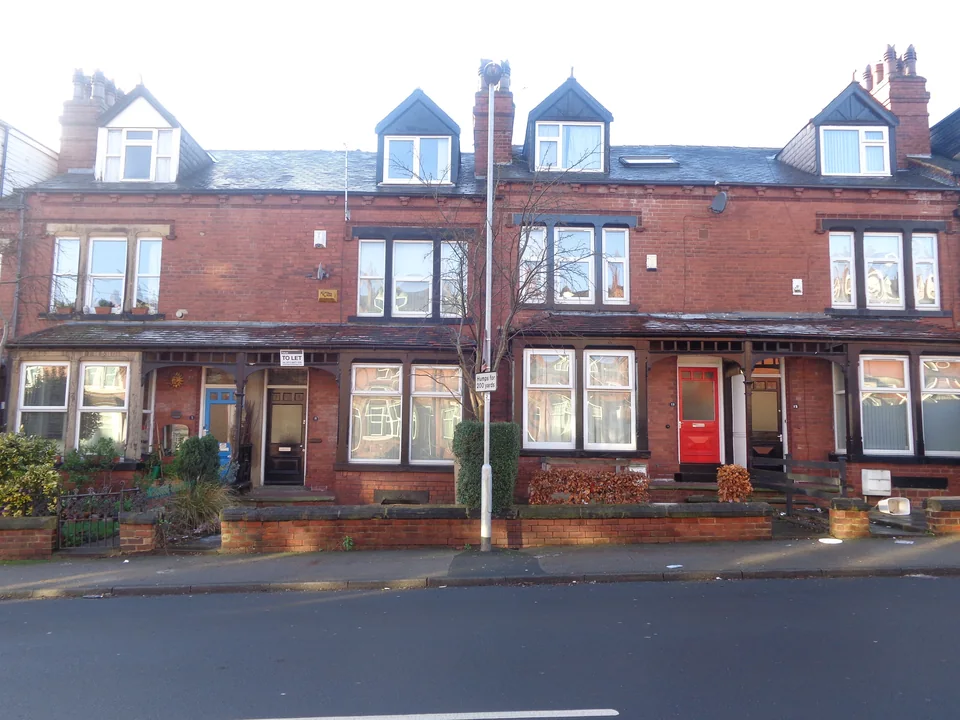
Three types of housing
| University halls | Private halls (PBSA) | Room in a shared house or flat | |
|---|---|---|---|
| Landlord | University | Private company | Private landlord or agent |
| Contract length | Academic year: Manchester 41–42 weeks for undergraduates, 50–51 for postgraduates; Glasgow 11 September to 11 June | Usually 44–51 weeks | Rolling monthly tenancy (England, from 1 May 2026) |
| Included | Heating, electricity, water, Wi-Fi, often contents insurance | Usually all bills | Usually rent only |
| Legal form | Licence or common law tenancy | Licence or common law tenancy if the operator has signed the National Code; otherwise an ordinary tenancy | Assured periodic tenancy (APT) |
| Guarantor | Usually not needed | Often a UK guarantor or advance payment | Often a UK guarantor |
| Best for | First year, master's students | Master's students, those without a halls place | Second year onwards |
In halls you normally pay for the whole academic year and cannot simply leave early. In a private APT in England you can leave on two months' notice, but bills and day-to-day issues are yours.
University prices for 2026/27
University of Glasgow (11 September 2026 – 11 June 2027 unless stated; seven instalments October–April):
| Residence and room | Per week | Per contract |
|---|---|---|
| Cairncross House, shared room | $170 (£129.92) | $6,710 (£5,066.88) |
| Cairncross House, single | $225 (£168) | $8,680 (£6,552) |
| Dumfries, single en-suite | $230 (£175) | $9,040 (£6,825) |
| Havannah House, en-suite, 51 weeks | $240–250 (£183.05–187.81) | $12,370–12,690 (£9,335.55–9,578.31) |
| Havannah House, studio, 51 weeks | $300–315 (£227.50–239.40) | $15,370–16,170 (£11,602.50–12,209.40) |
University of Manchester (per month): self-catered halls $645–1,400 (£487–1,060), postgraduate studios up to $1,660 (£1,255); catered $735–1,300 (£555–982); private halls with bills $1,140–1,340 (£860–1,010); shared houses $855–940 (£645–710). A year in self-catered university halls costs $6,430–16,020 (£4,853–12,096).
Imperial College London: college-run accommodation averages $330 (£250) a week ($1,440 (£1,084) a month); private sector $355 (£267) a week.
Compare the contract total, not the weekly rate. A master's student may prefer a 51-week contract because the dissertation runs through the summer. Full budgets are in cost of studying in the UK.
When and how to book
- As soon as you have accepted your offer, open the university's accommodation pages — many only accept halls applications after acceptance.
- Check whether the university offers every first-year a room and by what date you must apply to qualify; policies differ by university.
- Rank residences by contract total and journey time.
- If halls are full, ask which private halls the university works with and whether they have signed the National Code.
- Rooms in shared houses for the second year are usually arranged midway through the first year.
A deposit paid to the university for university-arranged housing reduces the visa funds requirement by up to $2,030 (£1,529) ($2,080 (£1,570) for visa applications from 30 November 2026) — check that it appears on your CAS. See our UK Student visa guide.
Where to search and how to read listings
Start with your university's housing service, which often lists vetted landlords. Major portals include Rightmove, Zoopla and OpenRent for whole flats and SpareRoom for rooms in existing households. Homestay is less common for university students. Listing terms: pcm/pw (per calendar month/per week), en-suite (own bathroom, shared kitchen), studio (own kitchen and bathroom), bills included (check which), furnished, and HMO (a house shared by three or more people from different households; you can ask the local council whether it is licensed).
What changed in England on 1 May 2026
The Renters' Rights Act moved private renting in England to the assured periodic tenancy.
- No fixed terms. Tenancies roll monthly or weekly; all assured shorthold tenancies became periodic on 1 May 2026 and their end dates no longer apply.
- Two months' notice to leave. A landlord cannot demand more. Notice must be in writing and end on a rent day or the day before.
- Joint tenancies. One joint tenant can usually end the tenancy for everyone.
- No rental bidding. Adverts must show a specific rent; landlords and agents cannot seek or accept offers above it.
- Rent increases once a year with at least two months' notice, challengeable at the tribunal.
University halls and private halls whose operators have signed the National Code stay outside this system, on fixed-period agreements usually running to the end of the academic year. For shared houses let to students, a special ground allows a landlord to recover an HMO for the next student group at the start of the academic year, provided the tenancy was not agreed more than six months before move-in; notice is four months.
Advance rent, deposits and guarantors
| Payment | Allowed under an APT in England |
|---|---|
| Holding deposit | Up to 1 week's rent |
| Tenancy deposit | Up to 5 weeks' rent (annual rent under $66,230 (£50,000)); 6 weeks above |
| Rent before signing | Not allowed |
| Rent after signing, before the tenancy starts | Usually up to 1 month (28 days if paid weekly) |
| Other fees | Banned under the Tenant Fees Act 2019 |
International students without a UK guarantor were often asked for six or twelve months upfront. For APTs in England this is no longer lawful; the local council can investigate and order repayment. The limit does not apply to university halls or National Code private halls, where advance payment may still be required.
Landlords must protect deposits within 30 days in the Deposit Protection Service, MyDeposits or the Tenancy Deposit Scheme. Under the Renters' Rights Act a landlord who has not protected a deposit cannot obtain possession until the breach is put right.
If you have no UK guarantor, choose halls, ask whether your university offers a guarantor scheme, or look for providers that do not require one; commercial guarantor services exist, but check that your landlord accepts them.
Scotland, Wales and Northern Ireland
The 2026 reform applies to England. In Scotland deposits are capped at two months' rent and must usually be protected in one of three schemes, and letting fees are banned. Wales and Northern Ireland have their own rules. See universities in Scotland.
Right to rent
Landlords in England must check that you can legally rent. eVisa holders prove this with a share code from their UKVI account; time-limited permission triggers a follow-up check after 12 months or just before your permission ends, whichever is sooner. Student halls are exempt.
Bills, council tax and TV licence
- Council tax: households where everyone is a full-time student (course of at least a year, 21+ hours a week) are exempt. Manchester warns that the exemption follows your academic year, not your tenancy, so a July start can bring a summer bill.
- Utilities are usually extra in private rentals and included in halls.
- TV licence: $240 (£180) a year if you watch or record live TV or use BBC iPlayer; the fine can reach $1,320 (£1,000).
Avoiding scams
- Pay nothing before signing except a holding deposit of up to one week's rent.
- Do not transfer money to a personal account you cannot link to the property.
- Letting agents in England must belong to a redress scheme — check.
- Ask for a live video viewing.
- "Pay more and it's yours" is banned rental bidding.
- When in doubt, send the listing to your university housing service.
Checklist before signing
- Type of agreement: APT, halls licence or National Code private halls.
- Total cost for the whole period and payment schedule.
- What is included.
- Deposit amount and protection scheme.
- Exit terms, including visa refusal or withdrawal from the course.
- Guarantor requirements.
- Move-in date versus arrival: you may enter up to one month before a course longer than six months.
- Who handles repairs.
Common mistakes
- Comparing weekly prices without checking contract length.
- Signing a joint tenancy with people you barely know.
- Paying a private landlord in England several months upfront before signing.
- Not checking deposit protection within 30 days.
- Starting a tenancy in July and receiving council tax for the summer.
- Expecting to leave halls mid-year like a private tenancy.
FAQ
For 2026/27: Glasgow $170–315 (£129.92–239.40) a week, Manchester $645–1,400 (£487–1,060) a month self-catered, Imperial around $330 (£250) a week in London. Bills are usually included.
Halls usually suit the first year better: a contract for the academic year, bills included and no UK guarantor. Most students move into private shared houses from the second year, once they have flatmates and know the city.
Not under an assured periodic tenancy: no rent before signing, and usually no more than one month between signing and move-in. Halls and National Code private halls are outside this rule.
In England up to five weeks' rent (annual rent under $66,230 (£50,000)) plus a holding deposit of up to one week. In Scotland up to two months' rent. Deposits must be protected.
Not if everyone in the household is a full-time student; you may need a university certificate.
Under an APT in England, with two months' written notice. Halls and National Code private halls follow their contract terms, usually to the end of the academic year.
Sources
- University of Glasgow: accommodation fees 2026/27 — checked 24.09.2026
- University of Manchester: cost of living 2026/7 — checked 24.09.2026
- Imperial College London: living costs 2026 — checked 24.09.2026
- GOV.UK: Assured periodic tenancies guide — rental bidding, rent in advance and deposits, ending a tenancy — checked 24.09.2026
- GOV.UK: Private renting, Guide to the Renters' Rights Act — checked 24.09.2026
- Tenancy deposit protection, Tenant Fees Act 2019 guidance — checked 24.09.2026
- mygov.scot: tenancy deposits — checked 24.09.2026
- Council tax for students, TV licence — checked 24.09.2026
- Appendix Student, ST 12.4 — checked 24.09.2026
- Exchange rate: ECB, 29.09.2026
Next steps
- Cost of Studying in the UK in 2026/27: International Tuition Fees, Living Costs, Visa Charges and a First-Year Budget
- UK Student Visa in 2026: CAS, 28-Day Funds, TB Test, Fees and Applying from Russia, Kazakhstan and Central Asia
- Universities in Scotland for International Students: List, Fees, Four-Year Degrees and Admissions
- Studying in the UK for international applicants
- Bachelor's Degree in the UK: Structure, Full Cost and How to Get In for 2027
- Foundation Year in the UK: Types, Entry Requirements, Costs and Progression
