
Mainland China has 3,196 higher education institutions, 1,412 of which can award a bachelor's degree or higher (Ministry of Education list as of 17 June 2026). The government's Double First-Class programme singles out 147 universities, and that list is the most useful official quality signal. In the QS World University Rankings 2027, Peking University (13th) and Tsinghua University (14th) lead the country. A year of a Chinese-taught bachelor's degree at a strong public university costs roughly $3,000–4,500 (RMB 20,000–30,000) in 2026/27; English-taught programmes at the same universities cost two to four times more. From the 2026 intake onwards, many universities also require international bachelor's applicants to sit a new test, the CSCA.
This guide explains how the system is organised, what labels such as 985, 211, C9 and Double First-Class actually mean, where to look for a strong programme in your field, what specific universities charge and how the 2027 admissions cycle works. StudyU's detailed university profiles are linked at the end.
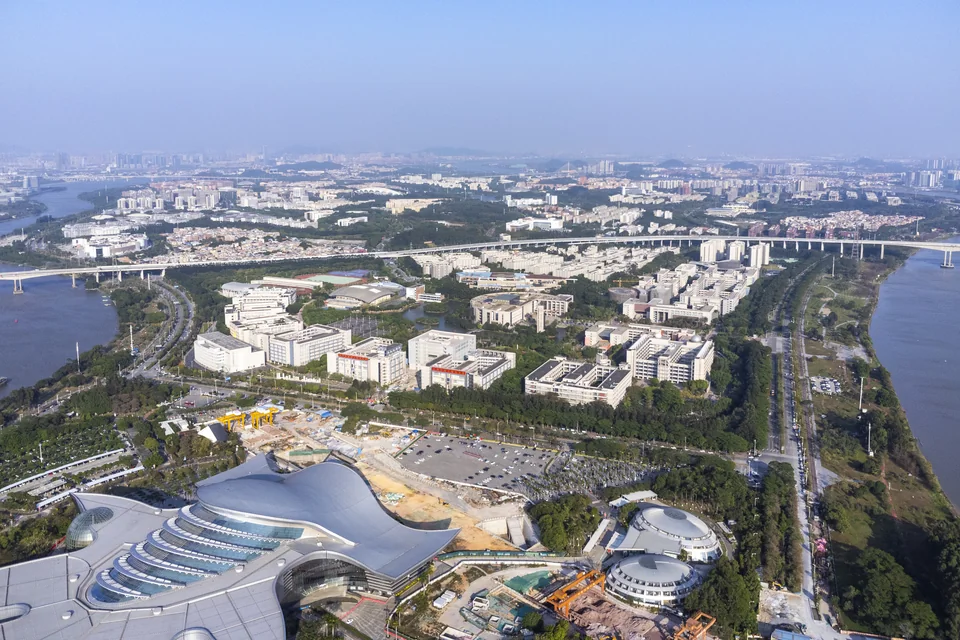
Types of universities in China
Most international students choose between a public research university and a specialised institution, but the official list contains several other categories. The type determines the degree you receive, the language of instruction and the fee.
| Type | What it is | Examples | What to check |
|---|---|---|---|
| Public research university | Comprehensive university with bachelor's, master's and doctoral programmes, usually on the Double First-Class list | Peking, Tsinghua, Fudan, Zhejiang, Nanjing, Wuhan | CSCA for bachelor's entry, HSK 5 for Chinese-taught programmes, separate (higher) fees for English-taught programmes |
| Specialised public university | Strong in one field: languages, education, finance, aviation, medicine | Beijing Language and Culture University (BLCU), Shanghai International Studies University (SISU), Beihang, Shanghai University of Finance and Economics | Usually strong in one group of subjects; compare other programmes separately |
| Provincial university | Public university run by a province | University of Science and Technology Liaoning, Shanghai University | Usually lower fees and competition, fewer English-taught programmes |
| Private university (minban) | Non-state university recognised by the Ministry | 423 private bachelor's-level institutions on the Ministry list | Confirm it appears on the official list and may award bachelor's degrees |
| Sino-foreign university | Joint institution with a foreign partner, usually English-taught | NYU Shanghai, Xi'an Jiaotong-Liverpool (XJTLU), Duke Kunshan, Nottingham Ningbo, Wenzhou-Kean, CUHK-Shenzhen, Shenzhen MSU-BIT University | High fees (NYU Shanghai tuition for 2026/27 is $68,576), foreign or dual degree |
| Higher vocational college | Applied two- or three-year programmes | 1,540 colleges on the Ministry list | Do not award bachelor's degrees |
Hong Kong and Macau are not part of this system: they have their own admissions, visa rules and fees. We cover Hong Kong universities on separate pages linked at the end.
985, 211, C9 and Double First-Class explained
- Project 211 and Project 985 were government funding schemes for leading universities launched in the 1990s. They have been replaced by Double First-Class, but employers and applicants still say "a 985 university".
- Double First-Class is the current programme of the Ministry of Education, the Ministry of Finance and the National Development and Reform Commission. The second-round list, published in February 2022, contains 147 universities and names the specific disciplines each one is developing to world-class level.
- C9 is an informal league of nine research universities: Peking, Tsinghua, Fudan, Shanghai Jiao Tong, Zhejiang, Nanjing, the University of Science and Technology of China (USTC), Harbin Institute of Technology and Xi'an Jiaotong.
The discipline list is the most practical tool for applicants. SISU has exactly one listed discipline (foreign languages and literature), SUFE has applied economics, Tongji has architecture, urban planning, civil engineering, landscape architecture and design, while Fudan has twenty, from philosophy to clinical medicine and integrated circuits. Peking and Tsinghua set their own disciplines. Absence from the list is not a verdict on quality: BLCU is not on it, yet it remains one of China's best-known addresses for Chinese as a foreign language.
Top Chinese universities in QS 2027
| QS 2027 | University | City | Double First-Class strengths |
|---|---|---|---|
| 13 | Peking University | Beijing | Self-determined |
| 14 | Tsinghua University | Beijing | Self-determined |
| 26 | Fudan University | Shanghai | Economics, politics, languages, maths, physics, medicine, integrated circuits |
| 36 | Shanghai Jiao Tong University | Shanghai | Mechanical engineering, computing, electronics, naval architecture, medicine, business |
| 47 | Zhejiang University | Hangzhou | Engineering, computer science, software, medicine, agriculture |
| =90 | Nanjing University | Nanjing | Physics, chemistry, astronomy, earth sciences, computing, languages |
| =134 | University of Science and Technology of China | Hefei | Maths, physics, nuclear science, computing |
| 146 | Tongji University | Shanghai | Architecture, urban planning, civil engineering, design |
| =165 | Wuhan University | Wuhan | Economics, law, surveying, water engineering, stomatology |
| 190 | Harbin Institute of Technology | Harbin | Mechanics, materials, aerospace, civil engineering |
Outside the top ten, Xiamen University (chemistry, marine science, statistics) and Sun Yat-sen University in Guangzhou (medicine, chemistry, materials, business) are also Double First-Class institutions.
Where to look by field
| Field | Start with | Check before applying |
|---|---|---|
| Engineering, IT, electronics | Tsinghua, Shanghai Jiao Tong, Zhejiang, HIT, Beihang, Beijing Institute of Technology | CSCA subjects (maths, physics), language, whether an English-taught stream exists |
| Architecture and urban planning | Tongji, Tsinghua | Portfolio or design task, five-year duration; Tongji has an English-taught international class |
| Economics, finance, business | Fudan, Jiao Tong, Renmin, SUFE, UIBE | CSCA maths, fee level: Fudan's English-taught economics costs $11,930 (RMB 80,000) a year |
| Languages, translation, international relations | Beijing and Shanghai foreign studies universities, BLCU, Fudan | HSK level; see our SISU and BLCU profiles |
| Medicine | Fudan, Jiao Tong, Tongji, Zhejiang, Sun Yat-sen | English-taught MBBS or Chinese-taught, recognition at home; see studying medicine in China |
| Natural sciences | Peking, Nanjing, USTC, Fudan | Supervisor fit for master's and PhD |
| Applied engineering on a tight budget | Provincial technical universities such as USTL | Cheaper living, fewer English-taught programmes |
Cities
| City | Universities international students often choose | What to expect |
|---|---|---|
| Beijing | Peking, Tsinghua, Renmin, Beihang, BIT, Beijing Normal, BLCU, BFSU | 92 institutions and the largest cluster of Double First-Class universities. See universities in Beijing |
| Shanghai | Fudan, Jiao Tong, Tongji, East China Normal, SISU, SUFE, NYU Shanghai | Finance, multinational employers, city scholarships. See universities in Shanghai |
| Hangzhou, Nanjing | Zhejiang, Nanjing, Southeast | Strong research universities, tech employers nearby |
| Wuhan, Xiamen, Guangzhou | Wuhan, Huazhong UST, Xiamen, Sun Yat-sen | Large campuses, lower costs than Beijing or Shanghai |
| Harbin, Dalian, Anshan | HIT, Dalian University of Technology, USTL | Engineering and industry, cold winters, cheaper housing |
| Xi'an, Hefei, Chengdu | Xi'an Jiaotong, USTC, Sichuan | Science and engineering inland, lower living costs |
Language of instruction
Chinese-taught programmes are the majority and the cheaper option. Leading universities usually ask for HSK 5. For 2026 entry, Tongji and Beijing Institute of Technology required HSK 5 with at least 180 points and Shanghai Jiao Tong required HSK 5 with 200 (or HSK 6 with 180) and a writing score of at least 60. For 2027 entry, Tsinghua requires HSK 5 with more than 60 points in listening, reading and writing; Some strong universities set a lower bar: in Beijing, USTB and UIBE accepted HSK 4 for Chinese-taught programmes in 2026. See our HSK exam guide.
English-taught programmes exist at almost every leading university, but there are few at bachelor's level and they cost more. A typical requirement is IELTS 6.0 or TOEFL 85–90; Peking University's master's programmes ask for TOEFL 100. See English-taught degrees in China.
No Chinese yet, but you want a Chinese-taught degree? The usual route is a language or foundation year at a university. It does not guarantee a place on the degree: you still apply through the normal selection. See foundation year in China and Chinese language programmes.
How the academic year and degree length work
The main intake is in autumn: classes start in September and new students register in late August or early September. Some programmes also admit in spring: Beijing Foreign Studies University lists both starts for many of its bachelor's programmes. A bachelor's degree usually takes four years, while MBBS medicine at Fudan and Tongji takes six. At Beihang, international students spend the first year at the International School on maths, physics and language before moving to their major school. Graduates receive the diploma and the bachelor's degree after passing all courses and defending a final project or thesis.
New from 2026: the CSCA test
The China Scholastic Competency Assessment (CSCA) is run by the China Scholarship Council under the Ministry of Education. It tests school subjects: Chinese (in a science or humanities version), mathematics, physics and chemistry, with the required combination depending on the programme. Official site: csca.cn.
University rules for the 2026 intake varied:
- Tongji required it from every bachelor's applicant, including self-funded and English-taught applicants;
- Fudan, Beijing Institute of Technology, University of Science and Technology Beijing, Beihang, Beijing Normal, ECNU, SUFE and SISU required it for bachelor's entry;
- Shanghai Jiao Tong required it but allowed applicants to submit results by 30 June 2026 after a conditional offer; its English-taught engineering programmes asked for the maths paper;
- Peking University required it from applicants for the Chinese Government Scholarship;
- Tsinghua lists CSCA among accepted tests alongside SAT, A-Level and IB.
If you are applying for a bachelor's degree in 2027, build CSCA into your plan and check each programme's subject list. Fudan, for example, only accepted results from specific sittings (December and January).
What Chinese universities charge
Public universities set their own fees, and within one university the fee depends on the field and the language of instruction.
| University | Programme | Annual fee |
|---|---|---|
| Tsinghua (2027 entry) | Chinese-English: science and engineering / economics and law / arts | $4,470 / $3,880 / $5,960 (RMB 30,000 / 26,000 / 40,000) |
| Tsinghua (2027 entry) | English-taught | $14,910 (RMB 100,000) |
| Fudan (2026) | Chinese-taught | $3,430–6,260 (RMB 23,000–42,000) |
| Fudan (2026) | English-taught economics, fintech, data science / MBBS | $11,930 / $11,180 (RMB 80,000 / 75,000) |
| Shanghai Jiao Tong (2026) | Chinese-taught / English-taught engineering | $3,700 / $17,890 (RMB 24,800 / 120,000) |
| Tongji (2026) | Chinese-taught | $2,980–4,280 (RMB 20,000–28,700) |
| Tongji (2026) | English-taught architecture, civil engineering / MBBS | $5,040–5,220 / $6,710 (RMB 33,800–35,000 / 45,000) |
| Beijing Institute of Technology (2026) | Chinese / English | $3,430 / $4,470 (RMB 23,000 / 30,000) |
| University of Science and Technology Beijing (2026) | Chinese or English | $3,470 (RMB 23,300) |
| SISU (2026) | Chinese language / other programmes | $3,280 / $3,700 (RMB 22,000 / 24,800) |
| Beihang (2026) | Chinese-taught / English-taught | $3,730 / $4,470 (RMB 25,000 / 30,000) |
| Renmin University of China (2026 fee list) | Chinese-taught / English-taught Global BBA | $3,580–4,470 / $5,370 (RMB 24,000–30,000 / 36,000) |
| Beijing Normal (2026) | Chinese-taught | $3,580–4,130 (RMB 24,000–27,700) |
| East China Normal, Shanghai (2026) | Chinese-taught / English-taught | $3,280–4,170 / $7,450–8,050 (RMB 22,000–28,000 / 50,000–54,000) |
| Shanghai University of Finance and Economics (2026) | Chinese- or English-taught | $4,470 (RMB 30,000) |
| NYU Shanghai (2026/27) | All programmes, English-taught | $68,576 |
Master's degrees at leading universities cost about the same. At Tsinghua in 2026, Chinese-taught master's programmes cost $4,180–4,920 (RMB 28,000–33,000) a year, and English-taught ones ranged from $4,470 (RMB 30,000) a year to $29,520 (RMB 198,000) for the full two-year Global MBA.
Mandatory extras:
- application fee: $90–120 (RMB 600–800);
- health insurance: usually $120 (RMB 800) a year; universities will not register students without it;
- residence permit: for example $60 (RMB 400) a year at Beijing Institute of Technology;
- campus housing: $75–220 (RMB 500–1,500) a month per bed at Beijing universities; $980–1,880 (RMB 6,600–12,600) per semester at Shanghai Jiao Tong.
A full annual budget is in the cost of studying in China; housing and arrival formalities are covered in student life and housing in China.
Scholarships
- Chinese Government Scholarship (CSC): full or partial coverage of tuition, housing and insurance plus a monthly allowance; apply through a Chinese embassy (Type A) or directly through a university (Type B).
- City scholarships. The Beijing Government Scholarship has three categories: A covers tuition, housing, insurance and a monthly allowance; B the same without the allowance; C tuition and insurance only. The Shanghai Government Scholarship is either full (A) or partial (B, tuition and insurance); it requires at least HSK 4, and applications usually run from February to April.
- University scholarships. Shanghai Jiao Tong's first-class scholarship for 2026 waived tuition and paid $370 (RMB 2,500) a month for living costs plus $160 (RMB 1,100) for housing.
Scholarship decisions are made by the funder or the university and may arrive after the admission letter. Plan a budget that works without one. More options are in our scholarships abroad overview.
How to apply: steps for 2027
There is no central application system: you apply through each university's portal.
- Check that you count as an international applicant. Ministry rules from 2020 mainly concern former Chinese citizens and children of Chinese citizens, who need a period of foreign citizenship and at least two years of actual residence abroad.
- Shortlist four to six programmes by deadline. Tsinghua is already accepting 2027 applications: round one runs from 30 September to 20 November 2026, round two from 21 November 2026 to 28 February 2027. For 2026 entry, Fudan's windows were in January and late February to early March, Tongji's from 20 January to 31 March, BIT's until 1 June.
- Take the language test and CSCA.
- Prepare documents: school certificate or degree with transcripts, translations, passport, personal statement, references, Foreigner Physical Examination Form. See documents for Chinese universities.
- Pass selection. Leading universities run written tests or interviews; Peking University's 2026 written test covered Chinese, English and maths.
- Receive the admission letter and JW202 form (JW201 for Chinese Government Scholarship holders) and apply for an X1 visa; see the Chinese student visa.
- Within 30 days of arrival, apply for a study residence permit at the local exit-entry office.
The university decides on admission, the funder on scholarships, the Chinese consulate on the visa and the immigration authority on the residence permit. Level-specific guides: bachelor's in China and master's in China.
Working while studying
Students may work off campus only with university approval and an annotation on their residence permit stating the place and period of work. Working without it counts as illegal employment and carries a fine of $750–2,980 (RMB 5,000–20,000). See work and internships for students in China.
Common mistakes
- Choosing by overall ranking instead of checking the university's Double First-Class disciplines.
- Assuming English-taught programmes cost the same: at Jiao Tong the difference is almost fivefold ($3,700 vs $17,890, or RMB 24,800 vs 120,000).
- Leaving out CSCA: since 2026 many leading universities will not consider a bachelor's application without it.
- Taking HSK at the last minute: thresholds apply to scores and sometimes to the writing section, not just the level.
- Treating a language year as admission: it does not transfer you to a degree automatically.
- Assuming you will automatically get campus housing: Tongji warns that even scholarship holders may have to find rooms off campus when dorms are full.
StudyU profiles of Chinese universities
- Tsinghua University
- Peking University
- Fudan University
- Shanghai Jiao Tong University
- Zhejiang University
- Tongji University
- Beijing Language and Culture University
- Wuhan University
- Xiamen University
- Nanjing University
- Sun Yat-sen University
- Harbin Institute of Technology
- Shanghai International Studies University
- University of Science and Technology Liaoning
Hong Kong has a separate system with its own admissions and visas: see studying in Hong Kong and our profiles of the University of Hong Kong, the Chinese University of Hong Kong and the Hong Kong University of Science and Technology.
Country overview: study in China. Still choosing a country? Compare China or Korea.
FAQ
The Ministry of Education listed 3,196 institutions on 17 June 2026: 2,952 regular institutions, of which 1,412 award bachelor's degrees, plus adult-education institutions.
In QS 2027, Peking University (13th) and Tsinghua (14th) rank highest, followed by Fudan, Shanghai Jiao Tong and Zhejiang. For a specific field, check whether it appears among the university's Double First-Class disciplines.
They are older government funding schemes for leading universities. The current scheme is Double First-Class, which lists 147 universities, but the old labels are still widely used.
Yes, on an English-taught programme, but bachelor's options are limited and more expensive: at Tsinghua, $14,910 (RMB 100,000) a year versus $3,880–4,480 (RMB 26,000–30,000) for Chinese-English programmes. The alternative is a language or foundation year followed by regular admission.
For bachelor's programmes at many leading universities, yes, from the 2026 intake. Tongji required it from everyone; Peking University from Chinese Government Scholarship applicants. It is not required for master's programmes.
A Chinese-taught bachelor's at a strong public university costs about $3,000–4,500 a year in 2026/27; English-taught programmes range from $4,470 to $17,890. Joint universities cost more: NYU Shanghai charges $68,576 a year.
Only with a scholarship from the Chinese government, a city (Beijing, Shanghai) or the university. These are competitive, so plan a budget that works without one.
Sources
- Ministry of Education of China — list of higher education institutions, 17 June 2026 — checked 23.09.2026
- Ministry of Education — second-round Double First-Class list (2022) — checked 23.09.2026
- QS — top universities in mainland China, updated 17 June 2026 — checked 23.09.2026
- Tsinghua — fees, 2027 schedule and eligibility — checked 23.09.2026
- Tsinghua — 2026 graduate tuition — checked 23.09.2026
- Peking University — 2026 undergraduate admission (exam route) and 2026 graduate admission — checked 23.09.2026
- Fudan — 2026 undergraduate admissions, fees and English-taught programmes — checked 23.09.2026
- Shanghai Jiao Tong — 2026 Chinese-taught bachelor's and English-taught engineering — checked 23.09.2026
- Tongji — 2026 undergraduate admission and programme list with fees and CSCA subjects — checked 23.09.2026
- Beijing Institute of Technology — 2026 bachelor's — checked 23.09.2026
- University of Science and Technology Beijing — 2026 bachelor's — checked 23.09.2026
- SISU — 2026 bachelor's programmes — checked 23.09.2026
- Beihang — 2026 bachelor's, Renmin University — fees, Beijing Normal — 2026 bachelor's UIBE — Chinese-taught bachelor's and BFSU — bachelor's catalogue — checked 24.09.2026
- ECNU — 2026 bachelor's (PDF) and SUFE — 2026 bachelor's — checked 24.09.2026
- NYU Shanghai — cost of attendance 2026/27 — checked 23.09.2026
- Shanghai Municipal Education Commission — Shanghai Government Scholarship — checked 23.09.2026
- National Immigration Administration — study residence permits and student work and Exit and Entry Administration Law — checked 23.09.2026
Dollar amounts are converted at the ECB reference rates of 23 and 29 September 2026 ($1 = RMB 6.7074 and 6.7034) and rounded.
During the free initial consultation, we clarify your goal, profile, timing, and budget and identify the next realistic step. Apply
Next steps
- Bachelor's Degree in China: How to Apply for the 2027 Intake
- HSK Exam Guide 2026: Levels, the Switch to HSK 3.0 on 13 December, Dates, Fees and Test Centres
- Master's in China: Requirements, Deadlines and Fees for 2027
- Studying Medicine in China: English-Taught MBBS, the Ministry of Education List and Recognising the Degree Back Home
- China or Korea for Studying: Costs, Language, Admission, Scholarships and Work Compared
- Studying in China for international applicants
