
A year of Chinese-taught bachelor's study at a public university in China costs from $2,982 (CNY 20,000) at Harbin Institute of Technology (HIT) to $6,262 (CNY 42,000) for medical majors at Fudan. English-taught programmes cost more: $3,876 (CNY 26,000) at HIT and $14,909 (CNY 100,000) at Tsinghua. On top of tuition come a dormitory ($119–179 a month in the examples below), insurance of $119 (CNY 800) a year, application fees, a residence permit and living costs. Using the government scholarship's living allowance as a benchmark, a first year of Chinese-taught study costs about $9,200–9,600 in Harbin and $10,900–11,400 on an engineering programme at Tsinghua.
Every figure here comes from official pages of Chinese universities and government bodies for the 2026 and 2027 intakes. This guide is about money only: tuition by level, housing, mandatory fees, four first-year budget scenarios and lawful ways to pay. How to win a Chinese Government Scholarship is a separate question, covered in our guide to bachelor's degrees in China and the scholarships abroad overview.
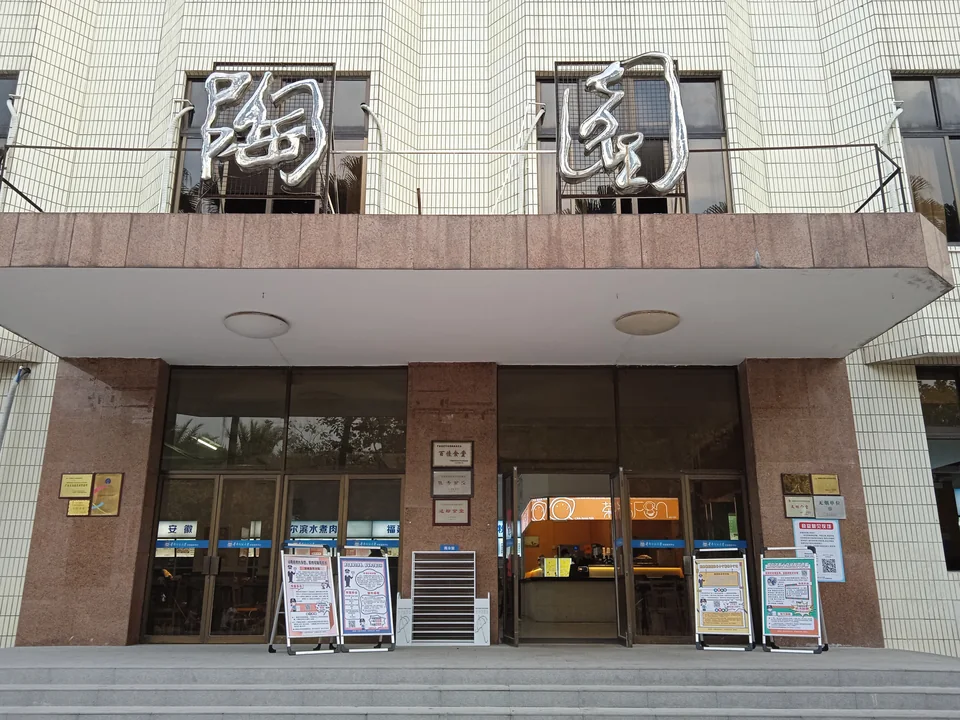
Cost of studying in China at a glance
| Item | Amount | Example |
|---|---|---|
| Bachelor's in Chinese | $2,982–6,262 a year | HIT, Fudan, Tsinghua |
| Bachelor's in English | $3,876–14,909 a year | HIT, Tsinghua |
| Master's in Chinese | $3,876–7,156 a year | Fudan, Tsinghua, HIT |
| Master's in English | $4,473–40,239 a year | Tsinghua, HIT, Fudan |
| Doctorate in Chinese | $4,771–5,964 a year (CNY 32,000–40,000); arts and design cost more | Tsinghua, 2027 intake |
| Foundation programme | $2,684–5,814 per course | HIT, Tianjin, BLCU |
| Language programme | $2,177 a year | HIT |
| Dormitory | $119–179 a month per bed | HIT, Tsinghua |
| Insurance | $119 (CNY 800) a year | HIT, Tsinghua, Fudan |
| Application fee | $60–119 (CNY 400–800) | HIT, Fudan, Tsinghua |
| Residence permit | $60–149 (CNY 400–1,000) | China's immigration authorities |
Dollar amounts use ECB reference rates for 23 September 2026 ($1 = CNY 6.7074) and are rounded. Universities invoice in yuan, so the dollar figure moves with the exchange rate.
Tuition by level
Bachelor's
| University | Chinese-taught, per year | English-taught, per year |
|---|---|---|
| HIT (Harbin), 2026 | $2,982 (CNY 20,000) | $3,876 (CNY 26,000) |
| Fudan (Shanghai), 2026 | $3,429 humanities, $3,876 sciences, $6,262 medicine | In separate programme brochures |
| Tsinghua (Beijing), 2027 | $3,876 economics, law and some colleges; $4,473 engineering and sciences; $5,964 arts | $14,909 (CNY 100,000) |
Within one university, the field sets the price: medicine and arts cost more than economics or law. A fully English-taught programme at a leading university can cost several times its Chinese-taught equivalent. The city matters less for tuition than for housing: tuition in Harbin and Shanghai differs by $450–3,300 a year.
Master's
| University | Chinese-taught, per year | English-taught |
|---|---|---|
| HIT, 2026 | $4,175 (CNY 28,000) | $5,069 (CNY 34,000) a year |
| Fudan, 2026 | $3,876 humanities, $4,473 sciences, $7,156 medicine | $7,454–40,239 a year |
| Tsinghua, 2027 | $4,175 humanities, $4,473 economics and management, $4,920 sciences and engineering | Engineering programmes most often $5,814 (CNY 39,000) a year; overall range from $4,473 (CNY 30,000) a year to $33,992 (CNY 228,000) for a whole programme; Global MBA $29,520 (CNY 198,000) for the programme |
Professional programmes (MBA, Master of Finance, Master of Public Administration) are priced separately and cost noticeably more than academic ones. Requirements and deadlines are covered in our guide to the master's in China.
Foundation year and language programmes
| Programme | Fee |
|---|---|
| HIT, Chinese-taught foundation, 36 weeks | $3,668 (CNY 24,600) |
| HIT, English-taught foundation, 18 weeks | $2,684 (CNY 18,000) |
| Tianjin University, one-year foundation, 2027 intake | $4,309 (CNY 28,900) |
| BLCU "Bachelor Express", one year | $5,814 (CNY 39,000) |
| HIT, language programme, one year (two 16-week semesters) | $2,177 (CNY 14,600) |
How foundation differs from a language course is explained in our guide to the foundation year in China.
Housing: what a dormitory really costs
A campus dormitory is the cheapest and most common first-year option. Prices depend heavily on the city and room type.
| University | Price per bed | Per month |
|---|---|---|
| HIT (Harbin) | CNY 800–1,000 a month, excluding electricity, water and internet | $119–149 |
| Tsinghua (Beijing) | CNY 30 a day in a triple room, CNY 40 in a double | $134–179 |
| Tianjin University | CNY 15–60 a day | $67–268 |
| BLCU (Beijing) | CNY 70–120 a day in triple, quadruple or double rooms; singles CNY 150–300 | $313–537 for a shared room |
Campus places are limited. Tsinghua allocates rooms online on a first-come, first-served basis; Fudan opens booking in August and requires a $119 (CNY 800) deposit within the first two days. Students who miss out rent privately, which costs more and requires police registration within 24 hours of moving in. See student life and housing in China.
Mandatory fees and one-off costs
| Cost | Amount | When |
|---|---|---|
| Application fee | $60 (CNY 400) at HIT, $89 (CNY 600) when applying for the HIT scholarship, $119 (CNY 800) at Fudan and Tsinghua; non-refundable | On application, per application |
| CSCA test for bachelor's applicants | $67 (CNY 450) for one subject, $104 (CNY 700) for two or more; each retake is paid again, scores are valid for two years | On registration |
| Apostille in Russia | $30 (RUB 2,500) per document | Before applying or registration |
| Insurance | $119 (CNY 800) a year | On enrolment |
| Study residence permit | $60 (CNY 400) for up to one year, $119 (CNY 800) up to three, $149 (CNY 1,000) up to five | Within 30 days of entry |
| Proof of funds | At HIT at least $2,982 (CNY 20,000) for bachelor's and $4,473 (CNY 30,000) for master's in the account | On application; a balance, not a payment |
Visa fees, language exams, medical examinations, translations and flights depend on the country of application and date of purchase, so we do not quote figures for them; check the visa centre and exam centre websites before applying. Which documents need translation and an apostille is listed in our guide to applying to Chinese universities; visa steps are in the Chinese student visa guide.
How much you need to live on
China does not publish an official minimum living budget for international students. The most reliable benchmark is the Chinese Government Scholarship. Scholars live in a paid dormitory and receive $373 (CNY 2,500) a month for food, transport, phone and personal costs at bachelor's level, $447 (CNY 3,000) at master's level and $522 (CNY 3,500) at doctoral level.
The scholarship standards also work as a budget model. Annual funding for an undergraduate scholar:
| Item | CNY per year | USD per year |
|---|---|---|
| Tuition (humanities / science and engineering / medicine and arts) | 20,000 / 23,000 / 27,000 | $2,982 / 3,429 / 4,025 |
| Accommodation | 8,400 | $1,252 |
| Living allowance | 30,000 | $4,473 |
| Insurance | 800 | $119 |
| Total | 59,200–66,200 | $8,826–9,870 |
Source: CSC standards published by the Haidian District Government, Beijing. Real spending is usually higher in Beijing and Shanghai and lower in cities such as Harbin or Anshan, but for a first estimate this model is more honest than unsourced "average prices". For comparisons with other countries, see our guide to the cost of living for students abroad.
First-year budget: four scenarios
The scenarios add official university fees, a dormitory for 12 months, insurance, the application fee, a residence permit for up to a year and living costs at the scholarship benchmark. Flights, visa and exams are excluded.
| Scenario | Components (CNY) | First-year total |
|---|---|---|
| Chinese-taught bachelor's at HIT, Harbin | 20,000 tuition + 9,600–12,000 dormitory + 800 insurance + 400 fee + 400 residence permit + 700 CSCA + 30,000 living | $9,229–9,586 (CNY 61,900–64,300) |
| Chinese-taught engineering bachelor's at Tsinghua | 30,000 + 10,950–14,600 + 800 + 800 + 400 + 30,000 | $10,876–11,420 (CNY 72,950–76,600) |
| Fully English-taught bachelor's at Tsinghua | 100,000 + 10,950–14,600 + 800 + 800 + 400 + 30,000 | $21,312–21,856 (CNY 142,950–146,600) |
| English-taught master's at HIT | 34,000 + 9,600–12,000 + 800 + 400 + 400 + 36,000 | $12,106–12,464 (CNY 81,200–83,600) |
Four years of Chinese-taught bachelor's tuition come to about $11,900 (CNY 80,000) at HIT and about $17,900 (CNY 120,000) for engineering at Tsinghua. From the second year one-off costs such as application fees disappear, but residence permit renewal is added.
How to reduce the cost
- The Chinese Government Scholarship covers tuition, housing, insurance and a living allowance, but it is competitive. Bachelor's applicants need a CSCA score for it; see our guide to bachelor's degrees in China and Study in China.
- University waivers. For 2026 HIT offered bachelor's and master's students tuition reductions of 100%, 50%, 30% or 20%. You cannot apply for the HIT scholarship and the CSC at the same time.
- City and provincial scholarships, such as the Shanghai Government Scholarship at Fudan, and Tsinghua's first-year freshman scholarship.
- Chinese-taught instead of English-taught. The difference is $894 a year at HIT and $10,400 a year at Tsinghua.
- A city with cheaper housing. A dormitory bed costs $119–149 a month at HIT and from $313 at BLCU in Beijing.
Your family budget should work without a scholarship: the decision belongs to the funding body or university.
How to pay tuition in China
The university sets the payment method. HIT accepts only bank transfers to its account at the Industrial and Commercial Bank of China, with the student's passport name in the payment details, and does not accept WeChat Pay or Alipay. In 2026 Fudan accepted WeChat Pay, Alipay and international Visa, Mastercard and JCB cards.
Applicants from Russia should use only lawful routes: a yuan bank transfer through a Russian bank that processes payments to China, or from the student's or parents' own account opened in line with currency regulations. Cards issued by Russian banks generally do not work for paying a Chinese university's invoice. Our guide on how to pay for studies abroad from Russia explains the options. Applicants from Kazakhstan and Uzbekistan should check with their bank how yuan transfers to a foreign university work; in all cases the university expects a transfer showing the student's name and the exact invoiced amount.
Two rules for everyone: keep proof of payment, because it is requested at registration, and do not send money before you receive a written invoice or notice from the university.
Common budgeting mistakes
- Counting tuition only. In the HIT scenario it is about a third of the annual budget.
- Ignoring the language premium. Tsinghua's fully English-taught programme costs 3.3 times its Chinese-taught engineering track.
- Budgeting with a scholarship you have not yet won. The decision belongs to the CSC, the province or the university.
- Forgetting utilities. At HIT electricity, water and internet are not included in the dormitory price.
- Confusing proof of funds with a payment. The balance is not charged but must be there.
- Paying the wrong way. HIT treats a transfer without the student's name as invalid.
How StudyU helps
Only the initial consultation is free. Budget-based university selection, a full cost calculation for specific programmes, a scholarship plan and admission support are provided under an agreement with StudyU. Amounts, payment deadlines and refund terms are set by the university; scholarship decisions by the CSC, provincial authorities or the university. University profiles with fees: Harbin Institute of Technology, Shanghai International Studies University, University of Science and Technology Liaoning. If you are comparing China with Hong Kong, where fees work differently, start with Study in Hong Kong.
FAQ
At public universities in Chinese, from $2,982 (HIT) to $6,262 (medicine at Fudan) for a bachelor's and $3,876–7,156 for a master's. With housing, insurance and living costs, a first year of Chinese-taught bachelor's study costs about $9,200–11,400 depending on the university and city.
Yes, with a Chinese Government Scholarship, which covers tuition, housing, insurance and a monthly allowance, or with a full university waiver such as HIT's 100% scholarship. These are competitive, so keep a self-funded plan in parallel.
In Chinese. The difference is $894 a year at HIT, and at Tsinghua the fully English-taught programme costs $14,909 against $4,473 for Chinese- and English-taught engineering. A Chinese-taught track, however, requires HSK and sometimes a preparatory year that also costs money.
In the university examples, $119–179 a month per bed: CNY 800–1,000 a month at HIT, CNY 30–40 a day at Tsinghua. At BLCU a bed in a shared room costs $313–537 a month. Utilities are sometimes charged separately.
Use the Chinese Government Scholarship as a benchmark: $373 (CNY 2,500) a month for a bachelor's student and $447 (CNY 3,000) for a master's student, with housing paid. Beijing and Shanghai usually cost more, smaller cities less.
Lawfully, by a yuan bank transfer through a Russian bank that processes payments to China. The university sets the method: HIT accepts only transfers to its account, while Fudan also accepted WeChat Pay, Alipay and international cards.
No. Dormitories are paid separately, usually monthly or per semester. The exception is the Chinese Government Scholarship, which covers a dormitory place or pays an allowance.
Sources
- HIT: bachelor's, master's, foundation and language programme — checked 23.09.2026
- Tsinghua: 2027 undergraduate fees, 2027 graduate fees, housing and insurance — checked 23.09.2026
- Fudan: bachelor's 2026, programme and fee lists, master's 2026, dormitory booking — checked 23.09.2026
- Tianjin University: foundation programme, 2027 intake — checked 23.09.2026
- BLCU: "Bachelor Express" 2026 and dormitories — checked 23.09.2026
- Haidian District Government, Beijing: Chinese Government Scholarship standards — checked 23.09.2026
- CSCA official website: subjects, sessions and fees — checked 23.09.2026
- National Immigration Administration of China: study residence permits and Exit and Entry Administration Law — checked 23.09.2026
- Russian Tax Code, Article 333.33 — checked 23.09.2026
- Rates: ECB on 23.09.2026 (€1 = $1.1411 = CNY 7.6538) and Bank of Russia on 23.09.2026 (RUB 84.0657 per $1)
Next steps
- Bachelor's Degree in China: How to Apply for the 2027 Intake
- Master's in China: Requirements, Deadlines and Fees for 2027
- Foundation Year in China: Which Format to Choose and What It Costs
- Applying to Chinese Universities: Documents Checklist for 2027
- Scholarships abroad 2026: where international students study for free
- How to Pay for Studies Abroad from Russia: What Works in 2026
