
A student budget in Turkey should separate recurring living costs from the money needed before and just after arrival. Start with a specific city and housing offer, then add food, transport, utilities and personal expenses. Keep the housing deposit, travel, insurance and document costs separate. The dollar estimates below are planning benchmarks; actual costs depend on the residence contract, location and exchange rate.
Use the sections below to build a budget from your own housing, transport and food assumptions. Compare the same room type and contract length across cities, and leave room for exchange-rate changes and unexpected costs. Tuition is a separate line and should not be confused with a monthly living allowance.
Education in Turkey
Tuition costs vary based on the level of study, the specific program, university location and size. Undergraduate programs range from $3,000 up to $15,000, some go as far as $45,000 (Medicine). Postgraduate programs, including master's and doctoral degrees range from free to $15,000.
For example, a bachelor's degree in Business Administration at a reputable Turkish university has an annual tuition fee of around $6,000 to $9,000. Keep in mind that Turkish universities offer scholarships to international students up to 75%. Learn more about Turkish universities.
Textbooks add $15–30 each, and you may need 3–6 a year.
Accommodation
In Turkey, the cost of accommodation can vary significantly depending on the city and type of housing chosen. Students choose between staying at a dormitory or an apartment. We recommend a dormitory for the first semester, while you settle in, and then deciding whether to stay or rent an apartment.
Dormitory
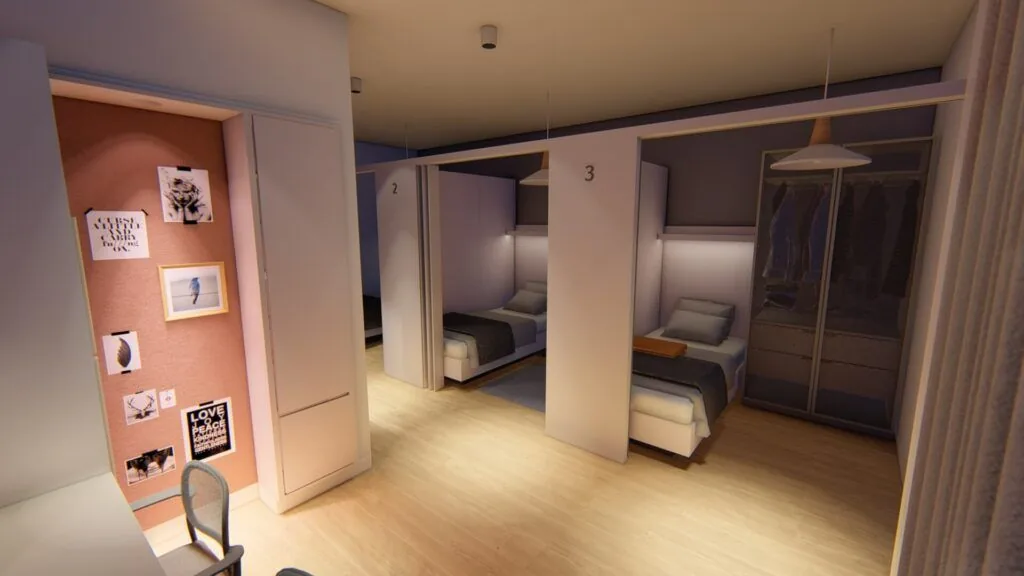
A university dormitory, especially the university's own, is easier to arrange and often cheaper. Rooms range from four-person to single; single rooms cost more, and so do dormitories closer to the city centre.

Rent
In Istanbul, one of the more expensive cities, renting a one-bedroom apartment in the city center costs around $500 per month and $350 outside of the center. Students in university dormitories also usually pay no separate utility bills or minor maintenance fees, and get weekly room cleaning included. Compare both options near your university.
Utilities and Internet
- Basic Utilities including — Water, Electricity, Heating, Cooling, and Garbage cost $40 to $100 monthly
- Mobile Phone Plan with 12GB+ of Internet and Calls costs $6–10 monthly
Transportation

Large Turkish cities have metro, bus, tram and ferry networks, and students pay reduced fares with a student card.
Metro and Buses
In Istanbul, Ankara and Izmir a one-way metro or bus ride costs $0.4 to $1.1 with a normal transport card and $0.1 to $0.5 with a student card. University students are eligible for a student discount card.
Boats and Ferries
In Istanbul ferries operate between the European and Asian sides, offering a scenic and efficient means of transportation. One way ferry rides across the Bosphorus costs $0.3 to $0.5 and $0.1 to $0.3 with a student discount.
Food and Restaurants
Exploring Turkey's rich culinary scene is undoubtedly one of the highlights of student life. Dining out at an affordable local restaurants costs between $5 and $10 per meal. Mid-range restaurants cost $10 to $30 per person and high range restaurants cost between $30 and up to $60 per person depending on the establishment and location. Opting for street food provides an affordable culture packed alternative, ranging from $2.5 to $6 per meal. A cup of coffee costs $2 to $3. There is a lot to look forward to for food loving students in the local cuisine and culture.
Entertainment
Typical prices for going out:
- Movie tickets $7–10
- Concerts & Football matches FREE — $300 (Greatly depends on occasion)
- Museums FREE — $10 (Most museums are free for students)
- Netflix Basic: $3.33/month | Standard: $5.00/month | Premium: $6.67/month
- Spotify $1.3/month
Need advice for your specific situation?
Talk to a consultant — free, no obligations.
Where students actually save
The student transport card cuts fares several-fold; university canteens (yemekhane) serve full lunches for a couple of dollars; MüzeKart opens hundreds of museums for a symbolic yearly fee; district markets undercut supermarket prices by a third. A disciplined first-year student in a dormitory runs on $350–400 monthly in Istanbul and $280–330 in Ankara or Izmir — the ranges our students report.
FAQ
The realistic monthly budget depends on the city and housing type. Istanbul is usually the most expensive because rent, transport, food and social life add up quickly. Ankara, Izmir and Antalya can be calmer financially, especially when the student lives in a dormitory and uses a student transport card.
For the first year, a dormitory is usually the easier and safer option: it is close to campus, the payment rules are clearer, and the student avoids deposits, furniture, utilities and long commuting. Renting gives more freedom, but it also adds more hidden costs.
Families often remember tuition and rent, but forget the university deposit, health insurance, translations, notarization, residence permit steps, textbooks, SIM card, transport card and the first month of living expenses. These smaller items are exactly what creates stress when the application starts late.
Under an agreement with StudyU, we calculate the whole route: tuition after the available discount, deposit, housing, insurance, documents, visa-related expenses and the first month in the city. Then we compare the agreed university options so the family sees the real first-year budget, not just a headline tuition fee.