
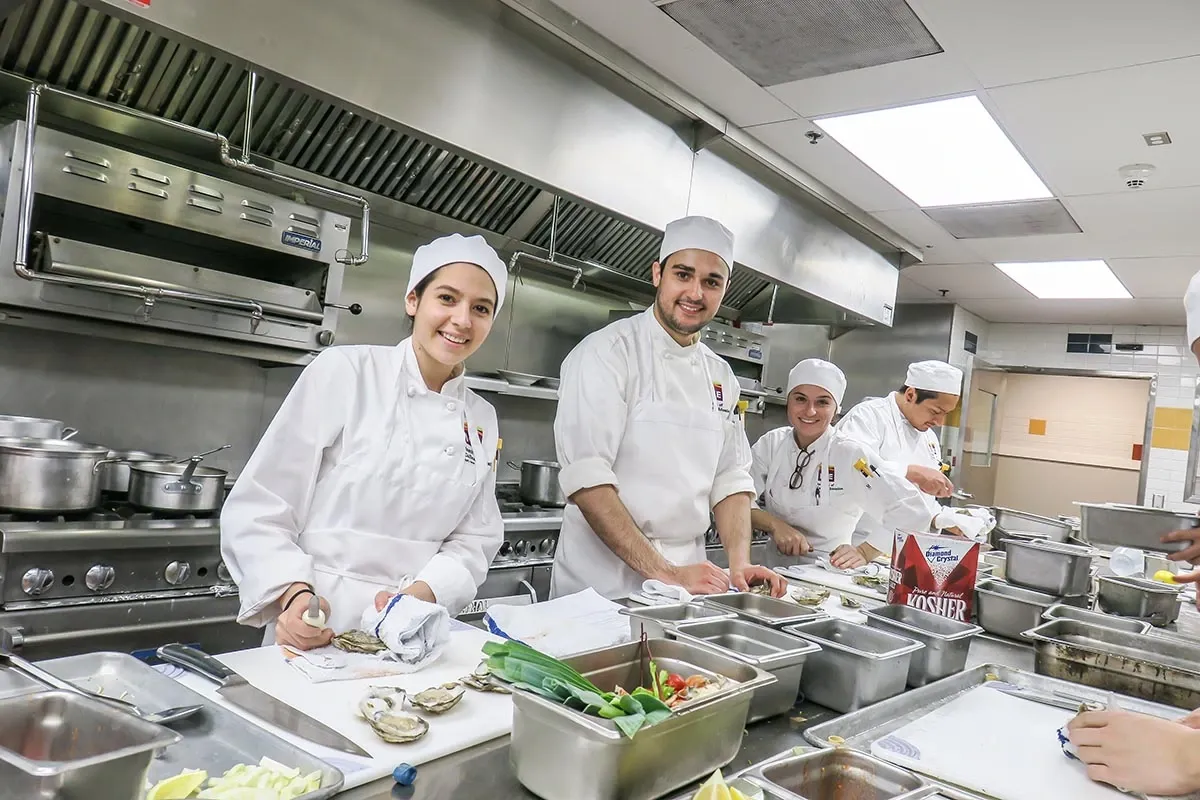
Gastronomy in Turkey
Gastronomy examines food through culinary practice, ingredients, culture and the management of food service. Compare practical kitchen training, food safety and business modules, and check how placements fit into the course.
Gastronomy at a glance
Compare practical kitchen work with food science, menu design, hygiene and restaurant operations. Ask how practical sessions are organised and what costs or equipment requirements sit outside tuition.
Use the curriculum and university options below to build a shortlist. Confirm the exact degree level, teaching language, course sequence and practical requirements with each university; similar programme names do not make the courses interchangeable.
Want to find out your discount?
A personal strategy, requirement checks, selection of agreed options, document preparation, applications, and support are provided under an agreement with StudyU.
Study to Become a Chef in Turkey
Turkish universities teach gastronomy and culinary arts in English and Turkish, with practical classes in training kitchens. You need a high-school diploma and a language certificate. The degree usually takes 4 years. StudyU helps you choose a university, handle documents and check scholarship terms confirmed by the university or funding body.
Program structure
The degree takes four years. The list below shows a typical sequence from foundation courses to electives and a graduation project; course titles, order and credits differ by university, so compare it with the published curriculum of each programme you shortlist.
- Introduction to gastronomy
- Kitchen safety, hygiene and HACCP
- Knife skills and basic cooking techniques
- Nutrition and food science basics
- Turkish and international cuisines
- Baking and pastry
- Purchasing, storage and food cost
- Restaurant operations and service
- Menu development and food entrepreneurship
- Advanced kitchen laboratories
- Managing a kitchen team
- Graduation project and a portfolio of dishes with recipe cards and costings
- Internship (staj) in a hotel or restaurant; its length and who finds the placement are set by each university
Your career outlook
The degree does not make you a head chef straight away: kitchens judge speed, discipline and experience, and management roles usually come after years on the line. Typical roles:
Cooks start in a hotel or restaurant brigade and move up to running a station.
Pastry and bakery specialists produce desserts and bread in hotels, patisseries and production kitchens.
Menu and product developers create and cost dishes for restaurant chains, caterers and food producers.
Food and beverage coordinators run service, stock and staff schedules in hotels and restaurants.
Purchasing and food-cost controllers buy ingredients and track margins and waste.
Some graduates open their own business, usually after several years of practical experience.
Is this program right for you?
It suits you if you…
- like precise manual work and a fast pace;
- are ready to study hygiene and kitchen economics as seriously as recipes;
- want daily practice and are curious about food culture;
- can budget for knives, uniforms and materials, which tuition often does not cover.
Take a moment if you…
- expect creative tastings without physical work;
- are not ready to work standing, in shifts and in a kitchen hierarchy;
- do not want to calculate food cost or take responsibility for food safety;
- want a broader hospitality degree (Tourism and Hotel Management covers service and operations).
Everyday student experience
What happens outside lectures depends on the university, so ask the department what it actually runs: kitchen practice outside scheduled classes, culinary competitions and events run with hotels or restaurants.
Gastronomy curricula usually include compulsory kitchen internships (staj) in hotels or restaurants: ask how long they are, who arranges them and whether you need a work permit for a paid placement. For a semester abroad, ask which Erasmus+ partner universities the department has and whether international degree students can apply; a visa for the host country is a separate step.
Salaries and demand: Turkey and abroad
What raises income: internships in chain hotels, two or three languages, revenue management skills. A personalised comparison of current salary ranges by city and employer is provided under an agreement with StudyU.
Additional guide to programme language
For gastronomy, language affects not only lectures, but also practical work, recipes and kitchen communication. The catalog lists Bahcesehir with an English-taught bachelor's track and Topkapi with a Turkish-taught bachelor's track.
Examples to check with StudyU: Bahcesehir University: Gastronomy and Culinary Arts (Bachelor, English); Topkapi University: Gastronomy and Culinary Arts (Bachelor, Turkish).
Universities offering Gastronomy
Compare listed universities by degree, teaching language and annual tuition shown below.
| University | Degree | Language | Tuition |
|---|---|---|---|
| Topkapi University | Bachelor | Turkish | $3 900/yr |
| Ankara Medipol University | Bachelor | English | $4 000/yr |
| Okan University | Bachelor | Turkish | $4 500/yr |
| Gedik University | Bachelor | Turkish | $4 600/yr |
| Halic University | Bachelor | Turkish | $4 800/yr |
| Altinbas University | Bachelor | Turkish | $5 000/yr |
| Okan University | Bachelor | English | $5 000/yr |
| Istanbul Galata University | Bachelor | Turkish | $5 600/yr |
| Medipol University | Bachelor | Turkish | $6 000/yr |
| Nisantasi University | Bachelor | Turkish | $7 481/yr |
| Gelisim University | Bachelor | Turkish | $8 000/yr |
| Istinye University | Bachelor | English | $8 000/yr |
| Istinye University | Bachelor | Turkish | $8 000/yr |
| Yasar University | Bachelor | Turkish | $8 000/yr |
| Bahcesehir University | Bachelor | English | $8 200/yr |
| Antalya Bilim University | Bachelor | English | $8 300/yr |
| Gelisim University | Bachelor | English | $8 500/yr |
| Bilgi University | Bachelor | English | $12 000/yr |
| Ozyegin University | Bachelor | English | $25 000/yr |
| Okan University | Master | Turkish | $3 500/yr |
| Topkapi University | Master | Turkish | $4 500/yr |
| Gedik University | Master | Turkish | $5 000/yr |
| Okan University | Master | English | $5 000/yr |
| Nisantasi University | Master | Turkish | $7 481/yr |
| Gelisim University | Master | Turkish | $10 000/yr |
| Bahcesehir University | Master | Turkish | $12 000/yr |
| Gelisim University | PhD | Turkish | $8 000/yr |
Ready to study gastronomy in Turkey?
During the free initial consultation, we clarify your goal, profile, timing, and budget and identify the next realistic step.
Get a consultationFrequently asked questions
To become a chef in Turkey you need a high-school diploma, a language certificate and denklik (recognition of your previous education). Some universities ask for the YÖS or SAT exam. Under an agreement with StudyU, a consultant can compare universities within budget, help prepare documents and check published scholarship terms. Each university decides admission and confirms individual scholarship terms; funding bodies decide their awards.
Many Turkish universities offer programs in English. Programs in Turkish require a TÖMER certificate. Exact requirements depend on the university.
Compare current vacancies or published pay scales for the exact role, seniority and location you are considering. Check the required language, work authorisation and professional registration alongside compensation. A degree alone does not establish a salary or job offer. Personalised salary research is provided under an agreement with StudyU.