
International students apply to Korean universities directly. There is no national entrance exam for foreigners and no central application system like the UK's UCAS: each university runs its own admissions and decides on your school certificate or degree, a language score, a personal statement and study plan, and recommendations. The academic year starts in March, with a second intake in September. Language is proven with TOPIK (the Korean proficiency test) or an English certificate; at Seoul National University (SNU) the minimum for both bachelor's and master's applicants is TOPIK level 3, TOEFL iBT 80 or IELTS 6.0. If you have no Korean yet, the usual entry points are a university language programme on a D-4 visa or the Global Korea Scholarship (GKS), which pays for a year of Korean.
The most important thing to understand early is that deadlines differ by months. For the spring 2027 semester SNU took applications on 6–9 July 2026, KAIST's graduate school from 18 August to 1 September, and Yonsei's graduate school on 7–14 October. This guide covers the routes, the calendar, requirements, documents, the visa and the budget.
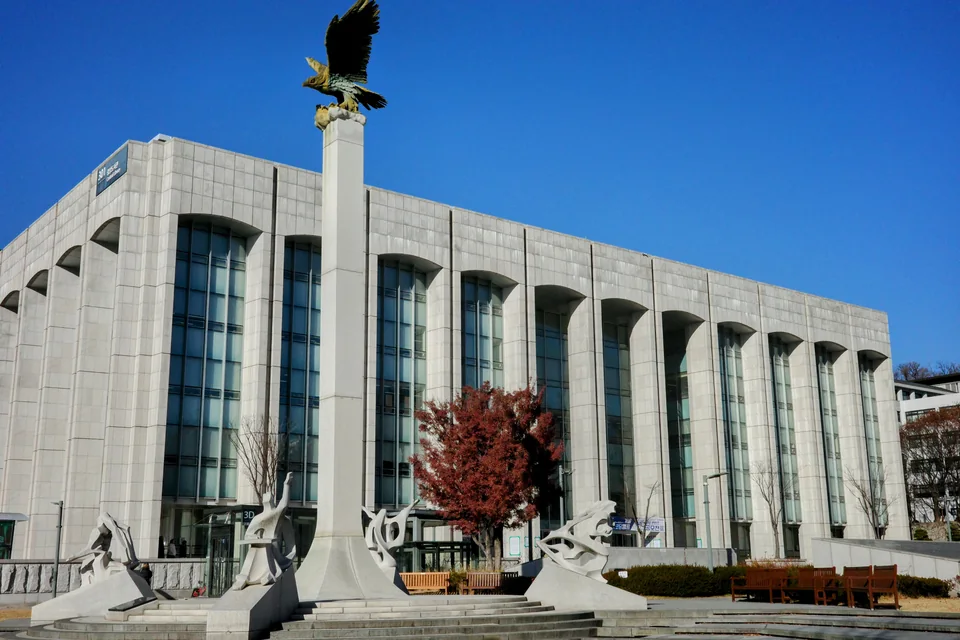
Applying to Korea at a glance
| Item | Current rule | Source |
|---|---|---|
| Intakes | Spring semester (March) and fall semester (September); not every programme admits in both | University websites |
| Decision-makers | The university admits you; a Korean embassy or consulate issues the visa; the immigration service issues your residence card | Study in Korea |
| Language at entry | SNU example: TOPIK 3, TOEFL iBT 80 (4.0 on the scale used since 21 Jan 2026), IELTS 6.0 or TEPS 269 | SNU spring 2027 admissions guides |
| Application fee | $51 (KRW 70,000) for SNU bachelor's, $66 (KRW 90,000) for SNU graduate, $95 (KRW 130,000) for Yonsei graduate, $80 for KAIST bachelor's | University websites |
| Average tuition | $5,325 (KRW 7,270,300) a year across four-year universities in 2026; $3,113 at national/public and $6,029 at private universities | Korean Ministry of Education |
| Funds for the visa | Set by the university in its admission-letter requirements, e.g. $16,113 (KRW 22 million) at Yonsei, $7,324 (KRW 10 million) at Korea University's language centre | University websites |
| Visa | D-2 for degree study, D-4-1 for Korean language programmes; the long-term visa fee for Russian citizens at the Moscow embassy is $80 | Korean Embassy in Russia |
Dollar figures use the ECB reference rates of 23 September 2026 (about KRW 1,365 per US dollar) and are rounded.
Which admission route fits you
Korean universities admit international students through a separate quota, without the Korean national exam (suneung). The right route depends on three things: your current qualification, whether you already have Korean or strong English, and how much your family can fund without a scholarship.
| Route | Best for | Language at entry | Time to degree | Main constraint |
|---|---|---|---|---|
| Direct bachelor's entry | School leavers with good grades and a language score in hand | TOPIK 3 or an English certificate, depending on the programme | 4 years; at Yonsei international freshmen spend two semesters in a foundation division with intensive Korean | Recognition of your school certificate and language level |
| Language programme first | Applicants with no Korean | None | Plus 6–12 months | Language study does not guarantee university admission |
| Master's | Bachelor's graduates in a related field | TOPIK 3 or IELTS 6.0–6.5 | 2 years | Subject fit; for research degrees, finding a supervisor |
| GKS | Strong students (80%+ average) within the age limit | Not required, but it earns points | Plus one funded year of Korean | Small country quotas and early deadlines |
| English-taught programme | Applicants strong in English and core subjects | TOEFL or IELTS | 4 or 2 years | Daily life, internships and jobs still need Korean |
Go deeper with our guides to bachelor's degrees in Korea, master's degrees in Korea, Korean language programmes and the D-4 visa and the GKS scholarship.
How applications work without a central portal
Study in Korea, the official portal run by the National Institute for International Education (NIIED), provides information and handles GKS applications, but university applications go to each university. The steps are similar almost everywhere:
- Online form on the university site. SNU, for example, accepts international applications online only, through its admissions website; paper submission is allowed only after a verifiable disruption such as a natural disaster.
- Application fee. Once you pay, SNU does not let you change the programme or withdraw; personal details and essays can still be edited until the window closes.
- Scans first, originals later. SNU wants scans with the application and originals after the preliminary decision. Yonsei's bachelor's admissions want the printed form and documents by registered mail by a fixed date.
- Recommendations. At SNU the recommender gets a link to an online form once you pay; letters sent by post or email are not accepted.
- Interviews and portfolios. Art, music and sports programmes add portfolios and auditions; some programmes interview online.
- Decision and admission letter. After admission and tuition payment the university issues a Certificate of Admission for the visa.
Most universities accept one programme per application. You may apply to several universities, paying a fee and preparing a set of documents for each.
Calendar for March and September 2027
| University and level | Start | Application window | Decision |
|---|---|---|---|
| SNU, international bachelor's | March 2027 | 6–9 July 2026 | Preliminary decision 16 October 2026 |
| SNU, master's and doctoral | March 2027 | 6–9 July 2026 | Preliminary 16 October, final 20 November 2026 |
| KAIST, graduate | March 2027 | 18 August – 1 September 2026 | Fall 2027 dates to be announced |
| Yonsei, graduate (Sinchon campus) | March 2027 | 7–14 October 2026 | 4 December 2026 |
| KAIST, bachelor's, early round | March or September 2027 | 22 September – 22 October 2026 | 7 January 2027 |
| KAIST, bachelor's, regular round | September 2027 | 10 November 2026 – 14 January 2027 | 25 March 2027 |
| Yonsei, bachelor's (last cycle, for reference) | September 2026 | 10–26 March 2026 | 19 June 2026 |
| GKS bachelor's, embassy track | March 2027, starting with a year of Korean | 15–30 September 2026 | Final list expected 7 January 2027 |
| GKS graduate, embassy track | September, starting with a year of Korean | 12–25 February in the 2026 cycle | Late June |
Sources: SNU admissions notices, KAIST graduate timeline, KAIST undergraduate timeline, Yonsei graduate schedule, 2027 GKS-U guidelines.
If you start preparing in September 2026, most March 2027 windows have closed. Realistic targets are KAIST's early and regular bachelor's rounds, Yonsei's graduate round in October, a language programme from March 2027 (Yonsei accepts applications from 7 December 2026 to 15 January 2027) and the fall 2027 intake, which many universities open in spring.
What Korean universities assess
Qualification and grades
For bachelor's entry SNU requires high school graduation by 28 February 2027 and rejects GED, homeschooling and online-only diplomas. Yonsei says it judges foreign high school completion by considering each country's school system. The 2027 rules of SNU and KAIST and Yonsei's fall 2026 rules contain no explicit "12 years of schooling" condition, but if your system has 11 grades (as in Russia or Kazakhstan), ask the admissions office in writing before paying the fee.
Master's applicants need a bachelor's degree. Most universities do not publish a minimum GPA. GKS does: 80 out of 100, the top 20% of the class, or the equivalent on 4.0, 4.3, 4.5 or 5.0 scales.
Language
| University and level | Korean | English |
|---|---|---|
| SNU, bachelor's and graduate | TOPIK 3 | TOEFL iBT 80 (4.0 for tests from 21 Jan 2026), IELTS 6.0, TEPS 269 |
| KAIST, bachelor's and graduate | Not required | TOEFL iBT 83 (4.5 on the new scale), IELTS 6.5; graduate also TOEIC 720 or TEPS 326 |
| Yonsei, graduate | TOPIK 3 in many programmes, higher in some | Set by department, e.g. IELTS 5.5 or TOEFL 3.5 (59) in history and language programmes |
| Yonsei, bachelor's | Proof of language became mandatory from the 2026 intake: a certificate, completion of a language programme, or evidence that school courses were taught in Korean or English | Same |
The TOEFL iBT moved to a new scale on 21 January 2026, so universities now publish two thresholds. Korean matters beyond admission too: Yonsei freshmen need TOPIK 3 to enter their major, and part-time work limits depend on TOPIK. See our TOPIK guide.
Personal statement, study plan, recommendations
Nearly every university asks for a personal statement and study plan, often in one form. Committees look for a link between your past study, the programme and your plans, not for enthusiasm about Korean pop culture. Graduate applicants add a research plan. Recommenders are teachers or school principals for bachelor's applicants and professors for graduate applicants.
Documents and apostille
Most applicants from Russia, Kazakhstan, Uzbekistan and other members of the Hague Convention legalise school certificates, diplomas and transcripts with an apostille; Korean universities also accept consular confirmation by a Korean embassy.
- Apostille the original or a notarised copy. For GKS, documents not in English or Korean need a certified translation, and the apostille may be on either the original or the translation. Universities set their own rule in the documents section of each admissions guide.
- Prepare several authenticated sets. The GKS guidelines warn that you will need them for the university admission letter, the visa and later immigration procedures, and originals are not returned.
- Watch expiry rules. Yonsei's language institute wants an apostille issued within the past 6 months and a bank certificate no older than 30 days.
- Country-specific rules exist. For language programmes, Yonsei and Korea University require Uzbek citizens to submit a certificate from a Korean bank operating in Uzbekistan showing a balance held for at least three months. Yonsei's language institute applies stricter paperwork to 21 countries notified by the Korean Ministry of Justice, including Kazakhstan and Uzbekistan.
Applicants from Kazakhstan can also read our overview of studying abroad from Kazakhstan.
Visa: D-2 or D-4 and why accreditation matters
Degree students receive a D-2 visa; students of university Korean language programmes receive D-4-1. The core file is the same: application form, photo, passport, the university's standard admission letter, a copy of the institution's business registration, proof of previous education and proof of funds (Study in Korea).
A lot depends on whether the university is accredited for international students. The Korean embassy in Moscow's list of 23 March 2026 names 182 universities accredited for degree programmes and 124 for language programmes. For accredited universities the Moscow embassy asks only for the form, passport, admission letter, registration certificate and a tuberculosis certificate; for non-accredited ones it adds a bank statement above the costs stated in the admission letter and sponsor documents (Korean Embassy in Russia). Requirements vary by consulate, so check the embassy that covers your place of residence.
The university asks for a bank certificate in any case: KRW 22 million ($16,113) for Yonsei degree students, the equivalent of $10,000 for Yonsei's language institute and KRW 10 million ($7,324) for Korea University's. You register for an alien registration card within 90 days of arrival. More in our Korean student visa guide.
What it costs
| Category (four-year universities, 2026) | Average annual tuition |
|---|---|
| All universities | $5,325 (KRW 7,270,300) |
| Private | $6,029 (KRW 8,231,500) |
| National and public | $3,113 (KRW 4,250,000) |
| Seoul capital area | $6,057 (KRW 8,270,000) |
| Other regions | $4,848 (KRW 6,619,600) |
| Humanities and social sciences | $4,712 (KRW 6,433,700) |
| Engineering | $5,623 (KRW 7,677,400) |
| Medicine | $7,563 (KRW 10,325,900) |
Source: Korean Ministry of Education, April 2026 disclosure analysis. These averages cover all students; check the international tuition table of your programme.
Official 2026 examples:
- SNU bachelor's: $1,789 (KRW 2,442,000) per semester in humanities and economics, $2,196 (KRW 2,998,000) in engineering.
- SNU graduate: first semester $2,401 (KRW 3,278,000) in humanities, $2,927 (KRW 3,997,000) in engineering.
- Yonsei graduate: $753 (KRW 1,028,000) entrance fee plus $4,013 (KRW 5,479,000) per semester in humanities and $5,648 (KRW 7,711,000) in engineering.
- Language programmes: $1,318–1,362 (KRW 1.8–1.86 million) per 10-week term at SNU, Yonsei and Korea University.
Add national health insurance, housing, food, flights and your first month before any stipend or part-time income. See our guides to the cost of studying in Korea and student housing in Korea. If you pay from Russia, read how to pay for studies abroad from Russia.
Scholarships
- GKS. Covers tuition (NIIED pays up to KRW 5 million per semester, the university covers the rest), a year of Korean, the flight and a monthly allowance. Quotas are small: in the 2027 bachelor's embassy track Russia has 3 places, Kazakhstan 4 and Uzbekistan 3, each including one for ethnic Koreans. Full details in our GKS guide.
- KAIST. Admitted international bachelor's students who tick the KAIST scholarship on the application receive it without a separate competition: a tuition waiver for 8 semesters and $256 (KRW 350,000) a month, subject to a GPA of at least 2.7/4.3 after the first year. In graduate programmes, 94% of international students hold a KAIST scholarship.
- SNU. The Graduate Scholarship for Foreign Students covers tuition for up to four semesters plus a stipend set by each college.
- Yonsei. International-track graduate students receive a living stipend for up to four semesters automatically.
Always build a budget that works without a scholarship: decisions come late, and the visa needs proof of funds before them. See also our overview of scholarships abroad.
A 12-month plan (example: fall 2027 intake)
- September–October 2026. Choose Korean- or English-taught study and shortlist 4–6 universities, including options outside Seoul. Note each window, language requirement and fee. Start with our Korea country page and the overview of universities in Korea for international students.
- October–December 2026. Book TOPIK or IELTS with time for a retake. If you have no Korean, decide whether you need a language term first.
- November 2026 – January 2027. Apostille, translations, grading-scale letter. KAIST's regular bachelor's round closes on 14 January 2027.
- January–March 2027. Personal statement, study plan, recommendations; graduate applicants contact potential supervisors.
- March–May 2027. Many universities take fall applications in spring (Yonsei's 2026 window was in March). Check your programmes' dates, which change each year.
- June–July 2027. Decision, tuition payment, documents for the admission letter including the bank certificate.
- July–August 2027. Tuberculosis certificate if your consulate requires it, visa appointment, dormitory, flights.
Common mistakes
- Planning around one "autumn deadline". Windows for the same semester differ by three to four months.
- Applying without a language score. Yonsei no longer reviews bachelor's applications without proof of language, and Yonsei graduate departments treat scores below their minimum as not submitted.
- An apostille on the wrong document, or an old bank certificate. Both have to be redone, and the window may close in the meantime.
- Ignoring accreditation. A non-accredited university means a heavier visa file.
- Applying for GKS through both tracks. Both applications are cancelled.
- Budgeting for part-time work in the first months of a language programme. D-4 students cannot get a work permit before six months; see working while studying in Korea.
How StudyU helps
Only the initial consultation is free; the link is at the end of this guide. Shortlisting universities for your documents and language, checking programme requirements, the application calendar, document preparation and application support are provided under an agreement with StudyU. Admission decisions are made by the university, GKS decisions by the embassy or university together with NIIED, visas by the Korean consulate and residence status by the immigration service. University profiles: SNU, KAIST, Kyungbok University.
FAQ
You can apply: the 2027 rules of SNU and KAIST and Yonsei's fall 2026 rules require high school graduation without a separate 12-year condition. Yonsei, however, evaluates foreign school completion by country, so get a written answer from the admissions office before paying. If a department insists on 12 years, options are a year at a university at home or a language year in Korea before applying.
Not for English-taught programmes: KAIST admits with TOEFL or IELTS alone. Most bachelor's programmes are taught in Korean, though, and even on an English track daily life and part-time work need Korean. Korean-taught programmes usually require TOPIK 3.
Yes, through competition. GKS covers everything including the flight and living costs, but quotas per country are small. KAIST waives tuition for admitted international bachelor's students who select its scholarship on the application. Elsewhere, discounts for language scores and grades are more common.
Usually not written ones for international applicants. Exceptions are portfolios and auditions in creative fields, online interviews in some programmes, and KAIST's requirement for standardized test results such as SAT, A-levels or national school-leaving exams.
The university sets the amount: KRW 22 million ($16,113) for Yonsei degree programmes, $10,000 for Yonsei's language institute, KRW 10 million ($7,324) for Korea University's. At non-accredited universities, the embassy in Moscow also checks a bank statement and sponsor documents.
There is no national limit, but usually one programme per university, with a separate fee and file. GKS is stricter: up to three universities via the embassy track, only one via the university track.
12–15 months before the semester. That leaves time for a language score with a retake, apostilles and essays. Add a year if you first need Korean.
Yes, the D-10-1 job-seeker status exists for this. A graduate of a Korean university switching from D-2 to D-10-1 for the first time is exempt from the points test and receives up to one year; extensions are assessed on points. The exemption also applies if you leave Korea and obtain a D-10 visa abroad within one year of graduation. The Korea Immigration Service decides (Hi Korea status manual). More in our master's guide.
Sources
- Study in Korea (NIIED): visa types and documents — checked 23 Sep 2026
- SNU spring 2027 international admissions guides — checked 23 Sep 2026
- KAIST graduate timeline, undergraduate timeline, undergraduate scholarship — checked 23 Sep 2026
- Yonsei graduate spring 2027 schedule and fall 2026 undergraduate guide — checked 23 Sep 2026
- 2027 GKS-U application guidelines — checked 23 Sep 2026
- Korean Embassy in Russia: long-term visa documents and accredited universities — checked 23 Sep 2026
- Hi Korea (Ministry of Justice): residence status manual, September 2026 edition — part-time work on D-2 and D-4, D-10 status — checked 24 Sep 2026
- Korean Ministry of Education: 2026 average tuition — checked 23 Sep 2026
- Yonsei Korean Language Institute and Korea University Korean Language Center — checked 23 Sep 2026
- ECB reference rates, 23 Sep 2026: €1 = $1.1411 = KRW 1,558
Next steps
- Bachelor's Degrees in Korea: How to Apply After High School and What It Costs
- TOPIK Exam Guide 2026–2027: Levels, Scores, Test Dates and Where to Sit It
- Master's in Korea: Requirements, Application Windows and Funding for 2027
- Working While Studying in Korea 2026: D-2 Part-Time Hours, Permits and Pay
- Scholarships abroad 2026: where international students study for free
- How to Pay for Studies Abroad from Russia: What Works in 2026
