
A master's degree in Korea takes two years (four semesters). You apply with a bachelor's degree, and the university decides on your degree and transcript, language score, study plan and recommendations; in research programmes the willingness of a future supervisor often decides the outcome. The minimum language level at Seoul National University (SNU) is TOPIK 3, TOEFL iBT 80 or IELTS 6.0; at KAIST, which teaches in English, it is TOEFL iBT 83 or IELTS 6.5. Costs range from $2,401 for a first semester in humanities at SNU to $6,401 for a first semester in engineering at Yonsei, Full funding is possible: according to KAIST, 94% of its international students hold an institutional scholarship, and GKS and SNU and Yonsei scholarships exist too.
For the spring 2027 semester universities took applications between July and October 2026: SNU on 6–9 July, KAIST from 18 August to 1 September, Yonsei on 7–14 October. Below: programme types, requirements, the calendar, costs, funding and the mistakes that most often cost a year.
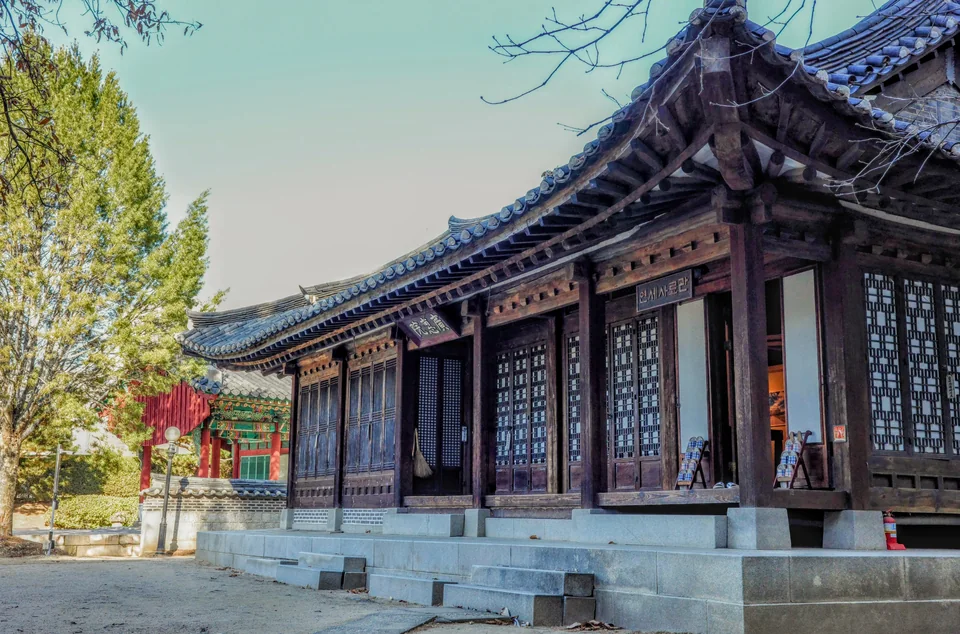
Master's in Korea at a glance
| Item | Current rule | Source |
|---|---|---|
| Length | 2 years, 4 semesters; thesis in academic programmes, project in professional ones | University websites |
| Eligibility | Holders of a bachelor's degree, or graduates who will hold one before the semester | SNU, Yonsei rules |
| Language | SNU: TOPIK 3, TOEFL iBT 80, IELTS 6.0; KAIST: TOEFL iBT 83, IELTS 6.5; Yonsei: by department | University rules |
| Windows for March 2027 | SNU 6–9 July, KAIST 18 August – 1 September, Yonsei 7–14 October 2026 | University websites |
| Application fee | $66 (KRW 90,000) at SNU, $95 (KRW 130,000) at Yonsei | University rules |
| Tuition | SNU: $2,401–2,927 (KRW 3,278,000–3,997,000) first semester in most colleges; Yonsei: $753 entrance fee plus $4,013–5,648 per semester | 2026 tuition tables |
| Funding | GKS graduate, university scholarships (KAIST, SNU GSFS, Yonsei), lab funding | NIIED, university websites |
| Visa | D-2; maximum stay for a master's is 5 years from admission | Study in Korea |
Dollar figures use the ECB reference rates of 23 September 2026 (about KRW 1,365 per US dollar) and are rounded.
Types of master's programmes
| Type | How it works | Best for |
|---|---|---|
| General Graduate School (일반대학원) | Department-based academic master's: courses, lab work, thesis; leads to a PhD | Future researchers and corporate R&D staff |
| Professional graduate schools | Separate schools of international studies (GSIS), business, public administration, data science; more coursework and projects | Applicants who want an applied degree and an English-speaking environment |
| Integrated master's–PhD | One programme instead of two stages, with no second admission to the doctorate; scholarships run longer (at Yonsei up to six semesters instead of four) | Applicants committed to research |
The type affects your application. In science and engineering academic programmes, a lab effectively admits the candidate, and an application without contact with a professor is weaker. Professional schools weigh experience, motivation and language more. Fees also vary by school: at SNU the first semester costs $2,401 (KRW 3,278,000) at the Graduate School of International Studies and $3,432 (KRW 4,686,000) at the Graduate School of Data Science.
Who a Korean master's suits
It suits researchers in engineering, IT and the sciences best: at KAIST, for example, 94% of international students hold an institutional scholarship, and the monthly stipend depends on research involvement. Second, candidates building a career in Asia who are ready to learn Korean to working level. Third, strong graduates on a limited budget who can compete for GKS or a university scholarship.
It fits less well if you want to change fields sharply, dislike long lab hours, or expect to stay in Korea after graduation without the language.
Admission requirements
Degree and subject fit
SNU and Yonsei admit applicants who hold, or will hold, a bachelor's degree before the semester. Transcripts must cover the whole degree; if your CGPA is not on a 4.0, 4.3, 4.5 or 5.0 scale, universities and NIIED want a letter describing your grading system and a converted GPA stamped by your university. Conversions from online calculators count only if your university confirms them.
Neither SNU's nor Yonsei's guide has a specific rule for five-year "specialist" diplomas common in post-Soviet countries; the university decides whether your document gives access to graduate study, so get written confirmation before paying the fee. A change of field is easier in professional programmes; academic master's committees look for continuity of subjects.
Language
| University | Korean | English |
|---|---|---|
| SNU | TOPIK 3; some departments require TOPIK | TOEFL iBT 80 (4.0 for tests from 21 Jan 2026), IELTS 6.0, TEPS 269 |
| KAIST | Not required | TOEFL iBT 83 (4.5 on the new scale), IELTS 6.5, TOEIC 720, TEPS 326 |
| Yonsei | TOPIK 3 in many programmes, higher in some | By department, e.g. IELTS 5.5 or TOEFL 3.5 (59) in history and language programmes |
At Yonsei a score below the department minimum counts as not submitted, and an application without an accepted document is not reviewed. For competitive English-taught schools aim above the minimum.
Essays and recommendations
- Study plan: what you want to study, in which lab or with which professor, and what you will do afterwards. Research programmes add a research proposal.
- Personal statement: not a biography but an explanation of how your experience leads to this programme.
- Recommendations from professors or your thesis supervisor. SNU collects them through its online system.
Writing to a professor
For academic programmes in science and engineering, email potential supervisors 4–6 months before applying. Read two or three recent papers, briefly describe your background, name a concrete question you want to work on and ask about openings and funding. Professors recognise mass emails immediately.
2027 calendar
| University | Start | Application | Interim step | Final decision |
|---|---|---|---|---|
| SNU | March 2027 | 6–9 July 2026; recommendations by 10 July | Preliminary decision 16 October 2026, then original documents | 20 November 2026 |
| KAIST | March 2027 | 18 August – 1 September 2026 | — | Fall 2027 dates to be announced |
| Yonsei (Sinchon) | March 2027 | 7–14 October 2026 | 6 November: interview list; 14 November: interviews | 4 December 2026 |
| GKS graduate | September, after a year of Korean | 12–25 February in the 2026 cycle | Embassy and NIIED rounds | Late June |
Sources: SNU, KAIST, Yonsei, 2026 GKS-G guidelines.
As of late September 2026, Yonsei (until 14 October) is the only spring window in this table still open. Fall 2027 is the more realistic target: many universities take fall applications in spring, and according to KAIST the 2027 GKS graduate call will be announced in February 2027.
What a master's costs
| University and field | Fee | What it includes |
|---|---|---|
| SNU, humanities, social sciences, business, law | $2,401 (KRW 3,278,000) | First semester, 2026 rate |
| SNU, natural sciences | $2,908 (KRW 3,971,000) | First semester |
| SNU, engineering | $2,927 (KRW 3,997,000) | First semester |
| Yonsei, humanities | $4,766 (KRW 6,507,000) | $753 entrance fee plus $4,013 semester, fall 2026 rate |
| Yonsei, economics and business | $4,034 (KRW 5,508,000) per semester | Plus the $753 entrance fee |
| Yonsei, engineering | $6,401 (KRW 8,739,000) | Entrance fee plus $5,648 semester |
| KAIST | $14,002 (KRW 19,118,000) a year in KAIST's 2023 cost estimate | In practice covered by scholarship for 94% of international students |
Sources: tuition tables in SNU's spring 2027 guide and Yonsei's spring 2027 guide, KAIST cost of attendance.
For the visa admission letter the university asks for proof of funds. Yonsei requires at least KRW 22 million ($16,113) in the student's or parents' account, or other documents showing at least that amount for a year of study and living. KAIST's estimate adds about $8,108 (KRW 11,070,787) a year for on-campus housing, food, insurance and phone. Full budgets in our guide to the cost of studying in Korea.
Four ways to fund it
GKS graduate scholarship
The government scholarship pays for a year of Korean, tuition (up to KRW 5 million per semester), the flight and a monthly allowance: in the 2026 cycle KRW 16.56 million ($12,129) a year during the degree and KRW 14.4 million ($10,547) during the language year. Age limit under 40, average 80%+, and TOPIK 3 or higher adds 10% bonus points. Embassy-track quotas in 2026: Russia 16 plus 4 for ethnic Koreans, Kazakhstan 13 plus 7, Uzbekistan 13 plus 6. Details in our GKS guide.
University scholarships
- KAIST. International applicants who choose the KAIST scholarship as their funding source get full tuition, national health insurance and a monthly stipend tied to research participation. The strongest master's applicants may be recommended for the KAIST Global Presidential Scholarship: KRW 1 million ($732) a month for four semesters (KAIST).
- SNU. The Graduate Scholarship for Foreign Students covers tuition for up to four semesters plus a stipend whose amount and duration depend on the college.
- Yonsei. International-track students of the General Graduate School automatically receive a living stipend for up to four semesters.
Lab funding
In research-intensive fields professors pay tuition and stipends from their grants in exchange for project work. There is no separate application: you agree it by email before applying.
Your own budget
Even if a scholarship looks likely, plan a scenario without it: decisions come late, and the bank certificate for the admission letter is needed earlier. See also our overview of scholarships abroad.
Documents and apostille
The core file: diploma and transcript, grading-scale letter with GPA, passport, language score, study plan, recommendations and, for some programmes, a portfolio or publication list. Documents not in English or Korean are translated, and diplomas and transcripts are legalised with an apostille in Hague Convention countries or by Korean consular confirmation elsewhere. Make several authenticated sets: originals sent to universities or NIIED are not returned. General document rules are in our guide to applying to Korean universities.
Visa and first weeks
Master's students receive a D-2 visa. If the university is on the accreditation list (182 universities in 2026), the Korean embassy in Moscow, for example, accepts a short file: form, passport, admission letter, university registration and a tuberculosis certificate from a designated clinic. Within 90 days of arrival you register for an alien registration card. Work requires separate permission from the immigration service: master's students with TOPIK 4 may work up to 30 hours a week during term, those without it 15 hours (Hi Korea status manual). See student visas for Korea and working while studying in Korea.
Can you stay in Korea after a master's? The D-10 status
The D-10-1 (general job-seeker) status covers the period after graduation. Its conditions are set out in the Ministry of Justice's residence status manual published on the Hi Korea portal (September 2026 edition):
| Condition | Current rule |
|---|---|
| First switch from D-2 to D-10-1 | Graduates of Korean universities are exempt from the points test; the first grant is up to 1 year |
| Extension | Assessed on points; graduates with TOPIK 4 or KIIP (the government integration programme) level 4 are exempt within 3 years of graduation |
| Already back home | The points exemption also applies if you obtain a D-10 visa abroad within one year of graduation |
| Purpose | Job search or training for professions that lead to E-1 to E-7 visas: teaching, research, professionals |
| Part-time work on D-10-1 | Only for Korean-university graduates within 3 years of graduation with TOPIK 4 or KIIP 4: up to 25 hours on weekdays, unlimited at weekends, with a separate permit costing KRW 120,000 ($88) |
The Korea Immigration Service grants and extends the status, and the manual is updated whenever the rules change, so check the current edition on Hi Korea or call the foreigner helpline 1345 before you graduate. The practical takeaway for a master's student: TOPIK 4 by graduation means more permitted work hours while studying and an easier job search afterwards.
Step-by-step plan for fall 2027
- September–October 2026. Decide between academic and professional study; shortlist 5–8 programmes, including universities outside Seoul.
- October–December 2026. Take IELTS, TOEFL or TOPIK. Start reading potential supervisors' papers.
- December 2026 – January 2027. Emails to professors; grading-scale letter; apostille and translations.
- February 2027. If applying for GKS, watch your embassy's announcement: the 2026 window was 12–25 February.
- March–May 2027. University applications for fall; online interviews.
- June–July 2027. Results, tuition payment or scholarship confirmation, documents for the admission letter including the bank certificate.
- July–August 2027. D-2 visa, dormitory, flights.
Common mistakes
- Applying to a research programme without contacting a lab. It is allowed, but a strong file without a supervisor loses to a weaker one with a supervisor.
- The same study plan for every university. Committees see it is not about their department.
- A transcript without a GPA on an accepted scale. NIIED and universities warn that unconverted grades may not be counted.
- An expired bank certificate. Universities want a recent one; Yonsei's language institute, for example, accepts certificates no older than 30 days.
- Counting on a scholarship too early. Until the written decision, budget without it.
How StudyU helps
Only the initial consultation is free; the link is at the end of this guide. Shortlisting programmes for your degree, checking department requirements, the application calendar, documents and supervisor emails, and application support are provided under an agreement with StudyU. Admission is decided by the university, scholarships by the university or NIIED, and visas by the Korean consulate. University profiles: SNU, KAIST; country overview: studying in Korea.
FAQ
Yes. You need a bachelor's degree (or another degree the university accepts) with apostille, translation and transcript, plus a language score. The university itself decides on recognition.
Yes. KAIST teaches in English, and SNU and Yonsei have English-taught professional schools and programmes. SNU accepts TOEFL iBT 80 or IELTS 6.0; KAIST TOEFL iBT 83 or IELTS 6.5.
At SNU the first semester costs $2,401–2,927 in most colleges; at Yonsei from $4,766 including the entrance fee. At KAIST most international students have tuition covered by scholarship.
Yes, through GKS, university scholarships or lab funding. At KAIST 94% of international students hold an institutional scholarship; SNU and Yonsei run their own programmes for international graduate students.
For academic programmes in science and engineering, strongly advisable: a supervisor's agreement often decides the result. For professional programmes it is optional.
SNU's and Yonsei's admission rules set none. GKS graduate has a limit of under 40: in the 2026 cycle applicants had to be born after 1 September 1986.
Yes, through the D-10-1 job-seeker status. A Korean-university graduate switching from D-2 to D-10-1 for the first time is exempt from the points test and receives up to one year; with TOPIK 4, the exemption also covers extensions within three years of graduation. The Korea Immigration Service grants the status.
In summer and autumn of the previous year: SNU in July, KAIST in August, Yonsei in October. Dates change yearly, so build your calendar from your universities' notices.
Sources
- SNU spring 2027 graduate admissions guide for international students — checked 23 Sep 2026
- KAIST timeline, language requirements, scholarships, cost of attendance — checked 23 Sep 2026
- Yonsei schedule and spring 2027 guide for international students — checked 23 Sep 2026
- 2026 GKS graduate application guidelines — checked 23 Sep 2026
- Study in Korea: visas and length of stay — checked 23 Sep 2026
- Hi Korea (Ministry of Justice): residence status manual, September 2026 edition — part-time work on D-2, D-10 status — checked 24 Sep 2026
- Korean Embassy in Russia: long-term visa documents — checked 23 Sep 2026
- ECB reference rates, 23 Sep 2026: €1 = $1.1411 = KRW 1,558
Next steps
- Applying to Korean Universities in 2027: Routes, Deadlines, Documents and Costs
- Working While Studying in Korea 2026: D-2 Part-Time Hours, Permits and Pay
- GKS Scholarship Korea: Quotas, Eligibility and Deadlines for 2027
- Cost of Studying in Korea 2026: Tuition per Semester, Living Costs and a First-Year Budget
- Scholarships abroad 2026: where international students study for free
- Studying in South Korea for international applicants
