
Long-term Korean courses in Korea are run by language institutes attached to universities. The year has four 10-week terms, each roughly equal to one of six levels. A term at the Yonsei, SNU and Korea University centres costs $1,208–1,362 (KRW 1.65–1.86 million), plus an application fee of $73–88 (KRW 100,000–120,000). Study longer than 90 days needs a D-4-1 visa, which requires the institute's admission letter, issued after tuition payment, and proof of funds: for example, the equivalent of $10,000 for Yonsei or $7,324 (KRW 10 million) for SNU and Korea University.
A language programme makes sense if you plan a Korean-taught degree, want to prepare for TOPIK or want a clear legal status for a longer stay. The spring 2027 term starts in March, and applications stay open into December–January: SNU until 24 December 2026, Yonsei until 15 January and Korea University until 22 January 2027.
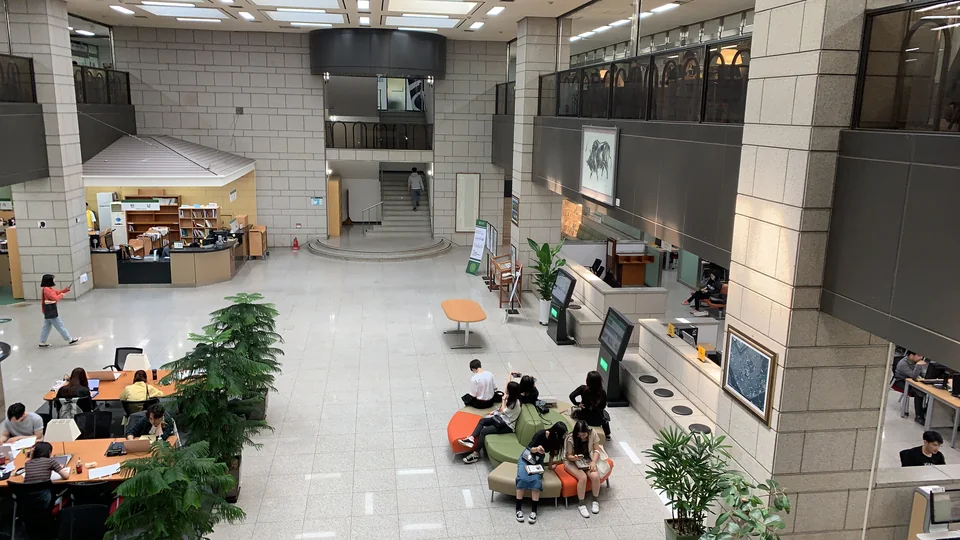
Korean language programmes at a glance
| Item | Current rule | Source |
|---|---|---|
| Where to study long-term | Language institutes attached to universities (eohakdang); the D-4-1 visa is issued for them | Korean Embassy in Russia |
| Format | 4 terms a year, 10 weeks, about 20 hours a week | Yonsei, SNU |
| Fee per term | $1,318–1,362 (KRW 1.8–1.86 million) for morning classes; SNU afternoon class $1,208 (KRW 1.65 million) | Yonsei, SNU, Korea University |
| Application fee | $88 (KRW 120,000) at Yonsei and Korea University, $73 (KRW 100,000) at SNU | University websites |
| Entry condition | Completed high school; Yonsei does not accept provisional graduation certificates | Yonsei KLI |
| Funds for the visa | Equivalent of $10,000 at Yonsei; $7,324 (KRW 10 million) at SNU and Korea University; certificate no older than a month | University websites |
| Minimum length for a visa letter | Korea University issues a letter only for at least 2 terms (4 for Uzbek citizens); Yonsei requires citizens of Kazakhstan, Uzbekistan and several other countries to register for 4 at once | University websites |
| Part-time work | Not before 6 months, with immigration permission | Ministry of Justice manual on Hi Korea |
Dollar figures use the ECB reference rates of 23 September 2026 (about KRW 1,365 per US dollar) and are rounded.
Types of Korean courses in Korea
| Format | Length | Visa | Best for |
|---|---|---|---|
| University regular programme | 10-week terms, one term to several years | D-4-1 for stays over 90 days; Korea University issues letters for 2+ terms | University preparation, TOPIK, work |
| University short programme | A few weeks, often summer and winter | Usually no D-4; entry rules depend on citizenship | Trying the country and the language |
| Online programme of a Korean centre | Remote term | None | Starting from home before moving |
| Private language school | Flexible | Not a D-4-1 basis: the Moscow embassy issues it on an invitation from a university language institute | An add-on during a short trip, not a visa basis |
Regular programmes look alike almost everywhere: levels 1 to 6, placement by test, daily classes in the morning or afternoon. SNU also offers an advanced academic class after level 6 for students heading to university.
Three Seoul language centres compared
| Yonsei (Korean Language Institute) | SNU (Language Education Institute) | Korea University (Korean Language Center) | |
|---|---|---|---|
| Fee per term, 2026 | $1,362 (KRW 1,860,000) | Morning $1,318 (KRW 1,800,000), afternoon 1,650,000 ($1,208), advanced academic 1,450,000 ($1,062) | $1,318 (KRW 1,800,000) |
| Application fee | $88 (KRW 120,000), non-refundable | $73 (KRW 100,000), non-refundable | $88 (KRW 120,000), non-refundable |
| Hours | 200 hours in 10 weeks | Morning class 9:00–13:00, afternoon class 13:30–17:20, five days a week; advanced academic class 160 hours in 10 weeks | 10-week term, classes of up to 14 |
| Spring 2027 applications | 7 December 2026 – 15 January 2027 | 2 November – 24 December 2026 | 7 December 2026 – 22 January 2027 |
| Spring 2027 classes | 5 March – 20 May | 8 March – 14 May | 18 March – 31 May |
| Funds for D-4 | Equivalent of $10,000+ on one certificate, within 30 days | $7,324 (KRW 10 million)+, within 30 days | $7,324 (KRW 10 million)+, within one month |
Sources: Yonsei KLI, SNU LEI programme, application and fees, Korea University KLC schedule and application guide. Fees are revised every year; if they rise after you pay, centres ask for the difference.
The differences matter more than the table suggests. At Yonsei morning classes fill first and are allocated in order of payment, so pay within three days of admission. At SNU the afternoon class is 10% cheaper, and you can switch only until the Friday two weeks before term. Korea University needs one to two weeks to review documents after arrival, so originals must arrive at least two weeks before the deadline.
2027 calendar
| 2027 term | Yonsei: applications | Yonsei: classes | Korea University: applications | Korea University: classes |
|---|---|---|---|---|
| Spring | 7 Dec 2026 – 15 Jan 2027 | 5 March – 20 May | 7 Dec 2026 – 22 Jan 2027 | 18 March – 31 May |
| Summer | 8 March – 16 April | 3 June – 13 August | 8 March – 23 April | 16 June – 26 August |
| Fall | 7 June – 16 July | 1 September – 17 November | 7 June – 23 July | 10 September – 26 November |
| Winter | 6 September – 15 October | 1 Dec 2027 – 14 Feb 2028 | 6 September – 22 October | 14 Dec 2027 – 28 Feb 2028 |
At SNU the 2027 spring term runs 8 March – 14 May, summer 7 June – 13 August and fall 6 September – 12 November; summer applications are open 1 February – 29 March 2027.
These are university deadlines, not visa deadlines. After admission you pay tuition, receive the admission letter and go through the consulate, so allow six to eight weeks for a D-4 visa. Yonsei explicitly asks D-4 applicants to send documents at least a week before the deadline.
D-4-1 visa: documents and money
What the university issues
The language centre issues a Certificate of Admission only after tuition is paid. It checks:
- Education document — high school certificate or degree with apostille. Yonsei wants an apostille issued within the past 6 months and does not accept expected or provisional graduation certificates.
- Bank certificate in the name of the student or parents. Yonsei requires one certificate showing a balance of at least $10,000, issued within 30 days; transaction statements are not accepted, nor are certificates in a spouse's or sibling's name. Korea University requires $7,324 (KRW 10 million) or more, issued within a month.
- Proof of family relationship, apostilled and translated, if the money is in a parent's account.
Some nationalities face stricter rules. Yonsei lists Kazakhstan and Uzbekistan among 21 countries for which the Korean Ministry of Justice requires an extended file (transcript and family documents even with a certificate in your own name), and citizens of Kazakhstan, Uzbekistan, Kyrgyzstan, Tajikistan, Turkmenistan and a number of Asian and African countries must register for four terms at once. Korea University also registers citizens of Uzbekistan (as well as Mongolia and Vietnam) for four terms at once. For Uzbek citizens both Yonsei and Korea University require a certificate from a Korean bank operating in Uzbekistan with the balance held for at least three months. Check the list of your chosen centre for your own nationality.
What the embassy checks
According to the Korean embassy in Moscow, the D-4-1 file is the same as for D-2. If the university's language programme is accredited (124 universities in 2026), a form, photo, passport with copy, admission letter, university registration and a tuberculosis certificate from a designated clinic are enough; the long-term visa fee for Russian citizens is $80. For non-accredited centres the embassy adds a bank statement above the costs in the admission letter and sponsor documents (Korean Embassy in Russia, accredited universities). Other embassies publish their own lists, so check the one covering your place of residence.
Within 90 days of arrival you register for an alien registration card. At SNU, a refund or deferral request leads to cancellation of the D-4 visa within two weeks, so change plans carefully. See also our Korean student visa guide.
What a term and a year cost
| Item | One term | Year (4 terms) |
|---|---|---|
| Tuition at Yonsei | $1,362 (KRW 1,860,000) | $5,449 (KRW 7,440,000) |
| Tuition at SNU, morning class | $1,318 (KRW 1,800,000) | $5,273 (KRW 7,200,000) |
| Application fee (Yonsei, Korea University; $73 at SNU) | $88 (KRW 120,000) once | $88 |
| Textbooks | Paid separately | — |
| Visa fee (Russian citizens, Moscow) | $80 once | $80 |
Sources: language centre websites, Korean Embassy in Russia.
Add housing, food, transport, phone and health insurance. The bank balance for the visa is not a payment but proof that funds are available, and you will live on them. See student housing in Korea and the cost of studying in Korea.
Refunds after classes start are partial. At Yonsei in 2026, withdrawing within the first 8 class days returns 80% of tuition ($1,090 [KRW 1,488,000]), and the share falls after that; application fees are non-refundable at all three centres.
Can you work during a language programme?
Under the Ministry of Justice manual published on Hi Korea, a D-4-1 student can get a part-time work permit no earlier than six months after entry and with attendance of at least 90% across all terms; the permit is issued for up to 6 months and for one workplace only (Hi Korea). The hours depend on your Korean: according to Cheongju University's summary of the rules, without TOPIK 2 (or an equivalent level) the limit is 10 hours a week, and with it more, up to 25 hours depending on the university's status (Cheongju University). The permit is obtained in advance through Hi Korea or an immigration office; working without it violates your status. More in working while studying in Korea.
In practice, your family funds the first six months; do not count on earnings in the first-year budget.
From language programme to university
A language year is the most common route into a Korean-taught degree for beginners. A few rules save time:
- TOPIK target. Most Korean-taught bachelor's and master's programmes require TOPIK 3. SNU accepts completion of level 4 at a Korean university language centre instead of TOPIK 3. See our TOPIK guide.
- Apply while still studying Korean. Spring windows open in the summer and autumn before, so prepare university documents during your second or third language term.
- Visa change. After university admission your status changes from D-4 to D-2; check the procedure, and whether it can be done without leaving Korea, with immigration or Hi Korea before your course ends.
- The GKS language year is different. The scholarship pays for it and NIIED assigns the institute. If you apply for GKS, self-funded courses are optional, a way to get TOPIK and bonus points. See our GKS guide.
The overall admission process is in our guide to applying to Korean universities; bachelor's requirements are in bachelor's degrees in Korea.
How to choose a language centre
- Goal. If you target a specific university, studying at its institute lets you learn the campus and requirements from inside. For TOPIK any large centre works.
- City. Seoul costs more but offers more choice. Institutes at regional universities also issue D-4 letters, and university accreditation simplifies the visa file.
- Accreditation. Check the university on the embassy's list of accredited language programmes.
- Rules for your nationality. Minimum registration and bank certificate rules differ by country.
- Schedule. Morning classes are more convenient but fill faster and cost more.
- Housing. Ask when dormitory applications open. At Yonsei this is possible only after tuition payment and issue of a student ID, and rooms cover only about 10% of students: they go on the first day, so most students live off campus.
Plan for spring 2027 (Yonsei example)
- October–November 2026. Apostille your school certificate or degree and translate it. Decide how many terms to book to meet the centre's minimum for a visa letter.
- Early December. Bank certificate for $10,000 or more, issued no more than 30 days before you send it.
- 7 December 2026 – early January 2027. Online application, $88 (KRW 120,000) fee, originals by courier at least a week before the deadline.
- January. Admission, tuition payment by 22 January, admission letter.
- February. Tuberculosis certificate if your consulate requires it, D-4-1 visa application, flights, housing.
- 2 March 2027. Placement test; 4 March orientation; 5 March classes begin.
Common mistakes
- Applying on the last day. For D-4, centres review documents only after they arrive by post; late sending moves you to the next term.
- A transaction statement instead of a balance certificate. Yonsei accepts only a single signed and stamped balance certificate.
- A certificate issued too early. Validity is 30 days at Yonsei and one month at Korea University.
- Booking one term and expecting a visa. Korea University issues letters only for at least two terms (four for Uzbek citizens); Yonsei requires four for several Central Asian nationalities.
- Counting on part-time work in the first half-year. No permit is issued before six months.
How StudyU helps
Only the initial consultation is free; the link is at the end of this guide. Choosing a centre for your goal and nationality, checking document rules, preparing the file and linking the language year to university admission are provided under an agreement with StudyU. Enrolment is confirmed by the university, the D-4 visa is issued by the Korean consulate and work permits by the immigration service. See our Korea country page.
FAQ
At large Seoul centres a 10-week term costs $1,208–1,362 (KRW 1.65–1.86 million), plus an application fee of $73–88. A year of four terms at Yonsei is $5,449 before housing and books.
For study longer than 90 days, D-4-1, issued on the admission letter of a university language institute after tuition payment. Short programmes do not need it, but entry rules depend on your citizenship.
The centre sets it: the equivalent of $10,000 at Yonsei, $7,324 (KRW 10 million) at SNU and Korea University. The certificate must be recent (no older than a month) and in the student's or parents' name.
Yes. A placement test decides your level, and beginners start at level 1. Yonsei has no age limit, but you must have finished high school.
Only after six months in Korea, with at least 90% attendance and an immigration permit. The limit is 10–25 hours a week depending on your Korean level and the university.
It depends on your start and effort. The benchmark is TOPIK 3 or completion of level 4 at a Korean university language centre, which SNU accepts instead of TOPIK 3. From zero that usually takes several terms, so prepare university applications during the course.
Yes, some centres such as Korea University offer online terms. They do not lead to a visa but help you start from zero before moving and reach the placement test with a foundation.
Sources
- Yonsei Korean Language Institute: regular programme, fees, D-4 documents, 2026–2027 schedule — checked 23 Sep 2026
- SNU Language Education Institute: programme and schedule, application documents and fee, fees and refunds — checked 24 Sep 2026
- Korea University Korean Language Center: schedule, application procedure — checked 23 Sep 2026
- Korean Embassy in Russia: long-term visa documents and accredited universities — checked 23 Sep 2026
- Study in Korea: D-2 and D-4 visas — checked 23 Sep 2026
- Hi Korea (Ministry of Justice): residence status manual, September 2026 edition — part-time work on D-4 — checked 24 Sep 2026
- Cheongju University: part-time work rules for D-2 and D-4 — checked 23 Sep 2026
- ECB reference rates, 23 Sep 2026: €1 = $1.1411 = KRW 1,558
Next steps
- Bachelor's Degrees in Korea: How to Apply After High School and What It Costs
- TOPIK Exam Guide 2026–2027: Levels, Scores, Test Dates and Where to Sit It
- Applying to Korean Universities in 2027: Routes, Deadlines, Documents and Costs
- Working While Studying in Korea 2026: D-2 Part-Time Hours, Permits and Pay
- How to Pay for Studies Abroad from Russia: What Works in 2026
- Studying in South Korea for international applicants
