
Japan has 816 universities: 85 national, 104 public (run by prefectures or cities) and 627 private, according to preliminary figures from the Ministry of Education (MEXT) for 1 May 2026. International applicants have three ways in: a Japanese-taught degree through the EJU exam and a university's own screening, an English-taught degree, or a master's or doctorate arranged with a supervisor. A year at a national university usually costs $3,410 (¥535,800), plus a one-off admission fee of $1,790 (¥282,000). The University of Tokyo has charged new undergraduates $4,090 (¥642,960) since 2025. MEXT recognises several 11-year school systems, including those of Russia, Kazakhstan, Belarus and Uzbekistan, as sufficient for university entry.
This guide explains how the types of institution differ, how to read the rankings, which English-taught programmes are open for 2027 and 2028 entry, where to sit the EJU and JLPT, what the first year really costs and which scholarships are worth planning for. At the end you will find links to StudyU's detailed university profiles.
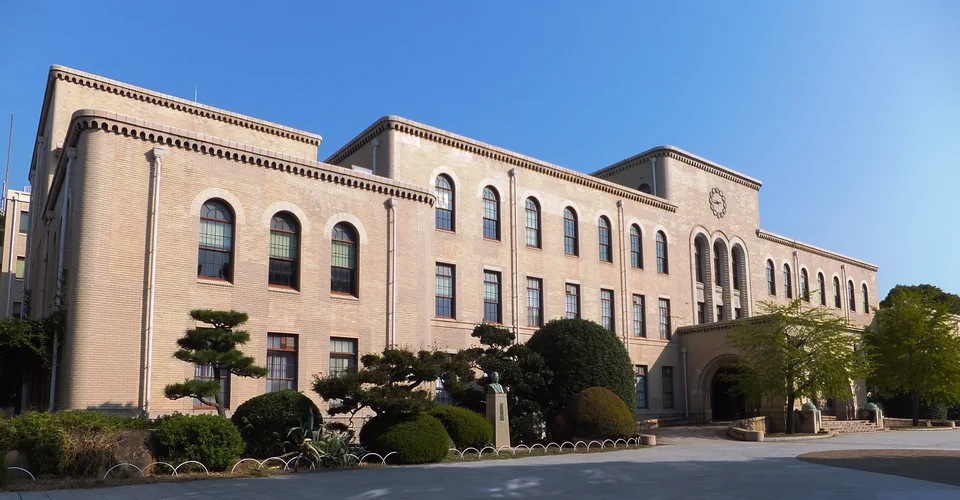
Japanese universities at a glance
| Indicator | Figure | Source and date |
|---|---|---|
| Universities | 816: 85 national, 104 public, 627 private | MEXT, preliminary, 1 May 2026 |
| University students | 3,000,542, of whom 284,802 are in graduate school | MEXT, 1 May 2026 |
| International students | 408,069 across all institution types; 92,442 undergraduates and 60,013 graduate students | JASSO, 1 May 2025 |
| Leader in QS 2027 | The University of Tokyo, 39th | QS, article updated 1 July 2026 |
| National university fee | Usually $3,410 (¥535,800) a year + $1,790 (¥282,000) on enrolment | Kyoto and Osaka university websites |
| Average first year | About $5,220 (¥820,000) at a national university, $8,270 (¥1,300,000) at a private one (excluding medicine) | Study in Japan (JASSO) |
| Living costs | About $670 (¥105,000) a month on average; rent $260 (¥41,000) nationally and $365 (¥57,000) in Tokyo | Study in Japan, JASSO 2023 survey |
Types of higher education institution
The institution type determines the price, the teaching language and the qualification you leave with. In Japan the word daigaku (大学, university) is reserved for institutions that award bachelor's degrees or higher.
| Type | What it is | Examples | What to check |
|---|---|---|---|
| National university | State-founded, run as a national university corporation | Tokyo, Kyoto, Osaka, Tohoku, Institute of Science Tokyo | Fees are close to the state standard of $3,410 (¥535,800), but some have raised them: Tokyo to $4,090 (¥642,960), Institute of Science Tokyo to $4,040–4,090 (¥635,400–642,960) |
| Public university | Run by a prefecture or city | Tokyo Metropolitan University, Osaka Metropolitan University | Local residents often pay a lower admission fee; international students usually pay the full rate |
| Private university | Non-state, the largest group | Waseda, Keio, Sophia, APU, iCLA | Higher and faculty-dependent fees, but more English-taught bachelor's programmes |
| Junior college | Two- to three-year applied programmes | Education, care work | Does not award a bachelor's degree |
| College of technology (kosen) | Five-year engineering education after lower secondary school | National colleges of technology | International students usually join in year 3; teaching is in Japanese |
| Specialised training college (senmon gakko) | Two- to four-year vocational programmes: IT, design, animation, cooking | Private schools nationwide | Usually requires JLPT N2 or higher; see our guide to senmon gakko |
Average first-year charges according to Study in Japan are about $5,220 (¥820,000) at a national university, $5,790 (¥910,000) at a public one, $8,270 (¥1,300,000) at a private one and about $24,190 (¥3,800,000) on private medicine, dentistry and pharmacy programmes. These figures cover the admission fee and first-year tuition, not rent or living costs.
"Former imperial" and other labels
Descriptions of Japanese universities often mention the "former imperial universities", the institutions founded as imperial universities before 1945. Seven of them are in present-day Japan: Tokyo (1877), Kyoto (1897), Tohoku in Sendai (1907, the country's third national university), Kyushu, Hokkaido, Osaka (1931, the sixth imperial university) and Nagoya. All seven are national universities today, all charge fees at or near the state scale and all are strong in science and engineering. Japanese employers still read the list as a clear signal.
Among private universities, Waseda and Keio are generally regarded in Japan as the two leading names. They sit lower in international rankings than the former imperial seven, but their reputation with Japanese employers is comparable.
Names also change. Tokyo Institute of Technology and Tokyo Medical and Dental University merged in October 2024 to form the Institute of Science Tokyo. Osaka University adopted the official English name The University of Osaka in April 2025. Older articles and ranking tables still use the previous names.
Rankings for 2026–2027
The three main global rankings place Japanese universities quite differently, especially the private ones.
| University | City | QS 2027 | THE 2026 | ARWU 2026 |
|---|---|---|---|---|
| The University of Tokyo | Tokyo | 39 | 26 | 30 |
| Kyoto University | Kyoto | 64 | 61 | 43 |
| The University of Osaka | Suita, Toyonaka, Minoh (Osaka Prefecture) | 95 | =151 | 101–150 |
| Institute of Science Tokyo | Tokyo | =97 | 166 | 151–200 |
| Tohoku University | Sendai | 102 | =103 | 201–300 |
| Nagoya University | Nagoya | 156 | 201–250 | 101–150 |
| Kyushu University | Fukuoka | 171 | 301–350 | 301–400 |
| Hokkaido University | Sapporo | =179 | 351–400 | 201–300 |
| Waseda University | Tokyo | =201 | 801–1000 | 601–700 |
| Keio University | Tokyo | =213 | 601–800 | 301–400 |
Four Japanese universities are in the QS 2027 top 100. The gap between Waseda's and Keio's QS and THE positions shows how differently the tables weight citations and reputation, so subject rankings and the actual labs matter more than an overall position.
Three routes into a Japanese university
Admission in Japan does not work like Europe or China. International applicants do not sit the national entrance test with Japanese school-leavers. They apply through a separate screening for international students, through an English-taught programme or directly to graduate school.
| Route | Teaching language | What you sit | Start | Best for |
|---|---|---|---|---|
| Special screening for privately financed international students (私費外国人留学生特別選考) | Japanese | EJU, often TOEFL, the university's essay and interview | April | Applicants already learning Japanese or ready for 1.5–2 years at a language school |
| English-taught bachelor's | English, sometimes switching to Japanese in later years | IELTS/TOEFL, SAT/IB/A Level or school grades, essay, interview | Mostly September–October, some April | Strong school-leavers without Japanese |
| Master's, doctorate or research student status | English or Japanese | Degree, research plan, supervisor's consent, graduate school exam | April or October | Bachelor's graduates |
Japanese-taught degrees: the EJU and a university exam
Most places for international students are on Japanese-taught programmes, and each university sets its own rules. At the University of Tokyo, the screening for privately financed international students for April 2027 accepts applications from 1 to 7 December 2026. Applicants need EJU results from June or November 2026 (Japanese plus mathematics and science or "Japan and the World", depending on the division) and a TOEFL iBT or IELTS score no more than two years old. After the document review, shortlisted candidates write an essay in Japanese on 25 February 2027 and are interviewed in Japanese on 4 March. The University of Osaka sets minimum EJU Japanese scores for the same kind of screening, from 200 in engineering to 360 in foreign studies and pharmaceutical sciences and 400 in medicine (out of a possible 450 including the writing section).
Many universities do not ask for the JLPT on this route, because the EJU Japanese section and the interview test the language. A JLPT certificate is still useful for language school, visa and part-time work. See our guides to the EJU and the JLPT.
English-taught degrees
National universities offer few English-taught bachelor's programmes, and competition is intense. What is open for 2027–2028 entry:
- The University of Tokyo, UTokyo College of Design. A new five-year combined bachelor's and master's programme taught entirely in English, 100 places, starting 1 September 2027. Applications run from 15 October to 5 November 2026. The previous English-taught programme, PEAK, took its final intake in September 2026.
- Kyoto University, Kyoto iUP. 4.5 years: six months of preparation, then a bachelor's degree in which teaching moves to Japanese by the third year. 40 places for October 2027; applications from 2 November to 3 December 2026. Every admitted student receives a full admission fee waiver and a full or partial tuition waiver.
- Kyoto University, Undergraduate International Course Program of Civil Engineering. Fully in English, April start; the preliminary screening for 2027 entry already took place in August 2026.
- The University of Osaka, Human Sciences International Undergraduate Degree Program. Social sciences and humanities in English, starting 1 October 2027; applications from 1 December 2026 to 5 January 2027. No Japanese is required to apply.
- The University of Osaka, International Undergraduate Program in Science. Biology, chemistry, mathematics and physics taught in English and Japanese; JLPT N3 is required (N2 for biology).
- Private universities. Waseda runs English-based programmes in six undergraduate schools; Sophia, International Christian University (ICU), the Institute of Science Tokyo (GSEP), Ritsumeikan Asia Pacific University in Beppu and iCLA in Kofu also offer bachelor's degrees in English.
Fees, requirements and pitfalls are covered in our guide to English-taught degrees in Japan.
Graduate school and research students
English-taught master's and doctoral programmes are far more common than bachelor's ones at national universities. The University of Tokyo lists more than twenty English-taught graduate programmes, from engineering and chemistry to public policy. Many international students first enrol as research students (kenkyusei, 研究生): a non-degree status of 6–12 months used to prepare for the master's entrance exam under a professor. At the University of Tokyo this costs $185 (¥28,900) a month plus $540 (¥84,600) on enrolment; at Kyoto University it is $190 (¥29,700) a month. See our guide to master's degrees in Japan.
The 12-year rule and 11-year school systems
Japanese law requires 12 years of schooling, or a recognised equivalent, for bachelor's admission. MEXT keeps a list of foreign school programmes it accepts as equivalent even though they are shorter than 12 years. It includes:
| Country | Programme | Covered graduates |
|---|---|---|
| Russia | General secondary education | Completed on or after 6 October 2009 |
| Kazakhstan | General secondary education | From 27 July 2007 |
| Belarus | Third stage of general secondary education | From 13 January 2011 |
| Uzbekistan | Secondary education | From 15 March 2017 |
| Ukraine | Complete general secondary education | From 23 May 1991 |
A graduate of one of these systems is therefore eligible in principle. Individual programmes still add their own conditions: the University of Tokyo's Japanese-track screening requires at least one year at the final school abroad, and Kyoto iUP requires applicants to be 18 by 1 April 2028. Applicants from countries not on the list usually need a MEXT-designated preparatory course, a year at university at home or an individual eligibility review by the university. Our guide to studying in Japan after 11 years of school walks through the options.
Where to sit the EJU, JLPT and English tests
- EJU runs twice a year, in June and November. Scores are valid for two years and are used by 479 Japanese universities. Outside Japan it is held in 17 cities in 13 Asian countries and territories; the options closest to the former Soviet region are Seoul, Busan and Ulaanbaatar. There is no test centre in Russia, Kazakhstan or Uzbekistan, so applicants either take it in Japan while at a language school or travel to Seoul or Ulaanbaatar.
- JLPT can be taken at home. Moscow, Vladivostok, Almaty, Tashkent and Bishkek host it in July and December; Novosibirsk and Khabarovsk in December only.
- TOEFL iBT now also reports scores on a 1–6 scale, and Japanese universities quote both: Kyoto iUP asks for 4.5 (or 90 on the old scale), Osaka's Human Sciences programme for 4.5 (or 85 for tests taken on or before 20 January 2026). A typical IELTS threshold is 6.5.
Choosing a university by field
| Field | Where to start | What to check |
|---|---|---|
| Engineering and IT | Institute of Science Tokyo, Tokyo, Kyoto, Osaka, Tohoku | Almost all undergraduate teaching is in Japanese; English options include GSEP at Science Tokyo, civil engineering at Kyoto and graduate programmes |
| Natural sciences | Kyoto, Tokyo, Osaka (IUPS), Nagoya | IUPS requires JLPT N3; graduate entry depends on a supervisor |
| Social sciences and humanities in English | Osaka (Human Sciences), Waseda, Sophia, ICU, APU | How much of the senior-year teaching is in English and whether internships need Japanese |
| Design and interdisciplinary projects | UTokyo College of Design | Five-year programme, compulsory first-year housing, fourth-year internship |
| Business and MBA | Hitotsubashi (ICS, English-taught MBA), Kyoto (i-MBA), Waseda | Work experience, GMAT/GRE where required |
| Japanese studies and language | Osaka (School of Foreign Studies), Kyoto (Kyoto iUP) | High EJU Japanese score on the Japanese track |
| Small-group liberal arts | iCLA, ICU, APU | Private fees and location: Kofu and Beppu are far from central Tokyo |
Cities: Tokyo, Kansai and the regions
JASSO's May 2025 survey found the largest numbers of international students in higher education in Tokyo (83,779), followed by Osaka (24,040) and Kyoto (17,913) prefectures. Tokyo offers the most programmes, internships and employers but also the most expensive housing: Study in Japan puts average rent there at $365 (¥57,000) a month against $260 (¥41,000) nationally. Osaka and Kyoto form a second hub with three strong national universities within an hour of each other. Sendai (Tohoku), Nagoya, Fukuoka (Kyushu) and Sapporo (Hokkaido) charge the same national fee with lower living costs. For the capital, see universities in Tokyo.
What studying at a Japanese university costs
| University and programme | Annual tuition | On enrolment | Application fee |
|---|---|---|---|
| University of Tokyo, bachelor's (entering 2025 or later) | $4,090 (¥642,960) | $1,790 (¥282,000) | $110 (¥17,000) on the Japanese track and at College of Design |
| University of Tokyo, master's / doctoral | $3,410 (¥535,800) / $3,310 (¥520,800) ($3,390 / $3,300) | $1,790 (¥282,000) | $190 (¥30,000) |
| Kyoto University, bachelor's and master's | $3,410 (¥535,800) | $1,790 (¥282,000) | $110 (¥17,000) / $190 (¥30,000) |
| Kyoto iUP | Preparatory half-year $1,880 (¥296,000), then $3,410 (¥535,800) a year; all admitted students receive admission fee waivers and full or partial tuition waivers | $180 (¥28,200) + $1,790 (¥282,000) (waived) | $62 (¥9,800) |
| University of Osaka, bachelor's and master's | $3,410 (¥535,800) | $1,790 (¥282,000) | $110 (¥17,000) / $190 (¥30,000) |
| Institute of Science Tokyo | $4,040 (¥635,400) in science and engineering, $4,090 (¥642,960) in medical fields | $1,790 (¥282,000) | $110 (¥17,000) |
| Research student (Tokyo / Kyoto) | $185 (¥28,900) / $190 (¥29,700) a month | $540 (¥84,600) | $62 (¥9,800) |
| Private university, first year (average) | about $8,270 (¥1,300,000) including admission fee | included | varies |
International students spend about $670 (¥105,000) a month on living costs excluding tuition, according to JASSO's 2023 survey; Tokyo is higher because of rent. Add flights, a housing deposit, National Health Insurance (which covers 70% of treatment costs) and a buffer for exchange-rate swings. A full budget is in our guide to the cost of studying in Japan.
Scholarships: before and after admission
- Japanese Government (MEXT) Scholarship, embassy recommendation. Covers tuition, return flights and a monthly stipend of $745 (¥117,000) for undergraduates and $910–925 (¥143,000–145,000) for research students, master's and doctoral students. Each Japanese embassy runs its own calendar; in Russia, applications for the 2027 undergraduate category closed on 1 June 2026 and exams were held on 20–21 June 2026. Undergraduate grantees spend a year at a preparatory centre, and MEXT decides which university they attend. See our MEXT scholarship guide.
- MEXT, university recommendation. The university nominates the candidate, and only some programmes have a quota: at Osaka, Human Sciences and IUPS; at Kyoto, the civil engineering programme; at Tokyo, mainly exchange students under inter-university agreements.
- JASSO Monbukagakusho Honors Scholarship. $305 (¥48,000) a month, reserved in advance for applicants with exceptionally high EJU scores and paid after enrolment.
- University scholarships and fee waivers. Kyoto iUP waives fees and pays up to $765 (¥120,000) a month during the preparatory course. UTokyo College of Design offers a needs-based scholarship of $15,270 (¥2,400,000) a year and a merit scholarship of $3,820 (¥600,000) a year. Tuition exemptions are usually decided after enrolment and budgets are tight; the University of Tokyo warns that admission fee exemptions are rarely approved.
MEXT, JASSO or the university makes the scholarship decision, and an offer of admission does not guarantee funding. Plan the first year without one. More options are listed in our overview of scholarships abroad.
Admissions calendar for 2027–2028
| When | What happens |
|---|---|
| 15 October – 5 November 2026 | UTokyo College of Design applications (start 1 September 2027) |
| 2 November – 3 December 2026 | Kyoto iUP applications (preparatory course starts 1 October 2027) |
| November 2026 | Second EJU session, accepted by most universities for April 2027 entry |
| 1–7 December 2026 | University of Tokyo Japanese-track screening for international students (April 2027) |
| 1 December 2026 – 5 January 2027 | University of Osaka Human Sciences programme (October 2027) |
| February–March 2027 | Japanese-track exams and interviews; Kyoto iUP interviews 1–16 March |
| Spring 2027 | Japanese embassies announce MEXT scholarships for 2028 |
| June 2027 | First EJU session for April 2028 entry |
After admission, the university applies for your Certificate of Eligibility (COE) at the immigration bureau, and only then can you apply for a student visa. See our guide to the Japanese student visa.
Housing
University housing is limited: Study in Japan estimates that about 70% of international students live in private accommodation. Examples for autumn 2026: Kyoto University's Hyakumanben house charges $265 (¥41,300) a month to residents moving in from October 2026; the University of Osaka's international dormitories cost $51–115 (¥8,000–17,700) in older buildings and $240–355 (¥37,400–56,000) at Global Village Tsukumodai; the University of Tokyo's Mejirodai International Village costs about $525 (¥82,300) a month all-in. English-taught programmes often give first-year housing priority: Kyoto iUP, Osaka's Human Sciences and IUPS do so, and UTokyo College of Design requires first-years to live at Mejirodai. See our guide to student housing in Japan.
Working while you study
"Student" status does not by itself permit work. You need permission from the immigration authorities to engage in activities outside your status; new arrivals can request it at the airport. Hour limits and restrictions are covered in our guide to working while studying in Japan. Relying on part-time income for the first year is risky, since job options without Japanese are narrow.
Common mistakes
- Assuming an 11-year school certificate rules you out. MEXT recognises several 11-year systems; check the specific programme's conditions instead of adding a year at home by default.
- Planning to sit the EJU in Moscow or Almaty. There are no centres in Russia or Central Asia; budget for a trip to Japan or Seoul.
- Looking for PEAK at the University of Tokyo. It has closed; UTokyo College of Design is a different format at a different price.
- Confusing an English-taught degree with "Japan without Japanese". Kyoto iUP's senior years are in Japanese, and internships and part-time jobs in Japan almost always need the language.
- Choosing by overall ranking. Waseda is in the 801–1000 band in THE 2026 but joint 201st in QS 2027; the curriculum and labs matter more.
- Missing the window. English-taught programmes close between November and January, nearly a year before classes begin.
StudyU university profiles for Japan
- The University of Tokyo: College of Design, EJU-based Japanese track, English-taught graduate programmes
- Kyoto University: Kyoto iUP, civil engineering in English, graduate schools
- The University of Osaka: Human Sciences and IUPS programmes, EJU-based screening
- Institute of Science Tokyo: science, engineering and medicine after the 2024 merger
- Tohoku University: national research university in Sendai
- Keio University: one of Tokyo's two leading private universities
- Sophia University: private university in central Tokyo with English-taught programmes
- Ritsumeikan Asia Pacific University (APU): bilingual campus in Beppu
- Waseda University: private university in Tokyo with English-based programmes in six schools
- iCLA: English-taught liberal arts college in Kofu
For the country overview, see studying in Japan. By level: bachelor's in Japan, master's in Japan and applying to Japanese universities. Still choosing a country? Compare Japan and Korea and read about universities in Korea.
FAQ
According to MEXT's preliminary figures for 1 May 2026, there are 816: 85 national, 104 public and 627 private. 667 of them run graduate programmes.
If your school system is on MEXT's list, yes: Russian general secondary education completed on or after 6 October 2009 qualifies, as do the Kazakh, Belarusian, Uzbek and Ukrainian systems from the dates MEXT specifies. You still need to meet each programme's own conditions on age, schooling and exams.
In QS 2027 the University of Tokyo ranks first in Japan (39th), followed by Kyoto (64th), Osaka (95th) and the Institute of Science Tokyo (=97th). Tokyo and Kyoto also lead in THE 2026 and ARWU 2026. For a specific subject, subject rankings and the lab matter more.
Yes, but bachelor's options are limited: UTokyo College of Design, Kyoto iUP (Japanese is taught along the way), Osaka's programmes and the English-taught degrees at Waseda, Sophia, ICU, APU and iCLA. There are far more English-taught master's and doctoral programmes.
Leading national universities usually assess Japanese through EJU scores rather than the JLPT on the Japanese track. Some programmes do require it: Osaka's IUPS asks for N3 (N2 for biology), and vocational colleges typically expect N2.
At a national university, $3,410 (¥535,800) a year plus $1,790 (¥282,000) on enrolment; new undergraduates at the University of Tokyo pay $4,090 (¥642,960). A first year at a private university averages about $8,270 (¥1,300,000). Living costs average about $670 (¥105,000) a month nationally.
There are no tuition-free universities, but the MEXT scholarship, Kyoto iUP and UTokyo College of Design's needs-based scholarship cover fees and part of living costs. All are competitive, so plan a budget without them.
Sources
- MEXT, School Basic Survey 2026, preliminary results (PDF, Japanese), checked 24 Sep 2026
- MEXT, foreign school courses designated as equivalent to upper secondary school, checked 24 Sep 2026
- JASSO, International Student Survey in Japan, 2025 and full report (PDF), checked 24 Sep 2026
- Study in Japan: academic fees, living costs, accommodation, insurance, residing in Japan, EJU and other exams, MEXT scholarships, checked 24 Sep 2026
- JLPT overseas test sites, checked 24 Sep 2026
- QS, top universities in Japan (updated 1 Jul 2026), THE World University Rankings 2026, ARWU 2026, checked 24 Sep 2026
- University of Tokyo: fees, 2027 screening for international students (PDF, Japanese), College of Design 2027 guidelines, PEAK, checked 24 Sep 2026
- Kyoto University: fees, Kyoto iUP guidelines for October 2027 (PDF), MEXT scholarship, international houses, checked 24 Sep 2026
- University of Osaka: fees, 2027 selection guide (PDF, Japanese), Human Sciences admissions, IUPS, residences, English name change, checked 24 Sep 2026
- Institute of Science Tokyo: fees (Japanese) and history of the merger, checked 24 Sep 2026
- Embassy of Japan in Russia, MEXT undergraduate scholarship 2027 (Russian), checked 24 Sep 2026
Dollar amounts are converted at the ECB reference rate of 29 September 2026 ($1 = ¥157.12) and rounded.
What to do next
Pick your route (Japanese-taught track, English-taught degree or graduate study), list three to five programmes with their deadlines and required tests, and budget the first year without a scholarship. If you would like to check that plan with us, apply for a consultation.
During the free initial consultation, we clarify your goal, profile, timing, and budget and identify the next realistic step.
Next steps
- Bachelor's in Japan for International Students: Programmes, Requirements, Costs and 2027–2028 Timelines
- EJU Exam Guide: Subjects, Scores, 2026–2027 Dates and Where to Sit It
- JLPT Exam Guide: Levels N5–N1, Scores, Dates and Test Centres
- Master's in Japan: How to Apply, Find a Supervisor and Budget for 2027–2028
- Scholarships abroad 2026: where international students study for free
- Universities in South Korea for International Students: Types, 2026 Costs and How to Choose
