
A year of undergraduate study at a Japanese national university costs $3,410 (¥535,800) under the standard set by the Ministry of Education (MEXT), plus a one-off admission fee of $1,790 (¥282,000). That standard no longer applies everywhere: the University of Tokyo has charged new undergraduates $4,090 (¥642,960) since 2025, and from April 2027 Tohoku, Tsukuba and Okayama raise fees for international students holding "Student" status to between $3,855 and $8,482 a year. The first year at a private university averages $8,790 (¥1,380,983) including the admission fee. Living costs, excluding study, average $670 (¥105,000) a month for international students and about $825 (¥130,000) in Tokyo.
This guide covers official 2026–2027 fees, which universities are charging international students more, what you will pay for housing, health insurance and pension, the payments due before you move in, four sample first-year budgets and ways to bring the total down. All figures are converted at the ECB rate of 29 September 2026: $1 ≈ ¥157.1.
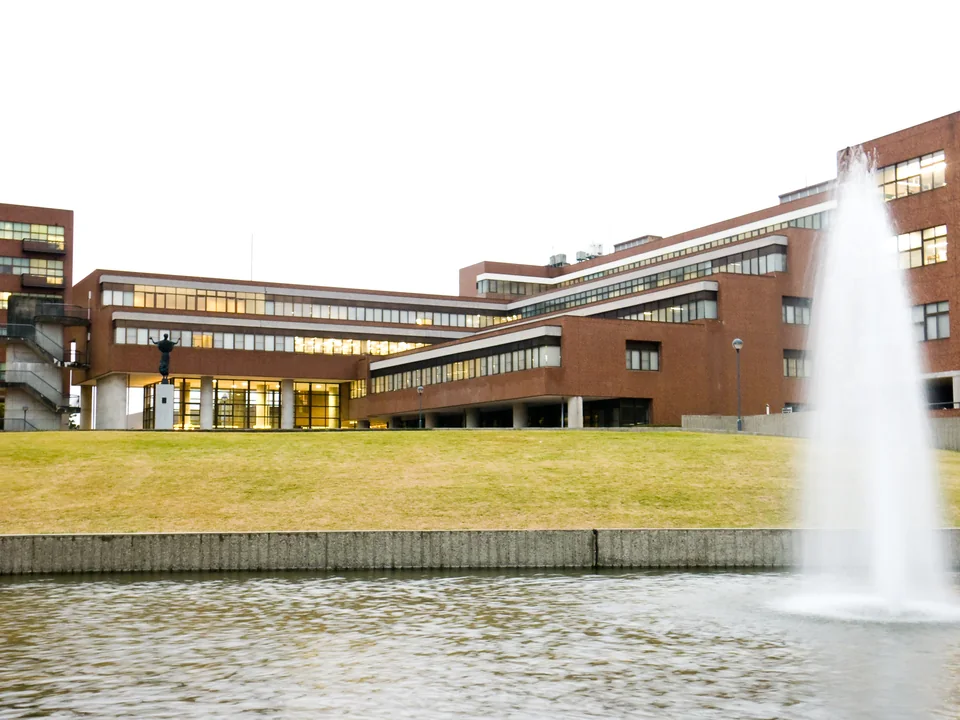
Tuition by type of university
Japan has three kinds of universities: national (founded by the state), public (run by prefectures and cities) and private. National fees follow a ministerial standard, public universities usually stay close to it, and private universities set their own.
| Undergraduate, university type | Annual tuition | Admission fee | Source and year |
|---|---|---|---|
| National, MEXT standard | $3,410 (¥535,800) | $1,790 (¥282,000) | Standard unchanged since 2005 |
| National, raised fee | Up to $4,090 (¥642,960) | $1,790 (¥282,000) | Cap: 120% of the standard |
| Public, average | $3,410 (¥536,520) | $2,440 (¥382,806) for non-residents of the prefecture, $1,430 (¥224,369) for residents | MEXT, 2025 entrants |
| Private, average | $6,160 (¥968,069) + $1,100 (¥172,550) facilities fee | $1,530 (¥240,365) | MEXT, 2025 entrants |
The private average varies sharply by field:
| Private university, first year incl. admission and facilities fees | Amount |
|---|---|
| Humanities and social sciences | $7,720 (¥1,212,235) |
| Science and engineering | $10,200 (¥1,602,053) |
| Medicine and dentistry | $30,420 (¥4,779,143) |
| Other fields | $9,380 (¥1,473,056) |
| Average | $8,790 (¥1,380,983) |
Two takeaways. Comparing annual tuition plus facilities fees, a national university costs half to two-thirds of a private humanities faculty, even at the raised rate. And private medicine sits in its own bracket: one year costs more than a full national bachelor's degree.
National universities: where you pay above the standard
Until recently, national fees barely differed: $3,410 (¥535,800) at the University of Tokyo and at a regional campus alike. That is changing in two ways.
Increases for all students. The ministerial rules let a national university charge up to 120% of the standard, $4,090 (¥642,960). The University of Tokyo did so for undergraduates entering from 2025; its master's programmes still charge $3,410 (¥535,800). From April 2026, four more universities moved new students to the cap: Nagoya Institute of Technology, Saitama University, Yamaguchi University and the University of Electro-Communications. According to the Sankei newspaper, 10 of Japan's 85 national universities charged above the standard as of December 2025.
Separate fees for international students. In 2024 MEXT removed the cap on what national universities may charge international students. The first decisions are in:
| University | Current fee | For entrants from April 2027 | Who is affected |
|---|---|---|---|
| Tohoku University | $3,410 (¥535,800) | $5,730 (¥900,000) | Bachelor's and master's; doctoral fees unchanged |
| University of Tsukuba | $3,410 (¥535,800) | $3,870 (¥608,800) | All degree programmes, including progression from bachelor's to master's |
| Okayama University | $3,410 (¥535,800) | $8,530 (¥1,339,500) | All levels; Japanese undergraduates move to $4,090 (¥642,960) from the same date |
Tohoku and Tsukuba define an international student as someone holding "Student" (留学, ryugaku) residence status. All three universities keep current students on their existing fee until they finish. Hiroshima University announced in December 2025 that it also intends to raise international fees, and its president confirmed the plan in February 2026, but no amount or date has been published. Waseda, a private university, said in December 2025 that it is considering an additional charge for students who have not learned Japanese, regardless of nationality; nothing has been decided and current students will not be affected.
In practice, do not assume "national" means $3,410 (¥535,800). Check each university's fee for your year of entry: from 2027, regional Okayama will cost an international student twice as much as the University of Tokyo.
One more caveat: many national universities, including Hiroshima and Tohoku, state that a general fee revision applies to students already enrolled. Build some headroom into your budget.
Private universities: real fees for English-taught tracks
International students often choose private universities for their English-taught degrees. Official fee tables show:
| University and programme | First year | Following years | Fee year |
|---|---|---|---|
| Waseda, Political Science and Economics (English track) | $8,200 (¥1,288,000) | $8,150 (¥1,281,000) | 2027 entry |
| Waseda, School of International Liberal Studies | $10,780 (¥1,693,000) | $10,760 (¥1,690,000) | 2027 entry |
| Waseda, Fundamental Science and Engineering | $11,830 (¥1,859,000) | $11,350 (¥1,784,000) | 2027 entry |
| Keio, Faculty of Economics | $9,600 (¥1,508,350) | $8,330 (¥1,308,250) | 2026 entry |
| Keio, Policy Management / Environment and Information Studies | $11,340 (¥1,781,350) | $10,060 (¥1,581,250) | 2026 entry |
| Keio, Science and Technology | $13,320 (¥2,093,350) | $12,050 (¥1,893,250) | 2026 entry |
| International Christian University (ICU) | $11,590 (¥1,821,000) incl. $1,910 (¥300,000) matriculation fee | $9,910 (¥1,557,000) in year two | 2026 entry |
| Ritsumeikan Asia Pacific University (APU) | $10,530 (¥1,655,000) incl. $1,270 (¥200,000) admission fee | $10,530 (¥1,655,000) | 2027 entry |
Notes. Waseda has not yet set its 2027 laboratory and other fees, so its table uses 2026 amounts for those items. Keio indexes fees every year on a sliding scale linked to civil-service pay rises. ICU publishes a rising schedule in advance: for 2026 entrants, tuition plus facilities is $9,680 (¥1,521,000) in year one, $9,910 (¥1,557,000) in year two and $10,040 (¥1,578,000) in year three. At APU the first year costs $9,260 (¥1,455,000) and later years $10,530 (¥1,655,000); the university awards tuition reductions of 30% to 100% at admission.
University profiles: Waseda and iCLA. For a side-by-side view of English-taught degrees, see English-taught degrees in Japan.
Language school, vocational college or preparation
The route into a Japanese-taught degree often starts at a language school. According to Study in Japan, the first year at a Japanese language institution costs $3,880–12,090 (¥610,000–1,900,000) depending on the course, and a specialised training college (senmon gakko) about $8,270 (¥1,300,000). More: Japanese language schools and senmon gakko.
Living costs by region
The best source is the survey by JASSO, the government agency that supports international students. The latest edition covers the 2023–2024 academic year and includes 7,599 students with complete income and spending data. Average monthly spending, excluding tuition:
| Region | Housing | Food | Everything except study |
|---|---|---|---|
| Tokyo | $365 (¥57,000) | $235 (¥37,000) | $825 (¥130,000) |
| Kanto region as a whole | $325 (¥51,000) | $230 (¥36,000) | $785 (¥123,000) |
| Kinki (Osaka, Kyoto, Kobe) | $255 (¥40,000) | $205 (¥32,000) | $645 (¥101,000) |
| Hokkaido | $215 (¥34,000) | $185 (¥29,000) | $600 (¥94,000) |
| Chubu (Nagoya) | $190 (¥30,000) | $190 (¥30,000) | $565 (¥89,000) |
| Kyushu (Fukuoka) | $185 (¥29,000) | $170 (¥27,000) | $520 (¥82,000) |
| Tohoku (Sendai) | $165 (¥26,000) | $170 (¥27,000) | $520 (¥82,000) |
| National average | $260 (¥41,000) | $205 (¥32,000) | $670 (¥105,000) |
"Everything except study" covers housing, food, transport, utilities, insurance and medical costs, leisure and daily items. These are averages across all respondents, including those in dormitories. The survey ran from November 2023 to March 2024 and prices have risen since: according to the retail price statistics cited by Study in Japan, a 5 kg bag of rice cost $32 (¥4,979) in December 2025. We suggest adding 10–15% to the table; that is our inflation buffer, not an official figure.
Including tuition, international students spend on average $1,080 (¥170,000) a month, and $1,270 (¥199,000) in Tokyo. For national-university students the figure is $960 (¥151,000), for private-university students $1,200 (¥188,000).
Housing: the biggest variable
A dormitory is almost always cheaper than an apartment: there is no key money, agency fee or guarantor search, although some dormitories do take a deposit. Official examples:
| Option | Monthly cost | Key conditions |
|---|---|---|
| Tohoku University, UH Aobayama (Sendai) | $230 (¥36,000) incl. maintenance and rental items | For FGL students, the first two years; the university suggests another $445–510 (¥70,000–80,000) for other living costs |
| Waseda International Student House (Tokyo) | $335 (¥53,000), single room | Undergraduates only; places allocated by the university |
| AP House, APU (Beppu) | $360 (¥56,800) flat pre-arrival rate | $1,550 (¥243,600) due at enrolment: moving-in fee, deposit and two months' rent |
| Akita International University | $3,960 (¥622,900) per academic year | Covers 11.5 months of housing and 8 months of three meals a day |
| Apartment near Waseda's campus | $445–635 (¥70,000–100,000) | Plus move-in payments |
Renting an apartment means paying a deposit, key money (reikin, a non-refundable payment to the landlord), an agency fee, insurance and rent in advance. Japan's Ministry of Land, Infrastructure, Transport and Tourism estimates the total at 4–7 months' rent. At Tokyo's average of $365 (¥57,000), that is $1,450–2,540 (¥228,000–399,000) before you move in. How to search, what a guarantor company does and who can act as your personal guarantor: student housing in Japan.
Health insurance, pension and tax
- Health insurance. Anyone living in Japan for more than three months must join National Health Insurance (NHI) at their municipal office. It covers 70% of medical costs. Premiums are based on the previous year's income, so they are low in year one: iCLA in Yamanashi tells its students to expect about $13 (¥2,000) a month. Part-time earnings raise the premium the following year. iCLA warns that unpaid premiums can affect your visa extension.
- Pension. Residents aged 20 and over also join the national pension scheme. The contribution in fiscal 2026 is $115 (¥17,920) a month, but students can apply for the student payment deferral (gakusei nofu tokurei) and pay nothing while studying.
- Accident and liability insurance. Many universities include it in compulsory fees: at APU it is $81 (¥12,740) in the first year.
- Tax on part-time pay. Employers withhold income tax. Under 2026 rules there is no income tax on annual wages up to $11,330 (¥1,780,000). Local inhabitant tax arrives the following year under separate thresholds.
One-off payments in the first year
| Payment | Amount | When |
|---|---|---|
| Examination and screening fee | National universities: $110 (¥17,000); English-taught programmes at Tohoku and Hokkaido: $32 (¥5,000) | On application |
| EJU, if required | Set by the test country; not held in Russia or Kazakhstan | 3–9 months before applying |
| Admission fee | National: $1,790 (¥282,000); private average: $1,530 (¥240,365); ICU: $1,910 (¥300,000) | After admission, before the visa |
| First semester | Half the annual fee | Before or at the start of classes |
| Moving in | Dormitory: one or two months' fees plus a deposit; apartment: 4–7 months' rent | Before arrival or in the first week |
| Furniture and appliances for an apartment | Shop prices | First month |
| Flights | Airline fares | Before the start of study |
The EJU is Japan's admission exam for international students. Outside Japan it is held in 13 countries and regions; the nearest centres for applicants from Russia are Seoul, Busan and Ulaanbaatar, so budget for the trip. More in our EJU guide.
First-year budget: four examples
This is our calculation based on official fees and JASSO averages. It shows how the total builds up; it is not an invoice from any university.
| First-year item | A. Nagoya, national university, G30 programme | B. Tokyo, University of Tokyo, undergraduate | C. Okayama, international student entering 2027 | D. Tokyo, Waseda, English track in Political Science and Economics |
|---|---|---|---|---|
| Tuition | $3,393 | $4,071 | $8,482 | $8,156 incl. admission |
| Admission fee | $1,786 | $1,786 | $1,786 | Included above |
| Living costs, JASSO averages | $6,763 (¥89,000 × 12) | $9,879 (¥130,000 × 12) | $6,383 (¥84,000 × 12) | $9,879 (¥130,000 × 12) |
| Total | $11,942 | $15,736 | $16,651 | $18,035 |
| Extra before moving in | Deposit and fees if renting | 4–7 months' rent if renting | Same | Or WISH dormitory at $335 (¥53,000) a month |
What the examples show. Location saves more than university type: Nagoya on the common national fee is nearly $4,000 cheaper than the University of Tokyo. For international students, though, that rule stops working after 2027 at universities that raise their fees: Okayama in example C costs more than Tokyo. Year two is cheaper everywhere by the amount of the admission fee, except where fees rise on a published schedule.
How to cut the cost
- Tuition exemption. National universities waive half or all of the fee for students with good grades and financial need. At the University of Osaka applications are accepted twice a year, from late March to early April and from late September to early October.
- MEXT scholarship. Covers tuition and pays undergraduates $745 (¥117,000) a month and research students $910–925 (¥143,000–145,000). Embassy selection runs once a year: for Russian citizens, 2027 undergraduate applications were open from 27 April to 1 June 2026, and research student applications until 8 June. See our MEXT scholarship guide.
- JASSO scholarship through the EJU. Applicants who tick the option when registering for the EJU and score very highly can receive $305 (¥48,000) a month for a set period.
- University scholarships. APU offers 30, 50, 65, 80 or 100% reductions at admission. Hiroshima pays $1,910 (¥300,000) in the first year to students in its English-taught IGS programme who hold "Student" status. Hokkaido waives the admission fee and first-year tuition for all international students entering its Modern Japanese Studies Program (MJSP) in April 2028, except MEXT scholars.
- Region and dormitory. Living in Sendai or Fukuoka costs about $3,600 a year less than Tokyo on JASSO averages.
- Part-time work. Allowed up to 28 hours a week with immigration permission. Students earn $515 (¥81,000) a month on average. That covers part of living costs, not tuition, and does not count as proof of funds. Rules: working while studying in Japan.
How and when you pay
Fees are paid per semester, twice a year. The University of Osaka debits them from a Japanese bank account on 27 May and 27 November; Keio collects at the end of April and the end of October. The first instalment and admission fee are usually due before arrival, from abroad; Keio, for example, accepts such payments through Flywire. If you are paying from Russia, use only legal routes; see how to pay for studies abroad from Russia.
The balance you must show for your residence status is set by the university or school that applies for your Certificate of Eligibility (COE). It is a paper minimum, not a spending forecast. The process is described in our student visa guide.
Common mistakes
- Assuming every national university charges $3,410 (¥535,800). Since 2025–2027 fees have diverged, and for international students some have risen 1.1 to 2.5 times.
- Comparing one university's "first year" with another's "annual tuition". Study in Japan's averages (about $5,220 (¥820,000) at national universities) already include the admission fee.
- Using 2023 survey living costs without allowing for inflation.
- Forgetting the 4–7 months' rent needed to move into an apartment, and housing during breaks.
- Counting on part-time work to pay tuition: average earnings cover less than two-thirds of Tokyo living costs.
- Building a scholarship into the core budget before you have a written award.
FAQ
At a national university, $3,410 (¥535,800) under the MEXT standard plus a $1,786 admission fee on entry. University of Tokyo undergraduates pay $4,071; from 2027 international students will pay $5,699 at Tohoku and $8,482 at Okayama. Private universities average about $7,200 a year and $8,745 in the first year with the admission fee; English-taught tracks at Waseda, Keio, ICU and APU cost $8,100–13,300 in the first year.
National universities used to charge everyone the same. Since 2024 the ministerial rules allow higher fees, and from April 2027 Tohoku, Tsukuba and Okayama introduce higher fees for international students with "Student" status; Hiroshima is preparing a similar decision. Most universities, such as Nagoya University, still charge a single rate.
Yes, with a MEXT scholarship or a full tuition waiver from the university. MEXT and the university make those decisions and nothing is guaranteed. Japanese universities do not offer free tuition to all international students, although one-off measures exist, such as Hokkaido's first-year waiver for MJSP entrants in 2028.
According to JASSO, international students in Tokyo spend on average $825 (¥130,000) a month excluding tuition, of which $365 (¥57,000) goes on housing. Allowing for inflation, plan on $900–950. Regional cities come in at $520–640.
At most national universities, the same $3,410 (¥535,800) a year and $1,790 (¥282,000) admission fee; the University of Tokyo still charges $3,410 (¥535,800) for master's programmes. For international students entering from 2027, a master's will cost $5,730 (¥900,000) a year at Tohoku and $8,530 (¥1,339,500) at Okayama. More in our master's in Japan guide.
No. The legal limit is 28 hours a week, and the average international student earns $515 (¥81,000) a month. Study in Japan explicitly warns that claims of earning $1,270–1,910 (¥200,000–300,000) a month are false.
Yes. Under a service agreement we shortlist universities that fit your budget, calculate the full first-year cost and check scholarship conditions. Fees are set by the university; scholarships are awarded by MEXT, JASSO or the university. For an overview of the country, see studying in Japan.
Sources
- MEXT: private university fees for 2025 entrants and fee history for national, public and private universities — checked 24.09.2026
- University of Tokyo: admission and tuition fees — checked 24.09.2026
- Tohoku University: revised tuition for international students from 2027 and FGL programme fees and dormitory — checked 24.09.2026
- University of Tsukuba: revised tuition for international students — checked 24.09.2026
- Okayama University: fee decision from 2027 (PDF) — checked 24.09.2026
- Waseda: statement on fees for international students, English-track fees for 2027 (PDF) and WISH dormitory — checked 24.09.2026
- Keio: 2026 undergraduate fees (PDF), ICU: fees for 2026 entrants, APU: fees for 2027 entrants, Akita International University: fees and housing — checked 24.09.2026
- JASSO: 2023 survey of privately financed international students (PDF, Japanese); Study in Japan: academic fees, living costs, insurance, part-time work, examinations, MEXT scholarship — checked 24.09.2026
- MLIT: Apartment Search Guidebook (PDF) — checked 24.09.2026
- Japan Pension Service: fiscal 2026 contribution; National Tax Agency: basic deduction and employment income deduction — checked 24.09.2026
- University of Osaka: fees and payment, Hokkaido: MJSP fees and scholarships, Hiroshima: IGS fees and scholarship — checked 24.09.2026
- Press: Sankei on national-university fee rises from 2026 (07.12.2025) and Yomiuri on Hiroshima University's plans (21.02.2026) — checked 24.09.2026
- Exchange rate: ECB, 29.09.2026, €1 = $1.1355 and €1 = ¥178.41, so $1 ≈ ¥157.1
Next steps
- EJU Exam Guide: Subjects, Scores, 2026–2027 Dates and Where to Sit It
- Master's in Japan: How to Apply, Find a Supervisor and Budget for 2027–2028
- English-Taught Degrees in Japan: Bachelor's and Master's Programmes, Requirements and Fees in 2026
- Working While Studying in Japan: the 28-Hour Rule, Permission, Pay and Tax in 2026
- How to Pay for Studies Abroad from Russia: What Works in 2026
- Studying in Japan for international applicants
