
Most international students in Japan rent privately: in JASSO's survey of self-funded international students, 70.1% live in private apartments and another 19.1% in university or school dormitories. Average housing costs are $260 (¥41,000) a month nationally, $361 (¥57,000) in Tokyo and $165 (¥26,000) in the Tohoku and Chugoku regions. A dormitory is usually cheaper and involves no key money or renewal fees, but places are limited and stays are often capped. Renting an apartment means paying the equivalent of 4–7 months' rent before you move in and finding a guarantor or a rent guarantee company. The workable plan for year one is therefore a dormitory or temporary housing with a clear contract, and an apartment only after you arrive.
This guide covers where international students actually live, what specific university dormitories cost, where to stay for the first weeks, what goes into apartment move-in payments, what to check in a lease, who can act as your guarantor, how to insure the risks and the order to do things in. Figures are converted at the ECB rate of 29 September 2026: $1 ≈ ¥157.1.
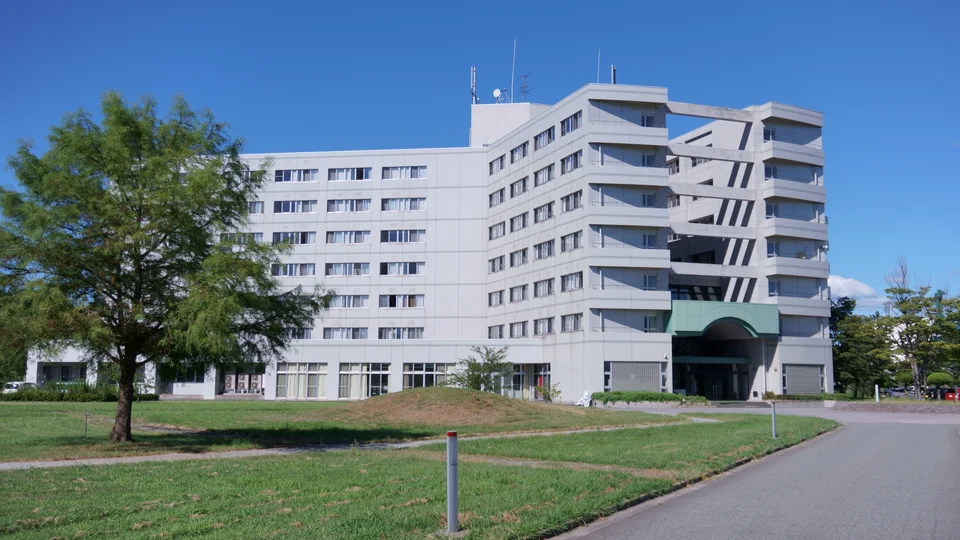
Where international students live
Data from the survey by JASSO, the government agency that supports international students. Between November 2023 and March 2024 it surveyed 7,867 international students who study without a Japanese government scholarship:
| Housing type | All international students | National-university students | Private-university students |
|---|---|---|---|
| Private apartment (apato or mansion) | 70.1% | 60.9% | 77.5% |
| University or school dormitory for international students | 11.0% | 18.1% | 7.7% |
| General university or school dormitory | 8.1% | 11.0% | 6.7% |
| Municipal or other public housing | 3.5% | 5.1% | 2.8% |
| Dormitories run by prefectures, cities or foundations | 1.7% | 2.1% | 1.2% |
| Company dormitory, homestay, other | 5.5% | 2.6% | 4.0% |
The key point: nearly a third of international students at national universities live in dormitories, compared with under 15% at private universities. On a tight budget, that is one more reason to look at national universities. Homestays are rare for degree students: 1.2% of respondents live with a host family.
What housing costs
Average monthly housing spending by region, from the same survey. Note how JASSO calculates it: total spending is divided by all respondents in the region, including those who pay nothing for housing. Actual rent for a self-contained apartment is therefore usually higher than these averages.
| Region | Per month |
|---|---|
| Tokyo | $361 (¥57,000) |
| Kanto region as a whole | $323 (¥51,000) |
| Kinki (Osaka, Kyoto, Kobe) | $253 (¥40,000) |
| Hokkaido | $215 (¥34,000) |
| Chubu (Nagoya) | $190 (¥30,000) |
| Kyushu (Fukuoka) | $184 (¥29,000) |
| Shikoku | $171 (¥27,000) |
| Tohoku (Sendai), Chugoku (Hiroshima, Okayama) | $165 (¥26,000) |
| National average | $260 (¥41,000) |
The spread within each housing type is wide. The most common rent for a private apartment is $190–255 (¥30,000–40,000), but 16.2% of students pay $445 (¥70,000) or more. In dormitories for international students the most common price is $125–190 (¥20,000–30,000), and 29.6% of residents pay under $125 (¥20,000).
The savings show up in the overall budget too. An international student at a national university who rents privately spends on average $1,030 (¥162,000) a month including tuition, against $815 (¥128,000) for one living in a dormitory: about $2,600 a year.
At private universities the gap is smaller: $1,270 (¥200,000) a month for students renting privately against $1,130 (¥178,000) for those in dormitories.
Add utilities to the rent. JASSO puts electricity, gas and water at $51 (¥8,000) a month on national average; dormitories often include them in the fee.
These figures were collected in 2023–2024 and rents have risen since. For Tokyo, Study in Japan calls $380 (¥60,000) a month a reasonable target for an apartment, and $190–255 (¥30,000–40,000) in smaller cities. Near central campuses it costs more: Waseda puts average apartment rent in its area of Tokyo at $445–635 (¥70,000–100,000) a month.
Housing options compared
| Option | Price | Payable on moving in | Guarantor | Best for |
|---|---|---|---|---|
| University dormitory | $64–360 (¥10,000–56,800) a month in the examples below | Moving-in fee and deposit, set by each university | JASSO: asked of about a third of dormitory residents | First year, tight budget |
| Language school dormitory | Set by the school | Per school rules, often several months in advance | Per school rules | Language study before university |
| Share house, guest house or short-term furnished apartment | Set by the operator | Per the operator's contract; check the deposit and minimum stay | Depends on the operator | First weeks or months; moving in without furniture or long contracts |
| Private apartment | Market rate; in Tokyo from about $380 (¥60,000) | 4–7 months' rent | Guarantor or guarantee company; JASSO: asked of 55% of tenants | After arrival, once you have a residence card, a bank account and know the area |
| Homestay | Set by the organiser | Per the organiser's rules | JASSO: asked of 28% | Short programmes and your first weeks in the country |
| Municipal or prefectural housing, foundation dormitories | Set by the organisation | Per the organisation's rules | Per the organisation's rules | If your city has places for international students |
Study in Japan lists the advantages of dormitories: lower rent and costs than an apartment; no deposit, key money or renewal fees; furniture and appliances are often included; and it is easier to make friends. That is a general rule, not a guarantee: APU, for example, charges a deposit for AP House. The downsides: not everyone gets a place, rules such as curfews and wake-up times apply, and kitchens, toilets and showers are shared.
Municipal public housing and UR (Urban Renaissance Agency) apartments are not an option for your first weeks. The Immigration Services Agency's guidebook notes minimum income requirements and, for foreign nationals, conditions on status and length of residence; a municipality may, for example, require a period of stay longer than one year.
University dormitories: example prices
| University and dormitory | Price | Conditions |
|---|---|---|
| Tohoku University, UH Aobayama (Sendai) | $228 (¥36,000) a month incl. maintenance and rental items | Students on the English-taught FGL programme get a room for their first two years, then move to private housing. The university suggests another $445–510 (¥70,000–80,000) for other living costs |
| Waseda International Student House (Tokyo) | $336 (¥53,000) a month, single room; about half the Tokyo market rate, according to Waseda | 872 places, undergraduates only, stays of 1.5 or 2 years depending on entry term, places allocated by the university |
| Waseda, Higashi-Fushimi Student Dormitory (Nishitokyo, Tokyo) | $127 (¥20,000) for a single room, $63 (¥10,000) for a place in a twin room | 40 places, men only, undergraduate and graduate students |
| APU, AP House (Beppu) | $360 (¥56,800) a month flat pre-arrival rate | $1,550 (¥243,600) due at enrolment: $205 (¥32,000) moving-in fee, $625 (¥98,000) deposit and two months' rent; the difference from the actual rent is adjusted later |
| Akita International University | $3,944 (¥622,900) per academic year | Covers 11.5 months of housing, 8 months of three meals a day (excluding breaks), internet, utilities, heating and air conditioning |
| JASSO Tokyo Japanese Language Education Center | $177 (¥28,000) a month | Benchmark cited by Study in Japan |
Getting a dormitory place: Study in Japan advises starting your housing search as soon as you receive your admission letter. At Waseda, for example, dormitory applications are taken online in a fixed window before enrolment and only from admitted students, after which the university selects residents. If you miss out, or your stay limit runs out, the private market is the next step.
We also have profiles of Waseda and iCLA.
Where to stay for the first weeks without a dormitory
Renting an ordinary apartment from abroad is hard: MLIT lists a residence card among the documents for a rental application, and you receive it only on entry. For the first weeks or months, students choose housing they can book in advance:
- Share house or guest house. A private or shared room, with the kitchen and bathroom shared among several residents; furniture and appliances are generally provided. Operators set the prices and guarantor rules, and there are no official statistics on them.
- Furnished apartment for a month or longer. Usually more expensive per month than a long lease, but furnished and on a shorter contract.
- Homestay. Living with a Japanese family through an organiser. It suits short programmes and the first weeks, but few degree students stay long term.
Before paying, ask the operator what the price includes (utilities, internet, cleaning), the minimum stay, whether the deposit is refundable and what early departure costs, and whether you need a guarantor or an emergency contact in Japan. Get these answers in the contract, not just in messages.
Renting an apartment: payments and terms
Japanese leases involve payments that many other countries do not. The Ministry of Land, Infrastructure, Transport and Tourism (MLIT) publishes an apartment search guidebook for foreign residents. Here is what it says:
| Payment | Typical amount | Refundable? |
|---|---|---|
| Security deposit (shikikin, 敷金) | Usually about 2 months' rent; in some areas it is called hoshokin and is often 6 months' rent | Yes, minus repair costs when you leave |
| Key money (reikin, 礼金) | Usually 1–2 months' rent, most common in the Kanto region; some properties charge none | No |
| Non-refundable deduction (shikibiki, 敷引き) | A set part of the deposit that will not be returned; common in Tokai, Kansai and Kyushu | No |
| Agency fee | No more than one month's rent | No |
| Rent guarantee company | Often 35–50% of one month's rent for two years | No; it is not insurance, and the company will recover any rent it pays for you |
| Fire and water damage insurance | Taken out when signing | No |
| Rent and common service fee | Rent is paid one month in advance | — |
| Renewal fee (koshinryo) | If the contract says so; contracts normally run two years | No |
MLIT puts total payments at signing at 4–7 months' rent. For an apartment at Tokyo's average of $365 (¥57,000), that is $1,444–2,527 (¥228,000–399,000). Apartments are unfurnished: you will need to buy a bed, fridge, washing machine and curtains and set up water, gas, electricity and internet yourself.
What drives rent. According to Study in Japan, rent varies significantly with the popularity of the nearest station, the distance to it and the age of the building. Listings describe the layout in code: K is a kitchen, DK a dining-kitchen, LDK a living room combined with the dining-kitchen, and the number in front is the count of separate rooms. So 1DK is one room plus a dining-kitchen.
What to check in a lease
According to MLIT's guidebook, the agent must explain the key terms of the lease before you sign and give you a written statement of them (juyo jiko setsumei). Go to that meeting with questions:
- Which type of lease it is. A regular lease is renewed almost automatically: the landlord cannot refuse without due cause. A fixed-term lease (teiki shakuya) ends on the stated date and continues only under a new agreement.
- How much of the deposit you will lose. Whether shikibiki applies and how restoration costs are calculated. Damage you caused is repaired at your expense.
- Renewal fee and notice period for leaving, usually one to two months.
- Application fee. If the agent charges one to reserve a flat, ask whether it is refunded if no lease is signed.
- Who lives with you. Co-occupants must be declared in the lease; letting someone move in without permission can get you evicted.
- The first month. Rent for a part month is normally prorated, and each month's rent is due at the end of the previous month.
Guarantors: who can sign for you
Almost every Japanese lease requires a joint guarantor: a person or organisation that pays unpaid rent or repair costs if you do not. Guarantors must have an income above a certain level. In JASSO's survey, 48.7% of international students were asked for one, and 55% of those renting private apartments. Who they named:
| Guarantor | Share |
|---|---|
| Guarantor scheme, mainly rent guarantee companies | 19.3% |
| University or school (represented by its head) | 17.9% |
| Japanese acquaintance | 17.1% |
| Non-Japanese acquaintance | 17.0% |
| Relative | 16.3% |
| Academic supervisor | 5.7% |
| Former language school | 4.4% |
| International exchange organisation | 1.2% |
What this means for a newcomer with no contacts:
- University as guarantor. Many universities run such a scheme. The University of Tokyo, for example, can act as guarantor for international students who meet its conditions.
- Guarantee company. The most common route: no personal guarantor is needed, but you pay the company. An agent may require a guarantee company even if you have a guarantor.
- JEES insurance for guarantors. Japan Educational Exchanges and Services (JEES) runs a comprehensive renters' insurance scheme for international students. It costs $25 (¥4,000) for one year or $51 (¥8,000) for two. It covers your liability to the landlord, for example after a fire (up to $318,000 (¥50 million)), and compensates your guarantor for up to three months of unpaid rent and up to $635 (¥100,000) in restoration costs, capped at $1,910 (¥300,000) in total. JEES does not act as guarantor itself. Your school must be a participating institution, and the joint guarantor is normally the school itself or a staff member such as the head of the international student office. The scheme does not cover your belongings or damage to the flat other than from fire or water leaks.
Do not confuse the JEES scheme with a university's compulsory student insurance. APU, for example, charges all international students for its own comprehensive insurance at enrolment ($81 (¥12,740) for the first year), including those who do not live in AP House.
Documents and the order of steps
To apply for an apartment, MLIT lists your passport, residence card and proof of income or student status. If you have a guarantor, you will also need their proof of income and seal registration certificate. Payments are made in cash or by bank transfer.
A sequence that works for most students:
- Right after admission. Apply for a university or school dormitory and ask whether your university offers a guarantor scheme and JEES insurance.
- One to two months before departure. If there is no dormitory, book temporary accommodation for your first weeks, or a share house with a clear contract.
- Within 14 days of moving in. Register your address at the municipal office: as the Immigration Services Agency's guidebook states, a residence card holder must do this within 14 days. Without it you cannot join National Health Insurance or receive your Individual Number (My Number). Banks check your residence card and that number when you open an account, and usually post your bank card to your home address. The same 14-day rule applies after every move.
- Once you have settled in. Once you have a bank account, a phone and some Japanese, look for an apartment through agencies near stations or online. View it in person and ask for the lease to be explained: the agent must explain the key terms before you sign.
- When you leave. Give notice in advance, usually one to two months as stated in the lease. The rest of your deposit is returned after repair costs are settled.
MLIT's Apartment Search Guidebook is available in 14 languages, including English. It contains sample rental application and standard lease forms you can compare with what you are asked to sign.
Neighbours and daily life
Study in Japan highlights two common sources of conflict. The first is noise: homes are close together and sound carries at night. The second is rubbish: it must be sorted strictly and put out on set days at set points. In JASSO's survey, students chose housing mainly on rent and move-in costs (77.7%) and distance to school (66.9%); 69.8% commute 30 minutes or less.
Common mistakes
- Not applying for a dormitory straight after admission, then hunting for an apartment from abroad.
- Budgeting only for monthly rent and forgetting 4–7 months' rent at signing.
- Confusing a guarantee company with insurance: any rent it pays will be recovered from you.
- Not reading the terms on shikibiki and renewal fees.
- Forgetting that Waseda's and many other dormitories have a stay limit, and not saving for the move.
- Not registering your address within 14 days.
- Signing a fixed-term lease without realising it can only continue under a new agreement.
- Letting a friend or partner move in without declaring them in the lease.
FAQ
Dormitories for international students most commonly cost $125–190 (¥20,000–30,000) a month. Examples: Tohoku University $230 (¥36,000), Waseda International Student House in Tokyo $335 (¥53,000), APU's AP House $360 (¥56,800) a month.
An ordinary one is difficult: MLIT lists a residence card, which you receive on entry, among the application documents, and it is best to view the flat and hear the terms explained in person. Book a university dormitory, share house or short-term furnished apartment in advance and look for a long lease once you are in Japan.
MLIT estimates payments at signing at 4–7 months' rent: deposit, key money, agency fee, insurance and rent in advance. For a $365 (¥57,000) flat in Tokyo that is $1,444–2,527, plus furniture and appliances.
Yes. The most common route is a rent guarantee company, which charges a share of one month's rent. Some universities, such as the University of Tokyo, can also act as guarantor. The landlord still makes the final decision.
Key money (reikin) is a one-off payment to the landlord when you sign, usually 1–2 months' rent and most common in the Kanto region. It is not refunded. The deposit (shikikin), by contrast, is returned minus repair costs.
Elsewhere. International students in Tokyo pay $365 (¥57,000) a month for housing on average, compared with about $165 (¥26,000) in Sendai or Hiroshima. For a full budget, see the cost of studying in Japan.
Partly. University students who work part-time earn $515 (¥81,000) a month on average: enough for rent, but not all living costs. For limits and rules see working while studying in Japan.
Under a service agreement we take dormitory availability into account when shortlisting programmes and help you understand the dormitory application and housing terms. Dormitory places are allocated by the university, and leases are signed with the landlord or agency. For an overview of the country, see studying in Japan.
Sources
- JASSO: 2023 survey of privately financed international students, housing section (PDF, Japanese) — checked 24.09.2026
- Study in Japan: accommodation and insurance — checked 24.09.2026
- MLIT: housing for foreign residents and Apartment Search Guidebook (PDF) — checked 24.09.2026
- Immigration Services Agency: Guidebook on Living and Working (PDF) — 14-day address registration, public and UR housing — checked 24.09.2026
- JEES: comprehensive renters' insurance for international students (Japanese) — checked 24.09.2026
- University of Tokyo: University Guarantor System — checked 24.09.2026
- Tohoku University: FGL fees and dormitory; Waseda: WISH dormitory and rents near campus; APU: AP House fees; Akita International University: housing — checked 24.09.2026
- Exchange rate: ECB, 29.09.2026, €1 = $1.1355 and €1 = ¥178.41, so $1 ≈ ¥157.1
Next steps
- Working While Studying in Japan: the 28-Hour Rule, Permission, Pay and Tax in 2026
- Cost of Studying in Japan in 2026: Tuition, Living Costs and a First-Year Budget
- Studying in Japan for international applicants
- International College of Liberal Arts (iCLA)
- Waseda University
- Bachelor's in Japan for International Students: Programmes, Requirements, Costs and 2027–2028 Timelines
