
A bachelor's degree in Japan takes four years (six for medicine, dentistry, veterinary science and some pharmacy programmes), and the academic year starts in April. International students can study in Japanese — which requires roughly JLPT N2–N1 plus the EJU exam — or in English, where selection rests on IELTS or TOEFL, grades and essays. A third option is a programme that admits students with no Japanese and teaches it from scratch. On average the first year costs about $5,193 (JPY 820,000) at a national university including the admission fee, and about $8,232 (JPY 1,300,000) at a private one, before living costs.
Below: how Japanese undergraduate study is organised, which programmes are open to international students, what they cost by type of university, which scholarships are realistic, and how to plan the path from school to the first year.
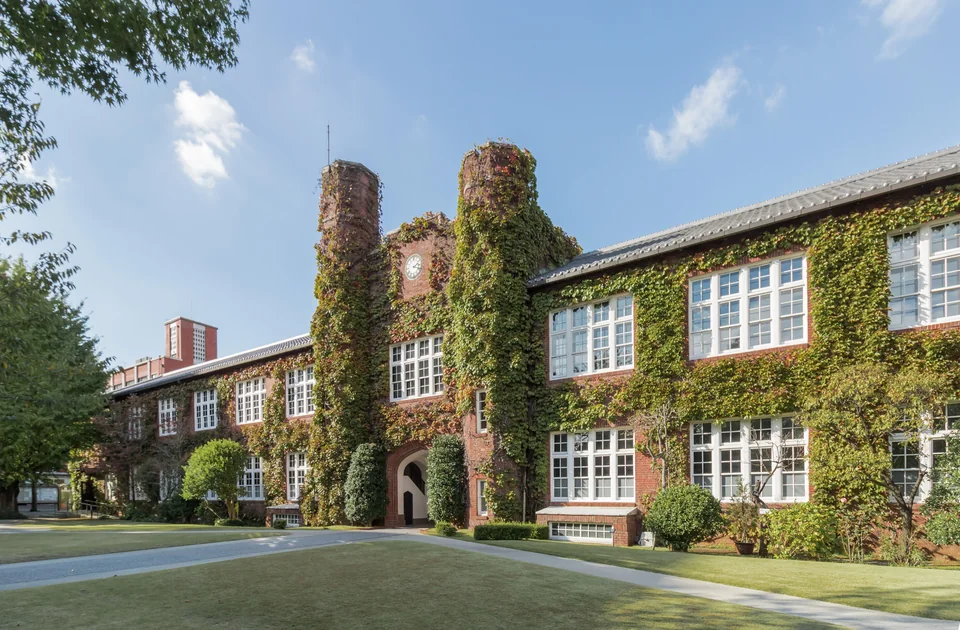
Bachelor's in Japan at a glance
| Item | What applies | Source |
|---|---|---|
| Length | 4 years; 6 for medicine, dentistry, veterinary science and some pharmacy | Study in Japan |
| Start | April; some universities admit in September or October | Study in Japan |
| Universities | 86 national, 101 public (prefectural or municipal), 620 private | Study in Japan |
| Language | Mainly Japanese; English-taught degrees are growing | Study in Japan |
| Japanese for Japanese-taught degrees | Benchmark: 250+ on the EJU Japanese section plus JLPT N1 or N2 | Study in Japan |
| English for English-taught degrees | Benchmark: TOEFL iBT 71–80 or IELTS 5.5–6 | Study in Japan |
| Average first year | $5,193 (JPY 820,000) national, $5,762 (JPY 910,000) public, $8,232 (JPY 1,300,000) private outside medicine | Study in Japan |
| Living costs | Average $665 (JPY 105,000) a month excluding study | JASSO, 2023 |
| Part-time work | Up to 28 hours a week with permission; up to 8 hours a day in long holidays | Study in Japan |
Dollar amounts use the ECB reference rate of 23 September 2026 (USD 1 ≈ JPY 157.9), rounded.
How Japanese undergraduate study is organised
The first thing to check is the type of university, because it shapes price, language of instruction and selection. There are three.
- National universities are state-funded and charge near-uniform fees. They include Tokyo, Kyoto, Osaka, Tohoku and other research universities. They admit international students mainly to Japanese-taught programmes via the EJU and their own exams, though many also run English-taught tracks.
- Public (prefectural and municipal) universities charge close to national rates; the admission fee can be higher for applicants from outside the prefecture.
- Private universities are the majority, including Waseda, Keio, Sophia and APU. They cost more but more often offer English-taught degrees, several intakes a year and their own discounts for international students.
You apply to a specific faculty and major. Typically the first one or two years cover general subjects before specialisation, and many programmes expect a graduation project in a professor's seminar in the final year. Besides universities there are professional and vocational universities with a more practical curriculum, and junior colleges of two to three years; junior college graduates can transfer to a university, usually into the second or third year, though not every university accepts transfers every year.
Three routes into a bachelor's
| Route | Language of study | How selection works | Earliest start after school | Best for |
|---|---|---|---|---|
| Japanese-taught programme | Japanese | EJU (Japanese plus Maths, Science or Japan and the World), the university's exam or interview, often TOEFL | After 1.5–2 years of language school | Those who want to live and work in Japan and will invest in the language |
| English-taught programme | English (Japanese as a subject) | Documents, IELTS or TOEFL, essays, sometimes SAT, IB or A levels, online interview | 3–4 months later with a September or October intake | School leavers with strong English |
| Bridge programme | English and intensive Japanese first, then Japanese | As for English-taught programmes | October of the graduation year | Those who want a Japanese-taught degree but have no Japanese yet |
Japanese-taught programmes
This is the core of Japanese higher education and offers the widest choice of majors. International applicants are selected separately from Japanese school leavers: instead of the national exam for Japanese students they take the EJU and the university's own tests. The EJU subjects depend on the field: humanities applicants take Japanese, Japan and the World and sometimes Maths Course 1; engineering and science applicants take Japanese, two of physics, chemistry and biology, and Maths Course 2. See the EJU guide.
A typical path for an applicant from Russia or Central Asia: 1.5–2 years at a Japanese language school, the EJU in June and November of the second year, university exams and interviews over the winter, and the first year in April. See our overview of Japanese language schools.
English-taught programmes
You can earn a full degree in English in Japan without Japanese at entry. Examples:
- Waseda runs English-based undergraduate programmes in six schools: Political Science and Economics, Social Sciences, International Liberal Studies (SILS), Culture, Media and Society, and two engineering schools. Most start in September; SILS also starts in April. Japanese is not required to apply, and SAT, ACT, IB, A levels, Abitur and other national exam results are accepted.
- APU (Ritsumeikan Asia Pacific University) in Beppu admits to English- and Japanese-basis tracks in April and September. The English track asks for IELTS 6.0 (at least 5.5 per section), TOEFL iBT 75 or 4.0 on the new scale, Duolingo 110 or other tests, and applicants abroad have four windows per intake.
- iCLA (International College of Liberal Arts, Yamanashi Gakuin University) in Kofu teaches a liberal arts curriculum entirely in English; see our iCLA profile.
More in our guide to English-taught degrees in Japan. One caveat: even on an English programme, part-time jobs, internships and post-graduation work are much harder without Japanese.
Bridge programmes
The best-known example is Kyoto University's Kyoto iUP. Students arrive with no Japanese, spend six months on a preparatory language course and then four years in their chosen faculty — taught in English and Japanese at first, and only in Japanese in the final two years. There is one intake a year, in October; the window for October 2027 runs from 2 November to 3 December 2026. The funding is unusually generous for this format: a full admission fee waiver, a full or partial tuition waiver for all 4.5 years, and up to $760 (JPY 120,000) a month during the preparatory stage. Selection details are in our guide to Japanese university after 11 years of school.
Requirements: what universities check
- School qualification. 12 years of schooling or a MEXT-recognised equivalent. The general secondary programmes of Russia, Kazakhstan and Uzbekistan are on MEXT's list, so the law does not require an extra year, though universities may add conditions. Details: Japanese university after 11 years of school.
- Grades. Transcripts for the upper grades, sometimes for all secondary years.
- Language. Japanese: EJU and often JLPT. English: IELTS or TOEFL.
- Essays and references. A statement in the university's format and a teacher's recommendation.
- University exam or interview. Japanese-taught programmes often hold a written exam and an interview in Japanese; English-taught ones usually interview online.
The step-by-step process, documents and CoE are covered in applying to Japanese universities.
What a bachelor's in Japan costs
Averages by type of university
| Type | First year including admission fee | Source |
|---|---|---|
| National | About $5,193 (JPY 820,000) | Study in Japan |
| Public | About $5,762 (JPY 910,000) | Study in Japan |
| Private, excluding medicine, dentistry and pharmacy | About $8,232 (JPY 1,300,000) | Study in Japan |
| Private, medicine, dentistry, pharmacy | About $24,063 (JPY 3,800,000) | Study in Japan |
The first year costs more because it includes the one-off admission fee; universities may also charge for materials, practical training and student associations.
Examples of official fees
- University of Tokyo: admission fee $1,786 (JPY 282,000); undergraduate tuition $4,071 (JPY 642,960) a year for students entering from 2025. Students who entered in 2024 or earlier pay the previous rate of $3,393 (JPY 535,800).
- APU: admission fee $1,266 (JPY 200,000); tuition $9,214 (JPY 1,455,000) for the first year and $10,480 (JPY 1,655,000) for each later year without a reduction. The APU Tuition Reduction Scholarship cuts fees by 30, 50, 65, 80 or 100%.
- Waseda English-based programmes, academic year 2027: annual tuition from the second to fourth year is $8,112 (JPY 1,281,000) in Political Science and Economics, $7,922 (JPY 1,251,000) in Social Sciences, $8,175 (JPY 1,291,000) in Culture, Media and Society, $10,702 (JPY 1,690,000) in SILS and $11,297 (JPY 1,784,000) in the engineering schools. The first year is barely higher, because Waseda spreads the registration fee over four years: in Social Sciences, for example, the first-year payment including small fees is $7,959 (JPY 1,256,800). Lab, library and association fees for 2027 have not yet been set, and Waseda's table still shows the 2026 amounts.
Living costs
JASSO's 2023 survey puts average spending at $665 (JPY 105,000) a month excluding study. Housing drives the difference between cities: $260 (JPY 41,000) nationally versus $361 (JPY 57,000) in Tokyo. Waseda International Student House, open only to incoming undergraduates, costs $336 (JPY 53,000) a month — about half the Tokyo market rate — but places are allocated by selection. See the cost of studying in Japan and student housing in Japan.
Part-time work helps but does not balance a budget. JASSO's average student earnings are $513 (JPY 81,000) a month, and Study in Japan states that study and living costs cannot be covered this way. See working while studying in Japan.
To work in Japan after graduating, you change from Student status to a work status, most often Engineer/Specialist in Humanities/International Services. If you have no job offer by graduation, you can switch to Designated Activities for job hunting: six months, extendable once, so up to a year.
Scholarships and fee reductions
| Option | What it gives | How to get it |
|---|---|---|
| MEXT Undergraduate scholarship via embassy | No admission or tuition fees, $741 (JPY 117,000) a month, flights; a preparatory year of Japanese, then 4 years of study | Spring competition at the Japanese embassy; for Russian citizens 11 years of school suffice; for 2027, born on or after 2 April 2002 |
| Honors Scholarship reservation via the EJU | $304 (JPY 48,000) a month | Tick the option when registering for the EJU; JASSO selects exceptionally high scorers |
| University reductions | E.g. APU 30–100% of tuition; Kyoto iUP full admission fee waiver and full or partial tuition waiver | With your university application |
| Waseda scholarships | Merit-based pre-enrolment awards; about one in four international students receive scholarships after enrolment; all are partial | Automatically on admission results or via the school |
The embassy-recommended MEXT scholarship rejects applicants from Russia whose field of study relates to Japan's sanctions. See our guides to the MEXT scholarship and scholarships abroad.
Who a Japanese bachelor's suits
It suits you if you are ready for one of two scenarios: investing 1.5–2 years in Japanese and studying alongside Japanese students, or entering an English-taught programme with strong English while learning Japanese on the side. Japan compares well on national-university fees and safety, and a Japanese-taught degree opens the local job market.
Think twice if you want a quick English-language degree with no language study and immediate work at an international company: without Japanese, the range of jobs and part-time work in Japan is much narrower. Our comparison Japan or Korea for studying may help.
From school to first year: a plan
| When | English-taught route (start Sep–Oct 2027) | Japanese-taught route (start April 2029) |
|---|---|---|
| Sep–Dec 2026 | IELTS or TOEFL, shortlist, first applications (Kyoto iUP by 3 Dec; APU windows closing 28 Oct and 9 Dec) | Choose a language school, study Japanese at home |
| Jan–Mar 2027 | Late windows (APU 20 Jan and 3 Mar), essays, interviews | Apply to language schools for October 2027 |
| Apr–Aug 2027 | Decisions, payment, CoE, visa | Graduate from school, visa, move |
| Oct 2027 – 2028 | First year | Language school, JLPT, EJU in June and November 2028 |
| Dec 2028 – Mar 2029 | — | University exams and interviews, admission |
Common mistakes
- Choosing by ranking without checking the language of the programme. English- and Japanese-taught tracks at the same university differ in requirements, fees and dates.
- Assuming 11 years of school rule you out. Russia, Kazakhstan and Uzbekistan are on MEXT's list; the question is each university's rules.
- Underestimating Japanese. Reaching N2–N1 takes around 600–900+ hours of study — not a few months of classes.
- Comparing first-year and later-year fees. The first year includes the admission fee; later payments are lower.
- Budgeting on part-time income. It supplements, but does not replace, proven funds for study and living.
What StudyU does
The only free service is the initial consultation, linked at the end of this page. Matching programmes to your language and budget, eligibility checks, the timeline, documents and application support are provided under contract. Universities decide on admission, the Immigration Services Agency on residence status, the Japanese embassy or consulate on visas, and MEXT, JASSO or the university on scholarships. See Study in Japan and the profiles of Waseda and iCLA.
FAQ
Four years; six for medicine, dentistry, veterinary science and some pharmacy programmes. Bridge programmes like Kyoto iUP add six months of Japanese, and the language-school route adds 1.5–2 years before the degree starts.
Yes. Waseda, APU, iCLA and many others offer degrees taught entirely in English. Study in Japan's benchmark is TOEFL iBT 71–80 or IELTS 5.5–6; individual universities may ask for more.
Study in Japan's benchmark is at least 250 on the EJU Japanese section plus JLPT N1 or N2. Each university sets its own threshold; APU's Japanese track, for example, requires 250 in EJU reading and listening plus 30 in writing.
Tuition at a national university is roughly $3,400–4,100 a year (JPY 642,960 at the University of Tokyo for entrants from 2025), plus a $1,786 (JPY 282,000) admission fee in the first year. Private universities with English-taught programmes charge roughly $7,900–11,300 a year. Living costs average $665 a month.
Only through a scholarship or full fee waiver: MEXT via embassy recommendation, 100% reductions at some universities (such as APU's tuition reduction scheme), or the Kyoto iUP waivers. All are competitive, so plan a budget without them.
Yes — Russian general secondary education is on MEXT's list, but a specific university may require more, so check its guidelines. See Japanese university after 11 years of school.
Yes, once you have work permission: no more than 28 hours a week, or up to 8 hours a day during long holidays. You can apply at the airport on first entry. Work must not interfere with study; poor attendance can lead to refusal of a status extension.
Automatically only if the university is on the Russian government's list of foreign institutions or the degree falls under a mutual recognition treaty. Otherwise it goes through Rosobrnadzor's recognition procedure, with a state fee of $77 (RUB 6,500). The apostille on a Japanese diploma is issued in Japan, so arrange it before you leave.
Sources
- Study in Japan: universities, academic fees, language institutes, living costs, part-time work, changing status after graduation, examinations — checked 24 Sep 2026
- MEXT: university entrance qualifications and designated 11-year courses — checked 24 Sep 2026
- University of Tokyo: admission fee and tuition — checked 24 Sep 2026
- APU: eligibility, 2027 tuition and fees — checked 24 Sep 2026
- Waseda: English-based undergraduate programs and AY2027 tuition (PDF) — checked 24 Sep 2026
- Kyoto iUP: programme, October 2027 applications, financial support — checked 24 Sep 2026
- JASSO: EJU and Honors Scholarship reservation — checked 24 Sep 2026
- Embassy of Japan in Russia: MEXT Undergraduate 2027 — checked 24 Sep 2026
- Rosobrnadzor: recognition of foreign education — checked 24 Sep 2026
- ECB reference rates, 23 Sep 2026: EUR 1 = USD 1.1411 = JPY 180.2 (USD 1 ≈ JPY 157.9); Bank of Russia, 23 Sep 2026: USD 1 = RUB 84.07
Next steps
- EJU Exam Guide: Subjects, Scores, 2026–2027 Dates and Where to Sit It
- English-Taught Degrees in Japan: Bachelor's and Master's Programmes, Requirements and Fees in 2026
- Japanese University After 11 Years of School: the 12-Year Rule, Exceptions and Routes for 2027–2028
- Applying to Japanese Universities for 2027: Routes, Deadlines, Documents, CoE and Visa
- Scholarships abroad 2026: where international students study for free
- Studying in Japan for international applicants
