
Japan has no central application system. International applicants apply to each university separately, through its own website and under its own rules. Japanese-taught programmes select on EJU scores, Japanese proficiency and the university's own tests; English-taught programmes on documents, English and essays; graduate schools on your degree, research plan and a prospective supervisor's agreement. The main intake is April, and many programmes for international students start in September or October. Once you are admitted, the university obtains a Certificate of Eligibility (CoE) for you, and you use it to get a student visa.
Below: the step-by-step process, real 2027 application windows, the document list, costs before arrival, and how the CoE and visa work, including for Russian citizens.
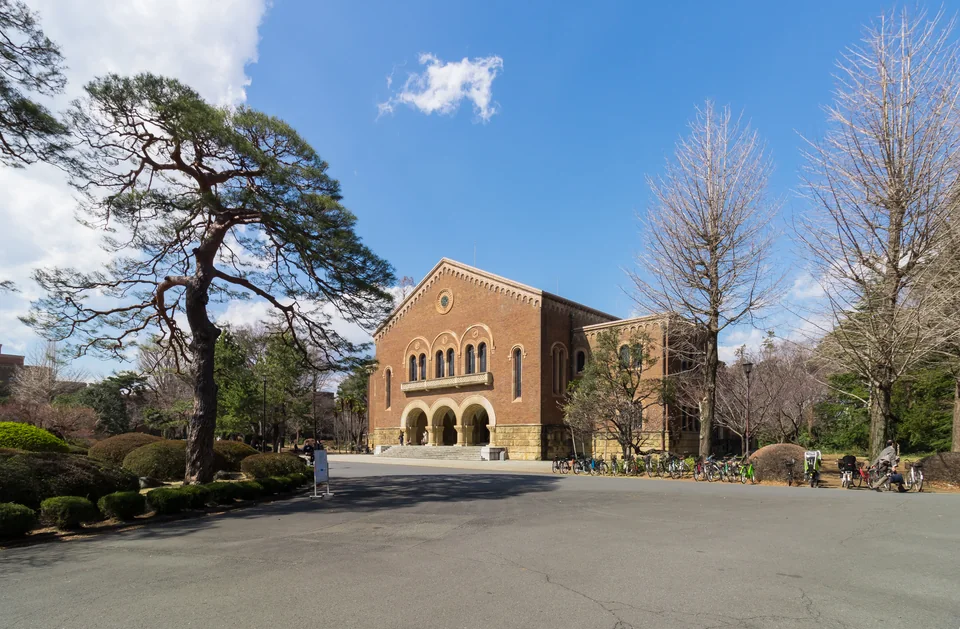
Applying to Japan at a glance
| Item | What applies | Source |
|---|---|---|
| Who decides | The university; residence status — Immigration Services Agency; visa — embassy or consulate | Study in Japan |
| Intakes | April (main); September or October for many international programmes | Study in Japan |
| Eligibility for a bachelor's | 12 years of school or a MEXT-recognised equivalent; 11-year programmes of Russia, Kazakhstan, Uzbekistan and others are on MEXT's list | MEXT |
| Eligibility for a master's | 16 years of education, or a bachelor's of at least 3 years from a foreign university | Study in Japan |
| Main exam for Japanese-taught programmes | EJU, June and November; not offered in Russia since 2024 | JASSO |
| English for English-taught programmes | Study in Japan guideline: TOEFL iBT 71–80 or IELTS 5.5–6 (bachelor's), TOEFL 75–80 or IELTS 6 (graduate) | Study in Japan |
| Fees at a national university | Admission fee $1,786 (JPY 282,000); tuition at the University of Tokyo, for example, $4,071 (JPY 642,960) a year for undergraduates and $3,393 (JPY 535,800) for master's | University of Tokyo |
| Visa for Russian citizens | No consular fee; the visa centre charges a service fee | Embassy of Japan in Russia |
Dollar amounts use the ECB reference rate of 23 September 2026 (USD 1 ≈ JPY 157.9), rounded.
Step 0: check that you are eligible to apply
Before shortlisting, confirm formal eligibility: a Japanese university rejects an ineligible application without looking at grades.
- Bachelor's. You need 12 years of schooling or a MEXT-recognised equivalent. MEXT lists the general secondary programmes of Russia (completed on or after 6 Oct 2009), Kazakhstan (27 Jul 2007) and Uzbekistan (15 Mar 2017), among others, as equivalents, but universities may add their own conditions. See our guide to Japanese university after 11 years of school.
- Master's. You qualify with 16 years of education in total, or a bachelor's degree after at least three years at a foreign university; Russian bachelor's and specialist degrees meet this. Japanese law also lets a graduate school admit someone aged 22 or over after its own individual review. See our guide to a master's in Japan.
If a university's wording is ambiguous, ask in writing through its official channel and keep the answer. Some programmes set a deadline for this: Kyoto iUP takes eligibility queries for October 2027 entry until 19 October 2026.
Four admission routes
| Route | How selection works | Language | Where it starts | Best for |
|---|---|---|---|---|
| Japanese-taught bachelor's for international students | EJU plus the university's exam or interview, often TOEFL | Japanese; benchmark 250+ on EJU Japanese and JLPT N1–N2 | Usually at a language school in Japan | Those ready to spend 1.5–2 years on Japanese |
| English-taught bachelor's or bridge programme | Documents, English, essays, sometimes SAT and an online interview | English | From home | School leavers with strong English |
| Master's | Degree, research plan, supervisor's agreement, faculty exam; sometimes a year as a research student (kenkyusei) first | Japanese or English | From home, by contacting a professor | Graduates with a clear research topic |
| MEXT scholarship via embassy | Documents, written exams and interview at the embassy, then MEXT selection | Japanese or English; teaching mostly in Japanese | Japanese embassy in your country | Strong candidates within the age limit |
Compare levels in our guides to a bachelor's in Japan and a master's in Japan; see also the EJU guide and the MEXT scholarship.
The process in eight steps
- Goal and shortlist. Decide the level, language of instruction and 4–6 programmes, including options outside Tokyo. For each, note the window, language and exam requirements, application fee and start date. Study in Japan's search and our overview of universities in Japan for international students are good starting points.
- Tests. For Japanese-taught programmes: the EJU in the subjects and language the university specifies, plus JLPT or TOEFL where required. For English-taught programmes: IELTS or TOEFL, sometimes the SAT. Time them so results arrive before deadlines with room for a retake.
- Documents. Certificates, transcripts, translations, essays, recommendations and, for graduate study, a research plan (see below).
- Application. Most universities accept online applications; some also want originals posted. Fees are paid in yen — APU, for instance, charges $35 (JPY 5,500) to applicants outside Japan paying by card.
- Selection. Document review, then the university's exam, an interview or both. English-taught programmes often interview online; Kyoto iUP holds interviews online only, in English.
- Decision and payment. Admitted students pay the admission fee and first-semester tuition by the deadline. At APU that is $1,266 (JPY 200,000) plus $4,607 (JPY 727,500) for the first semester without a scholarship, plus the dormitory entrance fee and insurance.
- CoE. The university, acting as your proxy, applies to a regional immigration bureau for your Certificate of Eligibility. It needs proof of funds — a savings balance certificate, the sponsor's income certificate for the past year and an explanation of where the money comes from — and the application form.
- Visa and arrival. With the CoE you apply for a visa, enter Japan, receive your residence card and register your address within 14 days.
2027 application windows
| Programme | Start | Application window | Result |
|---|---|---|---|
| APU bachelor's, applicants abroad (other than China, India, Indonesia, Korea, Thailand, Vietnam) | April 2027 | 4 windows: 4 Jun–15 Jul, 16 Jul–19 Aug, 20 Aug–16 Sep, 17 Sep–14 Oct 2026 | 8 Sep, 13 Oct, 3 Nov, 1 Dec 2026 |
| APU, same group | September 2027 | 4 windows: 3 Sep–28 Oct 2026, 29 Oct–9 Dec 2026, 10 Dec 2026–20 Jan 2027, 21 Jan–3 Mar 2027 | 15 Dec 2026, 2 Feb, 9 Mar, 20 Apr 2027 |
| Kyoto iUP (4.5 years, Japanese from zero) | October 2027 | 2 Nov – 3 Dec 2026 | Document-review results 5 Feb, online interviews 1–16 Mar, final result 6 Apr 2027 |
| MEXT Undergraduate, Embassy in Moscow | April 2027 | 27 Apr – 1 Jun 2026 (closed) | Exams 20–21 Jun 2026; final result after February 2027 |
| MEXT Research, Embassy in Moscow | April or October 2027 | 27 Apr – 8 Jun 2026 (closed) | Exams 27–28 Jun 2026 |
| EJU 2nd session 2026 | For April 2027 entry | 6–30 Jul 2026 (closed) | Exam 8 Nov, results 15 Dec 2026 |
If you start preparing in September 2026, April 2027 is realistic only through the last English-taught windows; Japanese-taught programmes for that intake are out of reach without EJU scores already in hand. September–October 2027 offers more: APU, Kyoto iUP and other international programmes take applications over the autumn and winter. The Japanese-taught route through a language school leads to April 2028 or 2029. Check your programmes' dates on admissions sites — they change every year.
Documents: what to prepare and how
A typical undergraduate file:
- the university's online application form;
- school certificate or proof of expected graduation;
- transcripts for the upper grades — many universities want all secondary years;
- language results: EJU (the university gets them from JASSO), JLPT, TOEFL or IELTS;
- an essay or statement in the university's format;
- a recommendation from a teacher or principal;
- passport copy and photos;
- for some programmes, SAT, ACT or IB results, or a portfolio for creative fields.
For a master's add your diploma and transcript, a research plan (around 2,000 words at most universities), academic references, your thesis with an abstract and, where relevant, correspondence with your prospective supervisor.
How to prepare them:
- Language. Documents must be in English or Japanese or come with a certified translation into one of them.
- Certification. Universities set the rules: some accept scans at the application stage, others want notarised copies or sealed originals. Japan is a party to the Hague Apostille Convention, so where legalisation is required an apostille is enough; in Russia the state fee is $30 (RUB 2,500) per document.
- Validity. Certificates issued in Japan for immigration applications must be under three months old. Universities usually want recent bank statements for the CoE; the enrolment instructions state the limit.
- Spares. Make several certified sets: originals sent to a university or immigration bureau are generally not returned.
What applying costs before you arrive
| Item | Amount | Note |
|---|---|---|
| Application fee | E.g. $35 (JPY 5,500) at APU; $62 (JPY 9,800) at Kyoto iUP, and the same for a research student application at the University of Tokyo | Per programme, non-refundable |
| EJU | $76 (JPY 12,000) for one subject, $146 (JPY 23,000) for two or three, in Japan | Plus travel if you sit it abroad |
| Apostille and translations | $30 (RUB 2,500) apostille fee in Russia; translation at agency rates | Per document |
| Admission fee | $1,786 (JPY 282,000) at national universities such as the University of Tokyo; $1,266 (JPY 200,000) at APU | Paid once on enrolment |
| First-semester tuition | Half the annual fee; $4,607 (JPY 727,500) at APU without a scholarship | Paid on enrolment |
| CoE | Free to the student | Handled by the university |
| Visa for Russian citizens | No consular fee; visa centre service fee applies | Other nationals may pay a consular fee |
Study in Japan's average first-year cost including the admission fee is about $5,193 (JPY 820,000) at a national university, $5,762 (JPY 910,000) at a public one and $8,232 (JPY 1,300,000) at a private one outside medicine, dentistry and pharmacy. Living costs excluding study average $665 (JPY 105,000) a month per JASSO's 2023 survey. See the cost of studying in Japan and, for payments from Russia, how to pay for studies abroad from Russia.
After admission: CoE, visa and your first two weeks
CoE. The university files the application with the regional immigration bureau. Processing time depends on the bureau and season, so send everything for the CoE as soon as the university asks. A CoE does not guarantee a visa; the embassy or consulate decides.
Visa for Russian citizens. Residents of Moscow and the surrounding region apply at the Japan Visa Application Centre (Olimpiyskiy Prospekt 16, bldg 5). Residents of the St Petersburg, Vladivostok, Khabarovsk and Yuzhno-Sakhalinsk consular districts should check the procedure on their consulate-general's website. No consular fee is charged to citizens of Russia, the CIS countries and Georgia, but the visa centre charges a service fee. Processing takes at least four working days, longer around Japanese and Russian holidays or if extra documents are requested, and you can apply no earlier than three months before travel. After a refusal, a new application is accepted only after six months, so check the file carefully before submitting. The core file is passport, application form, photo and CoE (a copy is accepted). Applicants elsewhere apply to the Japanese embassy or consulate for their place of residence. See our guide to the Japanese student visa.
Student status. Japan's Ministry of Justice sets the period of stay, up to 4 years and 3 months, and it can then be extended.
On arrival. At Narita, Haneda, Kansai, Chubu, New Chitose, Kobe, Hiroshima and Fukuoka airports you receive your residence card on the spot, and you can apply for part-time work permission there too: up to 28 hours a week, or 8 hours a day during long holidays. Register your address at the municipal office within 14 days of settling; your My Number notice follows by post.
Common mistakes
- Looking for one national deadline. There is none: APU runs eight windows a year for applicants abroad, four each for April and September, while Kyoto iUP has a single window in November–December.
- Applying to a Japanese-taught programme with the wrong EJU set. Subjects, maths course and question language must match the university's requirements.
- Leaving eligibility questions to the end. Graduates of 11-year systems and holders of non-standard qualifications need the admissions office's answer before paying fees.
- Sending professors a template email. For graduate study this is often the first and decisive contact.
- Underestimating financial documents for the CoE. Without convincing proof of funds the university will not file your CoE application.
- Budgeting around part-time work. JASSO's average student earnings are $513 (JPY 81,000) a month, and Study in Japan states plainly that this cannot cover study and living costs.
What StudyU does
Only the initial consultation is free; the link is at the end of this page. Programme selection, eligibility checks, timelines, documents, correspondence with admissions offices and professors, and support up to the CoE are provided under an agreement with StudyU. The university makes the admission decision, the Immigration Services Agency issues the CoE, the Japanese embassy or consulate decides on the visa, and MEXT awards its scholarship. See also Study in Japan and the profiles of Waseda and iCLA.
FAQ
No. Each university runs its own admissions, usually online. The only exam common to international applicants is the EJU, and not every university or programme uses it.
Yes. English-taught programmes select on documents and online interviews. On the Japanese-taught side, 112 universities offered pre-arrival admission based on EJU scores as of August 2026, but you still have to sit the EJU in Japan or an Asian city.
There is no limit, but each application has its own fee and documents. A realistic list is 4–6 programmes of varying selectivity.
For English-taught programmes, 12–15 months before the start date. For Japanese-taught programmes, 2–3 years if you do not speak Japanese yet, since 1.5–2 years go into the language and the EJU.
Japanese universities generally do not require a separate recognition procedure; they assess the document under MEXT rules. You need translations and certification in the form their guidelines specify.
There is no single figure. The university or language school sets it in its enrolment instructions based on tuition and living costs, and the immigration bureau reviews the bank statement, the sponsor's income certificate for the past year and the explanation of funds.
It depends on your country. In Russia, a degree from a university that is not on the government's list and not covered by a recognition treaty goes through Rosobrnadzor's recognition procedure; the state fee is $77 (RUB 6,500). The apostille on a Japanese diploma is issued in Japan, so arrange it before you leave.
Sources
- Study in Japan: universities, graduate schools, timeline, academic fees, immigration procedures, part-time work, living costs — checked 24 Sep 2026
- MEXT: university entrance qualifications and designated 11-year courses — checked 24 Sep 2026
- JASSO: EJU 2026 schedule, fee, pre-arrival admission — checked 24 Sep 2026
- APU: eligibility, 2027 tuition and fees, application schedule and handbook — checked 24 Sep 2026
- Kyoto iUP: October 2027 applications, application guidelines (PDF) and selection FAQ — checked 24 Sep 2026
- University of Tokyo: admission fee and tuition — checked 24 Sep 2026
- Embassy of Japan in Russia: MEXT Undergraduate 2027, MEXT Research 2027, visa application rules, visa centre — checked 24 Sep 2026
- Immigration Services Agency of Japan: Student status — checked 24 Sep 2026
- Rosobrnadzor: recognition of foreign education — checked 24 Sep 2026
- ECB reference rates, 23 Sep 2026: EUR 1 = USD 1.1411 = JPY 180.2 (USD 1 ≈ JPY 157.9); Bank of Russia, 23 Sep 2026: USD 1 = RUB 84.07
Next steps
- Bachelor's in Japan for International Students: Programmes, Requirements, Costs and 2027–2028 Timelines
- EJU Exam Guide: Subjects, Scores, 2026–2027 Dates and Where to Sit It
- Master's in Japan: How to Apply, Find a Supervisor and Budget for 2027–2028
- Japanese University After 11 Years of School: the 12-Year Rule, Exceptions and Routes for 2027–2028
- How to Pay for Studies Abroad from Russia: What Works in 2026
- Studying in Japan for international applicants
