
The MEXT scholarship (Japanese Government Scholarship, also called Monbukagakusho) is funded by Japan's Ministry of Education. It waives the entrance examination, enrolment and tuition fees at a Japanese university, provides an economy-class ticket to Japan and back, and pays a monthly allowance: $741 (¥117,000) for undergraduates and $906–918 (¥143,000–145,000) for research students, master's and doctoral students. You apply either through the Japanese embassy in your country or through a Japanese university that holds a MEXT recommendation quota.
The embassy rounds for April 2027 entry are closed in Russia, Kazakhstan and Uzbekistan: applications ran from late April through May 2026 (to 1 and 8 June in Russia), exams took place in June, and final results arrive between January and March 2027. If you are starting now, you are preparing for 2028 entry. Based on recent cycles, embassies will announce it in April 2027 and give roughly six weeks to submit.
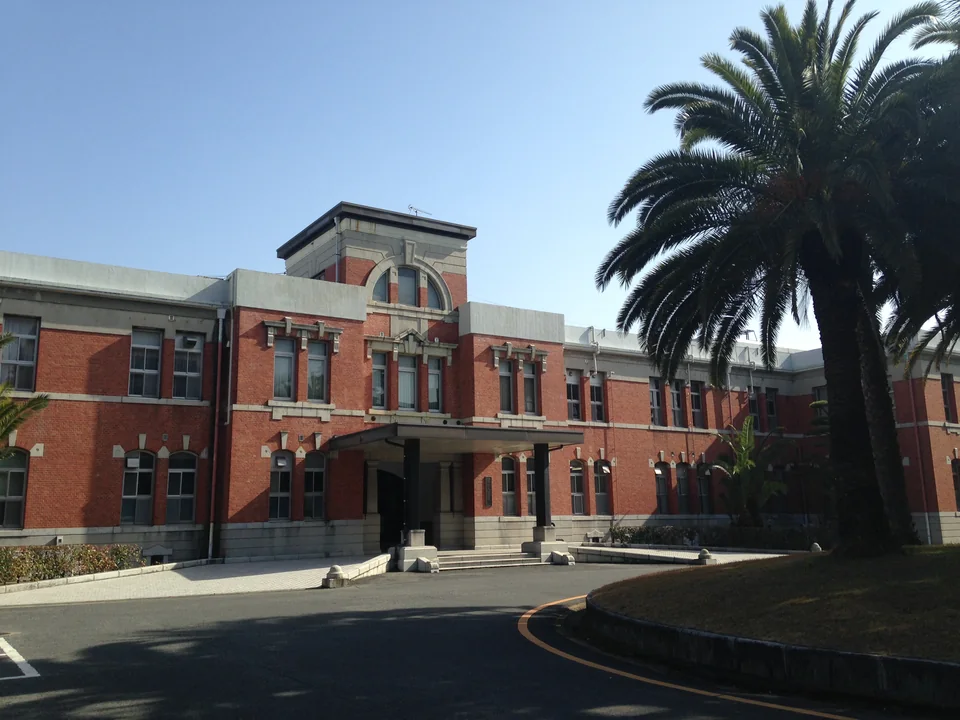
How much MEXT pays and who can apply
| Undergraduate | Research (master's, doctoral, non-degree research) | |
|---|---|---|
| Age limit, 2027 round | Born on or after 2 April 2002 | Born on or after 2 April 1992 |
| Education | 12 years of schooling, or completion of a school equivalent to Japanese upper secondary school (an 11-year Russian certificate qualifies), by March 2027 | Bachelor's degree (16 years of education) or a 3+ year degree equivalent to a bachelor's |
| Monthly allowance | $741 (¥117,000) | $906 (¥143,000) during preparation or as a non-regular student; $912 (¥144,000) master's; $918 (¥145,000) doctoral |
| Regional supplement | $13 or $19 (¥2,000 or ¥3,000) in designated areas | Same |
| Length | 5 years including a preparatory year (7 years for medicine, dentistry, veterinary science and six-year pharmacy) | Up to 2 years as a non-regular student; the standard length of a degree course if MEXT extends the award |
| First-screening exams | Japanese, English, mathematics; Sciences A applicants add chemistry and physics, Sciences B and C add chemistry and biology | Japanese and English |
| Start | April | April or September/October |
Sources: MEXT 2027 guidelines for undergraduates and research students. Dollar figures use the ECB reference rate of 23 September 2026 ($1 ≈ ¥157.9), rounded. MEXT notes that amounts may change each fiscal year.
What the scholarship covers — and what it does not
MEXT pays for three things: all university fees (entrance exam, matriculation, tuition), the flight to Japan and home at the end of the award on a route MEXT chooses, and the monthly allowance, paid only into a Japan Post Bank account opened after arrival.
You pay for:
- Housing, including preparatory-school and university dormitories, where places may be limited.
- National Health Insurance contributions after arrival.
- Travel to your home airport, airport taxes, excess baggage and travel insurance.
- Your first weeks. The first payment arrives one to one and a half months after arrival, so MEXT recommends bringing at least $2,000.
- The entrance exam fee if a research student ultimately does not enter a degree course.
The allowance is sized for one person. MEXT asks grantees with families to arrive alone first and find housing.
Categories and where they are open
MEXT has seven categories, but each embassy only announces the ones allocated to its country.
| Category | For whom | Age | What you get | Announced in 2026 |
|---|---|---|---|---|
| Research | Bachelor's or master's graduates | Under 35 | Graduate study, with 6 months of Japanese if needed | Russia, Kazakhstan, Uzbekistan |
| Undergraduate | High-school graduates | Under 25 | Preparatory year plus 4-year degree | Russia, Kazakhstan, Uzbekistan |
| Japanese Studies | Students majoring in Japanese language or culture | 18–29 | One year at a Japanese university, then return home | Russia, Kazakhstan, Uzbekistan (2026/27 intake) |
| Teacher Training | School teachers with 5+ years' experience (university lecturers excluded) | Under 35 | 1.5 years of training at a Japanese university | Russia, Kazakhstan, Uzbekistan |
| College of Technology | 11+ years of schooling | Under 25 | Transfer into year 3 of a kosen, 4 years with language | Not announced |
| Specialized Training College | 12 years of schooling | Under 25 | 3 years including language | Not announced |
| Young Leaders Program | Civil servants and professionals | Generally under 40 | One-year master's | Uzbekistan (via ministry nomination); Kazakhstan lists it separately |
Category data: Study in Japan (JASSO). Country data: Japanese embassies in Russia, Kazakhstan and Uzbekistan. Applicants from other countries should check their own embassy's list. If the vocational category is not offered where you live, the usual route is a language school followed by self-funded study at a senmon gakko.
Embassy vs university recommendation
| Embassy recommendation | University recommendation | |
|---|---|---|
| Who screens | Japanese embassy or consulate, then MEXT | Japanese university, then MEXT |
| Categories | Whatever the embassy announces | Research, Undergraduate, Japanese Studies, College of Technology — only where the university has a quota |
| Exams | Written tests and interview at the embassy | University's own process |
| Choice of university | Research students secure provisional acceptance themselves; undergraduates are placed by MEXT | Fixed from the start |
| Typical arrival | April (research students also in autumn) | Usually September/October, sometimes late March/early April |
Only universities approved by MEXT can recommend candidates, and quotas are often tied to exchange agreements or specific English-taught programmes. Check whether your target programme has a quota and when its internal deadline falls; university timelines rarely match the embassy's. You cannot apply to two MEXT programmes at once.
The 2027 round and what to expect for 2028
| Step | Russia | Uzbekistan |
|---|---|---|
| Announcement | 27 April 2026 | April 2026 |
| Deadline, undergraduate | 1 June 2026, 18:00 | 25 May 2026 |
| Deadline, research | 8 June 2026, 18:00 | 25 May 2026 |
| Document-review results | 10 June (undergraduate), 17 June (research) | — |
| Exams and interview | 20–21 June (undergraduate), 27–28 June 2026 (research), at the embassy in Moscow or the applicant's consulate general | June–July 2026 |
| Final results | After February 2027 (undergraduate); January to early March 2027 (research) | December–January |
| Departure | 1–7 April 2027; research also autumn | April or October |
Kazakhstan follows the same pattern. For the 2026 intake, the embassy in Astana took undergraduate applications until 30 May 2025, scheduled the written exam for 13 June and interviews for 24 June, with results in January–February and departure on 1–7 April. Look for the next call in the culture and education section of the embassy's website.
Japanese Studies runs on its own calendar: in Russia the 2026/27 intake accepted documents from 13 January to 16 February 2026 with the exam on 28 February. Expect the next call in early 2027. For the 2028 main round, no dates exist yet; if embassies repeat the 2026 pattern, calls open in the second half of April 2027 and close in late May or early June. The age cut-off moves with the intake year, so check it in the new guidelines.
Russian applicants should also note that the embassy attached a summary of Japan's export restrictions on Russia (semiconductors, computers, robotics, quantum technology, chemicals and related technology) to the 2027 call, and MEXT may reject an application that raises weapons-proliferation concerns. If your research topic is close to these areas, frame the plan carefully and keep a fallback topic.
In Russia, applicants living in the consular districts of Saint Petersburg, Vladivostok, Khabarovsk and Yuzhno-Sakhalinsk apply to those consulates; everyone else applies to the embassy in Moscow. Documents go in person, through a representative or by post — not by email or fax — and the embassy warns that domestic post can take weeks. In Kazakhstan, the embassy's culture section in Astana accepts applications in person or by post.
How research-student selection works
- April–June: apply. Application form, placement preference form, Field of Study and Research Plan, full transcripts, degree or expected-graduation certificate, recommendation from a president, dean or academic adviser, MEXT medical certificate; optionally thesis abstracts, a language certificate issued within two years, an employer's letter, or a portfolio for arts and music.
- June: first screening. Document review, written Japanese and English tests, interview. Everyone takes the Japanese test; it sets the level of language preparation rather than eliminating beginners.
- By 1 September: provisional acceptance. Successful candidates request a letter of provisional acceptance on the MEXT form. Contact the university's international student office first, not a prospective supervisor. You may approach at most two universities at a time and hold at most two letters; the preference form lists up to three universities. New requests after 2 September are not allowed, and universities typically need about a month.
- Mid-September to early October: final placement preference form to the embassy.
- From November: MEXT's second screening and placement.
- January–March: results via the embassy.
A letter of provisional acceptance weighs heavily; without one you may be rejected despite passing the first screening, and if you submit the preference form without a letter, arrival is limited to the October term. Where a preference form mixes private and national universities, MEXT may prioritise the national one for budget reasons. Write a specific research plan and shortlist labs that genuinely work on your topic before you apply.
A workable structure for the Field of Study and Research Plan:
- What you have studied so far and what came of it: coursework, thesis, publications, practical work.
- The specific question you want to answer in Japan.
- Methods and data: experiments, fieldwork, archives, modelling.
- Why Japan, and which two or three labs work on related topics.
- How the result will be used after the programme.
MEXT uses this document for university placement, and the interview panel checks whether you have researched Japanese universities and know why you are going.
Undergraduate MEXT: preparatory year and placement
Undergraduate grantees usually spend a year at ABK College (humanities and social sciences) or Osaka University (natural sciences) studying mainly Japanese plus core subjects, then sit the entrance exam of a university assigned by MEXT. You cannot object to the placement, change your course group (Humanities A/B, Sciences A/B/C) or transfer. If you fail the preparatory course or the entrance exam, the scholarship ends. Music and fine arts are not eligible. Direct placement, skipping the preparatory year, can be offered to humanities applicants with strong Japanese; applicants in any field may request it if their Japanese is sufficient or the chosen programme does not require Japanese. The university reviews grades and a language score such as the JLPT, consultations run until 12 February 2027, and anyone not accepted goes to the preparatory course.
Paperwork rules that trip people up
- Everything in English or Japanese, or with a certified translation.
- Two packets for undergraduates (originals and one set of copies), three for research students (originals and two sets of copies); write the document number in the top right corner.
- Use only the current year's forms. Photo 4.5 × 3.5 cm, under six months old, name and nationality on the back.
- Your name exactly as in your passport.
- Transcripts must show the grading scale and all years; a diploma or class ranking does not replace them.
- Submit attested copies of certificates; documents are not returned.
- Language certificates only if you have them, issued within two years.
Do you need Japanese or English?
For the undergraduate and research categories no minimum is set in either language; you must be willing to learn Japanese (Japanese Studies, by contrast, is for students already majoring in the language). Undergraduate degrees are usually taught in Japanese after the preparatory year. Research students can work in English where the lab does, but the interview must show you can communicate with a supervisor in Japanese or English. All applicants in Russia, Kazakhstan and Uzbekistan take the English test; exemptions apply only where English is an official language. MEXT sets no minimum IELTS or TOEFL score.
Who is ineligible
Military personnel; previous MEXT grantees (research students have limited exceptions); students already enrolled or planning to enrol in Japan as self-funded students before the award starts; applicants to another MEXT programme at the same time; research students with no intention of earning a degree in Japan; anyone planning long fieldwork abroad or a leave of absence; and anyone caught cheating in the written exam. You must also enter Japan on a newly issued Student visa from your country of nationality.
If MEXT does not work out
JASSO's Honors Scholarship pays $304 (¥48,000) a month at universities and vocational colleges and $190 (¥30,000) at Japanese language schools to self-funded students already in Japan, nominated by their school; strong EJU results taken abroad can earn a reservation before enrolment. MEXT cannot be combined with other Japanese-government scholarships; home-country awards are allowed in principle but must be cleared with the embassy. See our guides to the cost of studying in Japan, bachelor's and master's degrees, and the EJU exam.
What StudyU does
Only the initial consultation is free. Eligibility checks, choosing a category and route, matching universities and labs to your topic, research plans, documents and translations, interview practice and a parallel self-funded plan are provided under an agreement with StudyU. Scholarship decisions belong to the Japanese embassy or university at the first stage and to MEXT at the second; StudyU does not influence selection or promise an outcome. For an overview of the country, see Study in Japan.
FAQ
Yes. The Japanese embassy in Russia runs annual calls for research, undergraduate, Japanese Studies and teacher-training scholarships, and says several dozen Russians become grantees each year.
Under the 2027 guidelines, $741 (¥117,000) for undergraduates and $906–918 (¥143,000–145,000) for research, master's and doctoral students, plus $13–19 (¥2,000–3,000) in some regions. Tuition and flights are covered separately; housing is not.
Yes. You need only a willingness to learn. Everyone sits the Japanese test, but a low score leads to language preparation rather than automatic rejection.
Plan for April–June 2027 for embassy recommendation. Embassies publish exact dates about five to six weeks before the deadline, so prepare documents and references in advance.
Research students choose: up to three universities on the preference form and up to two acceptance letters. Embassy-route undergraduates are placed by MEXT. Under university recommendation, the university is fixed from the start.
For embassy-route undergraduate MEXT, yes: the 2027 guidelines accept graduates of a school equivalent to Japanese upper secondary school even if schooling took fewer than 12 years, and the preparatory year bridges the gap. Direct placement straight into a degree usually requires 12 years of schooling or an equivalency exam. See studying in Japan after 11 years of school.
MEXT can stop payments for false statements, legal violations, disciplinary action, poor results, changing residence status or accepting an unapproved scholarship, and may demand repayment. Former grantees generally cannot apply again.
Sources
- MEXT 2027 Application Guidelines, Undergraduate Students, Embassy Recommendation (PDF)
- MEXT 2027 Application Guidelines, Research Students (PDF)
- Study in Japan (JASSO): MEXT scholarship types, age limits and exams
- Embassy of Japan in Russia: education and 2026–2027 calls
- Embassy of Japan in Kazakhstan: Undergraduate programme and MEXT programmes
- Embassy of Japan in Uzbekistan: MEXT programmes
- Study in Japan (JASSO): JASSO scholarships
- ECB reference rates, 23 September 2026: €1 = $1.1411 = ¥180.20
Next steps
- Bachelor's in Japan for International Students: Programmes, Requirements, Costs and 2027–2028 Timelines
- EJU Exam Guide: Subjects, Scores, 2026–2027 Dates and Where to Sit It
- Master's in Japan: How to Apply, Find a Supervisor and Budget for 2027–2028
- Japanese University After 11 Years of School: the 12-Year Rule, Exceptions and Routes for 2027–2028
- Studying in Japan for international applicants
- Senmon Gakko in Japan: Vocational Schools for International Students, Entry Requirements and Work After Graduation
