
Tokyo is Japan's main student city. JASSO counted 83,779 international students in Tokyo's higher education institutions on 1 May 2025, more than three times the number in Osaka. The city is home to the University of Tokyo (39th in QS 2027), the Institute of Science Tokyo (=97th), Waseda (=201st) and Keio (=213th), as well as Sophia, Hitotsubashi, ICU and dozens of other universities. National universities in Tokyo charge $3,410–4,090 (¥535,800–642,960) a year; private ones cost noticeably more. Housing is the biggest part of the budget: average student rent in Tokyo is $365 (¥57,000) a month, against $260 (¥41,000) nationally.
This guide covers the main Tokyo universities, the difference between the Japanese and English tracks, what has changed at the University of Tokyo for 2027 entry, what study and living cost in the capital, where to live and how not to miss application windows.
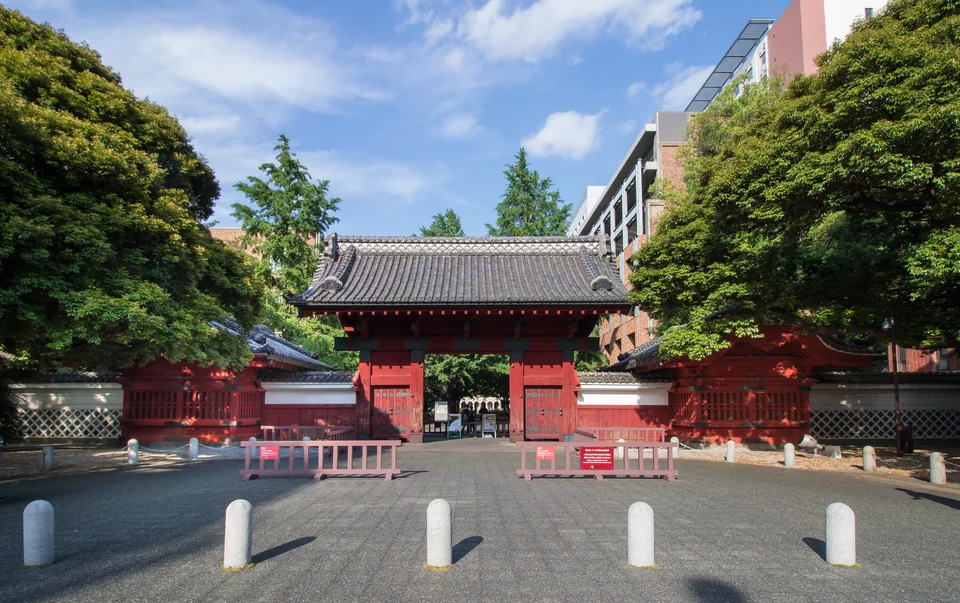
Tokyo at a glance
| Indicator | Figure |
|---|---|
| International students in Tokyo's higher education institutions | 83,779 (JASSO, 1 May 2025) |
| Tokyo universities in the QS 2027 top 100 | University of Tokyo (39) and Institute of Science Tokyo (=97) |
| National university tuition | $3,410 (¥535,800) a year on the state scale; University of Tokyo $4,090 (¥642,960) for new undergraduates; Institute of Science Tokyo $4,040–4,090 (¥635,400–642,960) |
| First year at a private university | About $8,270 (¥1,300,000) on average nationally, excluding medicine |
| Average rent | $365 (¥57,000) a month in Tokyo, $260 (¥41,000) nationally |
| Main intakes | April for Japanese-taught programmes; September–October for most English-taught ones |
Tokyo's main universities
| University | Type | QS 2027 | Why it matters to international applicants | Undergraduate language |
|---|---|---|---|---|
| The University of Tokyo | National | 39 | Japan's strongest research university, the new UTokyo College of Design, more than twenty English-taught graduate programmes | Japanese; College of Design in English |
| Institute of Science Tokyo | National | =97 | Science and engineering (Ookayama campus) and medicine (Yushima campus) since the 2024 merger; GSEP, an English-taught bachelor's with an April start | Japanese; GSEP in English |
| Hitotsubashi University | National | outside top 200 | Economics, management, law; ICS business school with an English-taught MBA | Japanese |
| Tokyo University of Foreign Studies | National | outside top 200 | Languages and area studies, Japanese as a major | Mostly Japanese |
| Tokyo Metropolitan University | Public (Tokyo Metropolitan Government) | outside top 200 | Broad range of fields at public-university fees | Japanese |
| Waseda University | Private | =201 | English-based programmes in six schools: Political Science and Economics, Social Sciences, International Liberal Studies (SILS), Culture, Media and Society, and two science and engineering schools | Japanese and English |
| Keio University | Private | =213 | Economics, business, medicine; historic Mita campus; English-taught PEARL and GIGA programmes | Japanese; PEARL and GIGA in English |
| Sophia University | Private | outside top 200 | All faculties on one Yotsuya campus in central Tokyo; English-taught programmes including the Faculty of Liberal Arts and SPSF | Japanese and English |
| International Christian University (ICU) | Private | outside top 200 | Liberal arts; separate English-language-based admission with April and September entry | Japanese and English |
QS positions come from QS's article on Japanese universities updated on 1 July 2026, which lists the national top ten. Other Tokyo universities sit below 200th or are not listed there, so we do not quote a position.
What has changed at the University of Tokyo for 2027
The University of Tokyo has closed its English-taught undergraduate programme PEAK; the September 2026 intake was the last. In its place, UTokyo College of Design opens in September 2027: a five-year programme combining a bachelor's and a master's degree. All teaching is in English and 100 students are admitted each year, 50 through Route A (via Japan's national Common Test) and 50 through Route B (international exams and school qualifications), the route used by most international applicants. Applications run from 15 October to 5 November 2026. The first stage covers documents, essays and a video task; shortlisted candidates are interviewed online in English between 13 and 22 January 2027, and decisions are released on 20 February 2027. Expected English scores are IELTS above 6.0 or TOEFL iBT above 80 (above 4 on the new scale for tests from 21 January 2026); these are guides rather than cut-offs. You also need results from one of the university's listed tests or school qualifications. All first-years live at Mejirodai International Village for about $525 (¥82,300) a month.
Two other routes remain. The Japanese-taught screening for privately financed international students accepts applications from 1 to 7 December 2026 and requires the EJU, TOEFL or IELTS, and an essay and interview in Japanese. The Global Science Course (GSC) admits students who have completed at least two years at a university outside Japan into the third year of the Faculty of Science, with a $955 (¥150,000) monthly scholarship and fully supported rent. See the University of Tokyo profile for details.
Japanese or English: choosing a track in Tokyo
Japanese-taught programmes are the main route into national universities. International applicants compete separately from Japanese school-leavers: they sit the EJU (Japanese plus subject tests), often TOEFL, then an essay and interview in Japanese, with an April start. Many applicants spend a year or eighteen months at a Tokyo language school first, which also makes the EJU easier to take, since there are no test centres in Russia or Central Asia. See our guide to Japanese language schools.
English-taught programmes are faster to access but narrower, and pricier at private universities. At Tokyo's national universities they are College of Design and GSEP; at private ones, the programmes at Waseda, Keio, Sophia and ICU. Even on an English track, part-time jobs, internships at Japanese companies and daily life in Tokyo call for Japanese, so start learning in your first semester.
English-taught master's programmes offer the widest choice. At the University of Tokyo they span engineering, chemistry and biotechnology, urban planning, sustainability, global health and public policy; Hitotsubashi offers an MBA. Many students start as research students for up to a year under a professor. See our guide to master's degrees in Japan.
School-leaving certificates and Tokyo universities
MEXT recognises Russian general secondary education completed on or after 6 October 2009 as sufficient for Japanese university entry, and it lists the Kazakh, Belarusian, Uzbek and Ukrainian systems from specified dates. Graduates of these systems can apply to Tokyo universities without an extra year at home unless a programme adds conditions. The University of Tokyo's Japanese-track screening, for example, requires at least one year at the final school abroad. Options for other systems are explained in our guide to university after 11 years of school.
What studying in Tokyo costs
| University and programme | Annual tuition | On enrolment | Application fee |
|---|---|---|---|
| University of Tokyo, bachelor's and College of Design | $4,090 (¥642,960) | $1,790 (¥282,000) | $110 (¥17,000) |
| University of Tokyo, master's | $3,410 (¥535,800) | $1,790 (¥282,000) | $190 (¥30,000) |
| University of Tokyo, research student | $185 (¥28,900) a month | $540 (¥84,600) | $60 (¥9,800) |
| Institute of Science Tokyo, science and engineering (bachelor's and master's) | $4,040 (¥635,400) | $1,790 (¥282,000) | $110 / $190 (¥17,000 / ¥30,000) |
| Institute of Science Tokyo, medical fields (bachelor's) | $4,090 (¥642,960) | $1,790 (¥282,000) | $110 (¥17,000) |
| Private university, first year (national average) | about $8,270 (¥1,300,000) including admission fee | included | varies |
Private Tokyo universities (Waseda, Keio, Sophia, ICU) publish fees by faculty; English-taught programme fees are covered in the university profiles and in our guide to English-taught degrees in Japan.
What living in Tokyo costs
International students in Japan spend about $670 (¥105,000) a month on average excluding tuition, according to JASSO's 2023 survey. Tokyo costs more mainly because of rent: $365 (¥57,000) on average versus $260 (¥41,000) nationally. Study in Japan suggests $380 (¥60,000) as a reasonable target for an apartment in Tokyo, though prices vary sharply by station and building age. Rent near central campuses such as Hongo, Yotsuya and Mita is higher, so the choice is usually a trade-off: a cheaper room further out means more time and money spent on the daily commute.
For the visa, the university and the immigration bureau check that you or your sponsor can cover study and living costs. Allow for exchange-rate risk if your family earns in another currency. A full budget is in our guide to the cost of studying in Japan.
Where to live in Tokyo
Study in Japan estimates that about 70% of international students live in private accommodation because dormitory places are limited. What Tokyo universities offer:
- The University of Tokyo runs residences in the Mejirodai, Oiwake, Komaba and Kashiwa areas. The largest is Mejirodai International Village, opened in 2019. College of Design first-years must live there, at about $525 (¥82,300) a month all-in plus $450 (¥70,930) on moving in. The university can also act as guarantor for a private rental if you meet its conditions.
- Private universities (Waseda, Sophia, ICU and others) offer places in their own or partner residences; terms depend on the programme.
Private rentals in Japan usually require a deposit, sometimes a non-refundable "key money" payment and a guarantor. See our guide to student housing in Japan.
Scholarships for studying in Tokyo
- MEXT, embassy recommendation: full tuition, flights and $745 (¥117,000) a month for undergraduates or $910–925 (¥143,000–145,000) for graduate and research students. MEXT assigns undergraduate grantees to universities, so a Tokyo placement is not guaranteed. See our MEXT scholarship guide.
- MEXT, university recommendation: at the University of Tokyo this goes mainly to students on inter-university exchange agreements.
- JASSO Honors Scholarship for top EJU scorers: $305 (¥48,000) a month, reserved on the basis of EJU results.
- UTokyo College of Design scholarships: needs-based, $15,270 (¥2,400,000) a year plus the admission fee and a one-way flight; merit-based, $3,820 (¥600,000) a year, for up to five years.
- University of Tokyo GSC: $955 (¥150,000) a month and supported housing for third-year transfer students.
Tuition exemptions are decided after enrolment and budgets are limited. The university, MEXT or JASSO decides on funding, and an offer of admission does not guarantee a scholarship.
Application deadlines for 2027 entry
| Deadline | What |
|---|---|
| 15 October – 5 November 2026 | UTokyo College of Design applications (start 1 September 2027) |
| November 2026 | Second EJU session |
| 1–7 December 2026 | University of Tokyo Japanese-track screening for international students (April 2027 start) |
| 25 February and 4 March 2027 | Essay and interview in Japanese at the University of Tokyo |
| Spring 2027 | Japanese embassies announce MEXT scholarships for 2028 |
Private universities and the Institute of Science Tokyo's GSEP publish their own schedules; GSEP's preliminary screening for April 2027 entry finished in September 2026. The overall process is in our guide to applying to Japanese universities, and the visa in our student visa guide.
Tokyo or another city
Tokyo wins on the number of universities, employers and English-taught programmes. If budget matters and your goal is research, compare the capital with Kansai and the regions: Kyoto University and The University of Osaka charge the standard $3,410 (¥535,800) a year and run strong English-taught programmes (Kyoto iUP and Osaka's Human Sciences), while Tohoku University in Sendai is 102nd in QS 2027. Near Tokyo, in Yamanashi Prefecture, iCLA teaches in English; in the south, APU runs a bilingual campus. For the national picture, see universities in Japan for international students.
Common mistakes
- Looking for PEAK. It has closed; the University of Tokyo's English-taught bachelor's is now College of Design, a five-year programme with compulsory first-year housing.
- Thinking Tokyo is expensive only because of rent. Add commuting, deposit, insurance and furniture in the first month.
- Comparing universities by QS alone. Private universities' QS and THE positions differ by hundreds of places; decide by programme and language.
- Putting off Japanese until you arrive. The Japanese track needs high EJU scores, and on English tracks the language matters for internships and jobs.
- Applying to one place only. The University of Tokyo does not allow parallel applications to its different programmes in the same cycle; keep three to five options at different universities.
FAQ
In QS 2027, the University of Tokyo (39th), followed by the Institute of Science Tokyo (=97th), Waseda (=201st) and Keio (=213th). For engineering look closely at Science Tokyo, and for economics and business at Hitotsubashi and Keio.
Yes. At bachelor's level: UTokyo College of Design, Science Tokyo's GSEP and the English-taught programmes at Waseda, Keio, Sophia and ICU. The choice is wider at master's level, especially at the University of Tokyo.
New undergraduates pay $4,090 (¥642,960) a year and master's students $3,410 (¥535,800), plus $1,790 (¥282,000) on enrolment. Research students pay $185 (¥28,900) a month.
For Japanese-taught programmes, yes; it is tested through the EJU and an interview. English-taught programmes do not require Japanese at application, but you will need it for life and work in Tokyo.
International students in Japan spend about $670 (¥105,000) a month on average excluding tuition, and Tokyo rents are above the national average: $365 (¥57,000) versus $260 (¥41,000). The University of Tokyo's Mejirodai residence costs about $525 (¥82,300) a month all-in.
If MEXT lists your school system, yes: Russian general secondary education completed on or after 6 October 2009 qualifies, and so do the Kazakh, Belarusian, Uzbek and Ukrainian systems from specified dates. Individual programmes may add conditions, such as the University of Tokyo's requirement of at least a year at the final school abroad.
Sources
- JASSO, International Student Survey in Japan, 2025 (PDF), checked 24 Sep 2026
- QS, top universities in Japan (updated 1 Jul 2026), checked 24 Sep 2026
- Study in Japan: academic fees, living costs, accommodation, checked 24 Sep 2026
- MEXT, foreign school courses designated as equivalent to upper secondary school, checked 24 Sep 2026
- University of Tokyo: fees, undergraduate programmes in English (PEAK, GSC), English-taught graduate programmes, housing, Mejirodai, 2027 screening for international students (PDF, Japanese), checked 24 Sep 2026
- UTokyo College of Design, 2027 Route B guidelines (PDF) and FAQ, checked 24 Sep 2026
- Institute of Science Tokyo: fees (Japanese), GSEP, merger history, checked 24 Sep 2026
- Waseda, English-based undergraduate programmes, Keio, undergraduate admissions, ICU admissions, Hitotsubashi ICS, Sophia University, checked 24 Sep 2026
Dollar amounts are converted at the ECB reference rate of 29 September 2026 ($1 = ¥157.12) and rounded.
What to do next
Draw up a shortlist of three to five programmes at different universities, note each one's teaching language, deadline and required tests, then check your first-year budget against Tokyo rents. If you would like to review that shortlist with us, apply for a consultation.
During the free initial consultation, we clarify your goal, profile, timing, and budget and identify the next realistic step.
Next steps
- Master's in Japan: How to Apply, Find a Supervisor and Budget for 2027–2028
- English-Taught Degrees in Japan: Bachelor's and Master's Programmes, Requirements and Fees in 2026
- Japanese University After 11 Years of School: the 12-Year Rule, Exceptions and Routes for 2027–2028
- Applying to Japanese Universities for 2027: Routes, Deadlines, Documents, CoE and Visa
- International College of Liberal Arts (iCLA)
- Waseda University
