
The JLPT (Japanese-Language Proficiency Test, Nihongo Noryoku Shiken) is the main international exam for non-native speakers of Japanese. It has five levels, from N5 (easiest) to N1 (hardest). It is a paper-based, multiple-choice test of vocabulary, grammar, reading and listening; it does not test speaking or writing. Certificates never expire, and since December 2025 score reports for successful candidates also show a reference CEFR level.
Outside Japan, the test is held on the first Sunday of July and the first Sunday of December; in 2026 those are 5 July and 6 December. Registration for December 2026 has already closed in Moscow, Almaty, Astana and Tashkent. The next chance is July 2027 — 4 July by the first-Sunday rule, although the official 2027 calendar has not been published yet — with registration usually in March.
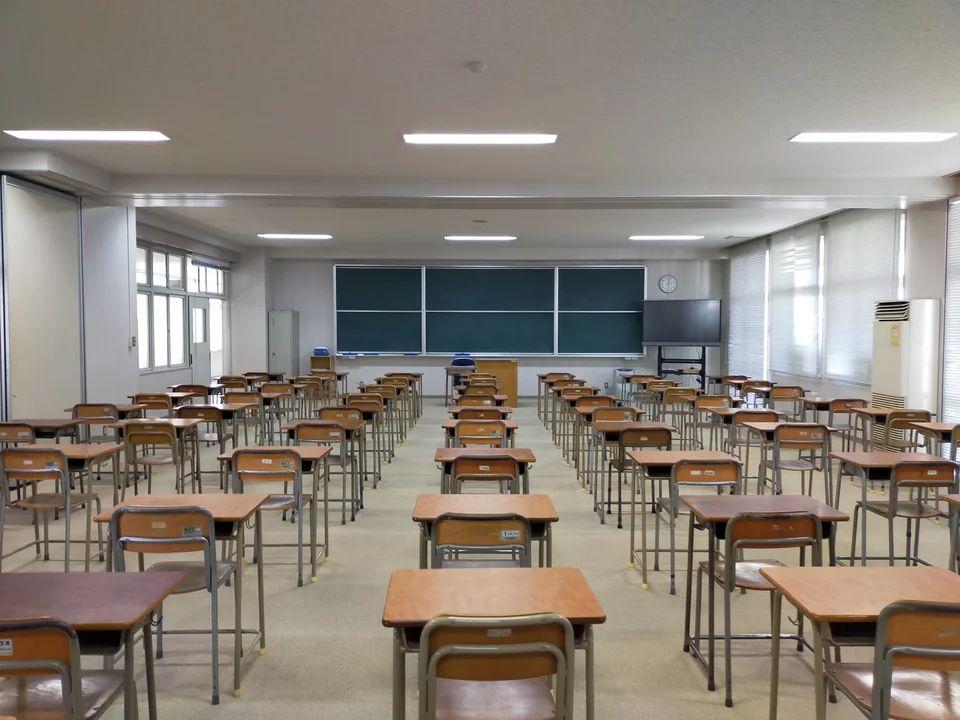
What you need to know about the JLPT
| Question | Answer |
|---|---|
| Organisers | The Japan Foundation (abroad, through local host institutions) and JEES (in Japan) |
| Levels | N5, N4, N3, N2, N1; you can take any level first |
| Format | Paper, multiple choice; no online version |
| 2026 dates | 5 July and 6 December; some cities hold only one session |
| Fees (examples) | Moscow RUB 5,000–6,200 ($59–73); Kazakhstan KZT 13,000–15,000 ($29–33); Tashkent UZS 700,000 ($59) |
| Validity | No expiry, though schools or employers may ask for a recent result |
| December results | Online in late January–February; certificate later |
Dollar amounts use the Bank of Russia official rates of 24 September 2026 ($1 = RUB 84.40; the ECB publishes no rouble, tenge or som rate): $1 ≈ KZT 448 and UZS 11,800. Rounded.
Levels, sections and pass marks
| Level | What a passer can do (JLPT descriptors) | Sections and time | Pass mark | Sectional minimum |
|---|---|---|---|---|
| N5 | Read phrases in hiragana, katakana and basic kanji; follow slow, short classroom and everyday conversations | Vocabulary 20 min; grammar and reading 40 min; listening 30 min | 80/180 | 38/120 (language and reading), 19/60 (listening) |
| N4 | Basic Japanese: everyday texts with basic kanji, slow speech | 25 + 55 + 35 min | 90/180 | 38/120, 19/60 |
| N3 | Everyday Japanese: headlines, coherent conversations at near-natural speed | 30 + 70 + 40 min | 95/180 | 19/60 in each of three sections |
| N2 | Newspaper and magazine articles and commentary, news and conversations at nearly natural speed | Language and reading 105 min; listening 50 min | 90/180 | 19/60 in each |
| N1 | Complex and abstract texts, editorials, lectures and news at natural speed | Language and reading 110 min; listening 55 min | 100/180 | 19/60 in each |
N1–N3 have three 60-point scoring sections (language knowledge, reading, listening); N4 and N5 have two (language knowledge plus reading out of 120, listening out of 60). You fail if any section falls below its minimum, however high your total, or if you miss a section. Scores are scaled, not raw percentages. N3's pass mark (95) is higher than N2's (90); each level has its own threshold.
JLPT and the CEFR
From the December 2025 session, successful candidates receive a reference CEFR level based on their total score:
| JLPT level | Total score → CEFR |
|---|---|
| N1 | 100–141 → B2; 142+ → C1 |
| N2 | 90–111 → B1; 112+ → B2 |
| N3 | 95–103 → A2; 104+ → B1 |
| N4 | 90+ → A2 |
| N5 | 80+ → A1 |
There is no C2. The reference covers reception and language knowledge only. Failed candidates get no CEFR level, and reports from July 2025 or earlier remain valid without it.
Where to take the JLPT: Russia, Kazakhstan and Uzbekistan
From the official overseas test-site list (updated 11 September 2026):
| Country, city | Host | July 2026 | December 2026 |
|---|---|---|---|
| Moscow | Litera | Yes | Yes |
| Vladivostok | JLPT Administration Committee | Yes | Yes |
| Novosibirsk | Sibir-Hokkaido Centre | — | Yes |
| Yuzhno-Sakhalinsk | JLPT Administration Committee | — | Yes |
| Irkutsk | Irkutsk State University | — | Yes |
| Perm | Gymnasium No. 2 | — | Yes |
| Petropavlovsk-Kamchatsky | NPO Kappiya | — | Yes |
| Yekaterinburg | Ural Federal University | Yes | — |
| Saint Petersburg | Saint Petersburg State University | Cancelled | Cancelled |
| Khabarovsk | Pacific National University | — | Cancelled |
| Kazan | Kazan Federal University | — | Cancelled |
| Astrakhan, Yakutsk | Local universities | Cancelled | Cancelled |
| Almaty (Kazakhstan) | JLPT Administration Committee in Kazakhstan | Yes | Yes |
| Astana (Kazakhstan) | Same | — | Yes |
| Tashkent (Uzbekistan) | Uzbekistan-Japan Center (UJC) | Yes | Yes |
Registration is run by each host, not by jlpt.jp, and sites change or cancel from year to year.
| Host | Registration for 6 December 2026 | Fee |
|---|---|---|
| Moscow (Litera) | From 5 August until seats ran out, no later than 30 August 2026 | N5/N4 RUB 5,000 ($59); N3 RUB 5,900 ($70); N2/N1 RUB 6,200 ($73) |
| Kazakhstan (Almaty, Astana) | 17–28 August 2026 | N1/N2 KZT 15,000 ($33); N3 KZT 14,000 ($31); N4/N5 KZT 13,000 ($29) |
| Tashkent (UJC) | 24 August–11 September 2026 | UZS 700,000 ($59), any level |
The Moscow host announces the July session in mid-February and registers in March; the December session is announced in mid-July with registration in August. Kazakhstan registered for July 2026 on 16–27 March.
How to register
- Pick one level. One registration covers one level per session.
- Watch your host's announcements; popular levels in Moscow sell out before the deadline.
- Pay in local currency and complete the host's form. In Kazakhstan you pay first, save the receipt as a PDF, then submit the form; skipping a step voids the application.
- Keep your registration number and password or code — you need them to see results online.
- Receive your voucher. Kazakhstan emails it within a month and requires two 3 × 4 cm photos on it; Moscow confirms immediately after payment.
- On the day: passport and printed voucher. The JLPT requires phones and all electronic devices to be switched off; the Moscow host has banned bringing or using gadgets, including during breaks, since July 2025.
Fees are generally non-refundable and non-transferable if you miss the test. If the test is cancelled for reasons beyond the organisers' control, the Moscow host refunds or carries over the amount set in its public offer agreement.
Which level do you need?
| Goal | Requirement | Source |
|---|---|---|
| Language school in Japan | A beginner level (around A1) confirmed by a test or interview, one of which is mandatory on ISA's form from October 2026; N5 and JFT-Basic both work | ISA, Japan Foundation |
| Vocational college (senmon gakko) | N2 or above; alternatives are EJU Japanese 200+, BJT 400+, or 6+ months at a recognised language school | Study in Japan |
| Japanese-taught bachelor's | Study in Japan says N1 or N2 is needed to keep up in class; most universities also require the EJU | Study in Japan |
| JASSO Honors Scholarship (degree students) | N2 or EJU Japanese 200+ (or English at CEFR B2) | JASSO |
| MEXT scholarship | Not required; a certificate issued within two years may be attached | MEXT guidelines |
| Specified Skilled Worker (i) | Japanese at A2 — JLPT N4 or JFT-Basic — plus a skills test | Japan Foundation, ISA |
| Highly Skilled Professional points | N1 = 15 bonus points, N2 = 10 | ISA |
JLPT, EJU or JFT-Basic?
| JLPT | EJU | JFT-Basic | |
|---|---|---|---|
| Purpose | General Japanese proficiency | Admission to Japanese universities | Everyday Japanese for work and life |
| Content | Language, reading, listening | Japanese (with writing) plus maths, science or Japan and the World | Script and vocabulary, conversation and expression, listening, reading |
| Format | Paper, twice a year | Twice a year, in Japan and some other countries | Computer-based, many dates |
| Result | Pass/fail by level, scores, reference CEFR | Scores only | Score and level A1, A2.1 or A2.2 (since August 2026) |
The exams do not replace each other. Japanese-taught bachelor's programmes generally look at the EJU, with the JLPT as a supplement; see our EJU guide.
How long to prepare
Study in Japan estimates 600–900+ hours to reach N2–N1. Progress is not linear: N3 to N2 takes much longer than N5 to N4 as kanji load and listening speed rise. Start with the official samples on jlpt.jp, choose a session with a margin, keep all sections balanced (a weak listening score cannot be offset), practise under time pressure, and sit full mock tests every week or two in the final six to eight weeks. An intensive course in Japan is often faster than self-study — see Japanese language schools in Japan.
Common mistakes
- Registering in Saint Petersburg or Kazan out of habit: both St Petersburg sessions and the December sessions in Kazan and Khabarovsk are cancelled in 2026.
- Missing the window: December registration in Moscow, Kazakhstan and Uzbekistan ran in August–September.
- Aiming a level too high: failing gives no certificate or CEFR level, and fees are not refunded.
- Relying on the JLPT instead of the EJU for Japanese-taught degrees.
- Losing your registration number or password.
What StudyU does
Only the initial consultation is free. Admission planning around the language level and exam dates you need, choosing a language school, university or college, and document preparation are provided under an agreement with StudyU. The JLPT is run by the Japan Foundation and local hosts; StudyU does not register candidates, influence results or promise a pass. See also Study in Japan.
FAQ
6 December 2026, but Moscow registration for it closed on 30 August. The next session is July 2027 — 4 July by the first-Sunday rule, with registration usually in March; official 2027 dates are not out yet.
RUB 5,000–6,200 in Moscow depending on level, KZT 13,000–15,000 in Kazakhstan and UZS 700,000 in Tashkent for any level.
No. Individual schools, employers or programmes may still set their own time limits.
No. It is paper-based and in person only. The Japan Foundation's computer-based test is the JFT-Basic.
No. You can register for any level first, for example N3 or N2, without holding certificates for the lower levels. One registration covers one level per session, so you cannot sit two levels on the same test day. Use the official sample questions on jlpt.jp to pick a level you can realistically pass, since every scoring section has its own minimum.
N2 with a total of 112 or more, or N1 with 100–141. The reference has been shown since December 2025.
For December sessions, online about two months later — the Moscow host says February 2027. Certificates follow; in Moscow, winter-session certificates are issued by 31 May.
Sources
- JLPT: level summary, test sections, times and 2026 dates, scoring and pass marks
- JLPT: CEFR reference and FAQ on certificate validity
- JLPT: overseas test sites as of 11 September 2026
- Japan Foundation Moscow: JLPT in Russia, Moscow host: December 2026 session and annual schedule
- JLPT Kazakhstan: dates and fees, registration
- UJC Tashkent: JLPT 6 December 2026
- Study in Japan: vocational schools, language schools, JASSO scholarships
- Japan Foundation: JFT-Basic
- ISA: Highly Skilled Professional points table (PDF)
- Bank of Russia official rates, 24 September 2026: $1 = RUB 84.3969; KZT 100 = RUB 18.8449; UZS 10,000 = RUB 71.5095
Next steps
- EJU Exam Guide: Subjects, Scores, 2026–2027 Dates and Where to Sit It
- Japanese Language Schools in Japan: Choosing a School, Costs and the Student Visa
- Studying in Japan for international applicants
- Bachelor's in Japan for International Students: Programmes, Requirements, Costs and 2027–2028 Timelines
- Master's in Japan: How to Apply, Find a Supervisor and Budget for 2027–2028
- English-Taught Degrees in Japan: Bachelor's and Master's Programmes, Requirements and Fees in 2026
