
Turkey's public (state) universities admit international students through a separate quota. You are not ranked in the national exam alongside Turkish school-leavers; instead, each university accepts a result from its own approved list: the TR-YÖS exam, SAT, ACT, A-levels, IB or certain national school-leaving exams. Fees for international students are far lower than at foundation (private) universities: for 2026/27, a bachelor's year costs $1,600–2,400 at Middle East Technical University (METU), about $1,610–2,430 (TRY 79,000–119,000) at Istanbul Technical University (İTÜ) and $8,000–10,000 at Boğaziçi. The trade-off is a small number of seats, early deadlines and, at most universities, teaching in Turkish.
| At a glance | What to know |
|---|---|
| Number of universities | The Council of Higher Education (YÖK) lists about 130 public and about 75 foundation universities |
| Who sets international quotas | YÖK, program by program, on each university's proposal |
| Admission tests | TR-YÖS (run by ÖSYM), SAT, ACT, A-levels, IB and selected national exams; each university publishes its own list and minimum scores |
| University-run exams | Public universities may no longer run their own entrance exams for international applicants (since 2024/25) |
| Fees for 2026/27 | Set by each university, but no lower than twice the per-student cost defined in Presidential Decision No. 11625 |
| Language | Mostly Turkish; METU and Boğaziçi teach almost entirely in English |
| How to apply | Directly to each university through its own portal, usually between April and July |
| Government scholarship | Türkiye Bursları, applications 10 January to 20 February |
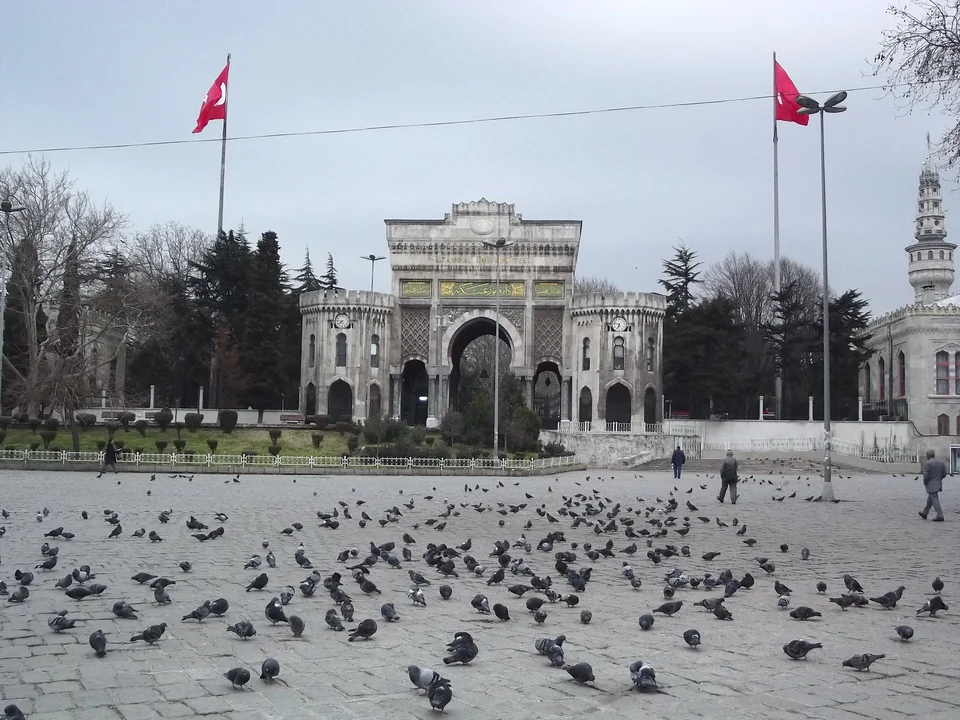
Public vs foundation university: what changes for an international student
Turkey has two kinds of universities. Public universities (devlet üniversitesi) are state-funded. Foundation universities (vakıf üniversitesi) are set up by non-profit foundations and are what most guides call "private". Both are supervised by YÖK and award degrees of the same legal standing. For an international applicant, the differences lie in admission and price.
| Factor | Public university | Foundation (private) university |
|---|---|---|
| Who sets the international fee | The university, within the annual presidential decision | The foundation's board, without an external floor |
| Typical bachelor's fee, 2026/27 | Roughly $1,600–10,000 a year (see the table below) | For example, Özyeğin lists $25,000 a year before scholarships; with 40–60% off, $10,000–15,000 |
| Entry requirement | A mandatory exam or diploma score from the university's list | Often a school certificate plus language; stronger universities add SAT or their own selection |
| Discounts | Rare; at least 25% off for siblings whose family holds Turkish residence permits | 25–75% merit discounts confirmed in the offer letter |
| Language | Mostly Turkish, with a preparatory year | Mostly English |
| Support for internationals | Small offices; you handle most steps yourself | Admissions teams, advisers, housing help |
In practice a public university is cheaper but less predictable. If your score misses the minimum or the quota fills, you wait a full year. Many applicants therefore apply to one or two public universities and one or two foundation universities in parallel. For private options, see our guides to top-ranked universities in Turkey for international students and universities in Turkey teaching in English.
How public universities admit international students
The rules come from YÖK's "Principles of Admission of Students from Abroad" (version of 31 July 2026). Five points matter before you shortlist.
- The quota is separate. International applicants compete only with each other for seats YÖK has approved for a program. METU's 2026/27 international quota totals 444 bachelor's seats, for example 22 in computer engineering, 30 in electrical and electronics engineering and 15 in architecture.
- You can apply in your final school year. Final-year students and graduates are eligible. A foreign national who graduated from a Turkish high school is excluded from this quota and goes through the national YKS exam instead.
- Universities choose tests from a YÖK-approved list. University entrance tests such as SAT and TR-YÖS are valid for two years; school-leaving qualifications such as A-levels or the Abitur have no expiry.
- Public universities no longer set their own exams. Many used to run a university "YÖS" (Istanbul University's İÜYÖS, for example). From 2024/25 that is no longer allowed for public universities, and TR-YÖS from ÖSYM has become the common test.
- Medicine, dentistry, pharmacy, law and teacher education do have quotas, but unfilled seats there cannot be moved to other programs. Competition is highest in these fields.
TR-YÖS: the common exam for international applicants
ÖSYM, the agency that runs Turkey's national university exam, holds TR-YÖS twice a year, in Turkish, English, Russian, German, French or Arabic. In 2026 the first session took place on 12 April (results on 7 May). The second is set for 11 October with results on 5 November; registration ran from 9 July to 3 August. You register yourself at tryos.osym.gov.tr. ÖSYM publishes the 2027 dates in its exam calendar.
The test covers mathematics and reasoning. The required result depends on the university: Boğaziçi asks for at least 450 out of 500, İTÜ for 400, and METU only accepts candidates in the top 5% of test-takers. Our YÖS exam guide explains the format, and which exams Turkish universities require compares it with SAT.
National school-leaving exams
Several strong public universities accept national exams, which helps applicants who have not prepared for SAT. A few examples from official minimum-requirement tables:
| University | Russian Unified State Exam (EGE) | Kazakhstan UNT (ENT) | SAT | TR-YÖS |
|---|---|---|---|---|
| METU (Ankara) | Average of at least 80% in three subjects, two related to the program; mathematics required for engineering and sciences | At least 125 out of 140 | 1200+, with 700+ in Math for engineering | Top 5% |
| İTÜ (Istanbul) | Average of at least 70% in three subjects, including mathematics | At least 100, with 30/40 in compulsory subjects | 1200+, with 650+ in Math | 400+ out of 500 |
| Boğaziçi (Istanbul) | Not on the list | Not on the list | 1300+; 1350+ and Math 700+ for engineering | 450+ out of 500 |
Meeting the minimum only makes you eligible. METU states that decisions follow the program quota and a holistic review of the file, including optional certificates, a statement of purpose and a portfolio.
What a public university costs in 2026/27
Each public university sets its own international fee, within Presidential Decision No. 11625 on 2026/27 fees (Official Gazette, 15 August 2026). The decision requires international-quota fees to be at least twice the program's per-student cost. That is why fees vary, and why some universities publish them in US dollars and others in Turkish lira.
| University and program | Annual fee, 2026/27 | Notes |
|---|---|---|
| METU: engineering, architecture, sciences | $2,400 ($1,200 per semester) | For students starting in 2023/24 or later; paid in lira at the Central Bank rate one week before the payment window |
| METU: sociology, psychology, history, economics, education | $1,600 ($800 per semester) | The English preparatory year costs the same as the program |
| METU: graduate programs | $750 ($375 per semester) | — |
| İTÜ: engineering faculties, architecture, computing | ≈ $1,930 (TRY 94,500) | Paid in two instalments, one per semester |
| İTÜ: business | ≈ $1,760 (TRY 86,500) | — |
| İTÜ: science and letters | ≈ $1,610 (TRY 79,000) | — |
| İTÜ: maritime, textile programs | ≈ $2,430 (TRY 119,000) | — |
| Istanbul University: humanities | ≈ $1,940 (TRY 95,220) | Half paid in autumn, half in spring |
| Istanbul University: economics, business | ≈ $2,430–2,910 (TRY 119,025–142,830) | — |
| Istanbul University: dentistry | ≈ $6,310 (TRY 309,465) | — |
| Istanbul University: medicine | ≈ $9,710 (TRY 476,100) | — |
| Boğaziçi: engineering, economics and administrative sciences | $10,000 | The university offers no scholarships to international students |
| Boğaziçi: science, humanities and social sciences, education, law | $8,000 | English preparatory year: $10,000 |
Lira amounts are converted at the ECB reference rate of 30 September 2026 and rounded to $10. The lira has been falling steadily, so the dollar value on your payment date may differ.
Add the application fee ($103 at Boğaziçi; METU charges none for 2026/27), the student residence permit card (TRY 964, about $20, in 2026), health insurance, housing and living costs. Public-university dormitories are cheap, but places are limited and not always available to international students. See cost of living in Turkey and student accommodation in Turkey for living-cost figures.
The decision also lets universities cut fees for up to 10% of their international students with outstanding results, and gives families holding Turkish residence permits at least 25% off when two or more children study at public universities. Do not count on the first of these when you build a budget.
Language of instruction and the preparatory year
Most public-university programs are taught in Turkish. If you have no Turkish certificate, you are admitted to the program and placed in a one-year Turkish preparatory class (hazırlık), with your seat held. That year is charged at the program fee and adds 12 months of living costs.
METU and Boğaziçi are the main exceptions, teaching in English. METU does not require an English score at application; you present TOEFL, PTE Academic or pass METU's own proficiency exam at registration. METU does not accept IELTS results from tests taken on or after 24 December 2022. Without the required score you take a year of English first. At İTÜ, programs are fully English, fully Turkish or 30% English, so check each program.
Deadlines: planning for 2027/28
There is no central portal; each university opens its own online form. Last cycle's dates show what to plan for.
| University | 2026/27 application window | What it means for 2027/28 |
|---|---|---|
| Boğaziçi | 6 April to 5 June 2026 | You need SAT or TR-YÖS results by spring of your final school year |
| METU | 1 June to 12 July 2026 | Applicants using national exam results can apply right after results come out |
| İTÜ | 18 May–17 July 2026, second round 21–26 August | Expect a similar pattern: a main window from mid-May to mid-July and a late-August round if places remain |
| TR-YÖS (ÖSYM) | Exams on 12 April and 11 October 2026 | For autumn 2027 entry, the October 2026 or April 2027 session is realistic |
If you are aiming for a public university in autumn 2027, sit TR-YÖS or SAT in the autumn or winter of your final school year rather than after graduation. You will then have a valid score in spring, with your national exam as a second route where it is accepted.
Documents for application and registration
Most universities only ask for scans when you apply. METU's list is typical:
- photo and passport;
- school certificate, or a letter from your school confirming the expected graduation date and grade average;
- transcript for all high-school years;
- the result you apply with (SAT, TR-YÖS, a national exam, A-levels) at or above the minimum;
- optional: language certificate, statement of purpose, references, CV, portfolio, olympiad awards.
Documents not in Turkish or English need an official translation. Originals are checked at registration, after admission. At that point you also need an equivalence letter (denklik) for your school certificate from Turkey's Ministry of National Education or a Turkish consulate; METU does not require it at application. Denklik is not issued for school documents without an apostille. See how to get denklik in Turkey.
Visa and residence permit
Check whether your nationality's visa-free stay covers study. For Russian citizens it does not: Russia's foreign ministry states that visa-free trips of up to 60 days do not apply to travel for study or work, and Turkey's foreign ministry describes the waiver as covering tourist and business trips. Russian students therefore apply for a study visa at a Turkish embassy or consulate once they hold an admission letter. Kazakh citizens may stay visa-free for up to 90 days in any 180.
After arriving and registering, students fill in the form at e-ikamet.goc.gov.tr. Since November 2023, under a protocol between the migration authority and YÖK, the university's international office collects residence-permit documents and forwards them. The first application must be filed while your visa or visa-free period is still valid. The university only collects the paperwork; the migration authority decides on the permit. Expect to provide your passport, a biometric photo, proof of enrolment, health insurance and the card-fee receipt. Within three months of registration you can enrol in state health insurance or buy private cover. See student visa in Turkey for the steps.
Türkiye Bursları scholarship
This is the main way to study at a public university for free. The scholarship covers tuition, dormitory housing, a one-off flight, health insurance, a year of Turkish and a monthly stipend of TRY 6,500 (about $130) for bachelor's students. Applications open online from 10 January to 20 February, interviews run from April to June and results come out in early August. Bachelor's applicants must be under 21 with a grade average of at least 70%, or at least 90% for medicine, dentistry and pharmacy. Students graduating in the current year can apply.
The agency places scholars at a university and program from the preferences listed in the application, so a parallel self-funded application to a university is a safety net rather than duplication. Our Turkey study grant guide explains how the full scholarship compares with private-university discounts.
Degree recognition outside Turkey
Within Turkey, a public and a foundation degree have the same standing. Abroad, recognition follows the rules of the country where you will work. Turkey is part of the European Higher Education Area, but there is no automatic recognition everywhere. For example, no Turkish university is on Russia's government list of foreign universities whose degrees are recognised automatically (Order No. 186-r, version of 19 February 2026), so Russian graduates go through a recognition procedure decided by Rosobrnadzor. Regulated professions such as medicine, dentistry and law need professional licensing on top of recognition. Check your home country's recognition authority before you enrol. For postgraduate study in Turkey, see master's programs in Turkey.
Which route suits you
| Your situation | Sensible choice |
|---|---|
| Strong mathematics, a good national exam score or SAT, limited budget | METU or İTÜ, plus one foundation university as a fallback |
| Engineering or IT in English, no Turkish | METU, Boğaziçi, İTÜ English programs; fallbacks such as Sabancı or Özyeğin |
| Medicine or dentistry in English | Usually foundation universities: public quotas are tiny and teaching is mostly in Turkish |
| Willing to spend a year on Turkish for a lower fee | Istanbul University and public universities in Ankara and İzmir with a preparatory year |
| You need a decision in spring, not August | Foundation universities with early rounds |
| Aiming for a full scholarship | Türkiye Bursları, with a parallel self-funded application |
Common mistakes
- Relying on old guides about university-run YÖS exams. Public universities no longer hold them; check the accepted-exam list on each university's site.
- Entering on a visa-free stay when your nationality's waiver excludes study, then struggling to obtain the residence permit.
- Budgeting in lira at today's rate. If a university prices in lira, allow for next year's increase.
- Forgetting the preparatory year. Turkish or English prep adds a year of study and a year of costs.
- Missing early deadlines. Boğaziçi closes in early June and does not accept national exams such as the EGE, so an SAT or TR-YÖS score is needed by the spring of the final school year.
- Paying intermediaries "for a seat". METU states it does not work with any third party for bachelor's recruitment; public-university applications are individual and online.
- Ignoring recognition. If you will work in a regulated profession at home, find out how recognition works before you apply.
For the country overview see study in Turkey; for Istanbul options see Istanbul universities and Istanbul city guide; for Ankara see Ankara. Applicants from Kazakhstan can also read studying abroad from Kazakhstan.
FAQ
Only with Türkiye Bursları or another scholarship that covers tuition. International-quota students pay fees: in 2026/27 from $1,600 a year at METU to $10,000 at Boğaziçi. Discounts for international students at public universities are uncommon.
Not always. METU accepts Russia's Unified State Exam with an average of 80% and Kazakhstan's UNT from 125 out of 140; İTÜ accepts lower thresholds. Boğaziçi accepts neither and requires SAT, TR-YÖS, IB or A-levels. Check the accepted-exam list on each university's website for your intake year.
Yes. YÖK allows final-year students to apply, and METU accepts a school letter with the expected graduation date and grade average at application. The apostilled original certificate and the denklik equivalence letter are needed at registration.
It depends on the program. METU and Boğaziçi teach in English, and you can submit a score at registration or take a preparatory year. Most other public universities teach in Turkish; without a certificate you are admitted and spend one year learning Turkish while your seat is held.
It depends on your nationality. Russian citizens do: their 60-day visa-free regime does not cover study, so they apply for a study visa at a Turkish consulate after admission. Kazakh citizens can enter visa-free for up to 90 days in 180. Everyone then applies for a student residence permit through the university's international office.
Legally, no: both are supervised by YÖK and award degrees of the same standing in Turkey. Differences lie in program quality, language, rankings and accreditations, which you should compare program by program rather than by university type.
Applicants submit public-university applications themselves: METU, for example, refuses to work with intermediaries, and StudyU does not handle applications to Turkish public universities. Comparing the public route with foundation universities, planning TR-YÖS or SAT and supporting applications to foundation universities are provided under an agreement with StudyU. The university decides on admission within its YÖK quota, and the Turkish consulate and migration authority decide on the visa and residence permit.
Sources
- YÖK: list of public universities and list of foundation universities
- YÖK: principles of admission of students from abroad, version of 31 July 2026 (PDF, Turkish)
- Presidential Decision No. 11625 on 2026/27 fees, Official Gazette No. 33341 of 15 August 2026 (PDF, Turkish)
- ÖSYM: exam calendar, TR-YÖS 2026
- METU: 2026/27 fees (PDF), minimum requirements by country (PDF), application dates, 2026/27 quotas, required documents, English proficiency, how to apply, residence permit
- İTÜ: 2026/27 fees, accepted exams and minimum scores
- Boğaziçi: tuition and application fee, accepted exams, 2026/27 application dates
- Istanbul University: 2026/27 international student fees (PDF)
- Özyeğin University: 2026/27 fees and scholarships
- Türkiye Bursları: application calendar, criteria, what the scholarship covers
- Turkish Ministry of Foreign Affairs: visa information for foreigners and Russian Ministry of Foreign Affairs: Turkey country information (in Russian)
- Russian list of foreign universities: Government Order No. 186-r of 30 January 2023 as amended by No. 126-r of 27 January 2025 and No. 298-r of 19 February 2026 (official legal portal, in Russian)
All sources checked on 30 September–1 October 2026. ECB reference rate of 30 September 2026: €1 = $1.1355 and €1 = TRY 55.6596, so $1 ≈ TRY 49.02.
Next steps
- Bilkent University: Admission and Tuition for International Students
- Istanbul Technical University (İTÜ): How International Students Get In
- Study in Turkey: universities, tuition and admission
- What is Denklik in Turkey and how to get it?
- What Exams Are Required to Apply to Turkish Universities?
- Top Ranked Universities in Turkey for International Students
