
The University of Pisa (UniPi) is a public university in Tuscany that was recognised as a Studio Generale by Pope Clement VI's bull of 1343. International applicants mostly come for its 17 English-taught master's programmes, concentrated in engineering, computer science and data science. Students whose family income is abroad pay a flat fee set by their country's World Bank income group: in 2026/27, from $510 (€446) to $3,490 (€3,056) a year including taxes. Windows for the English-taught master's programmes open in late November or early December, and for most programmes the non-EU deadline falls in early February.
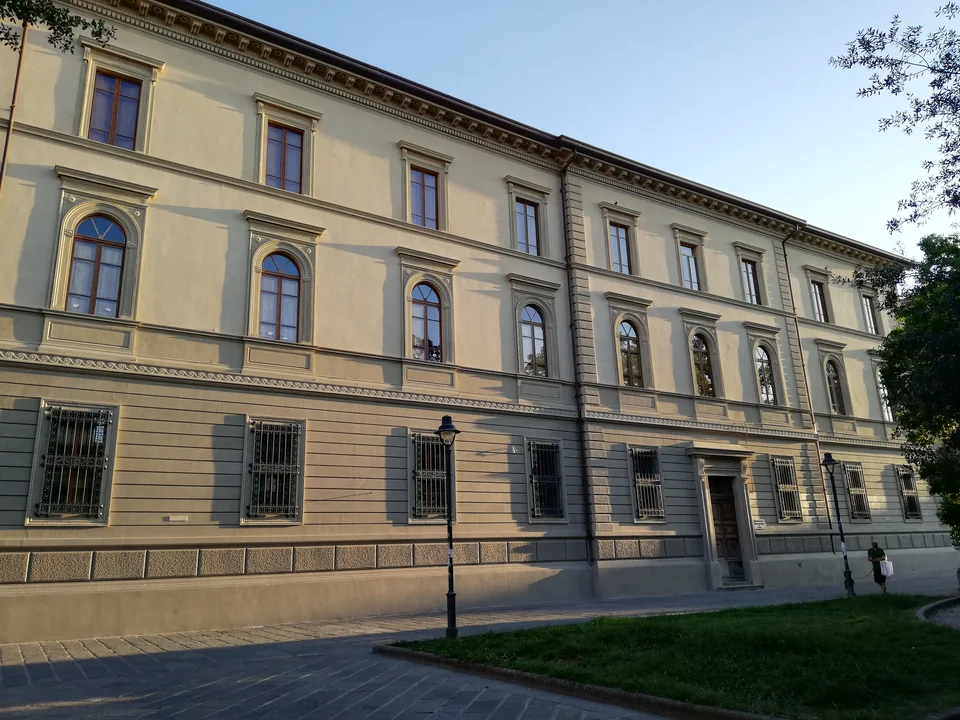
| At a glance | Details |
|---|---|
| Location | Pisa, Tuscany (around 90,000 residents plus tens of thousands of students) |
| Studio Generale status | 1343 |
| Rankings | QS World University Rankings 2027: 341; THE World University Rankings 2026: 351–400 |
| Languages | Italian and English |
| Fee for students with family income abroad | $330–3,310 (€290–2,900) by country group + $180 (€156) taxes, 2026/27 |
| English-taught master's (2026/27 cycle) | windows opened 28 Nov – 5 Dec 2025; most closed for non-EU applicants on 5 Feb 2026 |
| Funding | DSU Toscana grant: up to $3,810 (€3,338) cash + free housing and meals |
| Housing | no campus; room in a shared flat $340–400 (€300–350) a month excl. utilities |
Who the University of Pisa suits, and who should look elsewhere
| Pros | Cons and risks |
|---|---|
| Strong English-taught master's in engineering, computing and data | High-income countries pay the maximum $3,490 a year |
| Low fees for middle-income countries ($840–1,500) | Most deadlines fall on 5 February — start in the autumn |
| Published budget benchmark of $910–970 a month | Only two English-taught bachelor's degrees |
| DSU grant includes free housing and meals | Visa-student caps per programme; visa must be issued by 30 November |
| Two master's applications with a preference order | No university-owned halls |
Pisa suits master's applicants in IT, engineering or data who want a calm student city. For English-taught bachelor's degrees or humanities, compare the University of Bologna and Sapienza. High-income-country applicants should also compare the nearby University of Florence, which shares the DSU Toscana grant and charged Russian citizens $2,730 in 2026/27.
Which programmes are taught in English
English-taught bachelor's degrees - IPH — International Programme in Humanities - Management for Business and Economics (MBE)
English-taught master's degrees
| Area | Programmes |
|---|---|
| Engineering | Aerospace Engineering; Artificial Intelligence and Data Engineering; Bionics Engineering (with Sant'Anna); Communications Engineering; Computer Engineering; Cybersecurity; Engineering of Paper and Cardboard; Exploration and Applied Geophysics; Materials and Nanotechnology; Nuclear Engineering |
| Computing and data | Computer Science; Data Science and Business Informatics; Informatics for Digital Health (Cybersecurity is run jointly by engineering and computer science) |
| Life sciences | Neuroscience; Biotechnologies and Applied Artificial Intelligence for Health |
| Economics | Economics; Digital Intelligence and Change Management |
All master's programmes last two years (120 ECTS) and end with a thesis.
How to apply to the University of Pisa, step by step
English-taught master's
- October–November: shortlist. The applymscenglish.unipi.it portal allows applications to up to two programmes, ranked by preference.
- Late November – early December: windows open. In the 2026/27 cycle they opened between 28 November and 5 December 2025.
- Before the deadline: apply. For non-EU applicants, most programmes (Artificial Intelligence and Data Engineering, Computer Engineering, Communications Engineering, Computer Science, Data Science and Business Informatics, Neuroscience, Nuclear Engineering and others) closed on 5 February 2026. Cybersecurity accepted applications from 25 February to 15 March; Economics, Digital Intelligence and Change Management, and Engineering of Paper and Cardboard until 30 April; Exploration and Applied Geophysics until 20 September 2026. Aerospace Engineering, Bionics Engineering and Materials and Nanotechnology were not listed on the portal, so follow each programme's own call. Coordinators may change dates.
- After admission: Universitaly. Pre-enrolment was due by 30 September 2026 for 2026/27, or earlier for limited-enrolment programmes.
- Type D visa. The consulate contacts you after the university validates your pre-enrolment. Pisa accepts for enrolment only visas issued by 30 November 2026, so apply on Universitaly as soon as it opens. See our student visa guide and permesso di soggiorno guide.
- Arrival and enrolment. Residence permit, first instalment by 31 December and verification of your qualification.
For 2026/27 the university set 4,500 places for visa applicants, with a cap per programme. Once a cap is reached, UniPi may stop validating pre-enrolments for that programme and offer a related one with places left.
Italian-taught programmes. Bachelor's and single-cycle degrees require a 12-year school qualification with an official Italian translation and a B2 Italian certificate from the CLIQ system (or the university language centre's Open Badge). Italian-taught master's programmes require an Admission Decision from the degree board, uploaded to Universitaly.
When to apply for 2027/28
As of 23 September 2026 the 2027/28 calls were not yet published. Use the last cycle as a guide:
| Step | 2026/27 cycle | Plan for 2027/28 |
|---|---|---|
| English master's windows open | 28 Nov – 5 Dec 2025 | have CV, transcript, motivation letter and language test ready by November 2026 |
| Non-EU deadlines | 5 Feb 2026 (most), 15 Mar (Cybersecurity), 30 Apr (Economics, DICM, Paper and Cardboard), 20 Sep (Geophysics) | apply in December–January |
| Universitaly | by 30 Sep 2026 | submit as soon as the portal opens |
| Latest visa issue date accepted | 30 Nov 2026 | book consulate appointments early |
| First instalment for visa students | by 31 Dec 2026 | — |
Which documents and language certificates you need
- Bachelor's: 12 years of schooling. Applicants from 11-year systems must complete a year of university at home or a recognised foundation programme.
- Master's: a 180-credit bachelor's degree with the subject requirements set by the programme. Some engineering programmes publish a separate call for candidates with non-Italian degrees.
- Qualification validity: a Declaration of Value from the Italian consulate or CIMEA verification and comparability certificates; consulates need them for the visa, so order them before Universitaly.
- Language: English-taught programmes set their own certificates and levels in the call; Italian-taught programmes require B2.
How much studying and living in Pisa costs
The maximum fee for 2026/27 is $3,310 (€2,900) a year. Students whose family income and assets are abroad automatically receive a flat fee: the maximum multiplied by a coefficient based on the World Bank income classification of their country. A regional tax of $160 (€140) and $18 (€16) stamp duty are added.
| Income group | Examples | Fee | Total with taxes |
|---|---|---|---|
| High income | Russia, EU, USA | $3,310 (€2,900) | $3,490 (€3,056) |
| Upper-middle income | Kazakhstan, Armenia, Azerbaijan, Georgia, Belarus, Moldova, Turkmenistan, Ukraine | $1,320 (€1,160) | $1,500 (€1,316) |
| Lower-middle income | Uzbekistan, Kyrgyzstan, Tajikistan | $660 (€580) | $840 (€736) |
| Low income | per the World Bank list | $330 (€290) | $510 (€446) |
First-year visa students pay $175 (€156) in taxes by 31 December 2026, then 30%, 25%, 25% and 20% of the fee by 1 February, 1 March, 15 April and 31 May 2027. Alternatively, you can request an income-based reduction with an ISEEU parificato issued free of charge by the university's partner CAFs; first-year visa students may apply by 31 December 2026 without a late fee. Merit-based reductions do not apply to foreign entry qualifications. Check your country in the university's income-group table.
Monthly budget published by the university (room in a shared flat):
| Item | Amount |
|---|---|
| Room with utilities | $460–510 (€400–450) |
| Food | $340 (€300) |
| Other housing costs | $115 (€100) |
| Total | $910–970 (€800–850) |
The average room rent without utilities is $340–400 (€300–350), and landlords usually ask for a deposit of two to three months. A meal out costs $11–23 (€10–20). Dollar amounts use the ECB rate of 29 September 2026 (€1 = $1.1355).
How to get a DSU Toscana grant
In Tuscany grants and residence places are awarded by the regional agency DSU Toscana (ARDSU). International students count as off-site (fuori sede) unless their family lives in Italy. For off-site winners the grant includes free accommodation and two free meals a day on top of the cash amount.
| ISEE band (2026/27) | Cash for off-site students | Also included |
|---|---|---|
| up to $15,330 (€13,500) | $3,810 (€3,338) | free residence place, two meals a day |
| $15,330–20,440 (€13,500.01–18,000) | $2,580 (€2,262) | same |
| $20,440–30,660 (€18,000.01–27,000) | $1,210 (€1,060) | same |
DSU values a residence place at $3,580 (€3,150) a year and meals at $2,000 (€1,760). Amounts are higher for female students in STEM programmes. In the 2026/27 cycle applications ran from 20 July to 7 September 2026 (13:00); plan for a similar summer window in 2027. Non-EU students whose family lives abroad do not use an Italian ISEE for DSU Toscana: they submit home-country documents on 2025 family income and on property held at 31 December 2025, issued in 2026, translated into Italian and apostilled or legalised; self-declarations and affidavits are not accepted (article 8 and Appendix B of the call). DSU Toscana runs the competition and makes the decision. See also our scholarships in Italy guide.
Where to live: DSU residences and private rentals
The university has no halls of its own. Options:
- DSU Toscana residences for winners of the grant and housing competition;
- CercoAlloggio, DSU's portal of verified private rentals;
- partner platforms: 30% off the HousingAnywhere booking fee and 50% off at Uniplaces with the university promo code;
- private market: department notice boards, agencies and rental sites.
Before signing, check what the rent includes (utilities, washing machine, building fees). The lease must be registered, as you will need it for your residence permit. Our student housing guide has more checks.
Which mistakes to avoid when applying
- Starting in spring: most English-taught master's close for non-EU applicants on 5 February.
- Leaving Universitaly until September: the visa must be issued by 30 November and consulate slots fill up.
- Expecting merit discounts: they do not apply to foreign qualifications.
- Confusing the university application with the DSU competition: they are separate, with different deadlines.
- Forgetting the deposit: two to three months' rent upfront.
What the University of Pisa is known for
In 1343 the bull In Supremae Dignitatis recognised Pisa's school as a Studio Generale, granting privileges that only a handful of European cities enjoyed at the time. Today UniPi is a large public university covering nearly every field, from humanities to nuclear engineering.
Its English-taught offer is concentrated in technical and natural sciences: ten of the 17 English master's programmes are in engineering and several more in computing and data science. There are only two English-taught bachelor's degrees, so Pisa is mainly a master's destination. Some programmes run jointly with neighbouring research schools — Bionics Engineering, for example, is taught with the BioRobotics Institute of the Sant'Anna School — and joint programmes may have their own entry requirements.
Where the university stands in the rankings
| Ranking | Position |
|---|---|
| QS World University Rankings 2027 | 341 (=343 in 2026) |
| THE World University Rankings 2026 | 351–400 |
For a master's applicant, the department matters more than the overall rank: look at its research groups, industry projects and thesis topics on the department website linked from the programme page.
Where classes take place and what life in Pisa is like
There is no single campus; departments are spread around the city. Pisa is small enough to walk or cycle everywhere, and UniPi students get discounted bus fares. Many students live in nearby Cascina, Pontedera, Livorno or Lucca, all within 20 km and well connected. The university advises starting the housing search in July–August, when many students leave the city.
How to find work after graduation
Most English-taught master's programmes in Pisa are technical, so graduates typically move into IT, industry, research or a PhD. The university runs a Career Service and internship programmes, including internships abroad. Italian is close to essential for working in Tuscany, even in international companies. After graduating you can apply for a job-seeking permit in place of your study permit; confirm the conditions with the Questura.
FAQ
How much does the University of Pisa cost for international students?
It depends on your country's income group. In 2026/27 totals including taxes are $3,490 (€3,056) for high-income countries, $1,500 (€1,316) for upper-middle, $840 (€736) for lower-middle and $510 (€446) for low-income countries. An ISEEU parificato can lower the fee further.
When do applications for English-taught master's open?
In the 2026/27 cycle, windows opened between 28 November and 5 December 2025 and most closed for non-EU applicants on 5 February 2026. The 2027/28 dates have not been published yet.
Can I apply to several programmes?
Up to two on the English-taught master's portal, with a first choice. On Universitaly, only one programme at one university.
Does the university provide housing?
Not directly. DSU Toscana awards residence places with its grant; most students rent rooms in shared flats for about $340–400 (€300–350) a month excluding utilities.
Do I need Italian for an English-taught programme?
Not for admission: the programme call sets the English requirement. B2 Italian (a CLIQ certificate or the university's Open Badge) is required only for Italian-taught programmes; see our guide to Italian language certificates.
Can I start a bachelor's after 11 years of school?
No — 12 years of schooling are required, and only two bachelor's degrees are taught in English.
Can StudyU help?
Under an agreement with StudyU, we shortlist programmes, check requirements and deadlines, prepare documents and support the application, Universitaly and visa stages. The university decides on admission; DSU Toscana decides on grants and, as the housing provider, confirms housing; the Italian consulate as the consular authority decides on the visa.
Sources
- Degree Programmes held in English
- English-taught programme application portal and 2026/27 windows
- Pre-enrolment on Universitaly — non-EU citizenship
- Tuition Fees for International Students 2026/27
- Tuition Fees Reduction
- Country income-group table (PDF)
- DSU Toscana: grant and housing call 2026/27
- Accommodation for students and international guests
- Living in Pisa
- History of the University of Pisa
- QS World University Rankings: University of Pisa
- THE World University Rankings: University of Pisa
- DSU Toscana call 2026/27 (PDF)
For more on the Italian system, see Study in Italy. To plan your application timeline, send us a request.
During the free initial consultation, we clarify your goal, profile, timing, and budget and identify the next realistic step.
Next steps
- Italian Language Certificates CILS, CELI and PLIDA: Which One You Need for University and When to Sit It
- ISEE Parificato for International Students: Home-Country Documents, CAF, Timing and Tuition
- Permesso di Soggiorno for Students: How to Get and Renew Your Italian Residence Permit
- Scholarships in Italy for International Students 2026/27: DSU, MAECI, Invest Your Talent and University Awards
- Studying in Italy for international applicants
- University of Bologna
