
International students in Italy can fund their studies from four sources: the regional DSU grant based on family income, the Italian Foreign Ministry's MAECI scholarship, the Invest Your Talent in Italy programme and universities' own merit awards. For most families DSU matters most: it is open at every degree level and does not require high grades in the first year. For 2026/27 the national minimum for a student who moved to study is ≈$8,180 (€7,171.11) a year, and several regions pay more. MAECI and Invest Your Talent each pay ≈$12,320 (€10,800) for the academic year, but they are competitive, aimed mainly at master's level and above, and cannot be combined with DSU. Every award is decided by its owner — a regional agency, the Ministry or the university — so a realistic plan applies to two or three funding lines at once.
Dollar figures are converted at the ECB reference rate of 29 September 2026 (€1 = $1.1355) and rounded. Euro amounts are the exact figures published for the 2026/27 academic year.
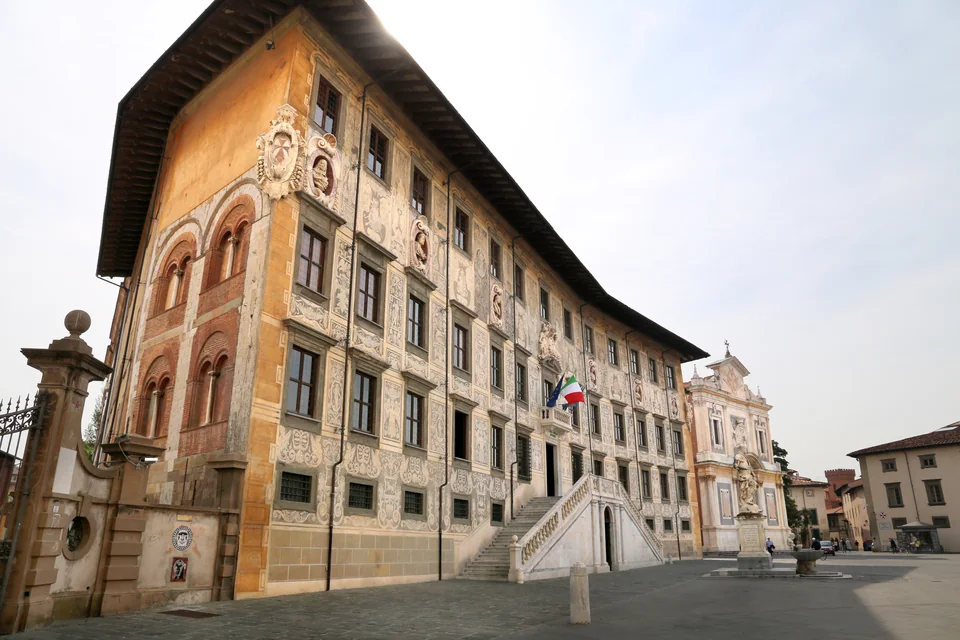
Italy's scholarships at a glance
| Scholarship | Who decides | Who it is for | Amount in 2026/27 | 2026 application window |
|---|---|---|---|---|
| DSU (borsa di studio) | Regional agency (ER.GO, EDISU, DiSCo, DSU Toscana) or the university | Any degree level; family income below the regional cap | National minimum $3,280–8,140 (€2,890.16–7,171.11) a year depending on status, up to $9,360 (€8,246) in some regions; plus a full fee waiver and sometimes housing and meals | June to September, each region sets its own window |
| MAECI | Italian Ministry of Foreign Affairs via its embassies | Master's, AFAM arts/music, PhD, research, Italian language courses | ≈$12,320 (€10,800) for a 9-month study period, plus health insurance | Closed 26 March 2026, 2 p.m. |
| Invest Your Talent in Italy | Ministry of Foreign Affairs, ICE agency, Uni-Italia | English-taught master's in engineering, architecture/design, economics/management; citizens of 23 countries | ≈$12,320 (€10,800) a year; the university waives fees except the regional tax | 20 April – 11 May 2026 |
| University merit awards | The university | Strong applicants, mostly to English-taught programmes | For example $9,080–11,360 (€8,000–10,000) gross plus a fee waiver | Autumn–winter, a year before the course starts |
Separately, public universities charge tuition according to family income through the ISEE indicator. That is a fee calculation, not a scholarship; see our guide to the ISEE parificato for international students and to what "free" university education in Italy really means.
Can you combine scholarships?
| Combination | Allowed? | Basis |
|---|---|---|
| MAECI + DSU | No | MAECI 2026/27 call, art. 12 bars holding other scholarships from the Italian Government or public bodies at the same time, regional grants included |
| Invest Your Talent + DSU or Erasmus+ | No | IYT 2026/27 call, art. 14 |
| MAECI + Erasmus | Yes, but the scholarship is not paid while you study outside Italy | MAECI 2026/27 call, art. 12 |
| DSU + ISEE-based fee waiver | Yes, the waiver is part of the DSU package | ER.GO 2026/27 call |
| University award + DSU | Depends on the university | Padua requires recipients of its award to hold no other scholarship; other universities allow combinations |
Applying to several lines is allowed; the restriction applies when you accept payment. If you win both MAECI and DSU, compare the whole package — DSU also brings a fee waiver, housing and meals.
What the DSU grant is and what it covers
DSU (Diritto allo Studio Universitario, "the right to university study") is Italy's public support system for students from lower-income families. It is run by the agency of the region where your university is located, not by the ministry: ER.GO in Emilia-Romagna, EDISU in Piedmont, DiSCo in Lazio, DSU Toscana in Tuscany. In Padua the University of Padova runs the regional scholarship competition itself, while halls and canteens are managed by ESU Padova.
A winner (vincitore) typically receives:
- a cash grant paid in two instalments during the year;
- a full tuition waiver — ER.GO's 2026/27 call grants it to every student found eligible (idoneo);
- a place in a hall of residence, if the student applied for housing and a bed is available;
- canteen meals free of charge or at a reduced price.
The amount depends on your status. In sede students live in the university's town, pendolari commute from another town, and fuori sede students have moved and pay for accommodation near the university. International students who relocate usually qualify as fuori sede, but agencies require proof of paid housing (see below).
The Ministry sets national minimums and regions may pay more. Ministry decree no. 175 of 10 February 2026 fixes the 2026/27 minimums:
| Status | Minimum annual grant, 2026/27 |
|---|---|
| Fuori sede (moved to study) | ≈$8,180 (€7,171.11) |
| Pendolare (commuter) | ≈$4,780 (€4,190.71) |
| In sede (lives in the university's town) | ≈$3,300 (€2,890.16) |
The full amount goes to students whose ISEE is no more than two-thirds of the regional cap. Above that the grant is gradually reduced, down to half, while students at or below half the cap receive 15% more. This is how the DiSCo Lazio and Padua calls work, and ER.GO also adds 15% at low ISEE levels.
Where the agency provides a bed and meals, part of the grant is paid in services and the cash share is smaller. In Piedmont, for instance, a winner who takes an EDISU hall place receives an 11-month bed valued at $3,070 (€2,700) and a reduced cash amount.
Who is eligible for DSU
Family income and assets. Ministry decree no. 176 of 10 February 2026 sets the national caps for 2026/27: ISEE up to $32,180 (€28,339.88) and ISPE up to $69,960 (€61,608.48). ISEE is Italy's indicator combining a household's income and assets adjusted for household size; ISPE measures assets only. Regions may set lower caps, and many do. For families living abroad, the indicator is calculated from documents issued in the home country — the process is explained step by step in our ISEE parificato guide.
Academic progress. First-year students compete on income alone. From the second year the grant is renewed only for students who have earned the required ECTS credits (CFU) by a cut-off date, usually 10 August. First-year students must also keep pace: under Padua's 2026/27 call the second instalment is paid after 20 CFU, and a first-year student without 20 CFU by 30 November of the following year loses the grant and must repay what was received, including the value of services.
Previous degrees. The grant is available once per degree level. Students who already hold a qualification of the same or a higher level, including one obtained abroad, are excluded — ER.GO's and Padua's 2026/27 calls say so explicitly.
Nationality alone is not a barrier. Students from the "particularly poor countries" listed by the Ministry for 2026/27 (decree no. 176 of 24 February 2026, mostly low-income African and Asian states) can use a simplified certificate from the Italian embassy. Everyone else, including applicants from Russia, Central Asia, India, China or Latin America, must file full, legalised and translated income and asset documents.
DSU by region: 2026/27 windows, caps and amounts
Regional rules differ enough to influence your choice of city. The table summarises five regions popular with international students, based on their official 2026/27 calls.
| Agency and universities | 2026 window | ISEE / ISPE cap | Top cash grant, fuori sede | Points for international students |
|---|---|---|---|---|
| ER.GO — Bologna, Modena, Parma, Ferrara | 23 June – 24 August, 4 p.m. | $28,390 (€25,000) / $56,780 (€50,000) | $8,140 (€7,171.11), +15% if ISEE ≤ $14,190 (€12,500) | Foreign income documents must be uploaded by the same 24 August deadline; separate ranking for non-EU first-year students |
| EDISU Piemonte — University of Turin, Politecnico di Torino | 22 July – 4 September, noon | $29,870 (€26,306.25) / $64,940 (€57,187.53) | $9,190 (€8,096.78) if ISEE ≤ $14,940 (€13,153.12), already net of $170 (€150) for meals | Translations and legalisation must be dated 2026; D visa must be uploaded; 15% of places reserved for non-EU first-year students |
| DiSCo Lazio — Sapienza, Tor Vergata, Roma Tre | 10 June – 22 July, noon (corrections until 11 August) | $32,180 (€28,339.88) / $69,960 (€61,608.48) | $8,580 (€7,556.78) if ISEE ≤ $16,090 (€14,169.94), plus two free meals a day worth $680 (€600) | The ISEE for families abroad (ISEEUP) must be filed at an approved CAF by 10 December 2026 |
| University of Padova and ESU Padova | By 30 September via Uniweb | $29,870 (€26,306.25) / $48,970 (€43,125.94) | $9,360 (€8,246) if ISEE < $14,940 (€13,153.12) | ISEE parificato only through the university's partner CAF; 7% of funds reserved for non-EU first-year students |
| DSU Toscana — Florence, Pisa, Siena | 20 July – 7 September, 1 p.m. | $30,660 (€27,000) / $68,130 (€60,000) | $3,790 (€3,338) in cash with ISEE up to $15,330 (€13,500), plus a free bed and two meals a day | International students count as fuori sede; documents must be issued in 2026 |
A household with an ISEE of about $29,520 (€26,000) qualifies in Lazio, Tuscany, Piedmont and Padua but not in Emilia-Romagna, where the cap is $28,390 (€25,000). Tuscany pays less cash but includes free housing and meals; Piedmont and Lazio pay more cash without guaranteeing a bed.
Lombardy works differently: Politecnico di Milano runs its own DSU competition, and Bocconi distributes aid through its own schemes and ISU Bocconi. Check the profiles of Politecnico di Milano, the University of Bologna and Sapienza alongside the regional rules.
Why fuori sede status depends on your lease
The top amount goes to students who pay for accommodation in the city where they study. For 2026/27, EDISU, ER.GO and DiSCo all require at least 10 months of paid accommodation within the academic year. In Piedmont the lease must be registered with the Italian Revenue Agency (Agenzia delle Entrate), name the student, and the registration receipt must be uploaded.
The gap is significant. At the lowest ISEE band in Piedmont, a fuori sede student receives $9,190 (€8,096.78) while a pendolare receives $5,300 (€4,669.32) — about $3,890 (€3,430) less. In Lazio a student who lives far away but has no 10-month lease is treated as a "calculated commuter". An informal room or a short-term booking platform stay therefore puts part of the grant at risk; our student housing guide covers leases in detail.
University scholarships and aid schemes
Merit awards do not depend on nationality or family income, and their deadlines fall almost a year before classes start. Some universities also run need-based schemes, as Bocconi does. Three examples with official terms:
| University and scheme | Who it is for | Value | How to be considered |
|---|---|---|---|
| Politecnico di Milano, Merit-Based International Scholarships 2026/27 | First year of English-taught MSc programmes, Milan campuses | 10 Platinum awards of $11,360 (€10,000) gross and 18 Gold awards of $9,080 (€8,000) gross, all with a fee waiver | Apply in the Early Bird round (1 October – 1 December 2025) and submit a separate scholarship application from 15 October to 15 December 2025 |
| University of Padova, Padua International Excellence Scholarship | English-taught bachelor's and master's; foreign diploma or degree; not resident in Italy | Up to 76 awards of $9,080 (€8,000) gross a year plus a fee waiver | No separate form — candidates are selected from programme applicants; the 2027/28 calls are due in November 2026 |
| Bocconi, Bocconi4Access to Education 2027/28 | Bachelor's applicants whose families need support | Full or partial tuition waiver | One application covers all schemes; awards continue until the budget runs out |
University awards are gross and may be taxed — Politecnico di Milano states that it treats its scholarship as income for tax purposes. Terms change every year, so read the current call for your intake.
MAECI: the Italian Government scholarship
MAECI scholarships are awarded by Italy's Ministry of Foreign Affairs to foreign students. The 2026/27 list of eligible countries covers most of the world, including India, China, Brazil, Nigeria, Russia, Kazakhstan and Uzbekistan; check the current list, because selection is by citizenship and you may apply through one country only.
Under the 2026/27 call a winner receives:
- $12,260 (€10,800) for 9 months in three instalments to an Italian bank account: $6,250 (€5,500) from November 2026 after arrival and enrolment are confirmed, $2,610 (€2,300) from February 2027 and $3,410 (€3,000) from June 2027 after 27 CFU;
- health insurance for the scholarship period;
- a tuition waiver only if your university grants one; the regional tax is always payable.
You can apply for a master's degree (Laurea Magistrale), a first- or second-cycle AFAM programme in art, music or dance, a PhD, a supervised research project, or a three-month intensive Italian course (which pays a different amount, $4,090 (€3,600)). Regular university bachelor's degrees are not included. Master's applicants had to be no older than 28 at the deadline (born on or after 27 March 1997); PhD applicants no older than 30. The language requirement is B2 in the language of the programme. The full amount is paid to recipients present in Italy by 15 November 2026 and reduced pro rata for later arrivals.
The 2026 window closed at 2 p.m. CET on 26 March, and applications could be filed online only, on the Study in Italy portal. Rankings are published by the Italian embassy in the candidate's country.
Invest Your Talent in Italy: a master's with a built-in internship
IYT is a joint effort of the Foreign Ministry, the ICE agency that promotes Italian business abroad, and the Uni-Italia association. It funds English-taught master's programmes in engineering and technology, architecture and design, and economics and management at participating universities, and includes a compulsory internship with an Italian company.
The 11th edition (2026/27) was open to permanent residents and citizens of 23 countries: Argentina, Armenia, Azerbaijan, Bangladesh, Brazil, Chile, China, Colombia, Egypt, Ethiopia, Ghana, India, Indonesia, Iran, Kazakhstan, Mexico, Mongolia, Paraguay, Peru, Tunisia, Türkiye, Uruguay and Vietnam. The programme reports 1,633 applications, 980 admitted candidates and 209 scholarships in this edition.
Requirements for 2026/27:
- born on or after 1 January 2000;
- bachelor's degree already completed — final-year students cannot apply, although a university letter confirming completion is accepted while the certificate is pending;
- a pre-admission application to one course on the programme's list;
- English at B2 or higher with a recognised certificate; an Italian certificate or a written commitment to study Italian before departure;
- a video of up to 59 seconds, a one-page CV and a transcript.
Applications ran from 20 April to 11 May 2026 (6 p.m. Italian time). The grant is $12,260 (€10,800) a year, paid quarterly as $5,450 (€4,800), $3,410 (€3,000) and $3,410 (€3,000). Universities waive fees except the regional tax and accident insurance; travel, accommodation and health insurance are not covered. Renewal for the second year requires 30 CFU by 20 July.
Timeline for the 2027/28 intake
Official 2027/28 dates are not yet published. This outline is based on the 2026 calls; windows tend to recur, but exact dates change every year.
- September–December 2026. Shortlist programmes. Check whether your university has an early merit round (as Politecnico di Milano does) and whether your programme is on the Invest Your Talent list. Book your language test.
- November 2026 – February 2027. Apply to universities. At Padua, the programme application also enters you for the excellence scholarship.
- From January 2027. Request family income and asset documents. The reference year depends on the procedure: agencies that assess foreign documents themselves (ER.GO, EDISU, DSU Toscana) asked for 2025 data for 2026/27, while CAF-based calculations (Padua, DiSCo) used 2024. EDISU and DSU Toscana accept only documents issued or translated in the year of application, so they cannot be prepared a year ahead.
- February–March 2027. MAECI call (the 2026 deadline was 26 March).
- April–May 2027. Invest Your Talent, if your citizenship is eligible (20 April – 11 May in 2026).
- June–September 2027. Regional DSU windows. Do not wait until enrolment is complete: ER.GO's window for first-year students closed on 24 August in 2026.
- October–December 2027. Provisional and final rankings, lease upload for fuori sede status, and the residence permit application within eight working days of arrival.
Documents you will need for DSU
Each agency publishes its own list, but the core is the same. For a family living and earning outside Italy, documents must be issued by the competent authorities of that country:
- household composition at the time of application;
- income of every adult household member for the reference year, or proof of no income;
- real estate of every adult member with floor area in square metres, or a certificate of no property;
- savings — account balances and other financial assets at 31 December;
- an apostille or consular legalisation and an Italian translation.
Self-declarations and affidavits are generally refused — ER.GO, EDISU and DSU Toscana say so explicitly. Property abroad is valued at a flat $570 (€500) per square metre, so a 100 m² flat counts as $56,780 (€50,000) whatever its market price.
Scholarships and your study visa
For a type D study visa, the consulate checks funds for the whole year. The admission procedures for 2026/27 and 2027/28 set this at $11,560 (€10,179.85) a year from lawful, traceable sources. The same rules state that applying for DSU, or being found eligible without a formal award letter, does not count towards this amount, and that applying for a hall place is not proof of accommodation. Plan to show family funds for the first year; MAECI and IYT awards, by contrast, come with a formal award decision.
Common mistakes
- Applying to the university but not to the agency. DSU is a separate application on the regional agency's website with its own, often earlier, deadline.
- Leaving income documents until summer. Apostilles, translations and CAF processing take weeks, and some agencies accept only documents issued in the current year.
- Ignoring regional differences. Emilia-Romagna's ISEE cap is lower than Lazio's; Tuscany pays less cash but provides housing.
- Renting without a registered lease. Without a 10-month lease, agencies pay the lower commuter rate.
- Expecting MAECI to fund a bachelor's degree. It covers master's, AFAM and PhD programmes, not regular university bachelor's degrees.
- Assuming IYT is open to every nationality. Only 23 countries were eligible in 2026/27.
- No personal budget for the first months. MAECI payments start from November and the first DSU instalment in Padua arrives by December, while the visa requires proof of funds before departure.
What to do next
Start with your degree level and region, because they decide which scholarships are open to you. Then assemble family documents for the ISEE calculation and compare the caps of two or three regions, while checking merit deadlines at your target universities.
StudyU does not award scholarships and has no influence on decisions by agencies, the Ministry or universities. Personal strategy, requirement checks, shortlisting, document preparation, submission and follow-up are provided under a contract with StudyU. For funding in other countries, see our overview of scholarships abroad in 2026 and the Italy country guide.
FAQ
Yes. Regions award DSU to students of any nationality whose household ISEE and ISPE fall below the regional caps and whose documents meet the call's requirements. Most families living abroad must submit legalised, translated income and asset documents; only students from the Ministry's list of particularly poor countries use a simplified embassy certificate.
There is no salary threshold as such. Italy uses the ISEE indicator, which combines income, savings, property and household size. The 2026/27 national cap is $32,180 (€28,339.88), but regions set their own: $28,390 (€25,000) at ER.GO and $30,660 (€27,000) in Tuscany, for example. The asset indicator ISPE is checked separately.
DSU is awarded per academic year and paid in instalments, not monthly. The 2026/27 minimum for fuori sede students is $8,140 (€7,171.11) a year, roughly $680 (€600) a month. Some regions pay more at the lowest ISEE levels: up to $9,360 (€8,246) in Padua and up to $9,190 (€8,096.78) in Piedmont without a hall place.
Yes. First-year awards are based on family income; academic requirements apply later. You must still earn a minimum number of credits on time — in Padua the second instalment requires 20 CFU, and without 20 CFU by 30 November of the following year the grant is revoked.
No. The 2026/27 MAECI call explicitly rules out combining it with other Italian public scholarships, including regional ones. Applying to both is allowed; if you win both, you give one up.
Yes: DSU and university awards such as Padua's International Excellence Scholarship or Bocconi's need-based waivers. MAECI and Invest Your Talent target master's level and above, except MAECI's first-cycle AFAM arts programmes.
DSU has no language test; Italian matters only if your programme is taught in Italian. MAECI requires B2 in the language of your programme, so English-taught courses need no Italian. Invest Your Talent requires English B2 and treats Italian as a plus or accepts a commitment to study it before departure.
Sources
- Ministry of University and Research: decree no. 175 of 10.02.2026 — DSU minimum amounts 2026/27
- Ministry of University and Research: decree no. 176 of 10.02.2026 — ISEE and ISPE caps 2026/27
- Ministry of University and Research: decree no. 176 of 24.02.2026 — particularly poor countries 2026/27
- Italian Ministry of Foreign Affairs: MAECI scholarships 2026/27, call and eligible countries
- Invest Your Talent in Italy: 11th edition call
- ER.GO: 2026/27 general rules
- EDISU Piemonte: 2026/27 scholarship and housing call
- DiSCo Lazio: 2026/27 call
- University of Padova: regional scholarships 2026/27
- DSU Toscana: scholarship and hall place 2026/27
- Politecnico di Milano: merit-based international scholarships 2026/27
- University of Padova: Padua International Excellence Scholarship
- Universitaly: procedures for international students 2026/27 and 2027/28
Official sources checked on 23 September 2026.
Next steps
- Free University Education in Italy for International Students: What "Free" Means in 2026/27
- ISEE Parificato for International Students: Home-Country Documents, CAF, Timing and Tuition
- Student Housing in Italy 2026/27: DSU Halls, University Residences, Private Rooms and Leases
- Politecnico di Milano
- University of Bologna
- Studying in Italy for international applicants
