
International students in Italy have four housing options: a place in a regional DSU hall allocated by competition, a university residence at full rate, a room in a privately let flat, and a private student residence. DSU halls are the cheapest — in Bologna a student on the income-and-merit ranking pays from $220 (€193) a month including utilities in 2026/27 — but places are limited and results arrive in September. On the private market, the average single room in summer 2026 cost $800 (€704) in Milan and $670 (€585) in Bologna. Your study visa requires proof of accommodation, and an application for a hall place does not count as proof.
Dollar figures use the ECB reference rate of 23 September 2026 (€1 = $1.1411) and are rounded. This guide covers housing only; for tuition, see our guide to free university education in Italy.
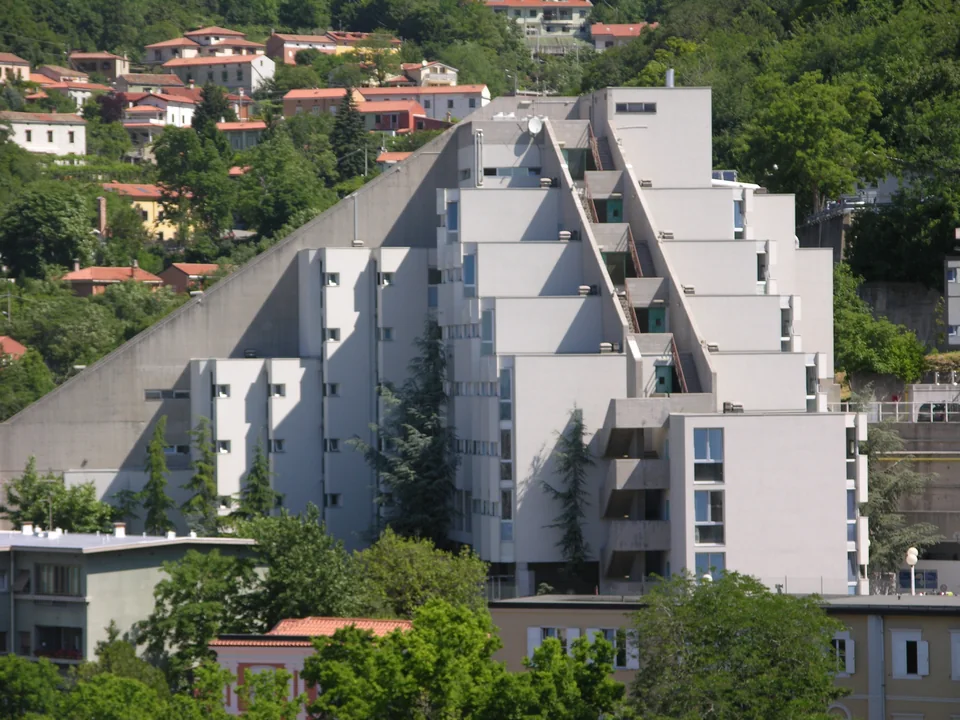
Housing options compared
| Option | Who allocates it | 2026/27 price | When to apply | Main limitation |
|---|---|---|---|---|
| DSU hall (residenza universitaria) | Regional agency: ER.GO, EDISU, DiSCo, DSU Toscana, ESU | $220–365 (€193–322) a month with utilities for ranked students in Bologna; for grant winners the cost is deducted from the grant or housing is free | In the DSU window, June to September | Limited places, results in September; an application is not visa proof |
| University residence at full rate | The university | Politecnico di Milano: $4,390 to $8,930 (€3,850 to €7,830) for 11 months depending on the residence and room type | When booking opens; Politecnico publishes dates by mid-June | More expensive than DSU; the booking may be non-refundable if your visa is refused |
| Room in a private flat | The owner | Average single room in major university cities: from $360 (€315) in Palermo to $800 (€704) in Milan | 2–3 months before term | You need a codice fiscale, a lease and its registration; scam risk |
| Private student residence | Operating company | Operator's price list | Subject to availability | Pricier than a market room, but standard contracts and services |
DSU halls: how to get a place
Hall places are part of the DSU system. You apply for housing in the same competition as the grant, under the same family-income caps. Our guides to scholarships in Italy and the ISEE parificato explain the income calculation and documents.
Housing often has its own, earlier or shorter deadlines. ER.GO's 2026/27 example:
- first-year students applied for housing from 23 June to 24 August 2026;
- continuing students applying for a place for the first time had until 6 August;
- the provisional list for first-year students came out on 10 September and the final list on 24 September.
In Piedmont the 2026/27 provisional housing ranking was published on 11 September and the final one on 25 September, with acceptance required between 25 and 29 September (noon). EDISU required the consular income documents for housing applicants by 4 September — three weeks earlier than for the grant alone.
What a DSU hall costs
The price depends on whether you win the grant:
- Grant winners. Housing is counted as part of the grant. In Piedmont a winner receives an 11-month bed valued at $3,080 (€2,700) and a smaller cash amount. In Padua $1,830 (€1,600) for housing and $865 (€760) for meals are deducted from the grant. In Tuscany a fuori sede winner receives a free bed and two meals a day plus $3,810 (€3,338) in cash at the lowest income band.
- Ranked students paying for a place. They pay the agency's monthly rate. In Bologna for 2026/27, students on the income-and-merit ranking pay $220–365 (€193–322) a month including utilities, depending on the residence and room type; rates for subsidised-access students are higher.
- Short-term guests at full rate. ER.GO lets vacant places short-term at full rate: $295–520 (€259–456) for up to 30 days in Bologna.
Not everyone who qualifies gets a place. Some agencies reserve quotas for international students: EDISU reserved 15% of grants and places for non-EU first-year students in 2026/27, and ER.GO runs a separate ranking for them. Final decisions arrive at the end of September, so you need a fallback in the meantime.
University residences at full rate
Some universities let rooms in their residences to all students, not only DSU winners. Politecnico di Milano's 2026/27 rates for an 11-month year excluding August (Leonardo da Vinci residence in Milan; some other Politecnico residences are cheaper, from $4,390 [€3,850] a year):
| Room type | 11 months, in instalments | Single payment | Monthly average (instalments) |
|---|---|---|---|
| Single room with private bathroom | $7,540 (€6,610) | $7,170 (€6,280) | ≈$690 (€601) |
| Single room with shared bathroom | $6,960 (€6,100) | $6,610 (€5,795) | ≈$630 (€555) |
| Place in a double room with shared bathroom | $5,280 (€4,625) | $5,010 (€4,394) | ≈$480 (€420) |
A $570 (€500) deposit is added and refunded on request after you leave. Annual bookings run from 25 August 2026 to 30 July 2027; nothing shorter than a semester is available. One condition matters: students not yet enrolled or still waiting for a visa may book, but if they do not enrol or are refused a visa, the booking payment is not refunded. Similar terms may apply elsewhere, so read cancellation rules before paying. More on the university: Politecnico di Milano.
Private rooms: prices by city
The most common option is a single room (stanza singola) in a flat shared with other students. The table shows average asking prices for single rooms from Immobiliare.it Insights' annual study published in August 2026. These are averages of listings on the Immobiliare.it portal, not prices of specific flats, and utilities are often charged separately.
| City | Average single room per month | Change over one year |
|---|---|---|
| Milan | $800 (€704) | −3.8% |
| Florence | $720 (€627) | not reported |
| Rome | $700 (€615) | +7% |
| Bologna | $670 (€585) | −7.5% |
| Bergamo | $580 (€504) | +8.3% |
| Padua | just under $570 (€500) | −1.1% |
| Turin | $550 (€479) | +0.5% |
| Brescia | $550 (€478) | −7.9% |
| Verona | $540 (€473) | +0.1% |
| Venice | $520 (€456) | +0.7% |
| Trento | $510 (€444) | −18.3% |
| Bari | $490 (€426) | +12.2% |
| Genoa | $470 (€408) | +11.9% |
| Pavia | $460 (€400) | +10.2% |
| Pisa | $420 (€364) | +10.7% |
| Palermo | $360 (€315) | +13.6% |
Prices vary widely within cities. In Milan the average room cost $940 (€823) in the centre and $650 (€571) in Ponte Lambro–Santa Giulia; in Rome $840 (€733) in the historic centre and $510 (€447) in Casal Lumbroso–Massimina–Ponte Galeria. When comparing universities, weigh room prices against the region's DSU rules: in Tuscany and Lazio grant winners receive more in services than in cash, while rooms in Pavia, Pisa or Turin cost noticeably less than in Milan.
Where to look. Private listings appear on Italian portals such as Immobiliare.it, Idealista and Subito, and on student platforms such as HousingAnywhere and Spotahome, which let you book from abroad. Some platforms release your payment to the landlord only after you move in — check whether that applies in the terms of the service you use before paying. A bed in a shared double room (posto letto) costs less than a single room, but the same lease requirements apply for the visa and DSU.
Your lease: what to check before signing
A written, registered lease protects you as a tenant, is needed for your residence permit and affects the size of your DSU grant.
Type of lease. Italy has a dedicated student lease (contratto per studenti universitari). Under the interministerial decree of 16 January 2017 it runs from six months to three years for students enrolled in a municipality other than the one where they are registered as residents. It can be signed by the student, a group of students or a DSU agency, and at first expiry it renews unless the tenant gives notice between one and three months in advance. There is also a transitional lease (contratto transitorio) of up to 18 months.
Registration. Every lease longer than 30 days a year must be registered with the Revenue Agency (Agenzia delle Entrate); the deadline is 30 days from signing or from the start date if earlier, and registration can be done by either the owner or the tenant. Ask for a copy of the registration receipt: EDISU, for example, recognises fuori sede status for the grant only when that receipt is uploaded.
Length for DSU. To receive the top fuori sede grant, EDISU, ER.GO and DiSCo required at least 10 months of paid accommodation in the city of study in 2026/27. A shorter lease or a room without a lease moves you to commuter status — in Piedmont that means almost $3,910 (€3,430) less a year at the lowest income band.
Deposit. By Law 392/1978 the deposit (deposito cauzionale) cannot exceed three months' rent. Record the amount, the return terms and the room's condition at move-in in writing, with photos.
Utilities. Check whether electricity, gas, internet, building charges and the waste tax (TARI) are included, and if not, how they are split between tenants.
Notifying the police. Anyone who lets or provides accommodation to a foreign national must notify the local police in writing within 48 hours (art. 7 of the Consolidated Immigration Act). The duty lies with the owner; ask how and when they will do it.
Codice fiscale: you cannot rent without it
The codice fiscale is Italy's tax code, needed for a lease, a bank account, a phone contract and lease registration. You can get it:
- before departure — from the Italian consulate in your country of residence;
- in Italy — at a Revenue Agency office; a first code for a foreign national requires an in-person appointment for identification;
- with your residence permit — the police headquarters (questura) assigns it when processing the permit.
Getting the code from the consulate in advance lets you sign and register a lease before or immediately after arrival.
Housing and your visa
The 2026/27 and 2027/28 admission procedures for international students require proof of suitable accommodation in Italy for a study visa, and state explicitly that applying for a university residence, or being found eligible for one, is not valid proof. Check with your consulate or visa centre which document it accepts — a lease, a booking or an allocation letter.
Some universities help. The University of Bologna points international students to SAIS, a free service run by private operators that helps find housing, supports lease signing and issues non-EU students the accommodation certificate needed for a visa. Bologna and ER.GO also run Vetrina Alloggi, a board of private listings they check, although they are not responsible for the contracts. See our University of Bologna profile for more.
After arriving on a D visa you have eight working days to apply for a residence permit (permesso di soggiorno) at the questura of the city where you will live. You need an address for this, so book temporary accommodation for the first weeks in advance.
How to avoid scams
- Never pay before you have a draft lease. It must show the owner's details and the address; check them.
- See the room in person or by live video. Listing photos do not prove that a flat exists or is available.
- Avoid transfers to foreign accounts or untraceable money transfers. Pay the deposit and first rent to the account named in the lease.
- Use checked listing boards. At Bologna it is Vetrina Alloggi; many universities offer similar services.
- Refuse "no-contract" rentals. Beyond the risk of losing money, you lose the basis for your residence permit and the top DSU grant.
When to look: a timeline
- March–May. Get your codice fiscale from the consulate, shortlist cities and compare room prices and DSU rules.
- June–August. Apply for DSU housing together with the grant. If your university offers full-rate residences, book as soon as booking opens (Politecnico di Milano publishes dates by mid-June).
- July–August. Arrange a private room or residence place as a fallback and for the visa. A lease of 10 months or more keeps you eligible for fuori sede status.
- September. DSU housing results. If you did not get a place, sign a private lease.
- In your first eight working days in Italy. Apply for your residence permit with your address.
- Within 30 days of the lease. Register the lease and upload the receipt to the DSU agency by its deadline — DiSCo required leases signed by 29 November 2026 and details entered by 27 December.
Common mistakes
- Relying only on a DSU hall. There are more applicants than places, and results come at the end of September.
- Showing the consulate a hall application. Under the 2026/27 rules it does not prove accommodation for the visa.
- Renting without a registered lease. It puts your deposit, residence permit and grant at risk.
- Signing for less than 10 months. You become a commuter for DSU and receive noticeably less.
- Paying a residence booking without reading the cancellation terms. Politecnico di Milano does not refund the booking if your visa is refused.
- Not asking about utilities. Advertised rents often exclude them.
What to do next
Shortlist two or three cities and compare three numbers for each: the private room price, the DSU hall rate and the DSU income cap. Then get your codice fiscale and prepare family income documents so you can apply for DSU housing in the first window. StudyU does not provide accommodation and has no influence on decisions by DSU agencies, universities or landlords. Personal strategy, requirement checks, shortlisting, document preparation, submission and follow-up are provided under a contract with StudyU. For the full admission and visa route, see our Italy country guide.
FAQ
According to Immobiliare.it Insights for summer 2026, the average advertised single room cost $800 (€704) in Milan, $720 (€627) in Florence, $700 (€615) in Rome, $670 (€585) in Bologna and $550 (€479) in Turin. Smaller university cities are cheaper — around $460 (€400) in Pavia and $420 (€364) in Pisa. Utilities are often extra.
Apply for housing in the regional DSU competition during its window, usually June to September, together with the grant. Places are allocated by family income and results come out in September. Some universities, such as Politecnico di Milano, also let rooms in their residences to all students at full rate.
A written lease, registered with the Revenue Agency no later than 30 days after signing. There is a dedicated student lease lasting six months to three years. If you apply for DSU as a fuori sede student, the lease must cover at least 10 months of the academic year.
Yes — without it you cannot sign and register a lease. It is issued by the Italian consulate in your country, by a Revenue Agency office in Italy by appointment, or by the questura when you apply for a residence permit. Getting it before departure is easiest.
No. The 2026/27 and 2027/28 admission procedures state that applying for a university residence, or being found eligible, does not prove accommodation. You need a document your consulate accepts, such as a lease or an allocation letter.
By law the deposit cannot exceed three months' rent. The amount, conditions and return date should be written into the lease. Photograph the room at move-in to avoid disputes when you leave.
In some regions, yes: in Tuscany a fuori sede grant winner receives a free bed and meals. Elsewhere the housing cost is deducted from the grant — a bed is valued at $3,080 (€2,700) for 11 months in Piedmont, and Padua deducts $1,830 (€1,600).
Sources
- ER.GO: hall rates 2026/27
- ER.GO: 2026/27 deadlines
- EDISU Piemonte: 2026/27 grant and housing call
- University of Padova: regional scholarship 2026/27
- DSU Toscana: grant and hall place 2026/27
- Politecnico di Milano: full-rate residences
- Politecnico di Milano: residence rates 2026/27
- University of Bologna: housing, SAIS and Vetrina Alloggi
- Teleborsa: Immobiliare.it Insights room price study, August 2026
- Italian Revenue Agency: lease registration
- Italian Revenue Agency: codice fiscale for foreign nationals
- Normattiva: Law 392/1978, art. 11 — deposit
- Normattiva: Immigration Act, art. 7 — accommodation notice
- Italian State Police: duties of those providing accommodation to foreign nationals
- Universitaly: procedures for international students 2026/27 and 2027/28
Official sources checked on 23 September 2026.
Next steps
- Scholarships in Italy for International Students 2026/27: DSU, MAECI, Invest Your Talent and University Awards
- ISEE Parificato for International Students: Home-Country Documents, CAF, Timing and Tuition
- Free University Education in Italy for International Students: What "Free" Means in 2026/27
- Politecnico di Milano
- University of Bologna
- Studying in Italy for international applicants
