
Heilongjiang University (黑龙江大学, HLJU) is a public comprehensive university in Harbin that grew out of a Russian-language unit founded in 1941 and still treats Russian studies and translation as its signature strength. International students study mainly in Chinese: Mandarin courses from one semester to two years, two bachelor's programmes designed for foreigners, and regular majors (the university lists 86 bachelor's majors in all) that require HSK 5. All programmes are fee-paying: Mandarin courses cost $970 (CNY 6,500) per semester, a bachelor's degree $2,310 (CNY 15,500) a year and a master's degree $3,130 (CNY 21,000) a year. Since the 2026 intake, every bachelor's applicant needs a CSCA score, and the autumn deadline is 10 June.
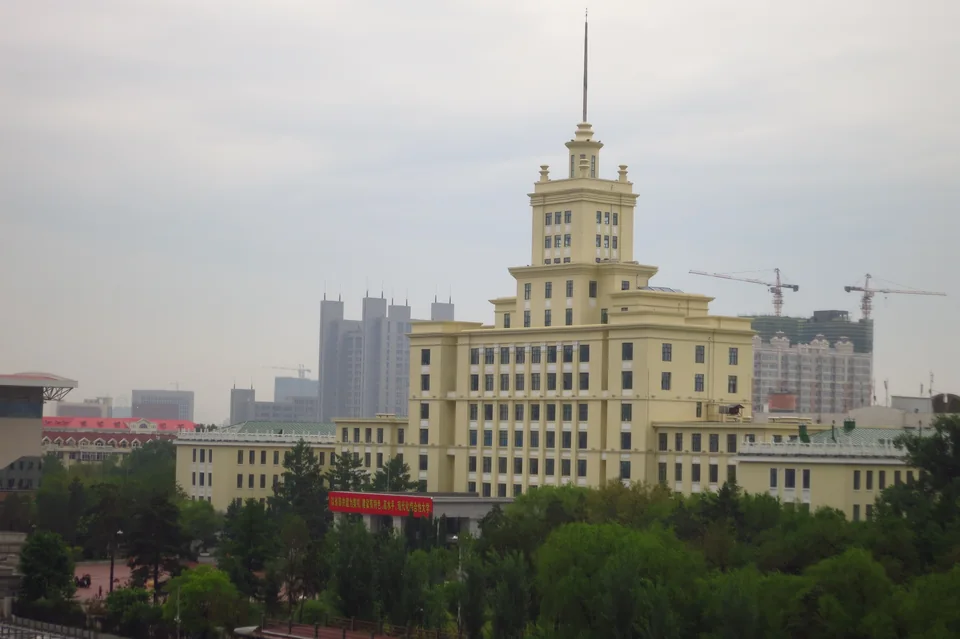
| At a glance | Details |
|---|---|
| Location | Harbin, Heilongjiang Province; main campus at 74 Xuefu Road, Nangang District |
| Founded | 1941, as a Russian-language unit |
| Size | more than 35,000 full-time students plus over 9,000 postgraduates |
| International students | enrolled since 1980; more than 26,000 alumni from abroad |
| Language of instruction | Chinese; the university's lists for international applicants contain no English-taught bachelor's degrees |
| Annual tuition | Mandarin $1,940 (CNY 13,000); bachelor's $2,310 (CNY 15,500); master's $3,130 (CNY 21,000); doctorate $4,180 (CNY 28,000) |
| Entry requirements | bachelor's: school certificate and CSCA, plus HSK 5 (180+) for regular majors; master's: bachelor's degree and HSK 5 (180+) |
| Autumn deadlines | bachelor's and Mandarin courses 10 June; master's and doctoral 10 May |
| Housing | twin rooms at $3–11 (CNY 21–75) per night depending on the building |
Who HLJU suits, and when another university is a better fit
HLJU is chosen for Chinese language, philology, translation and trade-related economics. In China's national discipline evaluation its Foreign Languages and Literature programme received an A grade, while philosophy, law, Chinese language and literature, chemistry and several other disciplines were graded B. The university is part of Heilongjiang's provincial "Double First-Class" scheme with 16 disciplines. It is not on the national 985 or 211 lists, whatever some agency pages claim.
Consider HLJU if you:
- want to learn Chinese from zero in northern China, where the university stresses that locals speak Mandarin close to the standard pronunciation;
- prefer a bachelor's programme that spends the first one or two years mostly on language, which is how the two programmes for international students are built;
- plan a career in translation or cross-border work with China, including the Chinese–Russian language pair;
- need a lower budget than Beijing or Shanghai universities.
Look elsewhere if you want engineering or computer science taught in English. HLJU's lists for international applicants include none, and in Harbin strong engineering usually means Harbin Institute of Technology or Harbin Engineering University. For a city-wide comparison, see universities in Harbin; our other Chinese university profiles are collected on the study in China page.
The Russian connection, and what it means for international students
HLJU dates its history from a Russian-language unit opened in 1941 at one of the branches of the Anti-Japanese Military and Political University. It now runs a School of Russian Language and several joint structures with Russian universities:
- the Sino-Russian Institute with Novosibirsk State University, named by China's Ministry of Education as one of 17 national pilot institutes for education reform;
- a Sino-foreign joint institute and a joint graduate school, again with Novosibirsk State University;
- an advanced school of translation and interpreting set up with Lomonosov Moscow State University;
- a Russian-language testing centre with Saint Petersburg State University and a Confucius Institute at Far Eastern Federal University in Vladivostok.
These structures mostly teach Chinese students admitted through China's national entrance exam. International applicants go through the Institute of International Culture and Education rather than applying to the joint institutes directly. For a student from Russia or Central Asia the practical benefits lie elsewhere: staff experienced with Russian-speaking learners, a Russian version of the admissions website, and plenty of Chinese students of Russian who are happy to arrange language exchanges.
Programmes for international students
Mandarin courses
The Chinese Language Study Programme runs from half a year to two years. Students are placed in one of seven levels, from beginner to Advanced Two, and classes are small. The curriculum covers comprehensive Chinese, speaking, listening, characters, reading, writing and HSK 4–6 preparation, with cultural classes such as tai chi, calligraphy, cooking and study tours. Students can take up to 25 class hours a week.
| Item | Rule |
|---|---|
| Start dates | March and September |
| Deadlines | 10 December for March; 10 June for September |
| Documents | latest education certificate or proof of enrolment in Chinese or English; passport photo page |
| Applicants under 18 | a letter signed by a guardian who lives in China (template on the website) |
| Fees | $970 (CNY 6,500) per semester excluding textbooks; registration $39 (CNY 260) |
| Outcome | HLJU certificate of completion |
HLJU also offers HSK 4 and HSK 5 preparation courses, two-week winter and summer courses for $280 (CNY 1,900) and one-to-one lessons at $18 (CNY 120) per class hour. To compare a language year in Harbin with other cities, read our guide to Chinese language programmes in China.
Two bachelor's programmes designed for international students
Both are taught by the Institute of International Culture and Education and assume no advanced Chinese on arrival. The programme descriptions set no separate HSK threshold; language training is built into the curriculum.
| Programme | Length | Structure |
|---|---|---|
| Chinese Language and Literature | 4 years | two years of intensive language skills, then two years of linguistics, literature, history, culture and translation |
| International Economics and Trade | 5 years | one year of intensive Chinese, then four years of economics and trade: international finance, China's foreign trade, settlements, taxation, contract law, WTO rules and business Chinese |
These are full HLJU bachelor's programmes, not preparatory courses. The trade programme takes a year longer but admits students without an HSK certificate and ends with business Chinese and a specialised degree. For how Chinese bachelor's degrees work in general, see bachelor's degrees in China.
Regular majors
International students may also join almost any of HLJU's 86 bachelor's majors alongside Chinese students. Here the bar is HSK 5 with at least 180 points. The CSCA subject list published for the 2026 intake contains 78 entries, including:
- humanities and social sciences: philosophy, sociology, public administration, law, journalism, advertising, history, archaeology, tourism, education, teaching Chinese to speakers of other languages;
- languages and translation: English, German, French, Spanish, Japanese, Arabic, Korean, Russian, English translation, Russian translation, business English;
- economics and management: economics, finance, international trade, accounting, business administration, e-commerce;
- science and engineering: mathematics, statistics, physics, chemistry and materials, electrical and electronic engineering, communications, integrated-circuit design, computer science, software engineering, cyberspace security, civil and hydraulic engineering;
- life sciences, agriculture and design: biotechnology, food science, plant protection, visual communication, environmental and fashion design, music performance.
The "Translation (Russian)" major trains translators between Chinese and Russian. It was designed for Chinese students of Russian, so for a native Russian speaker it only makes sense if the goal is professional written and spoken Chinese.
Master's and doctoral degrees
Master's applicants need a bachelor's degree, doctoral applicants a master's degree, and both need HSK 5 (180+) and must be at least 18. Master's programmes last two to three years and doctorates three years. HLJU offers academic master's degrees in most of its disciplines plus several dozen professional master's programmes, including English and Russian translation. The deadline is 10 May; admission letters and JW202 forms go out in early July. See also master's degrees in China.
CSCA subjects for HLJU bachelor's applicants
The China Scholastic Competency Assessment (CSCA) is an academic test for international students applying to Chinese bachelor's programmes, organised by the China Scholarship Council. HLJU states that a CSCA result is a required condition for reviewing any bachelor's application. Its subject list, published on 24 October 2025, is summarised below.
| Group of majors | Professional Chinese | Mathematics | Physics | Chemistry |
|---|---|---|---|---|
| Humanities, languages, economics, law, arts (including both programmes for international students) | Humanities version | yes | — | — |
| Mathematics, physics, computing and engineering, plus e-commerce, big data and library science | STEM version | yes | yes | — |
| Chemistry, materials, environmental science, chemical engineering | STEM version | yes | yes | yes |
| Biology, food science, agriculture, water supply, archival studies | STEM version | yes | — | yes |
Applicants to the Chinese Language major who hold a valid HSK 4 report may skip Professional Chinese. Mathematics, physics and chemistry can be taken in Chinese or English; pick the language that matches the programme. All questions are multiple choice. The test costs $67 (CNY 450) for one subject or $100 (CNY 700) for two or more. Six sessions are scheduled for the 2026/27 cycle: 14–15 November and 19–20 December 2026, then 23–24 January, 13–14 March, 24–25 April and 26–27 June 2027. Scores are released within 10 working days, so only the April session or an earlier one reaches HLJU before its 10 June deadline. Our CSCA exam guide explains registration and preparation, and the HSK exam guide covers the language test.
Documents and requirements for a bachelor's application
You must be a foreign national in good health with a secondary-school certificate; regular majors also require HSK 5 (180+). The online application needs:
- a passport copy;
- your secondary-school certificate;
- your high-school transcript;
- your CSCA score report;
- a copy of the Physical Examination Record for Foreigners (keep the original);
- a certificate of no criminal record;
- proof of funds: a bank statement showing about $8,950 (CNY 60,000) in your own or a relative's account.
The medical form is printed by Chinese health and quarantine authorities and must be completed in English. It is invalid without a photo stamped across by the clinic, without the doctor's and hospital's signatures and seals, or with any item left blank. Results are valid for six months, so an April or May examination fits a September start better than one in winter. For translation and certification rules, see applying to Chinese universities.
Deadlines for autumn 2027
| Programme | Apply by | What follows |
|---|---|---|
| Mandarin courses, spring 2027 | 10 December 2026 | classes start in March |
| Mandarin courses, autumn 2027 | 10 June 2027 | classes start in September |
| Bachelor's, autumn 2027 | 10 June 2027; sit the CSCA no later than the April session, preferably November–January | admission letter and JW202 in early July |
| Master's and doctoral, autumn 2027 | 10 May 2027 | admission letter and JW202 in early July |
| Institute scholarship for bachelor's students | 5 June under the current rules | results in early July |
| Chinese Government Scholarship, High-level Post-Graduate Programme | 28 February in the 2026 round | paper documents by 31 March |
Dates come from the university's current rules; HLJU normally publishes the next intake notice in autumn or winter. Applications are made in the university's online system (hlju.17gz.org), linked as "Online Application" on the admissions website.
Tuition and living costs in Harbin
Tuition
| Programme | Registration fee | Per half-year | Per year |
|---|---|---|---|
| Mandarin courses (0.5–2 years) | $39 (CNY 260) | $970 (CNY 6,500) | $1,940 (CNY 13,000) |
| Bachelor's, including the programmes for international students | $39 (CNY 260) | $1,160 (CNY 7,750) | $2,310 (CNY 15,500) |
| Master's (2–3 years) | $60 (CNY 400) | $1,570 (CNY 10,500) | $3,130 (CNY 21,000) |
| Doctorate (3 years) | $60 (CNY 400) | $2,090 (CNY 14,000) | $4,180 (CNY 28,000) |
Textbooks cost about $45 (CNY 300) per semester. The rates come from HLJU's current fee schedule for international students, which does not state an academic year, so confirm the 2027/28 figure in your admission letter.
Housing
| Option | Per night | About per month | About per year |
|---|---|---|---|
| Area A twin room, shared bathroom | $3 (CNY 21) | $94 (CNY 630) | $1,140 (CNY 7,665) |
| Area A twin room with private bathroom and shared kitchen | $5 (CNY 33) | $150 (CNY 990) | $1,800 (CNY 12,045) |
| Area C, hotel-standard building without a shared kitchen | $11 (CNY 75) | $340 (CNY 2,250) | $4,080 (CNY 27,375) |
A single room costs twice the twin-room rate. The Mandarin course page quotes $9 (CNY 60) per night for Area C while the main fee table says $11 (CNY 75), so confirm the rate when you book. Insurance is quoted inconsistently too: the fee table and the postgraduate page give $60 (CNY 400) per half-year, or $120 (CNY 800) a year, the Mandarin page $60 (CNY 400) a year; the budget below uses the higher figure.
First-year budget
Example for the Chinese Language and Literature bachelor's degree with a twin room and private bathroom:
| Item | Per year |
|---|---|
| Tuition and registration fee | $2,350 (CNY 15,760) |
| Housing, 365 nights | $1,800 (CNY 12,045) |
| Insurance: $60 (CNY 400) per half-year | $120 (CNY 800) |
| Textbooks | $90 (CNY 600) |
| Residence permit processing: about $60 (CNY 400) per half-year, university estimate | $120 (CNY 800) |
| Meals: about $90 (CNY 600) a month, university estimate | $1,070 (CNY 7,200) |
| Total | about $5,550 (CNY 37,205) |
Flights, winter clothing, a phone plan and the post-arrival health check are extra. HLJU accepts payment in yuan in cash, via WeChat Pay or Alipay, or by bank transfer to its ICBC account; a transfer must show the student's full name in Latin letters and student ID, otherwise it may not be matched to your file. If you are paying from Russia, see how to pay for studies abroad from Russia; for a comparison with other Chinese cities, see the cost of studying in China.
Scholarships open to students from Russia and Central Asia
- Institute of International Culture and Education Scholarship. Only for the two bachelor's programmes for international students. Four classes: first class covers the application fee, tuition and housing; second class the application fee and tuition; third class the application fee and half the tuition; fourth class the application fee and a 10% tuition reduction. Applicants must be 25 or younger and have a CSCA result. The application form, a notarised copy of the school certificate and a study plan of at least 500 words (Chinese, English or Russian) go to the admissions office by email by 5 June. Selection uses documents and an interview, and the award is reviewed every year.
- Eurasian scholarship of the Ministry of Education and Heilongjiang Province. Announced for 2026–2029 for citizens of Russia, Belarus, Kazakhstan, Kyrgyzstan, Uzbekistan, Tajikistan, Turkmenistan, Armenia, Azerbaijan, Georgia, Moldova, Ukraine and Mongolia. It covers tuition, housing, a living allowance and medical insurance. The rules spell out conditions for master's applicants (up to 35) and doctoral applicants (up to 40): an average of at least 80/100 and HSK 4 (180+) within the last two years, with a preparatory language year for anyone below HSK 5 (180). The file includes a study or research plan of at least 1,000 words and two recommendation letters from professors. Applications go through the China Scholarship Council portal with HLJU's agency number 10212.
- Chinese Government Scholarship (CSC). HLJU hosts several strands: the High-level Post-Graduate Programme, which pays master's students $450 (CNY 3,000) and doctoral students $520 (CNY 3,500) a month; a Silk Road programme in economics and trade for bachelor's students, paid $370 (CNY 2,500) a month, and for master's students; and the short ChinaLink scheme.
- International Chinese Language Teacher Scholarship. Awarded by the Ministry of Education's Center for Language Education and Cooperation on the recommendation of Confucius Institutes and test centres. A one-year place requires HSK 3 or HSK 4 plus HSKK depending on the track, and pays $370 (CNY 2,500) a month. Deadlines are 15 May for September and 31 October for March.
Monthly allowances equal about $370 (CNY 2,500), $450 (CNY 3,000) and $520 (CNY 3,500). Every award is decided by the university or the body that funds it. For a wider overview, see scholarships abroad in 2026.
Visa and the first weeks in Harbin
With the admission letter and JW202 form you apply to a Chinese consulate for a study visa: X1 for programmes longer than 180 days, X2 for shorter ones. Short visa-free visits do not allow you to study. X1 holders must apply for a study residence permit within 30 days of entry; HLJU helps with the process and puts the cost at about $60 (CNY 400) per half-year. Our China student visa guide covers the steps.
Harbin is the northernmost of China's big university cities. Winters are long and cold, but buildings and dormitories have central heating. The city has direct links with the Russian Far East, and Russian-speaking residents are more visible than in southern China. For day-to-day matters such as phones, banking and shopping, see student life and housing in China.
Common mistakes
- Applying to a regular major without HSK 5. Without 180 points at HSK 5 the application will not be accepted; beginners should start with a programme for international students or a Mandarin course.
- Counting on the June CSCA session. It takes place at the end of June, after the 10 June deadline, so it cannot be used for the same year's autumn intake.
- Having the medical check too early. The form is valid for six months, so a January examination may expire before September.
- Mixing up universities. Heilongjiang University (hlju.edu.cn), Heilongjiang University of Chinese Medicine and Heilongjiang International University are three separate institutions, and some sites confuse their names.
- Paying without a student ID. Without your Latin-script name and student number the finance office cannot match the transfer.
FAQ
Can I study at Heilongjiang University in English?
The official lists for international applicants contain no English-taught bachelor's programmes: both Institute programmes and the regular majors are taught in Chinese. English is only an option for the mathematics, physics and chemistry papers of the CSCA, while the degree itself is delivered in Chinese.
Do I need HSK to apply for a bachelor's degree?
Regular majors require HSK 5 with at least 180 points. The Chinese Language and Literature and International Economics and Trade programmes run by the Institute of International Culture and Education set no separate HSK threshold, because the first one or two years focus on language. A CSCA result is needed in both cases.
How much does a year at HLJU cost including housing?
At the current published rate, which names no academic year, bachelor's tuition is $2,310 (CNY 15,500) a year and a twin room with a private bathroom about $1,800 (CNY 12,045). Adding insurance, textbooks, residence permit processing and meals brings the total to about $5,550 (CNY 37,205) a year, before flights and personal spending.
Can I apply straight after school if I am under 18?
For Mandarin courses, yes, provided you attach a letter signed by a guardian living in China. A bachelor's application needs a school certificate and a CSCA result. The bachelor's notice carries the same guardian-letter template as the Mandarin courses, so a minor should line up a guardian in China early and ask the admissions office whether the letter is needed at application or only at registration. Our guide to studying in China after 11 years of school explains the route.
Are there scholarships for students from Russia or Kazakhstan?
Yes. The Ministry of Education and Heilongjiang Province scholarship for Eurasian countries (2026–2029) covers tuition, housing, a living allowance and insurance, and its rules describe master's and doctoral selection in detail. Bachelor's students in the two Institute programmes can apply for the Institute scholarship. Kazakh citizens may also find studying in China from Kazakhstan useful.
How can StudyU help with an HLJU application?
Choosing the programme and CSCA subjects, checking your school certificate, preparing documents and a scholarship study plan, submitting the application and support through to the visa are provided under an agreement with StudyU. Heilongjiang University makes the admission decision, the university or the scholarship provider decides on the scholarship, and the consular authorities decide on the visa.
Sources
- HLJU: university profile (Chinese): history, enrolment, discipline grades, joint institutes with NSU, MSU and SPbU
- HLJU: University Introduction and College Introduction
- HLJU: Undergraduate Programs for International Students: programmes, requirements, documents, 10 June deadline
- HLJU: CSCA subjects by major, published 24 October 2025
- HLJU: Mandarin courses and Postgraduate programs
- HLJU: Fee schedule: tuition, housing, insurance, payment methods
- HLJU: University Scholarship, Eurasian Program, CSC High Level, CSC Silk Road Program, International Chinese Language Teacher Scholarship
- Chinese Embassy notice on the CSCA and the CSCA website: 2026/27 session schedule
US dollar figures use the European Central Bank reference rate of 29 September 2026: EUR 1 = USD 1.1355 = CNY 7.6117, so CNY 1 ≈ USD 0.1492. Amounts under $100 are rounded to the dollar and larger amounts to the nearest $10.
If you want to know which HLJU programme is a realistic starting point for you and which CSCA papers to take, send us a request.
During the free initial consultation, we clarify your goal, profile, timing, and budget and identify the next realistic step.
Next steps
- Harbin Engineering University (HEU): Programmes, Fees and Admission
- Universities in Harbin for International Students: HIT, HEU, Heilongjiang University and More
- CSCA Exam Guide: Subjects, 2026/27 Test Dates, Registration and Preparation
- Studying in China After 11 Years of School: Routes, Age Rules, CSCA and a Timeline
- Studying in China for international applicants
- Harbin Institute of Technology (HIT)
