
You can enter a Chinese bachelor's programme straight after an 11-year school system such as Russia's or Kazakhstan's: universities accept the school-leaving certificate and do not require national exams like the Russian EGE or Kazakh UNT. For 2027 entry you will need three things: a CSCA score, a language certificate (HSK 4–5 for Chinese-taught programmes or IELTS for English-taught ones) and guardianship documents if you will be under 18 on 1 September. Without Chinese, the realistic route is a language or foundation year followed by degree entry a year later. At 2026/27 rates, a Chinese-taught year at a regional university starts at $2,460 (CNY 16,500) and reaches $5,970 (CNY 40,000) at Shenzhen University.
This guide compares direct entry, a language year, a foundation year and English-taught study, explains what changes for applicants under 18, and sets out a month-by-month plan that starts in the tenth grade. For the wider picture of universities and cities, see study in China.
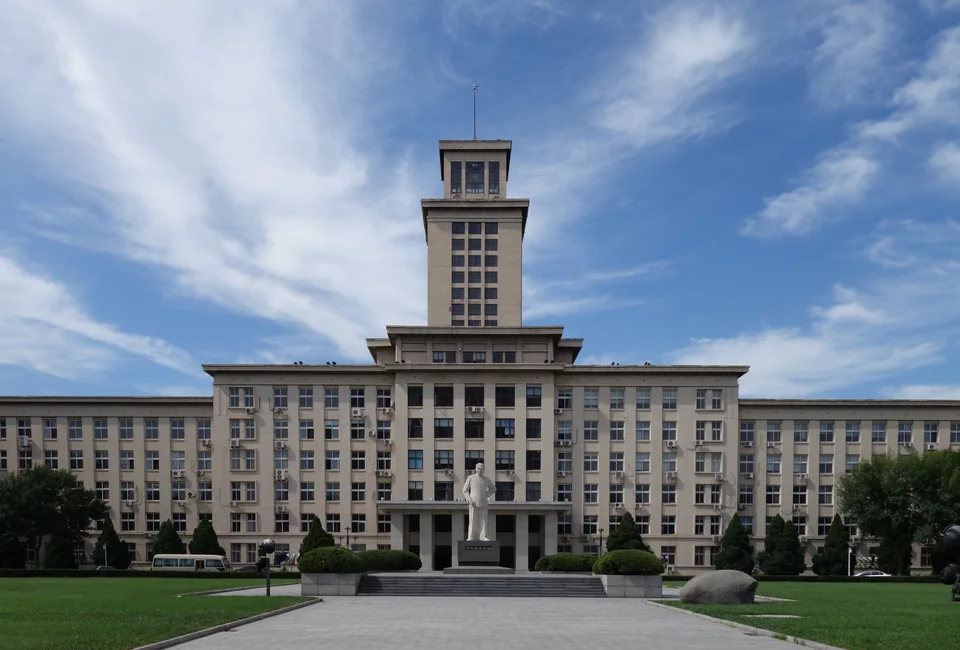
Four routes for school leavers
The real question is not whether you can apply, but what language level you will have on day one. That decides timing, budget and your university list.
| Route | Best for | Needed to apply | Years to a degree |
|---|---|---|---|
| Chinese-taught bachelor's straight from school | You already hold HSK 4 or can reach it by spring of the final year | School certificate, CSCA (Chinese, Mathematics, subject tests), HSK 4–5 | 4 (longer for medicine and architecture) |
| English-taught bachelor's | English around IELTS 5.5–6.0, no Chinese | School certificate, CSCA without Chinese, IELTS or TOEFL | 4 |
| Language year, then bachelor's | No Chinese yet, major taught in Chinese | For the course: certificate and passport; a year later, HSK and CSCA | 5 |
| University foundation year | No Chinese; you need language plus maths and science | School certificate; the university sets progression rules | 5 |
Direct entry to a Chinese-taught degree is faster and cheaper, but only if the language is already there, because teaching is in Chinese from the first week. English-taught bachelor's places are scarcer, and some run only if enough students enrol: HIT opens an English-taught cohort only with at least 20 students. Our guides to the foundation year in China and English-taught degrees in China compare those options in detail.
What universities require from school leavers in 2026–2027
The school certificate replaces entrance exams
Chinese universities assess your school-leaving certificate and transcript; national exams such as the EGE or UNT are not on their mandatory lists. Harbin Engineering University, for example, expects an average of at least 75 out of 100. Tsinghua lists national matriculation results among optional supporting evidence, so strong EGE or UNT scores are worth adding where extra documents are allowed.
You can apply before graduating. HIT, Sun Yat-sen University and others accept a pre-graduation certificate, and check the original certificate with its translation at registration in September.
The CSCA test
From 2026/27 the CSCA is compulsory for bachelor's applicants to universities in the Chinese Government Scholarship programme, which covers most universities that international applicants target. Everyone sits Mathematics; Professional Chinese is required for Chinese-taught programmes; Physics or Chemistry for engineering, science and medical majors. Sessions for 2026/27 fall on 14–15 November, 19–20 December, 23–24 January, 13–14 March, 24–25 April and 26–27 June. Our CSCA exam guide covers registration and home-test requirements.
Language: what HSK level you really need
Requirements vary by university and field, and moving from HSK 4 to HSK 5 usually takes a school student several more months of study.
| University (2026–2027 rules) | Chinese-taught programmes | English-taught programmes |
|---|---|---|
| Harbin Institute of Technology (HIT) | HSK 4, 210+ | IELTS 6.0 (no band below 5.5) or TOEFL iBT 80 |
| Harbin Engineering University | HSK 4; HSK 3 for Chinese Language | TOEFL 90 or IELTS 6.0 |
| Northeast Forestry University (Harbin) | HSK 4, 180+ for science, engineering and economics; HSK 5, 180+ for literature and law | IELTS 6.0 or TOEFL 80 |
| Shenzhen University | HSK 4, 180+ for science and engineering; HSK 5, 180+ for liberal arts, medicine and arts | IELTS 5.5, TOEFL 80 or Duolingo 100 |
| Sun Yat-sen University | HSK 5, 180+ (HSK 4, 180+ for Chinese Language) | No English-taught track in the 2026 rules |
| Tsinghua University | HSK 5 with each section above 60 | IELTS or TOEFL; no Chinese needed |
For the test structure and preparation, see our HSK exam guide.
Age and guardianship: the main hurdle at 17
Most school leavers from 11-year systems start university at 17, and Chinese rules on minors are stricter than many families expect.
| University | Rule for applicants under 18 |
|---|---|
| Tsinghua (2027 entry) | Minimum age 18 on 1 September 2027; younger applicants need a signed statement from a guardian in China |
| Harbin Engineering University | Age 18–25; under 18 requires guardian documents in Harbin |
| HIT | Notarised guardianship certificate if you will not be 18 by 1 September |
| Shenzhen University | Age 18–25; under 18 on 31 August requires the university's power-of-attorney form |
| Sun Yat-sen University | Guardian commitment letter with notarised documents if you will not be 18 by 1 September; the guardian must be an adult living in Guangdong Province |
| GDUFS (Guangzhou) | Under 18 on 1 September: notarised undertaking from a guardian living in China plus a translated birth certificate |
If a university requires a guardian in China, the family needs an adult who lives in that city or province and can formally take responsibility. Without one, ask the university before applying whom it accepts as a guardian: HIT's 2026 rules asked for a notarised guardianship certificate without saying the guardian must live in China. The other option is a language year first, entering the degree as an adult. Upper limits also exist: 25 at Harbin Engineering and Shenzhen University, under 30 at HIT.
Timeline from tenth grade to departure
This calendar targets September 2027 entry; if you are already in your final year, compress the first rows.
| When | What to do |
|---|---|
| Grade 10, spring–summer | Decide on the teaching language. For Chinese, study systematically towards HSK 4 by spring of the final year; for English, aim for IELTS 5.5–6.0 |
| Final year, September–October | Shortlist 4–6 programmes and record CSCA subjects, HSK level, age rules and deadlines. Check passport validity |
| Mid-October | Register for the November CSCA session at csca.cn |
| November–January | CSCA (14–15 November, 19–20 December or 23–24 January), HSK or IELTS |
| January–May | Applications: in 2026 Sun Yat-sen ran rounds to 28 February and 30 April, Harbin Engineering took waves to 15 May, Shenzhen University to 31 May |
| March–April | Backup CSCA sessions for retakes |
| May–June | Interviews; final school exams and certificate |
| June–August | Admission notice and JW202 form, apostille and translation of the certificate, foreigner medical form, police certificate |
| August | X1 visa at a Chinese visa application centre |
| September | University registration; residence permit for study within 30 days of entry |
Some universities accept late applications, such as HIT (to 15 July in 2026) and Northeast Forestry (to 30 June), but late filing squeezes the visa stage and leaves no margin for error.
First-year cost by route
Fees below come from official university pages and apply to the 2026/27 academic year; universities may revise them for 2027/28. Heilongjiang University's fee page names no academic year, so its figure is the rate published on 30 September 2026.
| Option | Annual tuition | Also budget for |
|---|---|---|
| Chinese-taught bachelor's, Harbin Engineering | $2,540 (CNY 17,000) | Housing from $60 (CNY 400) a month, insurance $120 (CNY 800) a year, application fee $60 (CNY 400) |
| Chinese-taught bachelor's, Northeast Forestry | $2,460 (CNY 16,500) | Twin room $75 (CNY 500) a month |
| Chinese-taught bachelor's, HIT | $2,980 (CNY 20,000) | Housing $120–150 (CNY 800–1,000) a month; proof of funds of at least $2,980 (CNY 20,000) at application |
| Chinese-taught bachelor's, Shenzhen University | $3,880–5,970 (CNY 26,000–40,000) | Housing $110–1,190 (CNY 750–8,000) a semester; campus places are limited |
| English-taught bachelor's, HIT | $3,880 (CNY 26,000) | Runs only with 20+ students |
| Language year, Harbin Engineering | $2,090 (CNY 14,000), i.e. $1,040 (CNY 7,000) a semester | Housing and living costs as for degree students |
| Language year, Heilongjiang University | $1,940 (CNY 13,000), i.e. $970 (CNY 6,500) a half-year | Twin room from $3 (CNY 21) a day |
In short, a language year adds roughly $2,000 in tuition plus a year of living costs, which Harbin Engineering estimates at $220–370 (CNY 1,500–2,500) a month. Our guide to the cost of studying in China builds a full budget by city.
Scholarships exist for school leavers too: the Chinese Government (CSC) Scholarship, provincial awards and university awards. A separate programme of China's Ministry of Education and Heilongjiang Province targets citizens of Russia, Kazakhstan and 11 other Eurasian countries and covers tuition, housing, living costs and insurance. It rarely fits a school leaver straight away: applicants need HSK 4 with at least 180 points from the past two years, and award holders without HSK 5 at 180 first spend a year on Chinese. Full awards are competitive, so apply for a paid place in parallel.
Documents, visa and the first weeks
The standard bachelor's set is: passport, school certificate or pre-graduation certificate, transcript, CSCA score, language certificate, foreigner medical form, police certificate, study plan or personal statement, proof of funds, and guardianship documents for minors. Documents in languages other than Chinese or English need notarised translations. Our guide to applying to Chinese universities covers each document, including apostilles.
Once admitted, you receive the university's admission notice and a JW202 form, or JW201 if you hold a Chinese Government Scholarship, and use them to apply for an X1 visa. Short visa-free entry schemes, such as China's 30-day visa-free regime for Russian citizens that runs to 31 December 2027, do not cover study. Within 30 days of arrival the X1 visa is converted into a residence permit for study; see our China student visa guide.
Common mistakes
- Choosing by ranking without checking the age rule. If a guardian in China is required and you have none, the application may not be considered.
- Planning to learn Chinese "on the spot" with direct entry. Lectures are in Chinese from the start, and without HSK 4–5 the first year becomes a struggle.
- Leaving the CSCA to June. Results take 10 working days, which leaves no time for a retake.
- Taking CSCA subjects in English for a Chinese-taught programme without checking the university's language rule.
- Ignoring final school exams. May and June are taken up by them, so finish interviews and language tests before spring.
- Confusing a language course with a foundation year. A language course teaches only Chinese; engineering and medical applicants must prepare CSCA mathematics and physics separately.
Who China suits straight after school
China suits students ready to spend one or two years on serious language study, comfortable with dormitory life far from home, and choosing engineering, computing, economics, Chinese studies or medicine with realistic timelines. Waiting or choosing another country makes sense if, by spring of the final year, you have neither Chinese nor English at B2, your family cannot arrange guardianship for a 17-year-old, or your budget works only with a full scholarship. Our comparison of China and Korea can help with that choice.
Route selection, a university shortlist matched to your age and language level, a CSCA and HSK preparation plan, documents and application support are provided under an agreement with StudyU. Admission is decided by the university, scholarships by the China Scholarship Council or the university, and visas by the Chinese consulate.
FAQ
Yes, in two ways. One is an English-taught bachelor's, which needs IELTS around 6.0 and the CSCA without Chinese, though such programmes are fewer. The other is a language or foundation year: you study Chinese for a year, pass HSK 4–5 and the CSCA, then enter a Chinese-taught degree. Direct entry to a Chinese-taught programme without the language is not possible because the HSK is required at application.
No. Chinese universities list the school certificate, transcript, CSCA and a language certificate as mandatory; national exams are not on those lists. Strong results can still be attached as supporting evidence where allowed, and Tsinghua explicitly mentions national matriculation exams among possible documents.
Yes, with guardianship documents. HIT asks for a notarised guardianship certificate, Shenzhen University for its own power-of-attorney form, Tsinghua, Sun Yat-sen and GDUFS for a guardian who lives in China (in Guangdong Province for Sun Yat-sen), and Harbin Engineering for a guardian in Harbin. If you have no one in China, ask the university before applying whom it accepts as a guardian, or begin with a language year.
At 2026/27 rates, a Chinese-taught bachelor's in Harbin costs $2,460–2,980 (CNY 16,500–20,000) a year and at Shenzhen University $3,880–5,970 (CNY 26,000–40,000). HIT's English-taught programme costs $3,880 (CNY 26,000). Add housing, insurance of $120 (CNY 800) a year and living costs.
Most applications run from January to May 2027, and some open earlier: Tsinghua's first round closes on 20 November 2026. Take the CSCA in November, December or January and get your language certificate before spring. May and June are taken up by final school exams, so finish the main work beforehand.
Recognition depends on your country. Kazakhstan, for example, recognises foreign education documents through the National Center for Higher Education Development via eGov or public service centres. Russian recognition rules are covered in our guide to bachelor's degrees in China.
Sources
- CSCA: exam introduction, subjects and fees and November 2026 – June 2027 schedule (announcement of 24.09.2026) — checked 30.09.2026
- Tsinghua: 2027 eligibility and schedule — checked 30.09.2026
- HIT: 2026 bachelor's admission — requirements, age, fees, deadlines — checked 30.09.2026
- Harbin Engineering University: 2026 bachelor's admission — checked 30.09.2026
- Northeast Forestry University: 2026 bachelor's admission — checked 30.09.2026
- Heilongjiang University: fees for international students and Ministry of Education–Heilongjiang Eurasian scholarship — checked 30.09.2026
- Shenzhen University: 2026 bachelor's admission — checked 30.09.2026
- Sun Yat-sen University: 2026 bachelor's guide and GDUFS: autumn 2026 international admission — checked 30.09.2026
- Chinese Embassy in Russia: visa-free regime for Russian citizens extended to 31.12.2027 — checked 30.09.2026
- Yuan amounts were converted at the ECB reference rate for 29.09.2026 (EUR 1 = USD 1.1355 and CNY 7.6117, so CNY 1 ≈ USD 0.1492); sums under $100 are rounded to the dollar and larger sums to $10.
Next steps
- CSCA Exam Guide: Subjects, 2026/27 Test Dates, Registration and Preparation
- Studying in China from Kazakhstan: Admission, Scholarships, the X1 Visa and Degree Recognition
- Studying in China for international applicants
- Foundation Year in China: Which Format to Choose and What It Costs
- English-Taught Degrees in China: Programmes, Universities, Fees and Requirements
- HSK Exam Guide 2026: Levels, the Switch to HSK 3.0 on 13 December, Dates, Fees and Test Centres
