
Milan has three state universities — Politecnico di Milano, the University of Milan (Statale) and Milano-Bicocca — and several private ones: Bocconi, Cattolica, IULM, San Raffaele and, just outside the city, Humanitas. Add the state-run Brera Academy and the private design and fashion schools. For 2026/27, a state university typically costs an international student about $180–5,000 a year depending on income or citizenship; a private one runs from about $10,000 to $20,000 and more. In Milan, the biggest cost is usually housing, not tuition.
Below: every institution on one map, their strengths, official 2026/27 fees, admission specifics and the mistakes people make when choosing Milan.
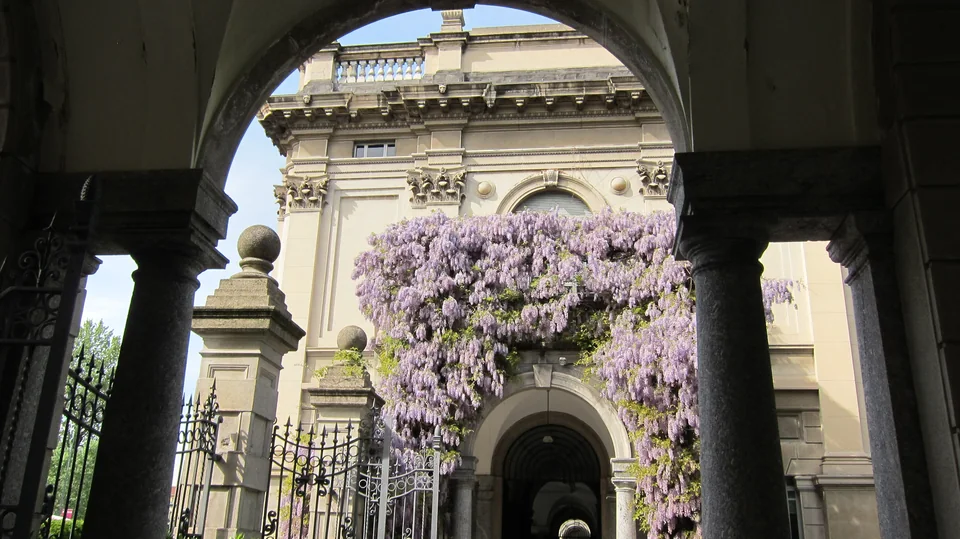
Milan's universities at a glance
| Institution | Type | Strengths | 2026/27 fee for international students |
|---|---|---|---|
| Politecnico di Milano | State | Engineering, architecture, design | $180–4,480 (€157.04–3,943.04) by ISEE |
| University of Milan (Statale) | State | Medicine, law, sciences, humanities | Group C countries (incl. Russia): second instalment $3,640–4,660 (€3,204–4,101.12) plus a $165 (€146) first instalment |
| Milano-Bicocca | State | Sciences, psychology, economics, medicine in Bergamo | Fixed amount by country of residence and programme area |
| Bocconi | Private | Economics, finance, management, law, politics | $19,300 (€17,000) for year one of a bachelor's or law degree |
| Cattolica | Private | Economics, management, psychology, communication | $9,990 (€8,800) on English-taught programmes if family income is outside the EU |
| IULM | Private | Communication, media, tourism, languages | Flat rate for students whose family lives abroad: $10,500 (€9,246) bachelor's, $12,200 (€10,746) master's |
| Vita-Salute San Raffaele | Private | Medicine, psychology, biotechnology | Medicine for non-EU students: $23,490 (€20,690) for year one |
| Humanitas University (Pieve Emanuele) | Private | Medicine, MedTech, health professions | Per university price list; medicine test fee $225 (€200) |
| Brera Academy | State AFAM academy | Painting, sculpture, set design, photography and film, new art technologies | $1,480 (€1,300) a year for non-EU students, plus regional tax and stamp duty |
| NABA, IED, Domus Academy, Istituto Marangoni | Private AFAM and design schools | Design, fashion, media, art | About $19,170–34,000 a year for non-EU students (see design and fashion schools in Italy) |
State-university figures are tuition only, without rent or living costs. Each university sets its own method: some use ISEE parificato (a calculation based on your family's income abroad), others a flat rate by country.
State universities
Politecnico di Milano
A state technical university with 49,395 students as of March 2026, including 9,940 international students. It ranked 87th in the world and first in Italy in QS 2027, and in the QS 2026 subject rankings it placed 20th for engineering and technology, 7th for art and design and 6th for architecture.
Admission points to know:
- Engineering bachelor's admission is test-based: Politecnico's own TOL or CISIA's TOLC-I (both in Italian), CISIA's English-language CEnT-S, or the SAT.
- Design uses a separate test, TOLD. For 2026/27 the English-language TOLD window ran from 14 March to 14 May 2026, with a $40 (€35) registration fee.
- Of the School of Design's bachelor's programmes, only Interaction Design (Lecco campus) is taught in English; the rest are in Italian at the Bovisa campus.
- Many master's programmes are in English; in design, the portfolio is worth up to 50 points in selection.
Fees depend on ISEE: $180–4,480 (€157.04–3,943.04) for a standard 2026/27 study plan. Non-EU quota students admitted to a master's with a foreign bachelor's and no scholarship pay the maximum regardless of ISEE parificato. More in our Politecnico di Milano profile.
University of Milan (Università degli Studi di Milano)
A comprehensive state university, often called the Statale. Two points matter most for international applicants:
- English-taught medicine (International Medical School): 15 places for non-EU citizens living abroad in 2026/27, via the IMAT.
- Transparent fees. If your family's income is abroad, the second instalment is fixed by country group. Group C (e.g. Russia) pays $3,640 (€3,204) or $4,660 (€4,101.12) depending on the programme's fee area; group B (e.g. Kazakhstan, Belarus, Albania) pays $1,030–1,320 (€910–1,164); group A (e.g. Uzbekistan) pays $225–290 (€200–256). Everyone pays a $165 (€146) first instalment and tops up the regional tax for their group. See our University of Milan profile.
Milano-Bicocca
Milan's second comprehensive state university, on a campus in the north of the city. Its English-taught medicine runs in Bergamo, with 20 non-EU places in 2026/27 via the IMAT. International students with family income abroad pay a fixed amount by country of residence and programme area. For 2026/27 the first instalment is $165 (€146), plus a non-refundable $170 (€150) deposit to confirm a place; a master's application costs $34 (€30); bachelor's applicants pay no application fee but need a TOLC or CEnT-S result. See our Milano-Bicocca profile.
Private universities
Bocconi
A private university for economics, management, finance, law and political science, with a wide choice of English-taught programmes. Year one of a bachelor's or law degree costs $19,300 (€17,000) in 2026/27. Admission runs in rounds using Bocconi's own test or the SAT/ACT, and some programmes add an interview.
Università Cattolica del Sacro Cuore
A large private university with its main campus in Milan and a medical school in Rome. For English-taught programmes in 2026/27, the rule is simple: if family income is earned outside the EU, the fee is a flat $9,990 (€8,800) a year, reduced to about $6,700 (€5,900) with the university's international scholarship.
IULM
A private university for languages and communication: media, advertising, tourism and creative industries. From 2026/27, international students whose family lives and earns abroad pay a flat fee at the fifth band of IULM's scale: $10,500 (€9,246) a year for a bachelor's and $12,200 (€10,746) for a master's, each including $165 (€146) of regional tax and stamp duty, paid in three instalments.
San Raffaele and Humanitas
Both focus on medicine and life sciences and select for English-taught medicine through their own tests. San Raffaele set 64 non-EU places for 2026/27, with year one at $23,490 (€20,690). Humanitas (campus in Pieve Emanuele, south of Milan) held its HUMAT test in March 2026 with a $225 (€200) registration fee. The full medicine route is in our guide to medicine in Italy and the IMAT.
Design, fashion and art academies
Milan is Italy's design-education hub, but distinguish a university from an academy:
- Brera Academy is a state fine-arts academy in the AFAM system. Teaching is in Italian and international students need B2 Italian. Non-EU students living abroad pay $1,480 (€1,300) a year for 2026/27, plus a $215 (€190) regional tax and $18 (€16) stamp duty.
- NABA, IED, Domus Academy and Istituto Marangoni are private schools; many of their programmes are MUR-recognised academic diplomas. Non-EU fees for 2026/27: NABA $25,260 (€22,250); IED $23,620 (€20,800); Domus Academy $19,080 (€16,800) per bachelor's year; Marangoni a $4,540 (€4,000) annual enrolment fee plus $29,300 (€25,800) on its Fashion Design & Accessories course.
How to choose between Politecnico, an academy and a private school, and what goes in the portfolio, is covered in our guide to design and fashion schools in Italy.
Which Milan university fits your goal
| Goal | First option | Alternative |
|---|---|---|
| Engineering or IT at low tuition | Politecnico di Milano | Politecnico di Torino if Milan rent is too high |
| Economics and finance in English | Bocconi | Cattolica (flat non-EU fee), English-taught master's at the Statale |
| Medicine in English | Statale or Bicocca via IMAT | San Raffaele or Humanitas via their own tests |
| Affordable design | Politecnico di Milano (TOLD) or Brera (in Italian) | Private schools if English and industry projects matter most |
| Communication, media, tourism | IULM | Cattolica |
| Sciences and psychology | Statale, Bicocca | San Raffaele (psychology) |
What it costs to live and study in Milan
Housing in Milan costs more than in most Italian university cities, and rent usually exceeds state-university tuition. Official reference points:
- Politecnico di Milano's Milan residences charged $4,920–8,800 (€4,330–7,750) per place per year in 2025/26 (the latest published figure; confirm the current fee with the university), depending on room type. Places are limited; book as soon as you are admitted.
- Visa proof of funds for 2026/27 and 2027/28 is at least $11,560 (€10,179.85) a year. That is the consulate's minimum, not a realistic Milan budget.
- Regional tax at Lombardy universities is $150–215 (€130–190) depending on ISEE or country group, plus $18 (€16) stamp duty.
A regional DSU grant can cut costs, but it counts towards visa funds only once formally awarded.
How to apply from outside the EU
- Check your schooling. A bachelor's requires 12 years of school; with 11, you need a foundation year or a year of university at home.
- Learn your university's calendar. It varies widely in Milan: Politecnico tests run in spring, Bocconi admits in rounds, private medical schools test in February–March, and the IMAT is in September.
- Prepare documents. Diploma and transcripts, translations, a CIMEA statement or Dichiarazione di valore if requested, a language certificate and, for creative programmes, a portfolio.
- File a Universitaly pre-enrolment. From 2026/27, a university can approve no more pre-enrolments than its non-EU places plus 20%, so late filing is risky.
- Apply for the visa. By 30 November 2026 for 2026/27 and by 31 October 2027 for 2027/28, or earlier if your university says so.
- Sort out housing. The visa needs proof of accommodation, and in Milan the search takes longer than elsewhere.
The university decides on admission, the Italian consulate on the visa, and the regional agency or foundation on grants; one decision does not guarantee another.
Common mistakes when choosing Milan
- Comparing tuition only. Politecnico and a private school differ hugely in fees, but rent eats most of the budget at both.
- Not checking the bachelor's language. Most state bachelor's programmes, including design at Politecnico, are taught in Italian.
- Confusing a design school with a university. Private schools award AFAM academic diplomas, not university lauree. Check the programme's status and recognition for your goal.
- Missing the spring tests. TOLD, private medicine tests and Bocconi's early rounds close long before summer.
- Waiting for an offer to start the housing search. In Milan, prepare housing and visa documents alongside your application.
Still choosing a city? Compare Milan with universities in Rome or start from our overview of universities in Italy for international students.
FAQ
State: Politecnico di Milano, the University of Milan (Statale) and Milano-Bicocca. Private: Bocconi, Cattolica, IULM, San Raffaele and Humanitas just outside the city. Art and design are taught at the Brera Academy and at private schools such as NABA, IED, Domus Academy and Istituto Marangoni.
In the QS 2027 overall ranking, Politecnico di Milano (87th in the world). For economics and finance, many international students choose Bocconi. The right answer depends on your field.
At state universities in 2026/27, roughly $180–5,000 a year depending on the university, income and country. Private options range from $9,990 (€8,800) at Cattolica to $19,300 (€17,000) at Bocconi, and more at design schools.
Yes. Bocconi and Politecnico di Milano's master's programmes offer the most English-taught options. At state bachelor's level the choice is narrower.
Often: TOL, TOLC or CEnT-S at Politecnico, TOLD for design, Bocconi's own test or the SAT, and the IMAT or private tests for medicine.
A study residence permit caps paid work at 20 hours per week and 1,040 hours per year. After graduating you can request a 9–12 month permit to look for work (Article 39-bis.1 of the Immigration Act).
Spring tests and early private-university rounds start in winter 2026–27. The 2027/28 visa application is due by 31 October 2027.
Sources
- USTAT (MUR) — list of Italian universities
- Politecnico di Milano — figures and rankings
- Politecnico di Milano — fees 2026/27
- Politecnico di Milano — engineering admission
- Politecnico di Milano — School of Design call for admission 2026/27
- Residenze Polimi — rates
- University of Milan — fees 2026/27
- Milano-Bicocca — fees and funding
- Bocconi — bachelor's fees
- Università Cattolica — fees for international students
- IULM — fees and contributions
- MUR — Decree 1005/2026 on IMAT and place tables
- Brera Academy — fees for non-EU students
- Universitaly — procedures for international students, 2026/27 and 2027/28
Dollar amounts use the ECB reference rate of 29 September 2026 (€1 = $1.1355), rounded.
During the free initial consultation, we clarify your goal, profile, timing, and budget and identify the next realistic step. Apply
Next steps
- Bachelor's in Italy for International Students: Entry Rules, Tests, Deadlines and Fees
- Free University Education in Italy for International Students: What "Free" Means in 2026/27
- Politecnico di Milano
- Design and Fashion Schools in Italy: Politecnico, AFAM Academies and Private Schools
- Documents for University Admission in Italy (2026–2027): Checklist, Apostille, CIMEA and Declaration of Value
- Italian Language Certificates CILS, CELI and PLIDA: Which One You Need for University and When to Sit It
