
English-taught medicine and dentistry at Italy's public universities are still filled through a single national test, the IMAT. The 2025 reform that replaced the entrance test with an open first semester (the semestre filtro, also called semestre aperto in the press) applies only to Italian-taught programmes. For 2026/27 the Ministry of University and Research (MUR) published 3,922 places in English-taught medicine, dentistry and veterinary medicine, of which 1,380 are reserved for non-EU citizens living outside Italy. A non-EU applicant living abroad does not compete for all of them: you compete only for the quota of the one university where you filed your Universitaly pre-enrolment.
Registration for IMAT 2026 closed on 9 September 2026. If you are aiming for 2027 entry, the useful work starts now, and one date is already fixed: study-visa applications for 2027/28 must be lodged by 31 October 2027.
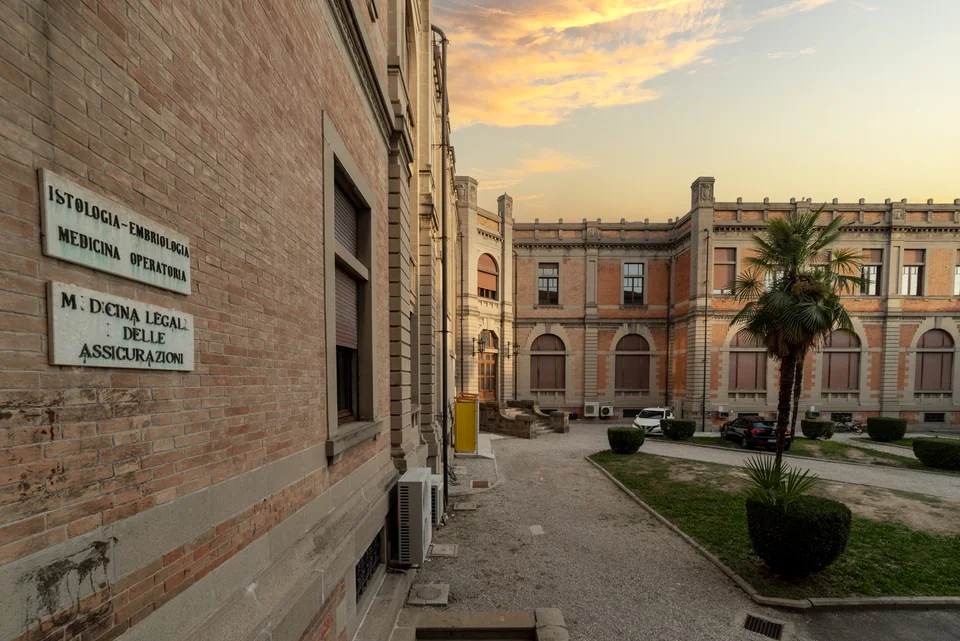
Three routes into medicine in Italy
| Route | How candidates are selected | Language | Best fit |
|---|---|---|---|
| Public university, English-taught | IMAT: one national test per year, score-based ranking | English | Strong science students who want low public tuition |
| Private university, English-taught (Humanitas, San Raffaele and others) | The university's own test; for 2026/27 these ran in February–March | English | Families able to pay from $20,000 a year (San Raffaele: $23,600 for year one) who want an earlier, separate attempt |
| Public university, Italian-taught | Semestre filtro: open enrolment, three exams at the end of the first semester, national ranking | Italian (at least B2) | Students already comfortable studying in Italian |
Medicine and Surgery (degree class LM-41) is a six-year single-cycle degree (laurea magistrale a ciclo unico), not a bachelor's plus master's. Dentistry (LM-46) and veterinary medicine (LM-42) follow the same single-cycle model with separate intakes.
What changed, and why IMAT survived the reform
Law no. 26 of 14 March 2025 and Legislative Decree no. 71 of 15 May 2025 rewrote admission to medicine, dentistry and veterinary medicine. For Italian-taught courses, the entrance test was replaced by an open semester followed by exams and a national ranking.
Article 8(3) of the same decree excludes English-taught courses at public and recognised non-state universities. That is why Ministerial Decree no. 1005 of 6 August 2026 set a single entrance exam for English-taught medicine, dentistry and veterinary medicine in 2026/27.
Two further changes matter to international applicants:
- A cap on pre-enrolment approvals. From 2026/27, a university may approve no more Universitaly pre-enrolment applications than its non-EU quota plus 20%. Once the cap is reached, the portal blocks further approvals, so applying late carries real risk.
- An earlier visa deadline for 2027/28. The Ministry's procedures for international students now cover two years: visa applications are due by 30 November 2026 for 2026/27 and by 31 October 2027 for 2027/28. Universities may set earlier dates.
How IMAT 2026 works
IMAT (International Medical Admissions Test) is run by the Ministry through the CINECA consortium. The paper is identical at every venue and shared by medicine, dentistry and veterinary medicine. At registration you choose whether you compete for medicine and dentistry or for veterinary medicine; that choice locks when registration closes.
| Section | Questions | Maximum points |
|---|---|---|
| Reading skills and knowledge from studies | 4 | 6 |
| Logical reasoning and problem solving | 5 | 7.5 |
| Biology | 23 | 34.5 |
| Chemistry | 15 | 22.5 |
| Physics and mathematics | 13 | 19.5 |
| Total | 60 | 90 |
Scoring rules for 2026/27:
- 100 minutes; five options per question, one correct;
- +1.5 for a correct answer, −0.4 for a wrong one, 0 for a blank;
- EU and EU-equivalent candidates need at least 20 points to be ranked;
- the non-EU-resident-abroad quota has no minimum threshold: any score above zero is eligible, but a candidate who answers nothing is not ranked;
- ties are broken by biology, then chemistry, physics and maths, logic and reading scores; then by an English certificate from Annex 3 of the decree declared at registration (for example IELTS 5.5+ or TOEFL 87+; at least one school year taught in English counts as a certificate); then a preference for candidates with certified disability; and finally by age, with the younger candidate preferred.
No threshold does not mean easy entry. Places go in score order, and the quota at many popular universities is a few dozen seats.
Where you can sit the test
The test runs at Italian universities and at foreign venues listed in Table A of Decree 1005. The 2026 list included Albania, Azerbaijan, Brazil, Canada, China, Cyprus, France, Germany, Greece, Hong Kong, India, Ireland, Kenya, Pakistan, Poland, Portugal, Saudi Arabia, South Africa, Spain, Switzerland, Tunisia, Turkey, the UAE (Dubai), the UK and the USA. Russia, Kazakhstan and Central Asia were not on it, so candidates from those countries travel to a listed venue or to Italy.
How many places: the 2026/27 table
Figures below come from Table B of Decree 1005. The first number is for Italian, EU and EU-equivalent candidates; the second is for non-EU citizens living abroad.
Public universities, English-taught medicine (IMAT)
| University | Teaching site | EU / equivalent | Non-EU abroad |
|---|---|---|---|
| Bari | Bari | 89 | 11 |
| Bologna | Bologna | 140 | 20 |
| Cagliari | Cagliari | 80 | 18 |
| Campania "Luigi Vanvitelli" | Naples | 70 | 50 |
| Catania | Catania | 40 | 40 |
| Florence (accreditation pending) | Florence | 50 | 0 |
| Messina | Messina | 55 | 61 |
| University of Milan (Statale) | Milan | 60 | 15 |
| Milano-Bicocca | Bergamo | 40 | 20 |
| Naples Federico II | Naples | 35 | 45 |
| Padua, MedTech (accreditation pending) | Padua | 70 | 15 |
| Padua | Venice | 75 | 25 |
| Parma | Piacenza | 80 | 50 |
| Pavia | Pavia | 103 | 40 |
| Marche Polytechnic | Ancona | 30 | 50 |
| Sapienza, course F | Rome | 52 | 13 |
| Tor Vergata | Rome | 65 | 20 |
| Tor Vergata | Tirana (Albania) | 0 | 320 |
| Turin | Orbassano | 73 | 32 |
Tor Vergata's Tirana course holds 320 non-EU places, but you would study in Albania. Treat it as a different decision, with its own visa, housing and cost of living.
English-taught dentistry and veterinary medicine (IMAT)
| Programme | University | EU / equivalent | Non-EU abroad |
|---|---|---|---|
| Dentistry | Sapienza, Rome | 19 | 6 |
| Dentistry | Siena | 30 | 5 |
| Veterinary medicine | Bologna (Ozzano dell'Emilia) | 45 | 5 |
| Veterinary medicine | Naples Federico II (accreditation pending) | 18 | 2 |
That is 11 non-EU dentistry places in the whole public system. If dentistry is the goal, build a fallback plan from the start.
Private universities, English-taught medicine (own tests)
The Ministry's table also lists places at non-state universities. These select mainly through their own tests, held in winter and spring:
| University | Non-EU places 2026/27 | Test for 2026/27 |
|---|---|---|
| Humanitas University (Milan area) | 40 and 50 (two programmes) | HUMAT online: 5–6 and 18–20 March 2026 |
| Vita-Salute San Raffaele (Milan) | 64 | online: 11 February and 4 March 2026 |
| Campus Bio-Medico (Rome) | 36, plus 12 on the MedTech course | non-EU online test: 6 February 2026 |
| Cattolica (Rome) | 70 | online: 25 March 2026 |
| Cattolica (Bolzano) | 10 | see the university's call |
| UniCamillus (Rome) | 225 | see the university's admission calls |
A further 10 non-EU places sit on a new UniNeuromed course in Pozzilli that was still being accredited when the decree was issued.
Because private tests come before IMAT, you can hold a private result from spring and still sit IMAT for a public university in September.
How non-EU applicants living abroad actually compete
EU and EU-equivalent candidates list several universities in order of preference and enter one national ranking. Non-EU citizens living abroad compete only in the local ranking of the university where they filed their Universitaly pre-enrolment. A strong score does not move you to another university that still has seats.
So the key decision is choosing one university before pre-enrolment. Compare:
- Quota size. Messina (61), Vanvitelli (50), Parma (50), Marche (50) and Federico II (45) offer far more seats than Sapienza (13) or Milan (15).
- Past results of the last admitted candidates. Universities publish their rankings after each intake. Look at two or more years of official data, not forum posts.
- City costs. Rent in Milan or Rome is far higher than in Messina or Catania; over six years that can outweigh any tuition difference.
- Pre-enrolment timing. With the quota-plus-20% cap, a late applicant may not be approved at all.
Do not borrow the national-ranking rules. The assigned (assegnato) and booked (prenotato) statuses, the four working days to enrol and the confirmation of interest at each round are set out in the decree for EU and EU-equivalent candidates. Rankings for the non-EU quota are drawn up by each university, so check your university's call (bando) for the publication date, enrolment window and reallocation rules.
Timeline: 2026 dates and a plan for 2027
Official 2026/27 dates (Decree 1005):
| Step | Date |
|---|---|
| IMAT registration on Universitaly | 26 August – 9 September 2026, 15:00 Italian time |
| Test | 29 September 2026, 13:30 Italian time |
| Scores published (by test code) | 8 October 2026 |
| Candidates can view their answer sheet | 19 October 2026 |
| Named national rankings (EU and equivalent) | 26 October 2026 |
| First national reallocation | 3 November 2026 |
| Local rankings for the non-EU quota | Published by each university under its own call (bando) |
| Visa application deadline, 2026/27 | 30 November 2026 |
The 2027/28 dates will come in a new decree. In 2026 the decree appeared on 6 August and the test followed less than eight weeks later, so aim to have your preparation and documents ready by late summer 2027.
A working plan for 2027 entry:
- September–December 2026. Diagnostic tests in biology, chemistry, physics and maths in English. Check that you have 12 years of schooling; if not, plan a foundation year or a year of university at home.
- January–March 2027. Register for and sit any private-university tests. Request recognition documents for your school certificate: a CIMEA statement or a Dichiarazione di valore from the Italian consulate.
- Spring–summer 2027. Choose one public university for the non-EU quota and file your Universitaly pre-enrolment as soon as its window opens. Prepare the financial and housing evidence the visa needs.
- August–September 2027. Register for IMAT under the new decree, choose a venue and travel.
- October 2027. Rankings, enrolment within each reallocation window, and a visa application no later than 31 October 2027 or your university's earlier date.
If 2027 rankings follow the 2026 pattern (late October), you may have only days left for the visa. Assemble the consular file before the test.
Requirements for non-EU applicants
- 12 years of schooling. Access to a laurea requires a secondary qualification obtained after at least 12 years of school. Eleven-year systems need an extra year.
- Recognition of your qualification. The university may ask for a CIMEA statement of comparability and verification or a Dichiarazione di valore; each university decides which.
- English. No Italian test applies to English-taught programmes, but under the 2026/27–2027/28 procedures the university checks your English at pre-enrolment against an internationally recognised certificate at B2 or above in all four skills (or an equivalent certificate issued by the university itself). Some set the bar higher: San Raffaele requires C1 for enrolment. The accepted certificates are listed in each university's call (bando). For IMAT itself, an Annex 3 certificate matters only as a tie-breaker.
- Universitaly pre-enrolment. Without an approved pre-enrolment, the consulate will not accept an enrolment visa application.
- Funds and accommodation for the visa. The 2026/27–2027/28 procedures require proof of at least $11,560 (€10,179.85) a year from lawful, traceable sources, plus suitable housing in Italy. A pending application for a residence hall or scholarship does not count.
- Residence permit after arrival. Within 8 working days of entering Italy you apply for a study permesso di soggiorno; see our guide to the student residence permit and the Italian student visa.
The university decides on admission, the Italian consulate on the visa, and the regional agency or foundation on grants; one decision does not guarantee another.
What medicine in Italy costs
Public tuition depends on citizenship, family income and each university's rules. The figures below are from official 2026/27 fee pages and cover tuition only, not rent, food, insurance or travel.
| University | Who | 2026/27 amount | What it covers |
|---|---|---|---|
| Pavia | Flat rate for citizens of bracket 3 countries (e.g. Russia, UK) | $5,200 (€4,550) a year | Tuition for science-area programmes, no income documents needed |
| Pavia | Bracket 2 (e.g. Kazakhstan, Turkey, China, Ukraine) | $1,730 (€1,520) a year | Same |
| Pavia | Bracket 1 (e.g. India, Pakistan, Uzbekistan, Nigeria) | $445 (€390) a year | Same |
| University of Milan (Statale) | Country group C (includes Russia) | Second instalment $3,660–4,680 (€3,204–4,101.12) by programme fee area, plus a $167 (€146) first instalment and a $68 (€60) regional-tax top-up (the group C regional tax totals $215 (€190)) | Tuition and regional tax |
| San Raffaele (private) | Non-EU candidates | $23,600 (€20,690) for year one | Includes the $215 (€190) Lombardy regional tax |
Notes:
- Pavia's page for the English-taught Harvey medicine programme gives a guide figure of about $5,140 (€4,500) a year, and applying through the university portal costs $40 (€35).
- At Pavia you may leave the flat rate and submit family income documents for an ISEE-based calculation (ISEE is Italy's household economic indicator).
- At the University of Milan, Kazakhstan is in group B and Uzbekistan in group A, so amounts are lower.
- Private-university tests also cost money: Humanitas and San Raffaele each charged $228 (€200), non-refundable, for 2026/27.
- Regional and government grants are compared in our guide to scholarships in Italy.
Italian-taught medicine: the semestre filtro
This route only makes sense if you already study comfortably in Italian. For 2026/27 it was governed by Ministerial Decree no. 941 of 10 July 2026:
- enrolment in the filter semester ran on Universitaly from 13 July to 3 August 2026, with a $285 (€250) fee to the chosen university payable by 6 August;
- the semester has three compulsory 6-credit courses: chemistry and introductory biochemistry, physics, and biology;
- exam results produce national rankings; the separate ranking for non-EU citizens living abroad is published on 22 January 2027;
- universities check Italian at B2 or above for Italian-taught degrees unless the applicant is exempt.
The filter semester is not an easier door. It swaps a one-day test for a semester of assessed study in Italian, and you still need a visa, housing and a budget.
Common mistakes that cost a year
- Preparing only for the test. Pre-enrolment, recognition and the visa run in parallel; a good score without an approved pre-enrolment cannot become a visa.
- Assuming you can rank several universities. Non-EU applicants living abroad compete in one university's ranking.
- Confusing the reform with the end of IMAT. The open semester applies only to Italian-taught programmes.
- Filing pre-enrolment late. Approvals are capped at the quota plus 20%.
- Ignoring the 12-year rule. A high score cannot fix a missing school year.
- Copying the 2026 calendar into 2027. The 2027/28 visa deadline is 31 October, not 30 November.
- Counting a scholarship before it is awarded. A regional grant does not count as visa funds without a formal award.
What the degree leads to
An LM-41 graduate receives an Italian medical degree after six years; specialist training (scuola di specializzazione) is a separate later stage. Within the EU, recognition of basic medical training is governed by Directive 2005/36/EC. To practise outside the EU, you will need that country's own recognition and licensing process, so research it before you enrol if you plan to return home.
Comparing destinations? See our overview of medicine in Turkey, which uses a different selection system and price structure, and our Italy country guide for the wider education system.
FAQ
No. Legislative Decree 71/2025 removed the entrance test only for Italian-taught programmes. Decree 1005 of 6 August 2026 scheduled IMAT for English-taught medicine, dentistry and veterinary medicine on 29 September 2026.
There is no formal minimum for the non-EU-resident-abroad quota: any score above zero is ranked. The real cut-off depends on competition at your chosen university, so study that university's published rankings from recent years.
EU and EU-equivalent candidates rank several universities in order of preference. Non-EU citizens living abroad compete only in the local ranking of the university where they filed their Universitaly pre-enrolment.
At a public university in 2026/27, examples range from $445 (€390) a year at Pavia for bracket 1 countries to $5,200 (€4,550) for bracket 3. The private San Raffaele charges $23,600 (€20,690) for year one. Living costs are extra.
Not to be admitted. In the clinical years, Italian becomes practically necessary for contact with patients, so start learning it in year one.
Only if your country is on the decree's list of foreign venues. For 2026 the list covered 25 countries plus Italy; candidates from elsewhere travel to one of them.
Six years for Medicine and Surgery. Specialist training is a separate stage after graduation.
Not into year one. For year two onwards the entrance test is not required, following the Council of State's plenary ruling no. 1/2015 cited in the Ministry's procedures. A transfer still depends on vacant places in the relevant year, which each university announces in advance, and on recognition of your completed exams. The criteria and number of places are set in each university's transfer call.
Sources
- MUR — Decree 1005 of 6 August 2026 on IMAT 2026/27, annexes and place tables
- MUR — 26 August 2026 notice adding Florence as an IMAT venue
- Universitaly — procedures for international students, 2026/27 and 2027/28
- MUR — Decree 941 of 10 July 2026 on the filter semester
- MUR — Annex 4 to Decree 941/2026 on the filter semester
- University of Pavia — fees for non-EU students, 2026/27
- University of Milan — fees 2026/27
- UniSR — International MD Program admissions
- UniSR — 2026/27 non-EU call for admission, tuition (Art. 10)
- University of Pavia — Harvey Medicine and Surgery programme
- Humanitas University — admission test 2026/27
- Campus Bio-Medico — non-EU admission, Medicine and Surgery 2026/27
- Università Cattolica — Medicine and Surgery entrance exam (Rome)
- University of Bologna — Medicine and Surgery: how to enrol 2026/27
Dollar amounts use the ECB reference rate of 29 September 2026 (€1 = $1.1355), rounded.
During the free initial consultation, we clarify your goal, profile, timing, and budget and identify the next realistic step. Apply
Next steps
- Bachelor's in Italy for International Students: Entry Rules, Tests, Deadlines and Fees
- Free University Education in Italy for International Students: What "Free" Means in 2026/27
- Medicine in Turkey
- Studying in Italy for international applicants
- Design and Fashion Schools in Italy: Politecnico, AFAM Academies and Private Schools
- Documents for University Admission in Italy (2026–2027): Checklist, Apostille, CIMEA and Declaration of Value
