
To apply to an Italian university you need your qualification with its transcript, an apostille or legalisation, translations, a language certificate and a document comparing your qualification with the Italian system. For the last item there are two routes: a Declaration of Value (Dichiarazione di valore, DoV) from the Italian embassy or consulate, or statements from CIMEA, Italy's ENIC-NARIC centre. The university decides whether your qualification gives access to the programme. The consulate, from 2026/27, requires proof of both comparability and authenticity for the visa, so a translated diploma alone is no longer enough.
Below: checklists for bachelor's and master's applicants, a comparison of DoV, CIMEA and ARDI, apostille and translation rules with examples from Russia and Kazakhstan, and a preparation calendar. Rules come from the MUR circular for 2026/27 and 2027/28, its FAQ, and consular and university pages.
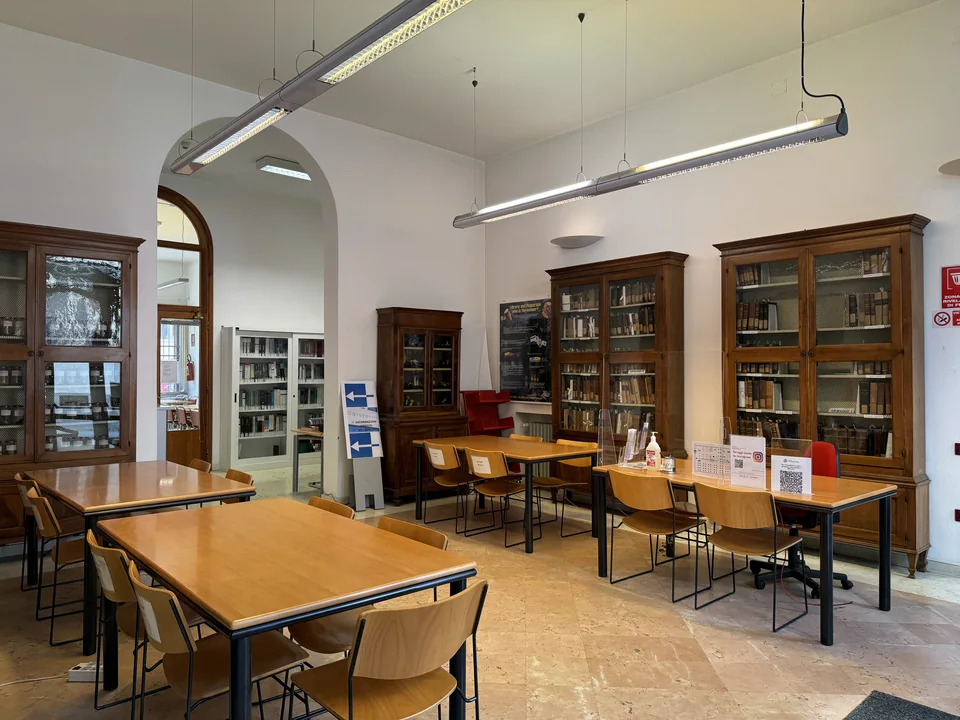
Who checks what
| Actor | What it checks | Outcome |
|---|---|---|
| University | Whether your qualification gives access to the programme; language; tests; authenticity before enrolment | Admission decision and validation of your Universitaly pre-enrolment |
| Universitaly | Free official Ministry portal for visa pre-enrolment | Pre-enrolment summary validated by the university |
| CIMEA | Comparability and authenticity of foreign qualifications | Digital statements, advisory in nature |
| Italian embassy or consulate | Issues the DoV, checks the visa file and assesses migration risk | Type D visa decision |
| Questura | Residence permit after arrival | Permesso di soggiorno |
Neither a DoV nor a CIMEA statement obliges a university to admit you: under Law 148/2002, assessing foreign qualifications for admission is the university's exclusive competence. The consulate, in turn, is not bound by the university: a validated pre-enrolment does not automatically lead to a visa appointment or a visa.
Bachelor's checklist
| Document | Purpose | Notes |
|---|---|---|
| School-leaving certificate with transcript | Main qualification | The original is needed for the visa and at enrolment |
| Proof of a 12th year of education | If your school system has 11 years | All first-year university exams passed, a related one-year post-secondary qualification, or a foundation certificate |
| Apostille or legalisation | Confirms the signature on the document is genuine | Issued in the country that awarded the document |
| Translation | For the consulate and universities that do not accept the original language | Rules depend on who receives it (see below) |
| DoV or CIMEA statements (or ARDI) | Comparability and authenticity | The visa needs both elements |
| National entrance exam result | Only if compulsory for university access in your country and requested by the Italian university | Examples: China, Brazil, Türkiye |
| Language certificate | Italian B2 for Italian-taught programmes; English B2 across four skills for English-taught | The university may test Italian itself |
| TOLC, CEnT-S or university test result | If the programme requires it | Upload the certificate with the application |
| Validated Universitaly pre-enrolment summary | For the visa | Validated without reservation |
| Passport, photos | Application and visa | Check validity requirements with the visa centre |
Master's checklist
| Document | Purpose | Notes |
|---|---|---|
| Bachelor's degree or final-year enrolment certificate | Access to the second cycle | Must give access to master's study in your country (EQF level 7) |
| Transcript | Courses, hours and grades | For the visa the consulate asks for exams and course programmes; a Diploma Supplement can serve this purpose |
| Course descriptions (syllabi) | Subject match | Optional at Polimi, but advised: they make the subject match easier to prove |
| Cumulative GPA statement | Minimum grade check | Mandatory for all Polimi master's applicants; applications below the country minimum are not evaluated |
| Apostille, translation, DoV or CIMEA | As for bachelor's | For the bachelor's degree |
| Language certificate | B2 or higher; the university sets the threshold | The visa needs a four-skill certificate |
| GMAT, GRE, portfolio, CV, motivation letter, references | As required by the programme | Portfolio is mandatory for design and architecture |
| Validated Universitaly pre-enrolment summary | For the visa | One programme at one university |
Some master's programmes also ask for the school-leaving certificate; check your programme's list.
Apostille or legalisation
Countries that are party to the 1961 Hague Convention use an apostille; for other countries, documents are legalised by the Italian embassy. Italy, Russia and Kazakhstan are all Hague parties.
Russia. The education authority of the region where the document was issued affixes the apostille; where you live now does not matter, so a diploma from a university in Kazan is apostilled in Tatarstan even if you have moved to St Petersburg. The state fee is 2,500 roubles (about $30) per document (Tax Code, art. 333.33, para. 1, subpara. 48). The Italian Consulate General in Moscow sets the order: apostille on the original first, then translation of the document together with the apostille.
Kazakhstan. The apostille is issued by the authorised Kazakh state body; the procedure is described on the egov.kz government portal. The Italian Embassy in Astana has less strict translation rules than Moscow (see below).
Documents issued in another country. The apostille and the DoV are obtained in the country whose education system issued the document. If you live in Moscow but your school certificate is from Kazakhstan, the apostille is issued in Kazakhstan and the DoV by the Italian Embassy in Astana; the Moscow consulate states that documents from former Soviet republics are handled by Italian missions in those states. Your visa, however, depends on your country of residence (University of Pavia).
Translation: for whom and what kind
| Recipient | Accepted without translation | Accepted translation |
|---|---|---|
| Politecnico di Milano (application) | Italian, English, French, Spanish | Official translation with a translator's original stamp or signature |
| University of Bologna | English, French, Spanish | Translation into Italian or English under Italian Foreign Ministry rules; in Italy, a sworn translation at a court |
| Italian Consulate General in Moscow | — | Italian translation; accredited translators recommended; notarised translations are not accepted |
| Italian Embassy in Astana | — | Italian translation by a translator on the embassy list, or by another translator whose signature is notarised |
| CIMEA | Depends on country and level | The list appears on DiploMe after you select your country |
Sources: Polimi, UniBo, Moscow consulate.
Consular fees in Moscow in September 2026: certifying a translation into Italian costs $15 (€13) per page; certifying a copy costs $11 (€10) per page. Astana works differently: it also accepts translations by other translators if their signature is notarised.
If your university issues an official English version of the diploma or transcript, many Italian universities accept it without translation at the application stage. For a DoV you still need an Italian translation.
DoV, CIMEA or ARDI: which to choose
From 2026/27, for bachelor's and master's visas your qualification must be accompanied by:
- either CIMEA statements of comparability and of verification (authenticity);
- or a Declaration of Value, which covers comparability, and authenticity only if it explicitly states that authenticity was verified.
If your qualification is described in ARDI (CIMEA's database for Lisbon Recognition Convention countries), a free ARDI Statement of Correspondence replaces the comparability statement. Kyrgyzstan and Tajikistan are Convention parties but were not in ARDI in September 2026, so their qualifications need the full CIMEA service or a DoV. The Ministry's FAQ confirms that, whatever verification system a university uses, for the visa the student presents a DoV or a CIMEA statement that also covers authenticity (FAQ).
| Item | Declaration of Value | CIMEA comparability and verification | ARDI plus CIMEA verification |
|---|---|---|---|
| Issued by | Italian embassy or consulate in the country that issued the document | CIMEA via the DiploMe platform | ARDI database (CIMEA); verification by CIMEA |
| For whom | Any qualification | Countries not covered by ARDI, e.g. Uzbekistan, Kyrgyzstan, Tajikistan, Turkmenistan | Countries in ARDI, e.g. Russia, Kazakhstan, Belarus, Armenia, Azerbaijan, Georgia, Moldova, Ukraine, Türkiye |
| Cost | Consular fees; free for study in Astana under the conditions below | $340 (€300) | ARDI statement free; verification $170 (€150) |
| Time | Depends on the mission and season | Up to 60 working days; comparability fast-track 30 working days for an extra $115 (€100) | ARDI instant; verification up to 60 working days, no fast track |
| When you can apply | In Moscow, only after the university has validated your Universitaly pre-enrolment | Any time after you receive the final qualification | ARDI any time; verification after the final qualification |
| Format | Paper | Digital statement | Digital documents |
Sources: CIMEA comparability and verification, CIMEA ARDI and verification, country list in ARDI, Moscow consulate, Italian Embassy in Astana, form M02. ECB rate of 29 Sep 2026: €1 = $1.1355.
How to decide:
- You need flexibility on timing: CIMEA or ARDI. You can start as soon as you hold the final qualification, before the university decides. A DoV in Moscow is possible only after pre-enrolment validation, usually in spring or summer, the busiest season.
- The university asks for a DoV: get a DoV. Some universities indicate on Universitaly that they need the consular declaration.
- Kazakhstan. DoVs for Kazakh qualifications are issued by the Italian Embassy in Astana (student requests: astana.studenti@esteri.it). Under its 2026 application form M02, a study DoV is free if you attach proof of pre-enrolment, enrolment or payment of the enrolment fee. You need a notarised copy of the apostilled document, a translation by a translator on the embassy list or by another translator with a notarised signature, and a passport copy, all in two sets (form M02).
Only the holder of the qualification can submit a CIMEA request; intermediaries, including agencies, cannot (CIMEA FAQ). The platform accepts a limited number of requests per day and in 2026 closed to new requests from 19 to 26 July and from 23 to 30 August; closure days do not count towards processing time.
DoV in Moscow: the admission file
According to the Italian Consulate General in Moscow, requests go through the Italian Visa Center VMS Moscow. The file for university admission:
- A copy of the passport data page.
- Proof of the Universitaly pre-enrolment, reviewed and validated by the university.
- The original certificate or diploma with the apostille of the regional education authority.
- Copies of all pages, including transcripts and apostille, without notarisation, in two sets.
- An Italian translation of all pages, including transcripts and apostille, in two sets. Notarised translations are not accepted.
For documents from regions in the St Petersburg consular district, the DoV is issued by the Italian Consulate General in St Petersburg.
Universitaly: what to upload and how to avoid problems
Pre-enrolment (preiscrizione) is mandatory for applicants who live abroad and need a visa. Rules for 2026/27 and 2027/28:
- the portal is free and the only official channel;
- you pre-enrol for one programme at one university;
- a university may validate no more applications than its international places plus 20%;
- validation "with reservation" is allowed in only two cases: the final qualification has not yet been awarded, or you must sit exams or a language test in person in Italy. A missing DoV or CIMEA statement is no longer a reason for conditional validation.
What is usually uploaded: the qualification in English, French or Spanish or with an official Italian translation; the admission or conditional offer letter; and, if ready, the DoV, CIMEA statements or ARDI statement (University of Pavia). The University of Bologna allows you to change a pre-enrolment programme, but only by writing to the university (UniBo guide).
If your final qualification is not issued yet
- University application. Master's programmes accept a final-year enrolment certificate or provisional certificate; bachelor's programmes accept a certificate of enrolment in the final school year.
- Visa. You can apply with an official provisional certificate if your country's system provides one; self-made statements and documents from unofficial bodies are not accepted. Unless you must sit exams in Italy, the final qualification with a DoV or CIMEA statements must be presented when you collect the visa.
- CIMEA. It evaluates only awarded final qualifications; an official provisional certificate can be submitted, and CIMEA may ask for more documents.
Visa-related documents and after arrival
The full visa file is covered in our guide to the Italian student visa. Four requirements from the circular link directly to admission:
| Requirement | Accepted | Not accepted |
|---|---|---|
| Funds | $11,560 (€10,179.85) per academic year from lawful, traceable sources, preferably held by the student or a relative up to the 4th degree | An application for a regional grant without an award decision |
| Housing | Confirmed accommodation in Italy | An application for, or eligibility for, a student residence place |
| Insurance | A policy without limits on emergency hospitalisation, or a consular statement of healthcare entitlement; proof is checked no later than the residence permit application | A policy with exclusions for emergency hospitalisation |
| Language | For English-taught programmes, a B2 certificate across four skills | A certificate without separate skill assessment |
After entering on a Type D visa, apply for the residence permit at a post office within 8 working days; see our residence permit guide. If Universitaly does not show you as enrolled by 31 January of the academic year, the visa is revoked.
Preparation calendar for September 2027
| When | Action |
|---|---|
| September – November 2026 | Check which comparability document your university wants (DoV, CIMEA or ARDI) and whether it accepts documents without translation |
| October 2026 – February 2027 | Apostille where the document was issued; order translations from a translator accredited by the consulate |
| As soon as you hold the final qualification | CIMEA verification request: up to 60 working days |
| Spring – summer 2027 | University decision, Universitaly pre-enrolment, validation |
| After validation | DoV at the consulate if you use this route |
| July – October 2027 | Visa application by 31 October 2027 or an earlier university date |
| First 8 working days after arrival | Residence permit application, enrolment |
Students finishing school in 2027 receive their certificates in summer, so a CIMEA verification based on them may not be ready in time for the visa. In that case a DoV requested after pre-enrolment validation is often the workable route. Agree on this with the university before spring.
Common mistakes
- Notarised translations for the consulate. The Moscow consulate does not accept them.
- Translating before the apostille. Apostille first, then translate the document together with the apostille.
- Apostille in the wrong region. It is issued where the document was issued, not where you live.
- ARDI alone for the visa. You also need CIMEA verification or a DoV.
- Counting on conditional validation without a DoV or CIMEA statement. Since 2026/27 universities may not validate "with reservation" because comparability documents are missing.
- CIMEA through an intermediary. Only the holder of the qualification can apply.
- Starting CIMEA in July. Closure weeks and the daily request cap push the date back.
- A first-year certificate without all exams passed. Covering the 12th year requires a fully passed first year.
How StudyU helps
During the free initial consultation, we clarify your goal, profile, timing, and budget and identify the next realistic step. Checking the document list for your chosen programmes, planning apostilles and translations, preparing applications and supporting submission are provided under an agreement with StudyU. CIMEA requests are submitted personally by the qualification holder; decisions are made by the university, CIMEA, the consulate and the Questura. See also our overview of studying in Italy and guides to bachelor's and master's admission and Italian language certificates.
FAQ
First check what your university asks for. If you have a free choice, CIMEA (or ARDI plus CIMEA verification) is easier to schedule because you can start before the university decides. In Moscow a DoV can be requested only after your Universitaly pre-enrolment is validated. Either route works for the visa if it covers both comparability and authenticity.
For qualifications listed in ARDI (for example from Russia or Kazakhstan), the Statement of Correspondence is free and CIMEA's verification costs $170 (€150), taking up to 60 working days. For countries not in ARDI, the full CIMEA comparability and verification service costs $340 (€300).
Yes, if the document comes from a Hague Convention country; otherwise it must be legalised by the Italian embassy. The apostille goes on the original in the country and region of issue, and the document is then translated together with the apostille.
Not for the consulate: the Moscow consulate certifies translations by accredited translators and does not accept notarised ones. For university applications some universities accept English documents without translation, and translations must carry an official translator's stamp or signature.
One, for one programme at one university. A change goes through the university that validated the application.
Apply with the provisional documents your university accepts. For the visa you will need the final certificate with a DoV or CIMEA statements, unless you must sit exams in Italy. Because CIMEA verification can take up to 60 working days, recent school graduates often find a DoV after pre-enrolment validation more practical.
Usually not; for the second cycle the bachelor's degree is assessed. Some master's programmes still ask for the school-leaving certificate, so check the programme's document list.
Sources
- MUR circular 2026/27 and 2027/28, annexes and FAQ — checked 23 Sep 2026
- CIMEA DiploMe: services, timelines and prices — checked 23 Sep 2026
- ARDI automatic recognition database, CIMEA verification with ARDI, CIMEA FAQ and 2026 platform closures — checked 23 Sep 2026
- University of Pavia: pre-enrolment and visa 2026/27 — checked 23 Sep 2026
- Italian Consulate General in Moscow: DoV and translation and legalisation — checked 23 Sep 2026
- Italian Embassy in Astana: DoV application form M02 (2026) — checked 23 Sep 2026
- University of Bologna: translation, authenticity and value of foreign qualifications — checked 23 Sep 2026
- Politecnico di Milano: master's document list — checked 23 Sep 2026
Next steps
- Bachelor's in Italy for International Students: Entry Rules, Tests, Deadlines and Fees
- Italian Language Certificates CILS, CELI and PLIDA: Which One You Need for University and When to Sit It
- Master's in Italy: How to Apply for a Laurea Magistrale in 2027
- Permesso di Soggiorno for Students: How to Get and Renew Your Italian Residence Permit
- Studying in Italy for international applicants
- Student Visa for Italy: Documents, Proof of Funds and Deadlines for 2026/27
