
Italy has 100 universities recognised by the Ministry of University and Research (MUR): 69 state and 31 non-state, 11 of which teach online. Art, design and music are also taught at AFAM academies. For most international students the choice is between a state university and a private one. At a state university in 2026/27, fees depend on family income or citizenship and usually run from a few hundred to a few thousand dollars a year. A private university typically costs $10,000–20,000 or more. The QS World University Rankings 2027 include 47 Italian universities, led by Politecnico di Milano in 87th place.
This guide is a map for the first shortlist: the kinds of institutions, where to look by field, which cities to consider, what it costs and how non-EU applicants get in. At the end you will find StudyU's detailed university profiles.
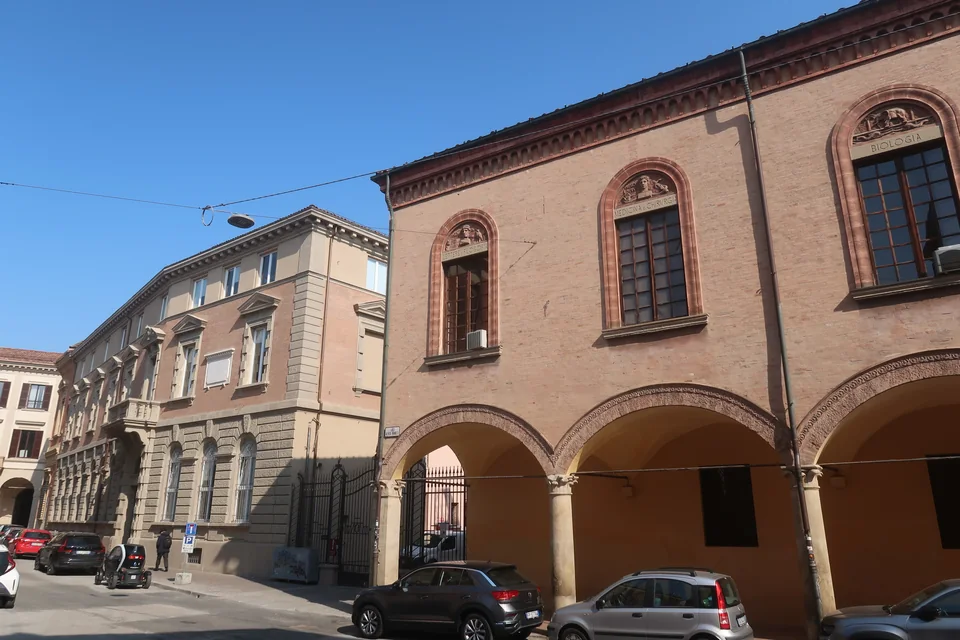
Types of higher education institutions in Italy
| Type | What it is | Examples | What international applicants should check |
|---|---|---|---|
| State university (statale) | Comprehensive university offering bachelor's, master's and doctorates | Bologna, Sapienza, Padua, University of Milan, Pavia | Fees based on income or country; bachelor's mostly in Italian, many master's in English |
| Polytechnic | State university for engineering, architecture and design | Politecnico di Milano, Politecnico di Torino | Entrance tests, strong maths, English more common at master's level |
| Non-state (non statale) university | Private, state-recognised, awards the same national degrees | Bocconi, Cattolica, LUISS, IULM, San Raffaele | Fixed or high fees, own tests and deadlines |
| Scuola superiore | Small, highly selective schools with residential colleges | Scuola Normale Superiore and Sant'Anna (Pisa), IUSS (Pavia) | Competitive entry, often Italian-taught, special admission rules |
| Online (telematica) university | Distance learning | e-Campus, Marconi, Mercatorum | If you want to move to Italy on a student visa, choose an on-campus programme |
| AFAM academy | Fine arts, design, fashion, music, dance | Accademia di Brera, conservatories, authorised private schools such as NABA and IED | Award first- and second-level academic diplomas; portfolio or creative exam required |
| ITS Academy | Non-university technical higher education designed around employers' needs | Regional ITS Academies by sector | No university degree; suits an applied profession rather than an academic path |
Degrees follow the Bologna structure. A laurea triennale is a three-year, 180-credit bachelor's; a laurea magistrale is a two-year, 120-credit master's. Medicine, dentistry, pharmacy, law and architecture are often single-cycle degrees of five or six years (laurea magistrale a ciclo unico). The doctorate is the dottorato di ricerca. Exams are taken in sessions and graded out of 30, with 18 as the minimum pass.
State vs private: a comparison
| Criterion | State | Private |
|---|---|---|
| Fees 2026/27 (examples) | Politecnico di Milano: $179–4,500 (€157.04–3,943.04) a year by ISEE for a standard study plan; Sapienza: $340–1,710 (€300–1,500) by country of residence | Bocconi: $19,400 (€17,000) for year one of a bachelor's or law degree; Cattolica English-taught programmes with family income outside the EU: $10,040 (€8,800) |
| How fees are set | ISEE (Italy's household economic indicator), ISEE parificato for income abroad, or a flat rate by country | A single price or published bands |
| Selection | Test, document review or open access, depending on the programme | Own tests, GPA, interviews, application rounds |
| Language | More Italian at bachelor's level, more English at master's | More English-taught options at every level |
| Funding | Regional DSU grants by income and merit, university scholarships | University funds; DSU under regional rules |
| Degree | National degree | The same national degree if the university is MUR-recognised |
The practical takeaway: a private university does not give you a "better" degree, but it offers more English-taught programmes, predictable calendars and more service. A state university needs more self-reliance but, with the right income documents, costs a fraction.
One master's caveat: at Politecnico di Milano, non-EU quota students admitted to a master's with a foreign bachelor's and no scholarship pay the maximum fee regardless of ISEE. Look for rules like this on each university's fee page.
Where to look by field
Overall rankings narrow the list; you still choose a programme. In QS 2027, Politecnico di Milano ranked 87th, Sapienza 111th and Bologna 123rd. In the QS 2026 subject rankings, Politecnico di Milano placed 20th in the world for engineering and technology, 7th for art and design and 6th for architecture.
| Field | Where to start | Check before applying |
|---|---|---|
| Engineering, IT, architecture | Politecnico di Milano, Politecnico di Torino, Bologna, Padua | Maths background, entrance test, language of instruction |
| Design and fashion | Politecnico di Milano School of Design, AFAM academies, authorised private schools | Portfolio, language, degree recognition; see our guide to design and fashion schools in Italy |
| Economics, finance, management | Bocconi, Cattolica, Ca' Foscari, Bologna | Test or GMAT/GRE, application rounds, private-sector fees |
| Medicine and dentistry | Pavia, University of Milan, Sapienza, Bologna and others | IMAT and the non-EU quota; see medicine in Italy and the IMAT |
| Law, humanities, social sciences | University of Bologna, Sapienza, Padua, University of Milan | Language (often Italian), professional recognition |
| Data science, natural sciences | Padua, Pavia, University of Milan, Pisa | Undergraduate subjects and maths credits |
For a narrow goal, compare three to five programmes, not three to five universities. The same title ("Management", "Design") can hide very different curricula, languages and requirements.
English-taught programmes: where to find them
Most English-taught programmes are at master's level. At bachelor's level the choice is narrower and should be checked school by school. For example, of the five bachelor's programmes at Politecnico di Milano's School of Design for 2026/27, only Interaction Design at the Lecco campus is taught in English; product, interior, communication and fashion design in Milan are taught in Italian.
Private universities (Bocconi, Cattolica, LUISS, John Cabot in Rome) offer more English-taught bachelor's degrees. State universities in large cities are adding more: Sapienza, for example, runs a separate pre-selection for its English-taught bachelor's and master's programmes.
Even on an English-taught programme, you will need Italian for housing, banking, internships and dealing with administration, especially outside Milan and Rome.
Cities and universities
| City | Universities international students often consider | Notes |
|---|---|---|
| Milan | Politecnico di Milano, Bocconi, University of Milan, Milano-Bicocca, Cattolica, design academies | Most English-taught options and internships; most expensive housing. See universities in Milan |
| Rome | Sapienza, Tor Vergata, Roma Tre, LUISS, Campus Bio-Medico, John Cabot | Broad choice, medicine, political science, arts. See universities in Rome |
| Bologna | University of Bologna | Classic student city with tight housing |
| Turin | Politecnico di Torino, University of Turin | Engineering and industry; cheaper housing than Milan |
| Padua, Venice | University of Padua, Ca' Foscari | Sciences, psychology, economics, languages |
| Pavia | University of Pavia, IUSS | Small city, college system, English-taught medicine |
| Pisa, Florence, Naples | University of Pisa and its scuole superiori, University of Florence, Federico II | Sciences, arts, a large southern medical school |
| The south and islands | Messina, Catania, Bari, Cagliari, Vanvitelli in Naples | Housing is usually cheaper than in the north; in English-taught medicine for 2026/27, Messina (61) and Vanvitelli (50) have larger non-EU quotas than Sapienza (13) |
The city shapes your budget as much as the university. For example, Politecnico di Milano's residences charged $3,770–8,840 (€3,300–7,750) per place per year in 2025/26, depending on campus and room type.
How to apply as a non-EU student
- Check you have 12 years of schooling. A laurea requires a secondary qualification after at least 12 years of school. Eleven-year systems need a foundation year or a year of university at home.
- Pick a programme and learn its rules. Each university has its own portal and calendar. Sapienza's 2026/27 pre-selection for non-EU visa applicants ran from 22 December 2025 to 15 May 2026, with a $34 (€30) fee per application and a maximum of two applications. Bocconi admits in rounds.
- Prepare documents. Transcripts and diploma, translations, a CIMEA statement or Dichiarazione di valore where the university asks for it, a language certificate, a motivation letter and, for creative programmes, a portfolio.
- File a Universitaly pre-enrolment. It is compulsory for everyone who needs a visa. From 2026/27 a university may approve no more pre-enrolments than its non-EU places plus 20%.
- Apply for a type D visa. Enrolment visa applications are due by 30 November 2026 for 2026/27 and by 31 October 2027 for 2027/28. The consulate checks funds of at least $11,600 (€10,179.85) a year from lawful, traceable sources, plus housing in Italy.
- Get your residence permit. After arrival you apply for a study permesso di soggiorno.
The university decides on admission, the Italian consulate on the visa, and the regional agency or foundation on grants. An offer letter does not guarantee a visa, and a visa does not guarantee a grant.
What it costs
| University | Who | 2026/27 amount |
|---|---|---|
| Politecnico di Milano | Bachelor's and master's, 46–74 credits a year | $179–4,500 (€157.04–3,943.04) by ISEE; first instalment $1,000 (€880.04), reduced for low ISEE |
| Sapienza | Bachelor's and master's programmes | $340–1,710 (€300–1,500) by country of residence |
| University of Pavia | Non-EU students on the flat rate | $445–5,200 (€390–4,550) by citizenship and subject area |
| Bocconi | First year, bachelor's or law | $19,400 (€17,000) |
| Cattolica | English-taught bachelor's, family income outside the EU | $10,040 (€8,800); about $6,730 (€5,900) with the UCSC International Scholarship |
| LUISS (Rome) | First-year bachelor's, all three instalments | $15,980 (€14,000) plus regional tax |
| John Cabot University (Rome) | Full-time, fall 2026 – spring 2027 | $25,900 (€22,700) tuition |
State universities add a regional right-to-study tax and a $18 (€16) stamp duty. A regional DSU grant can cover fees and part of living costs, but count it only after a formal award.
Grants, working while studying and after graduation
Grants. The main support at state universities is the regional DSU grant (diritto allo studio universitario), awarded on family income and academic merit; it can include a fee waiver, meals and a residence place. There are also university scholarships and the Italian Foreign Ministry (MAECI) scholarships for international students; for 2026/27, applications closed on 26 March 2026. Eligible countries and conditions are set in each year's call.
Working while you study. A study residence permit allows employment of up to 20 hours a week and 1,040 hours a year. More than that requires converting to a work permit. Curricular internships that are part of your programme are allowed.
After graduation. Graduates of an Italian laurea, master's, doctorate or AFAM academic diploma can request a 9–12-month permit to look for work or start a business related to their studies, subject to the income requirements in the immigration law.
Common mistakes
- Choosing by overall rank. A university's table position says little about a specific programme and its language.
- Confusing the website language with the teaching language. An English programme page does not mean English teaching.
- Leaving recognition paperwork late. CIMEA or the consulate can take weeks, and pre-enrolment approvals are capped.
- Budgeting tuition only. Rent in Milan, Rome or Bologna can exceed a year of state-university fees.
- Missing special fee rules. A maximum-fee rule for some international categories can multiply your budget.
- Treating a grant application as visa funds. A DSU application does not replace proof of funds.
StudyU university profiles for Italy
- Politecnico di Milano: engineering, architecture, design
- University of Bologna: comprehensive university with campuses across Emilia-Romagna
- Sapienza University of Rome: large comprehensive university
Our Italy country guide covers the education system as a whole.
FAQ
According to the Ministry's USTAT portal, 100: 69 state and 31 non-state, including 11 online universities. AFAM academies and conservatories operate alongside them.
Rarely entirely. At state universities, fees can fall close to zero for low-income families, and regional DSU grants cover part of the costs. Regional tax, stamp duty and living costs remain.
It depends on the field. In QS 2027, Politecnico di Milano ranks highest (87th), followed by Sapienza (111th) and Bologna (123rd). For economics, applicants often look at Bocconi; for medicine, at universities with English-taught programmes and large non-EU quotas.
Yes, on an English-taught programme. No Italian test applies, but the university checks your English. You will still need Italian for daily life and internships.
No. A MUR-recognised private university awards the same national degree. Fees, selection, calendar and the share of English-taught programmes differ.
About a year ahead. State-university intakes for non-EU applicants often close in spring, and 2027/28 visa applications are due by 31 October 2027.
Yes, for a bachelor's-level laurea. If your school system has 11 years, you need an extra year of study first.
Sources
- USTAT (MUR) — list of Italian universities
- Universitaly — procedures for international students, 2026/27 and 2027/28
- Politecnico di Milano — QS World University Rankings 2027
- Politecnico di Milano — figures and subject rankings
- Il Sole 24 Ore — Italian universities in QS 2027
- Politecnico di Milano — fees 2026/27
- Politecnico di Milano — School of Design call for admission 2026/27
- Sapienza — programmes in English and pre-selection
- Bocconi — bachelor's fees
- LUISS — bachelor's fees 2026/27
- MUR — English-taught medicine places 2026/27 (Table B, Decree 1005)
- Università Cattolica — fees for international students
- University of Pavia — fees for non-EU students
- John Cabot University — tuition 2026/27
- Residenze Polimi — residence rates
- Integrazione Migranti — working on a study permit
- Italian Embassy — MAECI scholarships 2026/27
- Normattiva — Immigration Consolidated Act (Legislative Decree 286/1998), art. 39-bis.1 on post-study job search
Dollar amounts use the ECB reference rate of 23 September 2026 (€1 = $1.1411), rounded.
During the free initial consultation, we clarify your goal, profile, timing, and budget and identify the next realistic step. Apply
