
France has more than 3,500 higher-education institutions. Campus France counts 78 universities and university groupings, about 200 engineering schools, 220 business and management schools, 45 public art schools, 22 architecture schools and around 3,000 private schools and institutes. For an international applicant the choice comes down to three routes. The first is a public university: admission on the basis of your file and, for non-EU students in 2026/27, $3,299 (€2,902) a year for a licence (bachelor's) and $4,490 (€3,950) for a master's unless the university reduces it. The second is a grande école, with competitive entry and higher fees. The third is a private school, whose diploma you need to check for state recognition. Four French institutions are in the QS 2027 top 100 (PSL, Institut Polytechnique de Paris, Sorbonne Université and Paris-Saclay), all in the Paris region; outside Paris, the University of Strasbourg ranks highest in ARWU 2026 (101–150).
This guide explains the types of institution, how to check a diploma, rankings with source and year, costs, admission routes by country of residence and how to choose a city. Dollar figures use the ECB rate of 24 September 2026 (€1 = $1.1367) and are rounded.
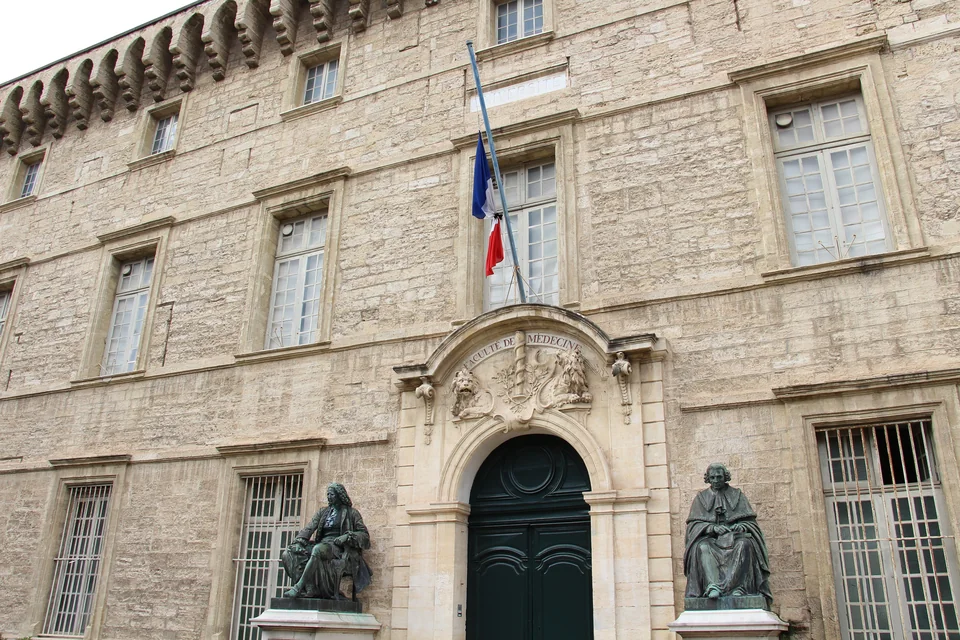
Types of higher-education institution in France
| Type | What it offers | How you get in | Non-EU fee in 2026/27 |
|---|---|---|---|
| Public university (université) | National degrees: licence (3 years), master's (2 years), doctorate | On your file: DAP for first year, then Études en France or Mon Master | Licence $3,299 (€2,902), master's $4,490 (€3,950), or a reduced rate if the university grants one |
| University institute of technology (IUT) | Three-year technology bachelor's (BUT) with lots of practice | Parcoursup, selection on grades | University rate |
| Preparatory classes (CPGE) in lycées | Two years preparing for grande école entrance exams | Parcoursup | Higher rate does not apply with parallel university enrolment |
| Engineering grande école | Engineering degree at master's level approved by the CTI | Competition after CPGE, integrated preparatory cycle or admission on qualifications | Public schools set their own rates; private schools set their own fees |
| Business school (école de commerce) | Grande École programmes, bachelor's, MSc, MBA | Own competition, often interview, GMAT or GRE for master's-level programmes | School's price list; Campus France gives a range of $6,820–20,461 (€6,000–18,000) a year for private institutions |
| Sciences Po and institutes of political studies | Political science, international relations, law, journalism | Own selection | Sciences Po: $16,937 (€14,900) undergraduate and $23,461 (€20,640) master's |
| Écoles normales supérieures (ENS) | Training for researchers and academics | Competition; a separate international selection for foreign applicants | School rules |
| Art and architecture schools | National diplomas in art, design, architecture | Portfolio, creative tests, CampusArt platform | Set by ministries and schools |
| Private specialised schools | Fashion, culinary arts, hospitality, media | Direct application | School's price list |
According to Campus France, 63% of international students study at universities and 20% at grandes écoles. French higher education has about 2.9 million students, 14% of them international.
How to check that a diploma is state-recognised
This is the key question when choosing a private school. Campus France treats the following as state-recognised:
- national university diplomas: BTS, BUT, licence, professional licence, master's, doctorate;
- engineering degrees approved by the CTI, which confer the master's degree;
- business-school diplomas holding a CEFDG visa;
- programmes registered in the national qualifications directory (RNCP);
- specific diplomas in architecture, art and political science carrying a ministry visa.
An unrecognised diploma carries only the school's name. It may be valued on the job market, but you cannot rely on it to continue your studies. Further signals are international accreditations: AACSB and EQUIS (from EFMD) for business schools, EUR-ACE for engineering programmes. EESPIG status ("private institution of public interest") shows that the state recognises the school and oversees its programmes.
In practice, at SKEMA Business School, SCBS (South Champagne Business School), Istituto Marangoni Paris or Le Cordon Bleu Paris, check the specific programme rather than the school as a whole: one school can offer programmes with a visa, RNCP-registered programmes and in-house certificates side by side.
French university rankings 2026–2027
QS World University Rankings 2027 top 100: Université PSL 34th, Institut Polytechnique de Paris =43rd, Sorbonne Université 73rd, Université Paris-Saclay 76th. The next French institutions are much lower: ENS de Lyon =235th, Université Paris 1 Panthéon-Sorbonne =246th, Université Paris Cité =303rd.
ARWU 2026 (Shanghai Ranking). France has 27 institutions in the top 1,000:
| World rank | Institution |
|---|---|
| 13 | Université Paris-Saclay |
| 33 | Université PSL |
| 55 | Sorbonne Université |
| 57 | Université Paris Cité |
| 101–150 | Université de Strasbourg |
| 151–200 | Aix-Marseille Université, Université Grenoble Alpes, Université de Montpellier |
| 201–300 | Université Claude Bernard Lyon 1, Institut Polytechnique de Paris |
| 301–400 | ENS de Lyon, Université Toulouse III – Paul Sabatier, Université de Bordeaux, Université de Lorraine |
| 401–500 | Université Toulouse Capitole, Université de Lille, Université de Rennes |
| 501–600 | Université Côte d'Azur |
THE World University Rankings 2026. 48 French institutions are ranked. The leaders are PSL (48th), Institut Polytechnique de Paris and Paris-Saclay (both =68th), Sorbonne Université (=76th), Université Paris Cité (=190th), ENS de Lyon (301–350) and Grenoble Alpes (351–400), with Montpellier, Bordeaux, IMT Atlantique and Institut Agro in the 401–500 band. Strasbourg and Aix-Marseille do not appear in the final THE 2026 table. The THE 2027 edition is released on 30 September 2026.
How to use these tables: ARWU measures research (publications, citations, prizes), while QS and THE add reputation surveys and international mix, so the same institutions land in different places. For research master's and doctorates, ARWU and subject rankings are more useful; for brand recognition, QS. Business, law and art schools barely register in overall tables even when they lead their field.
The "Bienvenue en France" label. Campus France awards it for five years to institutions that welcome international students well, with good information, housing help, language support and integration services. As of 9 July 2026, 189 institutions held it. It measures service to international students, not research quality.
What studying costs in 2026/27
| Item | EU students and students exempted by the institution | Non-EU students (standard rate) |
|---|---|---|
| Licence year at a public university | $202 (€178) | $3,299 (€2,902) |
| Master's year | $290 (€255) | $4,490 (€3,950) |
| Engineering-cycle year at a public school | $716 (€630); $2,978 (€2,620) at the Écoles Centrales and Mines Nancy | Rate published by the school |
| Doctoral year | $452 (€398) | $452 (€398); the higher rate does not apply |
| Student life contribution (CVEC) | $119 (€105) | $119 (€105) |
Who is automatically outside the higher rate. Doctoral candidates, CPGE students with parallel university enrolment, residents of Quebec, holders of a long-term resident card, students in a French tax household for more than two years, and refugees or beneficiaries of subsidiary protection. French government scholarship holders and students on exchanges with reciprocal fee waivers are fully exempt.
Waivers granted by institutions. Until 2026 many universities cut international students' fees to the national rate. Decree no. 2026-385 of 19 May 2026 changed and limited this practice. Waivers granted for 2025/26, or announced for 2026/27 before the decree, continue until the end of the cycle provided the student stays at the same institution. For example, Université Paris Cité and Université Paris-Saclay kept the national rate for international students in 2026/27. For 2027/28, check your university's decision in spring.
Living costs. The student residence permit requires proof of at least $997 (€877.50) a month. The average student studio in France costs $663 (€583) a month and $1,049 (€923) in Paris (LocService market data, 2026). Since 1 July 2026, a non-EU student holding a student residence permit can receive CAF housing aid (APL or ALS) only with a Crous means-tested grant, a job or a work-study (alternance) contract, so most students from Russia and the CIS no longer qualify. Details are in our guides to costs, student housing and scholarships in France.
Language: French or English
French-taught programmes require an official certificate. Campus France considers B1–B2 desirable for licence and master's studies, especially in humanities and social sciences; B2 is compulsory for first-year entry via DAP, and some programmes require C1 or C2. DELF, DALF, TCF and sometimes TEF are accepted; see our guide to DELF, DALF and TCF.
There are more than 1,600 English-taught programmes, mostly master's degrees, business-school MScs and engineering programmes. Public-university licences are almost all in French.
How to apply: it depends on where you live
| Level | Applicant living in Russia | Applicant living in Kazakhstan or Uzbekistan |
|---|---|---|
| First year of a licence at a public university | DAP via Études en France, up to three universities; 1 November – 15 December 2025 for 2026/27 | DAP via the "white file" at Campus France or the French embassy; in Kazakhstan 1 October – 15 December |
| Licence years 2–3, master's | Études en France; until 30 January 2026 for 2026/27 | Master's via the Mon Master platform; other levels directly with the institution |
| Grandes écoles, business schools, private schools | Direct application to the school, then Études en France for the visa | Direct application to the school |
| CPGE, BUT, BTS | Parcoursup, then Études en France for the visa | Parcoursup |
Études en France is compulsory for residents of 72 countries and territories, including Russia, Armenia, Azerbaijan and Georgia; Kazakhstan and Uzbekistan are not on the list and follow different routes. Public universities do not hold entrance exams as such: decisions are made on the file. See our guides to bachelor's and master's degrees in France, and to the student visa.
Paris or the regions
Every French institution in the QS top 100 is in the Paris region, which also has the highest rents; LocService's tension index ranks Paris as the hardest student rental market in France. For the capital's institutions see our guide to universities in Paris and the profiles of Sorbonne Université, PSL, Paris-Saclay and Sciences Po.
Regional universities award the same national degrees at a lower cost of living:
| City | University (ARWU 2026) | Average student studio (LocService 2026) |
|---|---|---|
| Strasbourg | Université de Strasbourg (101–150) | $659 (€580) |
| Grenoble | Université Grenoble Alpes (151–200) | $571 (€502) |
| Montpellier | Université de Montpellier (151–200) | $631 (€555) |
| Marseille, Aix-en-Provence | Aix-Marseille Université (151–200) | $680 (€598) and $705 (€620) |
| Lyon | Université Claude Bernard Lyon 1 (201–300) | $735 (€647) |
| Toulouse | Université Toulouse III (301–400) | $634 (€558) |
| Bordeaux | Université de Bordeaux (301–400) | $723 (€636) |
| Lille | Université de Lille (401–500) | $623 (€548) |
| Rennes | Université de Rennes (401–500) | $567 (€499) |
On a tight budget, a sensible plan is a strong regional programme first and a move to Paris for a master's or internship later. Check the "Bienvenue en France" label too: in your first year it matters more than a hundred ranking places.
Which type of institution fits your goal
| Goal | Best fit | Alternative |
|---|---|---|
| Low fees, French at B2, academic foundation | Public university | IUT (BUT) if you want practical training |
| Engineering career | Engineering school with a CTI-approved degree | University engineering master's |
| English-taught business | Business school with a CEFDG visa and accreditations | University management master's (for example at an IAE) |
| Politics and international relations | Sciences Po | University law and political-science faculties |
| Fashion, design, culinary arts | Private school with an RNCP-registered programme | Public art schools |
| Science and a route to a doctorate | Paris-Saclay, PSL, Sorbonne Université, Strasbourg, Grenoble | Other research universities in your field |
Common mistakes
- Assuming all French universities are free. The standard non-EU rate is $3,299 (€2,902) for a licence year and $4,490 (€3,950) for a master's year, and waivers are limited after 19 May 2026.
- Not checking a private programme's status. Without CTI, CEFDG or RNCP recognition, the diploma may not allow further study.
- Choosing only by QS. Overall rankings say little about law, business or art.
- Missing DAP. It is the only way into first year at a public university, and it closes in December.
- Mixing up procedures. Russia-based applicants need Études en France; residents of Kazakhstan or Uzbekistan the white file or Mon Master.
- Budgeting with APL. Since 1 July 2026 non-EU students with a student residence permit receive it only with a Crous grant, a job or an alternance contract.
Next step
Decide your level, language and field, then choose the type of institution using the table above. For three to five programmes, check diploma status, fees for your academic year, language and deadlines. Universities decide on admission and on fee waivers under their own rules, and the French consulate decides on the visa; StudyU does not guarantee any of these outcomes. Personal strategy, requirement checks, programme shortlisting, documents and application support are provided under a contract with StudyU. For the wider picture see Study in France.
FAQ
Campus France counts more than 3,500 higher-education institutions, including 78 universities and university groupings, about 200 engineering schools and 220 business and management schools; the rest are art and architecture schools and private institutes.
No. In 2026/27 a non-EU student at a public university pays $3,299 (€2,902) for a licence year and $4,490 (€3,950) for a master's year, plus the $119 (€105) CVEC. Some universities reduce this to the national rate of $202 and $290 (€178 and €255), but such waivers are limited after the decree of 19 May 2026.
In QS 2027: PSL (34th in the world), Institut Polytechnique de Paris (=43rd), Sorbonne Université (73rd) and Paris-Saclay (76th). In ARWU 2026, Paris-Saclay leads France at 13th in the world; outside Paris, Strasbourg, Aix-Marseille, Grenoble and Montpellier rank highest.
A university admits on your file, teaches broadly and costs less. A grande école selects through a competition or its own process, teaches small cohorts with a professional focus and usually costs more. Engineering and business schools award master's-level diplomas.
You can apply for first year via DAP, but each university decides whether your school-leaving certificate qualifies for admission, and French at B2 is required. Private schools and some business schools admit school leavers directly under their own rules.
Public-university fees are the same nationwide; housing differs. The average student studio costs $1,049 (€923) a month in Paris, $659 (€580) in Strasbourg, $571 (€502) in Grenoble and $567 (€499) in Rennes.
For first year via DAP, B2, proven with DELF B2, DALF or the TCF with the written section. For master's programmes the programme sets the level. English-taught programmes do not require a French certificate.
Sources
- Campus France: French higher education, statistics and language requirements
- Campus France: types of institutions
- Campus France: diploma recognition and accreditations
- Campus France: 2026/27 tuition and decree no. 2026-385
- Campus France: CVEC 2026/27
- Campus France: "Bienvenue en France" label, July 2026
- Campus France: application procedures and the Études en France country list
- Campus France Russia: 2026/27 deadlines
- Campus France Kazakhstan: bachelor's and master's admission
- ShanghaiRanking ARWU 2026
- Times Higher Education World University Rankings 2026
- QS World University Rankings 2027: Université PSL
- QS World University Rankings 2027: Université Paris-Saclay
- QS World University Rankings 2027: ENS de Lyon
- Service-Public: APL for international students from 1 July 2026
- Université Paris Cité: 2026/27 waivers and ministry guidance
- Sciences Po: tuition fees 2026/27
- Service-Public: student residence permit and financial requirement
- LocService: student housing prices 2026 (market data)
Official sources and rankings checked on 24 September 2026. ECB rate on 24 September 2026: €1 = $1.1367.
Next steps
- Sorbonne University (Sorbonne Université): Admission, Fees and Programmes
- Université PSL (Paris Sciences et Lettres): Admission, Programmes and Fees
- Université Paris-Saclay: Admission, Programmes and Fees for International Students
- Sciences Po (Paris Institute of Political Studies): Admission, Fees and Scholarships
- SKEMA Business School
- Istituto Marangoni Paris
