
A bachelor's degree in France usually means a Licence: three years at a public university, 180 ECTS credits, taught almost entirely in French. International school leavers can enter the first year directly, without a foundation year and without subject entrance exams, but they need certified French at B2 level and a DAP (demande d'admission préalable, the preliminary application for first-year university entry). Applicants living in one of the 73 countries covered by the Études en France procedure file the DAP on that platform; elsewhere it goes through the local Campus France office or the French embassy. For the 2026/27 intake the DAP window ran from 1 October (1 November in Russia) to 15 December 2025, with three university choices. Non-EU students pay ≈ $3,300 (€2,902) a year for a Licence in 2026/27, plus the compulsory CVEC student levy of ≈ $120 (€105). An English-taught bachelor's is almost always a private school, typically from ≈ $6,810 (€6,000) a year.
This guide covers the types of first-degree programmes, which application route applies to you, documents and translations, the calendar up to September 2027 and the real cost. For a general comparison of Études en France, Parcoursup and direct applications, see our overview of studying in France.
Dollar amounts use the ECB reference rate of 29 September 2026 (€1 = $1.1355).
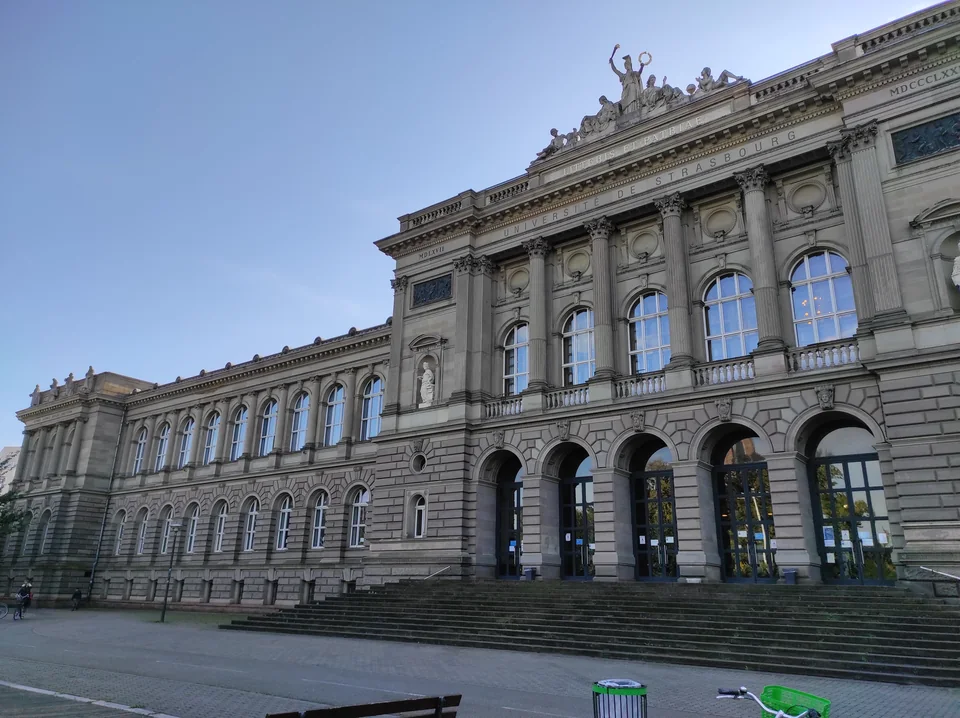
Bachelor's in France at a glance
| Item | Rule or figure | Applies to |
|---|---|---|
| Degree | Licence, 3 years (L1, L2, L3), 180 ECTS | Public universities |
| Entry after school | Foreign secondary school leaving certificates are assessed directly | Each university decides on the file |
| Language | French B2 for first-year DAP entry: DELF B2, DALF C1/C2 or TCF | French-taught programmes |
| Procedure | DAP; inside Études en France in the 73 covered countries | First year of a Licence |
| Application window | 1 October–15 December (2026/27 cycle); 1 November–15 December in Russia | Check your country's Campus France page |
| University answers | By 30 April; you confirm by 31 May | 2026/27 cycle |
| Annual fee | ≈ $3,300 (€2,902) for non-EU students; ≈ $200 (€178) if the university waives the higher rate | 2026/27, institutions under the Ministry of Higher Education |
| CVEC | ≈ $120 (€105) a year | Almost all students |
| Private schools | Typically ≈ $6,810–20,440 (€6,000–18,000) a year or more | Business, design, fashion, hospitality |
| Études en France fee | ≈ $95 (8,000 roubles) | Residents of Russia, 2026/27 cycle; other countries set their own |
Which first-degree programmes exist
"Bachelor's" covers several different things in France. The type determines the procedure, the language, the price and what appears on the diploma.
| Programme | Where | Length | Language | How international applicants apply | Best for |
|---|---|---|---|---|---|
| Licence (general) | Public universities | 3 years | Almost always French | DAP | Students ready to study in French who want a state degree at the lowest price |
| Licence professionnelle | Universities, IUTs | Usually 1 year (third year) | French | Through the standard procedure for your country | Applicants with two years of relevant higher education |
| CPGE (preparatory classes) | Lycées | 2 years | French | Parcoursup | Strong students aiming at engineering and business grandes écoles |
| BTS | Lycées, some universities | 2 years | French | Parcoursup | A short applied qualification |
| Private Bachelor | Business, design, fashion and hospitality schools | 3–4 years | Often English | Directly with the school | Students who need English-taught study and accept private fees |
| Architecture | 20 national schools of architecture | Licence-level cycle of 3 years | French | Separate preliminary application ("yellow file"), two schools, portfolio | Future architects |
A French qualification is state-guaranteed when it is a national degree (Licence, Master), a diploma "visé" by the ministry, or a qualification registered in the national RNCP register. For private Bachelor programmes this must be checked programme by programme: the word "Bachelor" guarantees nothing. If you will later need the diploma for a public master's or for post-study status, ask the school whether the programme carries the "grade de licence" or an RNCP registration and at what level.
Private schools we have profiled include SKEMA Business School, Istituto Marangoni Paris and Le Cordon Bleu Paris. Public universities with strong first-year provision are compared in our guide to universities in France for international students.
Who a French bachelor's suits
It fits if:
- you already have French at B1+ and a year to reach a certified B2;
- your family budget covers ≈ $3,300 (€2,902) in fees plus living costs, but not private-school tuition;
- you can study independently: many lectures in large halls, with much of the planning left to you;
- you want a European degree that leads to a master's in France or elsewhere in the EU.
Look elsewhere if:
- you have no French and do not plan to learn it: English-taught Licence programmes at public universities are rare, which you can verify in Campus France's "Programs taught in English" catalogue by filtering by level;
- you need first-year funding: the flagship government programme, Eiffel, covers only master's and doctoral study;
- you want to stay and work in France straight after the bachelor's: the one-year job-search residence permit is for master's-level graduates and, among first degrees, only for the Licence professionnelle.
Which application route is yours
The route depends on your nationality, where you live and which school leaving qualification you hold.
| Your situation | First-year Licence procedure | Notes |
|---|---|---|
| Non-EU national living in an Études en France country (for example Russia, Armenia, Azerbaijan, Georgia, Turkey, India, China, Brazil, the US or the UK) | DAP inside Études en France: online file, fee, Campus France interview | Campus France Russia states that first-year files go through the platform even for universities not connected to it |
| Foreign national with long-term registration in Russia (work or study) | The same Études en France route through the Russian Campus France offices | Confirmed by Campus France Russia for citizens of other CIS countries |
| Non-EU national living in a country without Études en France (for example Kazakhstan, Uzbekistan or Belarus) | Paper DAP ("white file") through the Campus France office or the cultural service of the French embassy; in Kazakhstan the file goes to the Astana or Almaty office | Visa through France-Visas and the visa centre |
| Holder (or future holder) of the French baccalauréat abroad | Parcoursup, then Études en France for the visa where applicable | Applies to non-EU nationals as well |
| Already living in France with a residence permit | "Green file" directly with the university | Language test taken in France |
| EU, EEA, Swiss, Andorran or Monegasque national | Parcoursup | No visa needed |
| Private school | Direct application to the school; in Études en France countries, the platform is used afterwards for the visa | The school sets its own deadlines |
Campus France Russia is still operating: it has offices in Moscow, St Petersburg, Samara, Yekaterinburg and Novosibirsk, and the file interview takes place online. The office runs the admission procedure only; visas are handled by the French visa centre and the consulate.
Applicants who will be under 18 when classes start need a guardian in France for a long-stay visa. Campus France Russia specifies a French citizen living in the city of study and warns that this visa type can take about 4–6 weeks.
French: an entry threshold, not a preference
For the DAP, language works as the entrance exam. Campus France requires B2. Campus France Russia states that if DELF/DALF or TCF results (including the written part) are not submitted by 27 February, the first-year file is not accepted at all. That was the 2026/27 rule; check the date again once the next calendar is published.
Exempt from the test in the Russian procedure are holders of DELF B2 or DALF C1/C2, candidates with a TEF score of at least 14/20 (valid 12 months), nationals of countries where French is an official language and pupils of the bilingual Franco-Russian school sections on Campus France Russia's list (schools in Moscow, St Petersburg, Yekaterinburg, Novosibirsk, Samara and other cities) who hold an attestation de réussite. Other countries publish their own lists.
Registration for DELF, DALF and TCF sessions at French Institute centres closes well in advance, so book in the autumn, at the same time as you create your file. Humanities and social science programmes often expect more than B2; if a programme says "C1 souhaité", take it seriously. Our guide to the DELF, DALF and TCF exams compares the tests.
Documents for the DAP
The core set for first-year entry:
- a passport with sufficient validity (no translation needed);
- your school leaving certificate with transcript and a certified French translation; if you have not graduated yet, your grade reports for the final years;
- a transcript from any university you already attend;
- a language certificate or test result;
- a motivation letter for each programme;
- a CV.
Details that often cost time:
- Translation rules differ by country. Campus France Russia, for example, asks for notarised translations made in Russia or France and does not require an apostille on translated diplomas for admission.
- Certificates may have short validity. In the Russian procedure, supporting certificates are valid one month, notarised diploma translations indefinitely.
- Terminology matters. Campus France Russia prescribes the equivalents: a Russian school certificate is a "Diplôme de fin d'études secondaires", the final (11th) year is "en dernière 11ème année d'études" (not "terminale"), a gymnasium is a "Lycée" (not "Gymnase"), and grades 5, 4 and 3 are "excellent", "bien" and "satisfaisant". A translation calling the certificate a "baccalauréat" is rejected.
- Apostilles are not needed for admission. Campus France Russia states that certified translations of school and university documents need no apostille; one may be required only for a birth certificate, later, for some administrative steps in France.
The motivation letter is read by the university and, in Études en France countries, discussed at the Campus France interview. Link what you have studied to the specific programme rather than writing about your love of France.
Calendar: the 2026/27 cycle and a plan for September 2027
Published dates for the 2026/27 cycle:
| Step | Dates | Owner |
|---|---|---|
| DAP registration | 1 October–15 December 2025 (Russia: 1 November–15 December) | You; in Russia the Campus France check takes 5–10 working days on average |
| Études en France fee of ≈ $95 (8,000 roubles) in Russia, and Campus France interview | Until 20 and 27 February 2026 in Russia | You, Campus France |
| Language test results | By 27 February 2026 in Russia | You |
| University answers | By 30 April 2026 | Universities |
| Your final choice | By 31 May 2026; no answer counts as a refusal | You |
| Visa application | The window opens 3 months before classes start | French consulate |
The 2027/28 calendar had not been published on 24 September 2026. Campus France offices usually publish it in October, so treat 15 December 2026 as a working deadline until then.
| When | What to do for a September 2027 start |
|---|---|
| September–October 2026 | Choose three programmes, check language and subject requirements, book DELF or TCF |
| October–November 2026 | Order translations, draft motivation letters, create the file as soon as the platform opens |
| By 15 December 2026 | Submit the file, not in the final week |
| January–February 2027 | Pay the fee, attend the interview where required, sit the language test if needed |
| March–April 2027 | Wait for answers; research housing and budget |
| By 31 May 2027 | Confirm one university |
| June–August 2027 | Apply for the visa, arrange housing for the first months |
| September 2027 | Administrative enrolment, CVEC payment before it, online visa validation within three months |
If you miss the first-year deadline, the only option is to write to the university directly and ask whether it will consider you outside the calendar. Even if it agrees, residents of Études en France countries still have to complete the procedure for the visa.
How much a bachelor's in France costs
| Item | 2026/27 amount | Note |
|---|---|---|
| Licence, non-EU student | ≈ $3,300 (€2,902) a year | Differentiated rate |
| Licence at EU rate | ≈ $200 (€178) a year | If the university waives the higher rate |
| CVEC | ≈ $120 (€105) a year | Paid before administrative enrolment |
| Private school | Typically ≈ $6,810–20,440 (€6,000–18,000) a year or more | Set by the school |
| Three-year Licence without a waiver | ≈ $10,240 (€9,021) | 3 × $3,300 (€2,902) + 3 × $120 (€105) |
Since Decree 2026-385 of 19 May 2026, institutional waivers are granted only on the student's request and on the basis of personal circumstances, above all financial resources. They may be full or partial, and the share of waived students is capped: 30% in 2026/27, 25% in 2027/28 and 20% from 2028. Do not budget on ≈ $200 (€178) until the university confirms a waiver in writing. Who pays the higher rate, who is exempt and what living costs look like are covered in our guide to the cost of studying in France.
How Licence study works
L1 and L2 give a broad base in the field; L3 narrows to the specialisation that later determines your master's options. Each semester carries 30 ECTS. Teaching combines lectures in large halls with compulsory small-group classes (TD and TP), and assessment runs through the semester and in end-of-semester exams. Grades use a 20-point scale with 10 as the pass mark. Do not convert them mechanically into your home scale: the scale works differently and high marks are rare in France.
If you have already completed one or two years at a university abroad, you can ask to enter L2 or L3. In Études en France countries this follows the general procedure (30 January in Russia's 2026/27 cycle), not the DAP; the university decides which courses to credit.
What a Licence leads to
- A master's in France. A national Master continues the field of your Licence; see our guide to master's degrees in France.
- A master's elsewhere. 180 ECTS read as a bachelor's across the European system.
- Work during studies. Student status allows up to 964 hours of work a year without a separate permit; see our guide to the French student visa.
- A one-year post-study job-search permit only with a Licence professionnelle or a master's-level degree.
Common mistakes
- Assuming that a university "not connected" to Études en France accepts first-year applications directly.
- Sitting the TCF in February: results may arrive after the 27 February deadline, and the file is then refused.
- Letting a translator call your school certificate a "baccalauréat" or render a top grade as "très bien".
- Budgeting ≈ $200 (€178) instead of ≈ $3,300 (€2,902) without a written waiver.
- Choosing a private "Bachelor" without checking the diploma's status.
- Using only one of the three DAP choices.
- Planning to start before 18 without a guardian in France.
How StudyU helps
Only the initial consultation is free. Programme selection against your school record and language level, requirement checks, an application calendar, document preparation and application support are provided under an agreement with StudyU. Admission decisions are made by the university and visa decisions by the French consulate. For the wider picture, see our overview of studying in France.
FAQ
Yes. A foreign school leaving certificate that gives access to higher education in your country is assessed for first-year Licence entry without a foundation year. You need certified French at B2 and a DAP filed on time; each of your three universities decides separately.
No. The DAP file does not ask for them: the university looks at your school grades, subject profile, motivation letter and French level.
At public universities, only a handful. English-taught bachelor's study in France is mainly offered by private schools in business, design, fashion and hospitality, typically from ≈ $6,810 (€6,000) a year.
In 2026/27 non-EU students pay ≈ $3,300 (€2,902) plus the CVEC of ≈ $120 (€105). A university waiver brings the fee down to ≈ $200 (€178), but waivers are now capped and granted case by case.
Three. Some Campus France offices, for example in Kazakhstan, allow one subject at three universities, three subjects at one university or three at three.
Plan for October–mid-December 2026: in the last cycle DAP files were accepted until 15 December. Campus France offices usually publish the new calendar in October.
No. The DAP exists precisely for applicants with a foreign school leaving qualification. The French baccalauréat route goes through Parcoursup.
Not for a Campus France Russia application: you need a notarised French translation made in Russia or France. An apostille may be needed on your birth certificate after arrival.
Sources
- Campus France: Études en France procedure and DAP calendar — checked 24 Sep 2026
- Campus France: applying from a country without Études en France — checked 24 Sep 2026
- Campus France Russia: applications, 2026/27 deadlines, translation rules, including guide no. 01 for Licence 1 (version of 14 Oct 2025) — checked 24 Sep 2026
- Campus France Russia: visa information and guardians for minors, CIS nationals living in Russia and offices in Russia — checked 24 Sep 2026
- Campus France Kazakhstan: first-year Licence admission — checked 24 Sep 2026
- Campus France: tuition fees 2026/27 — checked 24 Sep 2026
- Ministry of Higher Education: FAQ on differentiated fees and Decree 2026-385 — checked 24 Sep 2026
- Service-Public: tuition and CVEC 2026/27 — checked 24 Sep 2026
- Campus France: LMD system and recognition, types of institutions and language requirements — checked 24 Sep 2026
- Service-Public: post-study job-search permit — checked 24 Sep 2026
- ECB euro reference rates — 29 Sep 2026, €1 = $1.1355
Next steps
- DELF, DALF and TCF: Which French Test You Need to Study in France and Where to Take It
- Master's in France: Master, MSc and Grandes Écoles — How to Apply for 2027
- Cost of Studying in France in 2026/27: Tuition, Compulsory Fees and a Full-Year Budget
- French Student Visa in 2026: VLS-TS, the New Funds Threshold and Validation After Arrival
- Studying in France for international applicants
- Istituto Marangoni Paris
