
Sorbonne Université is a public research university in central Paris with three faculties: Arts and Humanities, Science and Engineering, and Health. Most applicants from outside the EU who live in a country covered by Campus France's "Études en France" (EEF) procedure apply through it. For the 2026/27 intake, the EEF window for most levels ran from 1 November 2025 to 30 January 2026, with first-year files due by 15 December. From 2026/27, new non-EU students are charged the national "differentiated" rate of $3,300 (€2,902) a year for a bachelor's and $4,490 (€3,950) for a master's. However, for 2026/27 the university has adopted a policy to exempt every eligible applicant who requests it, which brings fees back to $200–290 (€178–255). The board will decide again for 2027/28, when the national exemption quota falls from 30% to 25%. Bachelor's teaching is in French at B2 level or above; English is used mainly in master's tracks in the sciences.
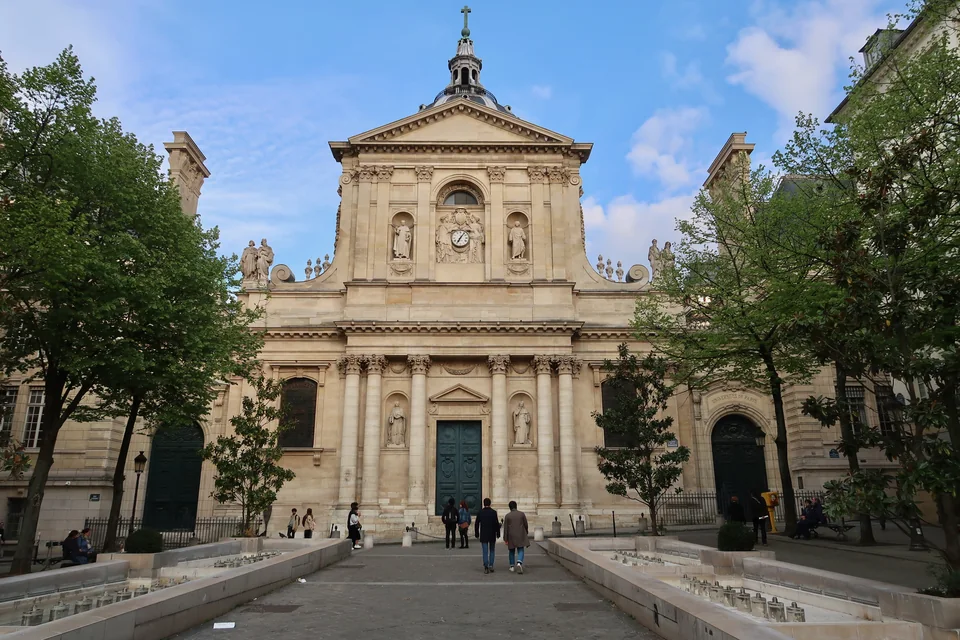
| At a glance | Details |
|---|---|
| Location | Paris (Latin Quarter and other sites); branch campus in Abu Dhabi |
| Status | Public university, created in 2018 by merging two Paris universities |
| Students | About 53,000 |
| Rankings | QS World University Rankings 2027: 73rd; THE 2026: =76th; ARWU 2026: 55th |
| Languages | Bachelor's: French (B2); several master's tracks: English |
| Fees 2026/27 | $200 (€178) bachelor's, $290 (€255) master's; non-EU base rate $3,300 / $4,490 (€2,902 / €3,950), with exemption available |
| Student and Campus Life Contribution (CVEC) | $120 (€105) a year |
| Main route for Russia/Kazakhstan | Campus France (EEF or DAP), plus Mon Master or eCandidat for master's |
Which "Sorbonne" is this?
Several Paris universities use the Sorbonne name. This page covers Sorbonne Université, formed on 1 January 2018 from Université Paris-Sorbonne (Paris IV, humanities) and Université Pierre et Marie Curie (Paris VI, sciences and medicine). The old names "Paris IV" and "UPMC" still appear in agency catalogues, but you cannot apply under them any more: applications, enrolment and degrees are all in the name of Sorbonne Université.
Université Paris 1 Panthéon-Sorbonne, Sorbonne Nouvelle and Sorbonne Paris Nord are separate institutions with their own programmes, calendars and fee policies. Applicants interested in law or economics are often really looking for Paris 1. For a side-by-side view, see our guide to universities in Paris.
Who Sorbonne University suits, and who should look elsewhere
| Strengths | Limits and risks |
|---|---|
| Public fees: a master's costs $290 (€255) a year once an exemption is granted | Without an exemption request, a master's costs $4,490 (€3,950) a year from 2026/27 |
| Strong sciences: mathematics, physics, chemistry, biology, earth sciences | Almost no English-taught bachelor's degrees; French B2 is required |
| English-taught master's tracks in physics, maths, computer science and robotics | Humanities programmes are taught almost entirely in French |
| A predictable national route via Campus France and Mon Master | A strict calendar: first-year files close in mid-December |
| A medical faculty linked to Paris teaching hospitals | International entry to medicine goes through the first-year PASS or LAS route and is demanding |
| Central Paris, major libraries and laboratories | Paris rents dominate the budget; CROUS rooms are limited |
Sorbonne University is a good fit if you can study in French, or if you want a research-based science master's at public-university prices. If you need an English-taught bachelor's, compare Université PSL and the Sciences Po undergraduate college. For engineering, physics or data science master's in the Paris region, compare it with Université Paris-Saclay.
Faculties and programmes: what is taught where
The university has about 53,000 students and 7,100 researchers across three faculties:
- Faculty of Arts and Humanities (the former Paris IV): French and foreign literature, linguistics, history, philosophy, art history, archaeology, musicology, geography.
- Faculty of Science and Engineering (the former Paris VI, main site at Place Jussieu): mathematics, computer science, physics, chemistry, biology, earth and environmental sciences, and the Polytech Sorbonne engineering school.
- Faculty of Health: medicine, pharmacy, dentistry, midwifery and nursing-related programmes.
Sorbonne University recruits into 86 first-year bachelor's programmes through the national system. It also offers internal double degrees (for example, a science and humanities combination) and a double licence with Paris-Panthéon-Assas.
English-taught options
The Faculty of Science and Engineering publishes its own list of English-taught courses, mostly second-year master's (M2) tracks:
- Physics: Paris Physics Master (M1), plus M2 tracks such as International Centre for Fundamental Physics, Quantum Information, Physics of Plasmas and Fusion, and Nuclei, Particles, Astroparticles and Cosmology;
- Mathematics: Learning and Algorithms, Statistics, and Mathematics of Modeling (M2);
- Computer science and engineering: Computer Science – Digital International Program, Automation and Robotics, and Electronics, Electrical Energy and Automation tracks;
- Life sciences and chemistry: Integrative Biology and Physiology, Molecular and Cell Biology, and the Chemistry master's;
- Earth sciences: Earth and Planetary Sciences, Environment – Geosciences-Planetology track.
The first year (M1) is often taught in French even when the second year is in English. Check the language of each year on the programme page.
How to apply from Russia, Kazakhstan or elsewhere outside the EU
First year of a bachelor's (Licence 1)
- Residents of Russia apply through the EEF online file. For the 2026/27 intake the file had to be submitted between 1 November and 15 December 2025. Applicants may list at most three universities. A French test result (DELF B2, DALF, or TCF with written expression) was due by 27 February 2026. After that, you pay the EEF fee and do an online interview with Campus France, which has offices in Moscow, St Petersburg, Samara, Yekaterinburg and Novosibirsk. Universities reply by 30 April.
- Residents of Kazakhstan use the paper "white" preliminary admission request (DAP, demande d'admission préalable). It is submitted between 1 October and 15 December to the Campus France office in Astana or Almaty, together with a TCF-DAP result unless the applicant already holds DELF B2 or DALF.
- Residents of countries without a Campus France EEF office follow the DAP procedure through the French embassy.
Sorbonne's science faculty states a minimum of B2 in French for first-year entry, proven by a certificate recognised by the French higher education ministry (TCF, TEF or DELF). Applicants who will be under 18 when the course starts need a guardian in France to get the long-stay visa, as Campus France Russia makes clear. For the general route, see our guide to bachelor's degrees in France.
Master's (M1 and M2)
Sorbonne University's own admissions page lists three channels: Mon Master for M1, eCandidat for M2, and Études en France for non-EU applicants. For an applicant living in Russia this usually means:
- Choosing the programme in the Mon Master catalogue (M1) or on the faculty site (M2).
- Opening an EEF file during the national window (1 November 2025 to 30 January 2026 for the 2026/27 intake), paying the fee by 20 February and completing the interview by 27 February.
- Submitting on Mon Master or eCandidat as well if the programme page requires it.
- Recording the admission decision in the EEF file. Without this step the visa application will not be processed.
In 2026, Mon Master opened its catalogue on 2 February, took applications between 17 February and 16 March, and sent admission offers on 3–16 June. The 2027 dates are published in winter. For motivation letters and programme choice, see our guide to master's degrees in France.
What dates to expect for 2027/28
| Step | Dates | Who |
|---|---|---|
| EEF file, first year | 1 Nov – 15 Dec 2025 | Licence 1, residents of Russia |
| EEF file, other levels | 1 Nov 2025 – 30 Jan 2026 | L2, L3, M1, M2 |
| EEF fee and interview | by 20 Feb and by 27 Feb 2026 | all EEF applicants |
| Mon Master applications | 17 Feb – 16 Mar 2026 | M1 |
| University replies | by 30 Apr 2026 | all EEF applicants |
| Final choice confirmed | by 31 May 2026 | all EEF applicants |
| Visa application | no earlier than 3 months before the course starts | all |
The 2027/28 dates had not been published when this page was checked. In recent years the windows have moved only slightly, so the 2026/27 calendar is a sound planning guide. Aim to have your language certificate by November and certified translations ready when the file opens.
Which documents and language level you need
Campus France's list for applicants from Russia includes:
- a passport valid for three months beyond the end of the course;
- your school certificate or degree and transcript, with a notarised translation into French (or English for fully English-taught programmes);
- transcripts for every year of university study if you are a student or graduate;
- a CV and a motivation letter in the language of the programme;
- a French certificate (DELF B2, DALF C1/C2 or TCF) or an English certificate for English-taught tracks.
No apostille is needed on the translations. Certified translations of diplomas do not expire, while any official certificate is valid for one month. Translate a Russian bachelor's degree as "Diplôme de Bachelor", not "Baccalauréat", which means a French school-leaving certificate.
For master's programmes the language threshold is set by each programme; humanities tracks usually expect C1 French. To choose between DELF, DALF and TCF, see our guide to French language tests.
How much Sorbonne University costs in 2026/27
| Level | EU students and exempted students | Non-EU base rate |
|---|---|---|
| Bachelor's (licence) | $200 (€178) | $3,300 (€2,902) |
| Master's | $290 (€255) | $4,490 (€3,950) |
| Doctorate | $450 (€398) | $450 (€398) — no differentiated rate |
| Engineering degree | $720 (€630) | school rules |
Students who, on their own or as part of their family's tax household, have lived in France for at least two years are not charged the differentiated rate either. For new students, Decree no. 2026-385 of 19 May 2026 abolished blanket waivers: universities may grant individual exemptions on request to no more than 30% of their non-EU students in 2026/27, 25% in 2027/28 and 20% from 2028. On 7 July 2026, Sorbonne University's governing board adopted its exemption policy. The university says newly arrived non-EU students and those changing programme make up less than 30% of its non-EU students, so it can exempt everyone who applies and meets the approved criteria. The committee considers financial resources, state of health, distance from the family home, family difficulties or social isolation, and disability. The exemption can be full or partial. French Government scholarship holders (including the embassy programme) and students under exemption agreements with partner institutions are exempted automatically, without an application. Apply through the university's student-life support platform under the campaign for exemption from differentiated fees for non-EU nationals. Students enrolled in 2025/26 who continue in the same cycle are not charged the differentiated rate. The governing board sets the policy each year. The 2027/28 policy has not yet been adopted and the quota will be smaller, so keep the full rate in your budget until you have the committee's written decision.
Other compulsory costs:
- the CVEC of $120 (€105), paid before enrolment;
- the $110 (€100) tax when validating your long-stay student visa (VLS-TS) within three months of arrival;
- the EEF fee, the consular fee and the visa centre's service charge, at the rates in force when you apply.
How much money you need for living costs and the visa
Since 1 August 2026, a student visa and residence permit require proof of at least $1,000 (€877.50) a month, about $9,970 (€8,775) for a ten-month academic year. Treat this as the documentary minimum; it is not a realistic Paris budget.
Since 1 July 2026, non-EU students holding a student residence permit can receive the APL or ALS housing allowance only if they hold a CROUS means-tested grant, have a job, or are on an apprenticeship contract. Most new students from outside the EU will not qualify in their first year.
Students may work up to 964 hours a year without a separate work permit, but part-time earnings do not count towards the visa: the money must be in your account beforehand. Master's graduates can apply for a one-year residence permit to look for work or set up a business. Plan how you will pay tuition from Russia before admission and use only lawful bank transfers. For a full budget, see the cost of studying in France.
Which scholarships are realistically available
- French Government scholarship for Russian citizens (master's). It is awarded by the French Embassy in Russia and pays $980 (€860) a month for 2026/27. It also includes a free visa and Campus France procedure, insurance, help with student housing, and exemption from public-university fees.
- France Excellence Eiffel. The university nominates candidates, not the students themselves. The age limit is 29 for master's and 35 for PhD. The 2026 call closed for institutions on 8 January 2026. Russia is on the programme's country list, but the 2027 session rules had not been published as of 24 September 2026; look for Sorbonne's internal deadline on the faculty website. The master's allowance is $1,360 (€1,200) a month (January 2026 rate, as published by Université Paris-Saclay). Check Sorbonne's internal deadline for the 2027 call on the faculty website in autumn.
- Kazakhstan. The Campus France Kazakhstan catalogue lists Bolashak, Abaï-Verne, Eiffel and France–Kazakhstan double-degree programmes.
- Sorbonne University itself. The university has no dedicated merit scholarship for international master's students. What it offers is the fee exemption, the FSDIE student-project fund and emergency social aid.
For other funding routes, see our guide to scholarships in France.
Where Sorbonne students live
- CROUS residences. Submit the student social file (DSE, dossier social étudiant) between 15 January and 31 May. Grant holders get priority; others can try the summer phase for remaining rooms. Campus France's May 2026 benchmarks put a CROUS room or studio in Paris at $340–740 (€300–650) a month.
- Cité internationale universitaire de Paris (CIUP). It has 47 houses and about 7,200 rooms. It is open to students from master's level (bac+4) upwards; applications for September should be completed by April.
- Sorbonne University's accommodation platform. It lists student residences, private rooms and shared flats.
- The private market. A private student residence in Paris costs $630–1,020 (€550–900) a month and a studio from a private landlord $630–1,480 (€550–1,300); a Navigo transport pass is $100 (€90.80). The free Visale guarantee, generally for under-30s, replaces a French guarantor.
See also student housing in France.
Where Sorbonne University stands in the rankings
| Ranking | Position |
|---|---|
| QS World University Rankings 2027 | 73 |
| THE World University Rankings 2026 | =76 |
| ARWU (Shanghai) 2026 | 55 |
Sorbonne University is in the global top 100 in all three tables. In ARWU, Paris-Saclay (13th) and PSL (33rd) rank above it among French institutions. For a master's, the lab behind the M2 track and its internship matter more than the overall rank.
Mistakes to avoid
- Confusing Sorbonne Université with Paris 1 Panthéon-Sorbonne. They are different universities with different programmes and fee rules.
- Planning a spring application. First-year files close in mid-December and master's files at the end of January.
- Not requesting the fee exemption. Without it, a master's costs $4,490 (€3,950) from 2026/27 instead of $290 (€255).
- Assuming the whole programme is in English. The first year is often taught in French.
- Counting on APL. Since July 2026, a non-EU student without a CROUS grant or a job does not receive housing aid.
- Translating your degree as "Baccalauréat". The correct term is "Diplôme de Bachelor".
FAQ
Can I apply with 11 years of school?
Yes. Campus France Russia accepts first-year applications from graduates of Russian schools, lyceums and colleges without an extra year. You need French at B2 level and must submit the file by mid-December.
How much does Sorbonne University cost for non-EU students?
In 2026/27 the base rate is $3,300 (€2,902) a year for a bachelor's and $4,490 (€3,950) for a master's. With an approved exemption it falls to $200 (€178) and $290 (€255). That is Sorbonne's policy for 2026/27; the board will set the 2027/28 policy separately. The CVEC of $120 (€105) is added on top.
Are there programmes in English?
Yes, mainly master's tracks in the Faculty of Science and Engineering. Bachelor's degrees and humanities master's programmes are taught in French.
Do I still need Campus France if I apply directly?
If you live in a country covered by the EEF procedure, such as Russia, you need to complete it before the consulate will process a long-stay student visa.
What level of French do I need for a bachelor's?
At least B2: DELF B2, DALF C1/C2 or TCF. Holders of DELF B2 or DALF are exempt from a separate test for first-year entry.
Can I study for free?
Only with a French Government scholarship, which waives fees and covers part of your living costs. The fee exemption lowers tuition to the national rate, not to zero.
Can StudyU help me apply?
Under a service agreement, we shortlist programmes, check requirements, prepare documents and the EEF file, and support the visa stage. The university decides on admission, the French consulate on the visa, and the embassy or foundation on scholarships.
Sources
- Sorbonne University: enrolment procedures and tuition fees 2026/27
- Sorbonne University: exemption policy for 2026/27
- Master's applications (FR)
- Faculty of Science and Engineering: L1 admissions, master's calendar, courses taught in English
- Campus France: tuition fees 2026/27
- Campus France Russia: application procedure and deadlines
- Campus France Kazakhstan: admission
- Service-public.fr: student residence permit and APL rules
- Ministry FAQ on Decree 2026-385 on exemptions
- Campus France: Eiffel programme and Eiffel 2026 rates (Université Paris-Saclay)
- Campus France: student cost of living, May 2026, Campus France offices in Russia and embassy scholarships
- Service-public.fr: working while studying and post-master's job-search permit
- Sorbonne University: about us, history (created 1 January 2018) and housing
- QS, THE, ARWU 2026
- CIUP: accommodation
- Dollar amounts use the ECB rate of 24 September 2026 (€1 = $1.1367), rounded to $10.
For an overview of the French system, see Study in France. Help deciding whether Sorbonne University fits your plans is provided under an agreement with StudyU; to start, send us a request.
During the free initial consultation, we clarify your goal, profile, timing, and budget and identify the next realistic step.
Next steps
- Bachelor's in France: Licence, Private Bachelor Programmes and Admission After School
- DELF, DALF and TCF: Which French Test You Need to Study in France and Where to Take It
- Master's in France: Master, MSc and Grandes Écoles — How to Apply for 2027
- Scholarships in France: Eiffel, French Embassy Scholarships and University Awards
- Studying in France for international applicants
- Cost of Studying in France in 2026/27: Tuition, Compulsory Fees and a Full-Year Budget
