
Austria has 23 public universities (per the federal ministry's list), 21 universities of applied sciences and around 20 private universities. For non-EU citizens a public university costs $826 (€726.72) per semester plus a $30 (€26.20) students' union fee, whatever the subject or city. Bachelor's programmes there are taught almost entirely in German; English-taught options concentrate in master's programmes, universities of applied sciences and the private sector. The largest institution is the University of Vienna; engineering centres on TU Wien, TU Graz and Leoben; business on WU in Vienna; medicine on three medical universities and the medical faculty in Linz. Choose in this order: field, language, city, admission route.
Four sectors
| Sector | Number | Fee for non-EU citizens | Admission | Language |
|---|---|---|---|---|
| Public universities | 23 | $826 (€726.72)/semester + ÖH fee | Document review; entrance test once a year for some programmes | Bachelor's mostly German |
| Universities of applied sciences | 21 | Set by institution; FH Technikum Wien $3,410 (€3,000) | Competitive selection per programme | German; about 80 programmes fully in English |
| Private universities | about 20 | Set by institution; Modul University $10,230 (€9,000)/semester for bachelor's | Own selection | Often English |
| University colleges of teacher education | — | — | Teacher training, German required | German |
Public universities at a glance
Founding years and student numbers are taken from OeAD's Study in Austria institution profiles.
| University | City | Profile | Founded / students | StudyU profile |
|---|---|---|---|---|
| University of Vienna | Vienna | Comprehensive; 180+ programmes | 1365 / 85,000+ | Profile |
| TU Wien | Vienna | Engineering, informatics, architecture, physics, chemistry | 1815 / about 26,000 | Profile |
| WU Vienna | Vienna | Business, economics, business law; AACSB, EQUIS, AMBA | 1898 / about 22,000 | Profile |
| Medical University of Vienna | Vienna | Medicine, dentistry, master's and PhD | Faculty since 1365, independent since 2004 / about 8,000 | — |
| BOKU | Vienna | Agriculture, forestry, biotechnology, food, environment | 1872 / about 10,500 | — |
| University of Veterinary Medicine | Vienna | Veterinary medicine; some English master's | 1765 / about 2,500 | — |
| University of Graz | Graz | Second oldest and largest; NAWI Graz joint science programmes with TU Graz | 1585 / about 30,000 | Profile |
| TU Graz | Graz | Engineering, computer science, architecture; 20 of 36 master's in English | 1811 / about 13,700 | Profile |
| University of Innsbruck | Innsbruck | 16 faculties; 49.9% international students | 1669 / about 28,000 | Profile |
| Johannes Kepler University (JKU) | Linz | Law, business, engineering, computing, medicine; about 100 programmes | 1966 / about 24,000 | Profile |
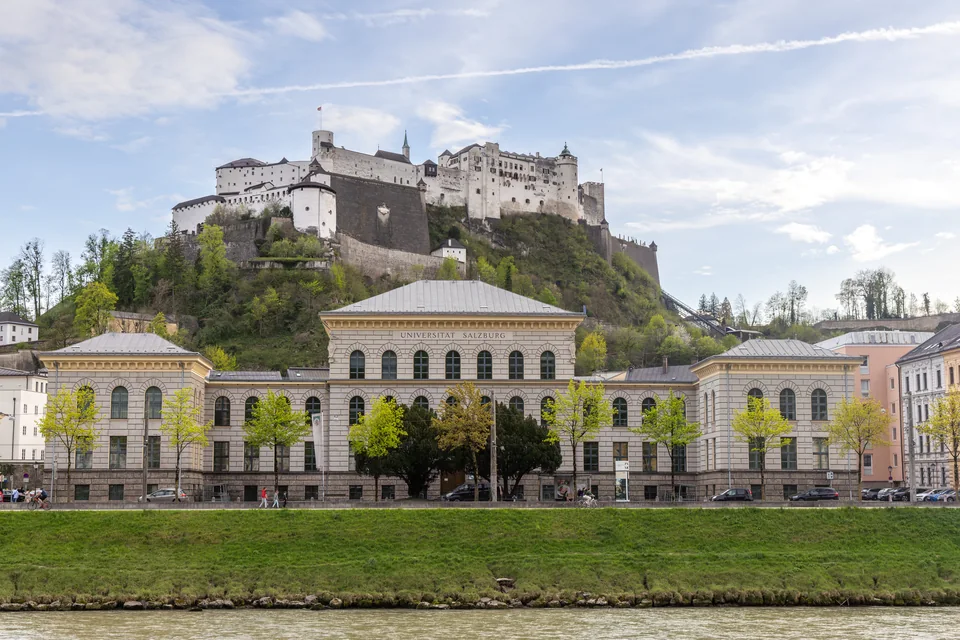
| University of Salzburg | Salzburg | 34 bachelor's, 40 master's, some fully in English | 1622 / about 18,000 | — |
| University of Klagenfurt | Klagenfurt | Business, technical sciences, media; English bachelor's | 1970 / about 13,300 | — |
| Montanuniversität Leoben | Leoben | Mining, metallurgy, materials, energy, recycling | 1840 / about 3,000 | — |
The list also includes the medical universities of Graz and Innsbruck, six universities of the arts, the University for Continuing Education Krems and the new IT:U in Linz.
Choosing by field
| Field | Where to look first | Watch out for |
|---|---|---|
| Engineering, computing | TU Wien, TU Graz, JKU, Leoben | Maths/physics exams often prescribed for 11-year certificates; TU Wien computer science has selection |
| Business, economics | WU, JKU, Innsbruck, Klagenfurt | WU's English BBE: 240 places, spring selection |
| Medicine, dentistry | Medical universities of Vienna, Graz, Innsbruck; JKU (medicine only) | MedAT; up to 5% of medicine places for non-EU applicants |
| Natural sciences | University of Vienna, Graz (NAWI Graz), Innsbruck, Salzburg | Entrance tests for biology and chemistry in Vienna |
| Humanities, social sciences, law | University of Vienna, Graz, Innsbruck, Salzburg | Latin for some programmes |
| Agriculture, biotech, environment | BOKU | Many master's programmes |
| Arts, music | Angewandte, mdw, Academy of Fine Arts, Mozarteum, KUG | Artistic entrance exams with their own dates |
| Applied professions | Universities of applied sciences | Selection, early deadlines, higher non-EU fees |
See also studying medicine in Austria.
English-taught options
Confirmed English-taught bachelor's options include the University of Vienna's International Legal Studies and Mathematical Foundations of Data Science; WU's Business and Economics (240 places for 2026/27); and Klagenfurt's International Business and Economics, Robotics and Artificial Intelligence, Worlds of English, and Digital Media, Culture, and Communication. At master's level, TU Wien teaches 19 of 32 programmes in English and TU Graz 20 of 36, Salzburg offers several, and Leoben and the Veterinary University run international master's programmes. Search all 2,500+ programmes on studienwahl.at.
Choosing a city
Tuition and the residence-permit minimum are the same everywhere; only housing differs, and OeAD notes Vienna is more expensive (average student costs about $1,478, or €1,300, a month). Vienna offers the widest choice and the VWU preparation programme (universities in Vienna); Graz has two strong universities and its own preparation programme (VGUH); Innsbruck is highly international; Linz has law, business, engineering and medicine on one campus; Salzburg, Klagenfurt and Leoben are smaller. Budget details: cost of studying in Austria.
Universities of applied sciences
Practice-oriented programmes with compulsory internships, small cohorts and selection for every programme. Deadlines are early — FH Technikum Wien takes non-EU applications for 2027/28 until 31 March 2027 (EU: 31 May) — and third-country fees can be higher, e.g. $3,410 (€3,000) per semester plus a $284 (€250) deposit there.
By province, the Study in Austria catalogue lists: Vienna — FH Technikum Wien, Hochschule Campus Wien, FHWien der WKW, FH BFI Wien, Lauder Business School; Lower Austria — IMC Krems, USTP St. Pölten, FH Wiener Neustadt; Styria — FH JOANNEUM, CAMPUS 02; Upper Austria — FH Upper Austria and FH for Health Professions Upper Austria; Tyrol — MCI Innsbruck, FH Kufstein, fh gesundheit Tirol; plus FH Salzburg, FH Carinthia, FH Vorarlberg, FH Burgenland, the distance-learning FERNFH and the military academy in Wiener Neustadt.
Private universities
Accredited private universities award recognised degrees and set their own fees; an accredited programme qualifies for the student residence permit. Examples from the Study in Austria catalogue include Modul University Vienna, Webster Vienna Private University, Sigmund Freud University and private medical universities in Salzburg and Krems. Central European University (CEU) in Vienna is also listed; note that it is designated an "undesirable organisation" in Russia, which matters for Russian citizens.
Narrowing the list to two or three applications
- Filter by language: without a path to German C1, only English-taught programmes remain.
- Check the admission procedure: a once-a-year test, applied-university selection or a document review determines which semester you can make.
- Estimate which supplementary exams an 11-year certificate is likely to trigger; science and engineering programmes usually prescribe more.
- Compare cities by rent, not tuition.
- Keep a fallback with a different procedure, e.g. a document-review programme alongside a test-based one.
We do not list ranking positions: they change yearly and differ by subject. OeAD states that full-degree scholarships in Austria are rare; other funding is searchable on grants.at.
Admission differences
Common rules — direct application, A2 to apply and C1 to enrol in German-taught programmes, supplementary exams for 11-year certificates — apply everywhere, but details differ: the University of Vienna closes its non-EU window early, TU Wien takes paper applications by post and requires national exam results for some countries, and WU and the University of Vienna run entrance tests once a year. See applying to universities in Austria.
Common mistakes
- Choosing by ranking without checking the programme's language and entrance test.
- Expecting lower tuition outside Vienna.
- Looking for English bachelor's programmes at TU Wien, which says its bachelor's programmes are generally taught in German.
- Applying to universities of applied sciences in summer after non-EU deadlines have passed.
- Comparing private and public prices at face value.
FAQ
23 on the federal ministry's list, including medical and arts universities, the University for Continuing Education Krems and IT:U in Linz.
It depends on the field: TU Wien and TU Graz for engineering, WU for business, the University of Vienna and University of Graz for breadth. Compare specific programmes rather than overall rankings.
At bachelor's level in a limited number of programmes; at master's level the choice is much wider.
Public tuition is identical nationwide; housing is usually cheaper outside Vienna.
For most public bachelor's programmes: A2 to apply and C1 to enrol. English-taught programmes usually do not require German.
Under a service agreement we match your certificate, language and budget to programmes, check requirements and deadlines and prepare documents. Universities make admission decisions.
Sources
- Federal ministry (BMFWF): list of universities — checked 24 Sep 2026
- Study in Austria (OeAD): universities, universities of applied sciences, private universities, institution profiles for Vienna, TU Wien, WU, Graz, TU Graz, Innsbruck, JKU, Klagenfurt, Salzburg, Leoben — checked 24 Sep 2026
- Study in Austria: find your programme, living costs, scholarships — checked 24 Sep 2026
- University of Vienna: fees, bachelor's programmes; TU Wien: bachelor's, master's — checked 24 Sep 2026
- WU: BBE; FH Technikum Wien: deadlines, fees; Modul University: fees — checked 24 Sep 2026
- MedAT: places and quotas — checked 24 Sep 2026
- Conversion: ECB rate of 24 Sep 2026, €1 = $1.1367
Next steps
- Studying Medicine in Austria as an International Student: MedAT, the 5% Quota, German C1 and the Preparation Year
- Applying to Universities in Austria: Deadlines, Documents, Supplementary Exams and the Residence Permit
- Cost of Studying in Austria in 2026/27: Tuition, the Preparation Year and Living Costs
- Universities in Vienna for International Students: Public Universities, Universities of Applied Sciences and Private Options
- TU Wien (Vienna University of Technology)
- University of Vienna (Universität Wien)
