
Johannes Kepler University Linz (JKU), founded in 1966, has about 27,000 students and sits in the 401–500 band of the THE World University Rankings 2026. Of the universities in Graz, Innsbruck and Linz, it is the only one where you can take a whole bachelor's in English — in artificial intelligence, chemistry or international business, and from autumn 2027, if the Senate approves it, in quantum science. Non-EU students pay $826 (€726.72) per semester plus the $30 (€26.20) ÖH student union fee. Watch the calendar: non-EU applicants apply for the winter semester from 6 February to 31 March, and the window for summer 2027 is open now, until 31 October 2026.
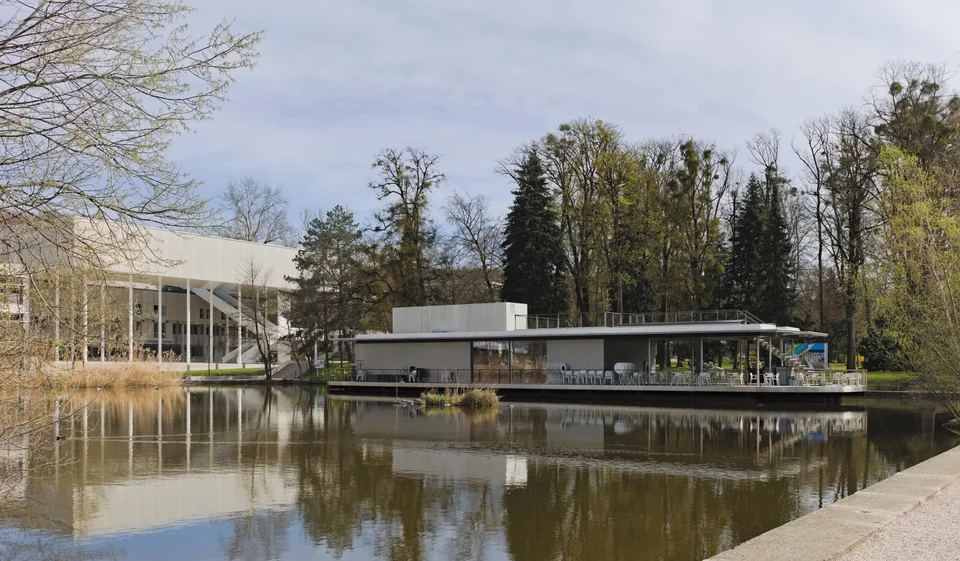
| At a glance | Details |
|---|---|
| City | Linz, capital of Upper Austria |
| Founded | 1966 |
| Students | about 27,000; over 21% international, from 120+ countries |
| Structure | 4 faculties (Social Sciences, Economics and Business; Law; Engineering and Natural Sciences; Medicine) and 6 schools |
| Ranking | THE World University Rankings 2026: 401–500 (Business and Economics 151–175, Psychology 176–200) |
| Non-EU tuition | $826 (€726.72) per semester + $30 (€26.20) ÖH fee |
| English-taught programmes | 4 bachelor's (2 more from 2027/28) and 20+ master's; 1,800+ English-taught courses a year |
| German | B2 or C1 depending on the programme; at least A2 to apply |
| Non-EU deadlines | winter semester 6 February – 31 March; summer semester 6 September – 31 October |
| How to apply | online via MyAdmission, personally and free of charge |
Who JKU suits
JKU is a young research university focused on technology, business and law. Most institutes sit together on the Auhof campus — unusual in Austria, as the university points out — while the Faculty of Medicine has its own JKU MED campus. THE 2026 subject tables show its strengths: business and economics 151–175, psychology 176–200, computer science and education 201–250.
| A good fit if you… | Consider alternatives if you… |
|---|---|
| want an English-taught bachelor's in AI, chemistry or business | want to study medicine in English — medicine is taught in German (C1) with an entrance exam |
| are a technically minded applicant with B2 German: many technical programmes do not require C1 | plan to apply in summer — the non-EU window for winter closes on 31 March |
| want a master's in economics, analytics, statistics, maths, physics or polymers | want a big-city experience — Linz is much smaller than Vienna |
| want to live near campus: about 3,000 hall places nearby | want an English-taught mechanical or mechatronics master's — JKU teaches these in German |
For comparison, TU Graz teaches all bachelor's in German but offers more English-taught engineering master's; if you want B2 German to be enough for humanities too, see the University of Innsbruck.
Programmes and languages
JKU lists the language and required level on each programme page. Summary of the catalogue as of September 2026:
English-taught bachelor's
| Programme | English level | Notes |
|---|---|---|
| Artificial Intelligence | B2 | no German needed for the English track |
| Quantum Science and Technology | B2 | planned start autumn 2027, still subject to approval by the JKU Senate |
| Chemistry and Chemical Technology | B2 | — |
| Biological Chemistry | B2 | joint programme with the University of South Bohemia: the second year is spent in České Budějovice, and graduates receive two degrees |
| International Business Administration | C1 | admission procedure, a mandatory second foreign language from B1 and a semester abroad |
| Transformation Studies (Art x Science) | B2 | joint programme with the University of Applied Arts Vienna, taught in Vienna and Linz; first intake in 2027/28 |
English-taught master's
- Computing and data: Artificial Intelligence, Computer Science, Statistics and Data Science, Economic and Business Analytics, Computational Mathematics, Industrial Mathematics.
- Economics and management: Economics, Management (C1), Global Business (C1), Leadership and Innovation in Organizations (C1), General Management Austria–France (C1 plus French B1) and Austria–Taiwan (C1), Comparative Social Policy and Welfare (C1).
- Science and engineering: Physics, Molecular Biology, Biological Chemistry, Chemistry and Chemical Technology, Polymer Engineering and Science, Management in Chemical Technologies, Sustainability and Plastics Management, Digital Energy Solutions.
- German or English: Business Informatics, Biophysics.
Most English-taught master's require B2 (e.g. IELTS 6.5); those marked C1 need IELTS 7.0.
German-taught programmes: B2 or C1
Many technical programmes accept B2 German: the Computer Science bachelor's (with some English courses), Mechatronics, Mechanical Engineering, Electronics and Information Technology, Technical Mathematics, Technical Physics, Statistics and Data Science, Business Informatics, Polymer Engineering and Cultural Studies. C1 is required for business, law, sociology and medicine: Business Administration, Business and Economics, Social Economics, Sociology, Law, Human Medicine and the Psychology master's. Teacher education depends on the subjects.
How to apply
What you need
- Passport showing photo, signature and gender.
- School-leaving certificate with all subjects and grades; for master's, your degree and transcript.
- National entrance exam results, if required for certificates from your country — for example Russia's Unified State Exam (EGE) or Kazakhstan's UNT; JKU decides based on the issuing country.
- Proof of previous university study, if any: semester transcripts or a degree.
- Language certificate at the required level.
- Photo in JPEG for your JKU Card.
Documents are uploaded as PDFs in MyAdmission. If your certificate is not equivalent to the Austrian Matura, your admission decision lists supplementary exams (Ergänzungsprüfungen); JKU offers them in German, chemistry, history, mathematics and physics.
Process
- Create an applicant (guest) account on the JKU website.
- Log in to MyAdmission, choose your programme and upload documents.
- Submit within your window — late applications cannot be considered for that semester.
- Wait for the decision; processing takes several months, which is why non-EU applicants must apply six months before the start of studies.
- After admission, pay the ÖH fee and tuition to complete enrolment. JKU exempts only holders of Austrian, German, South Tyrolean and Liechtenstein certificates from appearing in person, so plan a trip to Linz to enrol with an international certificate.
JKU is explicit: applications must be submitted by applicants themselves and are free. Applications from agencies or intermediaries are unlawful and will not be processed.
Application deadlines
| Start of studies | Non-EU nationals, stateless persons and non-equivalent third-country nationals | For comparison: EU/EEA citizens |
|---|---|---|
| Summer semester 2027 (March) | 6 September – 31 October 2026 | early January – 5 February 2027 |
| Winter semester 2027/28 (October) | 6 February – 31 March 2027 | early July – 5 September 2027 |
The same deadlines apply to bachelor's and master's. JKU recommends applying at the start of the window so you have time for your residence permit. To start in October 2027, have your apostilled, translated documents and language certificate ready by February.
Language requirements
German. To apply for a German-taught programme you need at least A2 (ÖSD, Goethe, telc, ÖIF, DTÖ, DSD I, DSH-1, TestDaF or the JKU A2.2 course). To enrol, you need B2 or C1 depending on the programme:
- B2: ÖSD B2, Goethe B2, telc B2, ÖIF B2, DSH-1, DSD II, TestDaF with TDN 3 in all parts, or the German exam of an Austrian preparatory programme;
- C1: ÖSD C1, Goethe C1, telc C1 Hochschule, ÖIF C1, DSH-2, DSD II at C1, TestDaF with TDN 5 in all parts, or the C1 German exam of a preparatory programme.
Certificates must be no older than two years at the time of application. See our overview of German language tests.
English. Certificates must be no older than two years and, ideally, digitally verifiable:
| Level | TOEFL iBT | IELTS Academic | PTE Academic | Cambridge |
|---|---|---|---|---|
| B2 | 88 (at least 22 per section) or 4.5 on the scale used from January 2026 | 6.5, at least 6.5 in each skill | 70, at least 70 in each skill | B2 First Grade B or C1 Advanced Grade C |
| C1 | 100 (at least 25 per section) or 5 on the new scale | 7.0, at least 7.0 in each skill | 80, at least 80 in each skill | C1 Advanced Grade B, C2 Proficiency Grade C |
JKU checks every section, not just the overall score: an IELTS 6.5 with 6.0 in writing does not meet B2.
JKU's preparatory programme
If your German is below the required level or you have supplementary exams, you study in JKU's pre-study programme (Vorstudienlehrgang) as a non-degree student after admission.
- German: three sequential modules — B1, B2 and C1 — one per semester. Each module has three courses: the main course (8 hours a week, $682 or €600), grammar ($171 or €150) and text production ($171 or €150), totalling $1,023 (€900) per module. You must pass all three to move up. B1 to B2 takes two semesters ($2,046 or €1,800); B1 to C1 takes three ($3,069 or €2,700). The German course is compulsory if you have been assigned the German exam.
- Chemistry, physics, mathematics, history: take a fee-based preparation course (passing it counts as the exam) or sit the exam free of charge after self-study. Course places are limited.
- Registration for German courses for winter 2026/27 ran from 9 to 25 September 2026 in KUSSS; your place is confirmed only once you pay online.
- Other costs: the ÖH fee every semester. According to JKU's FAQ, pre-study students pay the ÖH fee and course fees.
While in the pre-study programme you cannot take degree courses, with one exception in Gender Studies. To compare with Graz and Innsbruck, see our guide to the Vorstudienlehrgang.
Costs
Fees paid to the university
| Item | Per semester | Per year |
|---|---|---|
| Tuition fee for third-country nationals | $826 (€726.72) | $1,652 (€1,453.44) |
| ÖH fee (from winter 2026/27) | $30 (€26.20) | $60 (€52.40) |
| Total on a degree programme | $856 (€752.92) | $1,712 (€1,505.84) |
| Pre-study programme: one German module plus ÖH | $1,053 (€926.20) | $2,106 (€1,852.40) |
Tuition is due from the first semester and is the same for every level and programme. EU/EEA citizens within the standard duration do not pay it; for third-country nationals JKU mentions only limited exceptions, assessed individually.
Living costs and proof of funds
The 2025 Austrian Student Social Survey, quoted by TU Graz, puts average student spending at about $1,478 (€1,300) a month, including $565 (€497) on housing. For a student residence permit in 2026 you must prove funds for 12 months:
| Item | Under 24 | 24 and over |
|---|---|---|
| Living costs per month | $821 (€722.58) | $1,487 (€1,308.39) |
| Living costs per year | $9,856 (€8,670.96) | $17,847 (€15,700.68) |
| ÖGK insurance per year | $1,075 (€946.08) | $1,075 (€946.08) |
| Residence permit fee | $248 (€218) | $248 (€218) |
| Tuition and ÖH per year | $1,712 (€1,505.84) | $1,712 (€1,505.84) |
| Minimum first-year total | about $12,891 | about $20,882 |
If your rent exceeds $439 (€386.43) a month, the amount to prove rises by the difference. In a pre-study year, replace tuition with the cost of German modules.
Scholarships. JKU points applicants to the OeAD grants.at database and its own scholarships page. Merit scholarships under Austria's Student Support Act (StudFG) are aimed at Austrian and EEA nationals, so non-EEA students should look to external and home-country funding. With a student residence permit you may work up to 20 hours a week; the employer obtains the permit from the AMS.
Housing
According to JKU, student halls near the campus offer about 3,000 places, with more in central Linz. Nearby options include Johannes Kepler Heim, WIST Barbara and the Franz Jägerstätter hall (KHG). OeAD Housing's Linz residences are reserved for OeAD scholarship holders. Shared flats and apartments are advertised on the ÖH JKU housing exchange, the ÖH notice board and Willhaben. The university does not allocate housing — finding it is your responsibility.
Residence permit and programmes with a mandatory stay abroad
Stays longer than six months need the "Aufenthaltsbewilligung – Student" permit, lodged in person at the Austrian embassy or consulate responsible for your place of residence, not at a visa centre. The Linz authorities decide within up to 90 days. To renew it, you must show at least 16 ECTS or 8 semester hours per academic year, even if you started in the summer semester.
If your programme requires study in another EU country (for example the Biological Chemistry bachelor's), JKU recommends the residence permit for students on mobility programmes, which can be issued for two years. See our guide to the student visa and residence permit in Austria.
Pros and cons for non-EU applicants
| Pros | Cons |
|---|---|
| English-taught bachelor's in AI, chemistry and international business | Early deadline: 31 March for the winter semester |
| B2 German is enough for many technical programmes | Business and law programmes require C1 |
| 20+ English-taught master's, mostly at B2 | Strict per-section thresholds for IELTS and TOEFL |
| Compact campus with about 3,000 hall places nearby | German preparatory courses cost $1,023 per module |
| Free online application, no intermediaries | Linz is smaller than Vienna, with fewer part-time jobs and internships |
Fees are paid to an Austrian account, and the account for proof of funds must be in your name and accessible from Austria, so plan a legal payment route from your country early. An adviser can help you prepare, but the account and submission must be yours.
Mistakes to avoid
- Planning to apply in summer. For non-EU applicants, winter 2027/28 applications run 6 February – 31 March 2027; the 5 September deadline is for EU citizens.
- Looking only at the overall IELTS score. B2 means 6.5 in every skill.
- Assuming B2 is enough everywhere. Business Administration, Business and Economics, Law and Medicine require C1.
- Leaving out entrance exam results. Where your country's exam is required, your application is incomplete without it.
- Missing German course registration. It lasts about two weeks in September, and places go in order of payment.
FAQ
How much does JKU cost for non-EU students?
$826 (€726.72) per semester plus the $30 (€26.20) ÖH fee — about $1,712 (€1,505.84) a year on any programme. In the pre-study programme you pay German modules at $1,023 (€900) per semester plus ÖH instead.
Can I study at JKU in English without German?
Yes. The bachelor's programmes in Artificial Intelligence, Chemistry and Chemical Technology, Biological Chemistry and International Business Administration (plus Quantum Science and Technology from autumn 2027, once approved), and more than 20 master's, are taught in English. German is not required for them, though it helps in daily life and part-time work.
When should I apply for 2027?
For summer 2027: 6 September – 31 October 2026. For winter 2027/28: 6 February – 31 March 2027. These are the deadlines for non-EU nationals.
What level of German does JKU require?
A2 to apply. To enrol: B2 for many technical programmes (Computer Science, Mechatronics, Mechanical Engineering and others) and C1 for business, law and sociology. If you fall short, you learn German in the pre-study programme after admission.
What IELTS score do I need?
6.5 in every skill for B2 programmes and 7.0 in every skill for C1 programmes, with a certificate no older than two years.
Can I apply with 11 years of school?
Yes, with your certificate and, where required, national exam results such as the EGE or UNT. If JKU finds your certificate not equivalent, it assigns supplementary exams (for example maths or physics) to pass in the pre-study programme before you start.
How can StudyU help with JKU?
Under an agreement with StudyU, we shortlist programmes, check language and academic requirements, help you prepare documents for the 31 March deadline, calculate your budget and plan your residence permit. You submit the MyAdmission application yourself, as JKU does not accept applications from intermediaries. Admission is decided by the university; the Austrian authorities decide on the residence permit.
Sources
- JKU facts and figures
- JKU for international students: tuition and ÖH fee
- Bachelor's registration: deadlines, documents, country rules
- Master's registration: deadlines
- Registration steps
- Proof of German
- Proof of English
- JKU degree programmes
- Supplementary examinations and the pre-study programme
- German as a foreign language courses
- German module fees, winter 2026/27 (PDF)
- Organisational matters for international students
- Student residence halls near JKU
- OeAD Housing in Linz
- TU Graz FAQ: 2025 Student Social Survey spending
- Migration.gv.at: 2026 proof-of-funds amounts (German)
- OeAD: student residence permit, 2026 amounts
- THE World University Rankings 2026: JKU Linz
Dollar amounts are converted at the ECB reference rate of 24 September 2026 (€1 = $1.1367). For an overview of other universities see universities in Austria for international students and studying in Austria. Application planning for the 31 October window or for 2027/28 is provided under an agreement with StudyU — to start, submit an application.
During the free initial consultation, we clarify your goal, profile, timing, and budget and identify the next realistic step.
Next steps
- Universities in Austria for International Students: Public, Applied and Private — How to Choose
- Austrian Student Visa and Residence Permit: Where to Apply, Proof of Funds, Timing and Renewal
- Vorstudienlehrgang (VWU): Austria's University Preparation Programme — Who Needs It, How to Enrol, What It Costs
- German Language Tests for German Universities: TestDaF, DSH, Goethe and telc Compared (2026–2027)
- Studying in Austria for international applicants
- University of Innsbruck
