
You can earn an Italian state degree without an Italian exam at entry, but your options depend heavily on the level. English dominates at master's level and remains the exception at bachelor's level. Politecnico di Milano teaches all 45 of its master's programmes in English but only 7 of its 29 bachelor's programmes; the University of Bologna offers 82 of 143 master's and 15 of 118 bachelor's and single-cycle programmes in English. For the visa you need an English certificate at B2 or above covering all four skills, and public universities charge English-taught programmes under the same fee rules as Italian-taught ones.
This guide shows how to find a programme without confusing a fully English course with a bilingual one, which certificates and scores are accepted, which entrance tests are in English, what it costs and where you will still need Italian. Catalogues and fees were checked on 23 September 2026.
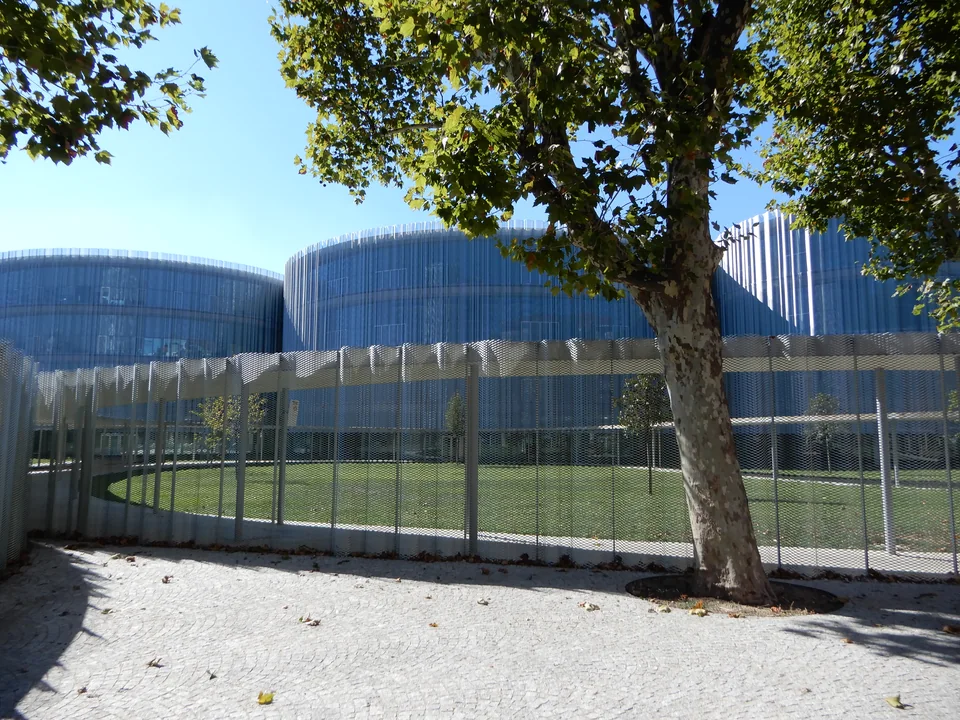
How many programmes are taught in English: three universities
There is no official national figure from the Ministry, and aggregators count differently. University catalogues are more reliable:
| University | English-taught bachelor's and single-cycle | English-taught master's | Where to check |
|---|---|---|---|
| Politecnico di Milano | 7 of 29: 5 fully in English, 2 bilingual | 45 of 45: 37 fully in English, 8 bilingual | Bachelor's, master's |
| University of Bologna | 15 of 118 | 82 of 143 | Catalogue with language filter |
| University of Padua | 8 bachelor's and 2 medicine programmes; 4 more bachelor's awaiting approval for 2027/28 | About 60, including English tracks within Italian programmes | Bachelor's, master's |
Private Bocconi teaches a large share of its programmes in English, including at bachelor's level, and reserves up to 50–55% of places on English-taught bachelor's programmes for international applicants (Bocconi admissions).
The practical conclusion: a school leaver who wants to study only in English will find a short list of public options, each with a limited number of places for applicants from abroad. After a bachelor's degree, the choice widens considerably.
What counts as English-taught
Catalogues use several labels, and the difference matters:
| Label | Meaning | Is Italian required? |
|---|---|---|
| Fully in English (ENG) | The programme is taught in English | Usually not for admission |
| Bilingual (ITA-ENG) | Some courses in Italian | Polimi requires Italian B2 in addition to English |
| English track (curriculum) of an Italian programme | One specialisation runs in English | Check the language of shared first-year courses |
| "International programme" | May mean a double degree, joint degree or international track | Language is stated separately; it is not always fully English |
The language of each course is stated in the programme's study plan (piano di studi) or regulations (regolamento didattico). Check every year of study: some tracks are only partly in English.
Language requirements and certificates
Visa minimum. The MUR circular for 2026/27 and 2027/28 lets consulates accept, for programmes taught in a foreign language, only certificates at B2 or above that attest all four skills: reading, writing, listening and speaking. Certificates from internationally recognised bodies qualify, as do equivalent certificates issued by the universities themselves (MUR circular).
University thresholds. Politecnico di Milano, master's programmes 2026/27:
| Certificate | Minimum |
|---|---|
| IELTS Academic or General Training | 6.0 |
| TOEFL iBT and Home Edition taken until 20 Jan 2026 | 78 |
| TOEFL iBT and Home Edition taken from 21 Jan 2026 (new scale) | 4.5 |
| Cambridge English | First grade B; Advanced and Proficiency grade C |
| PTE Academic | 59 |
| LanguageCert ESOL | B2 Communicator (4 skills) |
| Three-year bachelor's taught in English | Exemption if at least 75% of courses were in English, certified by the university |
Source: Polimi document list. Polimi does not accept certificates that the issuing body considers expired.
A university exemption does not always match what the consulate asks for. Polimi warns, using Egypt as an example, that the consulate may request IELTS or TOEFL for pre-enrolment and visa purposes. The University of Bologna notes that consulates may require language certificates beyond those checked by the university (UniBo Universitaly guide). Holding a certificate is the safer option even when the university accepts a medium-of-instruction letter.
Entrance tests in English
| Test | Used for | Key rules |
|---|---|---|
| CEnT-S (CISIA) | English-taught bachelor's in engineering, economics, pharmacy and other science fields | Replaced the English TOLC on 4 November 2025. 55 questions, 110 minutes; four periods in the 2025/26 cycle, once per period. Non-refundable fee $62 (€55), the latest published figure; confirm the current fee with CISIA |
| Bocconi Online Test, SAT or ACT | Bocconi bachelor's | Test score weighs 55%, the grade average of the third-last and second-last school years 45% |
| GMAT, GRE or Bocconi online test | Most Bocconi master's programmes | Applications without a score are not evaluated |
| GRE | Polimi engineering and architecture master's | Optional, no minimum score |
| IMAT | Medicine, dentistry and veterinary medicine in English | A separate procedure set by annual ministerial decree; see our IMAT guide |
Sources: CEnT rules, UniBo on TOLC and CEnT-S, Bocconi master's.
What English-taught study costs
At public universities, teaching in English does not create a separate tariff: fees follow the university's general rules. Individual programmes may have a higher maximum, though. Examples for 2026/27:
| University and category | Annual fee | Comment |
|---|---|---|
| University of Bologna, citizens of non-OECD countries with family income only abroad | Bachelor's $1,320 (€1,157.04), master's $1,549 (€1,357.04) | Reduced fixed fee applies to first and second cycle |
| University of Bologna, full rate | English-taught bachelor's in Genomics up to $3,380 (€2,805 + €157.04) | Higher maximum for some programmes; the standard bachelor's maximum is $2,320 (€2,040) + $180 (€157.04) |
| Politecnico di Milano, non-EU master's students with a foreign degree | Up to $4,499 (€3,943.04) | Maximum rate unless you hold a scholarship |
| Bocconi | Bachelor's $19,399 (€17,000), master's $21,167 (€18,550) | Full first-year fee without financial aid |
Sources: UniBo reduced fee, UniBo maximum amounts, Polimi, Bocconi bachelor's and master's. ECB rate of 29 Sep 2026: €1 = $1.1355.
For the visa you must also show $11,560 (€10,179.85) per academic year.
English or Italian programme: how to decide
| Criterion | English-taught | Italian-taught |
|---|---|---|
| Choice at bachelor's level | Narrow: a few programmes per large university | Wide: most of the catalogue |
| Choice at master's level | Wide, especially in engineering, economics and sciences | Wide, with fewer international students |
| Language threshold | English B2, often IELTS 6.0 or higher | Italian B2: university test or CILS, CELI, PLIDA, CERT.IT (see our Italian certificates guide) |
| Preparation time | If your English is already B2, you can apply in the next cycle | Reaching B2 from zero takes hundreds of study hours; plan for it |
| Competition | Places for applicants from abroad are capped by quota, and popular programmes draw applicants from many countries | Fewer international applicants, but a higher language bar |
| Jobs and internships in Italy | Limited without Italian | Easier to find part-time work and internships |
| Public university fees | University's general rules | Same rules |
If your English is strong and you can take a certificate now, an English-taught master's is the shortest route. If you are aiming for a bachelor's and want to work in Italy, compare English and Italian options and plan a year for the language.
Where you will still need Italian
- Bilingual programmes. Polimi requires Italian B2 for ITA-ENG programmes.
- Housing and paperwork. Leases, the residence permit, banking and healthcare are mostly in Italian. See student housing in Italy.
- Part-time work and internships. International roles cluster in Milan and Rome, but most student jobs expect Italian. A study permit allows up to 20 hours a week and 1,040 hours a year; see working while studying in Italy.
- The first year. Many universities offer Italian courses for international students; check whether yours are free and carry credits.
Starting Italian before you move makes the first months noticeably easier, even at A2 level.
Finding the right programme: step by step
- Level and field. English-taught bachelor's programmes are concentrated in economics, management, engineering, psychology and political science. At master's level almost every field has options.
- University catalogues. Use language filters (the University of Bologna has one) and English-taught lists (Padua, Polimi).
- Study plan. Check the language of every course for all years, especially for tracks and bilingual programmes.
- Language and tests. Note minimum scores, tests (CEnT-S, SAT, GMAT, GRE) and portfolio requirements.
- Quotas and rounds. Many programmes cap places for applicants from abroad; earlier rounds give better chances of a place and a scholarship.
- Budget and documents. Fees under the university's rules, visa funds, and a Declaration of Value or CIMEA statements. The full list is in our guide to documents for admission in Italy; level-specific steps are in our bachelor's and master's guides.
StudyU university profiles: Politecnico di Milano, University of Bologna, Sapienza.
Common mistakes
- Treating an "international programme" as English-taught. Check the language of each course.
- Choosing ITA-ENG without Italian. Such programmes require an Italian certificate.
- Relying only on a medium-of-instruction letter. The consulate may ask for a four-skill B2 certificate.
- Ignoring the new TOEFL scale. Since 21 January 2026 thresholds are expressed in new units.
- Applying to a single English-taught bachelor's. There are few of them; keep a backup list.
- Leaving Italian out of your planning. Without it, housing and part-time work are harder to find.
How StudyU helps
During the free initial consultation, we clarify your goal, profile, timing, and budget and identify the next realistic step. Selecting English-taught programmes, checking the language of each course, test planning, documents and application support are provided under an agreement with StudyU. Admission is decided by the university and the visa by the Italian consulate. See our overview of studying in Italy.
FAQ
Yes, if the programme is taught entirely in English. You need an English certificate, usually B2 or higher, and for the visa one that covers all four skills. Italian will be needed for daily life and work, and bilingual programmes require it formally.
Yes, but few: 7 of 29 at Politecnico di Milano, 15 of 118 at the University of Bologna and 8 at the University of Padua (September 2026). Most are in economics, management, engineering, psychology and political science.
Each university sets its own threshold. Politecnico di Milano accepts IELTS 6.0; other programmes, especially in business, may ask for more. Check your programme's requirements and the validity of your certificate.
At public universities there is no separate fee for teaching in English; the university's general rules apply. Some programmes have a higher maximum, such as Genomics at Bologna. Private universities set their own prices: Bocconi charges $19,300 (€17,000) for bachelor's and $21,060 (€18,550) for master's programmes in 2026/27.
At public universities usually CEnT-S, the English-language CISIA test that replaced the English TOLC in November 2025. Bocconi accepts its own online test, the SAT or the ACT. English-taught medicine uses the IMAT.
Some universities accept it. Politecnico di Milano waives the certificate if your bachelor's lasted at least three years and at least 75% of courses were in English. The consulate may still ask for a certificate for the visa, so taking a test is the safer choice.
Sources
- MUR circular 2026/27 and 2027/28 — checked 23 Sep 2026
- Politecnico di Milano: programme catalogues and language requirements — checked 23 Sep 2026
- University of Bologna: programme catalogue — checked 23 Sep 2026
- University of Padua: programmes in English — checked 23 Sep 2026
- CISIA: CEnT-S launch and CEnT rules (structure, periods, fee) — checked 23 Sep 2026
- University of Bologna: Universitaly guide — checked 23 Sep 2026
- Politecnico di Milano: document list and language thresholds 2026/27 and country requirements — checked 23 Sep 2026
- Italian Integration Portal: working on a study permit — checked 23 Sep 2026
- Bocconi: bachelor's selection, master's selection, bachelor's fees and master's fees — checked 23 Sep 2026
- University of Bologna: fees 2026/27 — checked 23 Sep 2026
Next steps
- Bachelor's in Italy for International Students: Entry Rules, Tests, Deadlines and Fees
- Documents for University Admission in Italy (2026–2027): Checklist, Apostille, CIMEA and Declaration of Value
- Italian Language Certificates CILS, CELI and PLIDA: Which One You Need for University and When to Sit It
- Master's in Italy: How to Apply for a Laurea Magistrale in 2027
- Studying in Italy for international applicants
- University of Bologna
