
You can start a Spanish bachelor's degree (grado) straight after secondary school in most countries, including 11-year systems such as Russia's: Spain's Ministry of Education recognises a Russian school-leaving certificate as equivalent to the Spanish Título de Bachiller without a foundation year. A public university, however, rarely admits you on the certificate alone. Applicants from outside the EU need recognition of the certificate (homologación), an accreditation from UNEDasiss and subject exams called PCE, plus Spanish at B2 for Spanish-taught programmes. Fees also depend on your status: in Madrid a non-EU student without residence pays $7,750–9,300 (€6,823–8,186) a year at Complutense, while UPC in Catalonia charges about $2,040 (€1,800). Private universities cost roughly $16,000–34,000 a year but run their own admissions and start taking applications for 2027 in autumn 2026.
This guide covers how the degree is structured, the three realistic entry routes, how public universities rank applicants, what you will actually pay, a month-by-month plan for September 2027 and the mistakes that cost applicants a year.
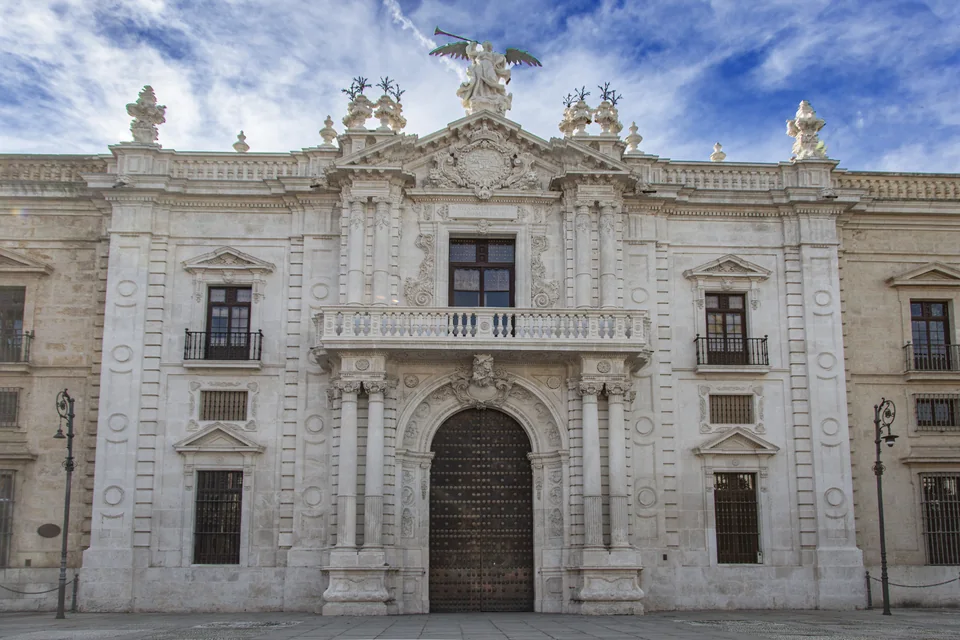
Spanish bachelor's at a glance
| Item | How it works | Example from an official source |
|---|---|---|
| Degree | Grado, the official Spanish bachelor's | Listed in the national RUCT register |
| Length | 240 ECTS, usually four years; 300 or 360 ECTS where the law requires it | Royal Decree 822/2021, article 14 |
| Entry after school | Your certificate is recognised as a Spanish Bachiller | Ministry of Education country sheet for Russia |
| Exams | For public universities: PCE through UNEDasiss, usually four or more subjects | UNEDasiss advice for non-EU applicants |
| Language | Mostly Spanish; B2 for Spanish-taught programmes | UCM and UC3M rules for applicants from non-Spanish-speaking countries |
| Public application window | Pre-registration (preinscripción) until early July | 7 July 2026 for international applicants |
| Public fees | Per credit, set by the region and your status | UCM: $130–155 (€113.71–136.44) per credit for non-EU non-residents |
| Private fees | Fixed annual price | IE University BBA: $33,930 (€29,880) for 2027–28 |
| Visa | National study visa; the permit covers the official length of the degree | Spanish Consulate in Moscow; Royal Decree 1155/2024 |
What a grado is — and what a business-school "Bachelor" may be instead
A grado is an official degree of the Spanish higher-education system. Each programme is state-verified and entered in the RUCT register of universities, centres and degrees. The standard load is 240 ECTS, 60 per year. Programmes leading to regulated professions, such as medicine, run to 300 or 360 credits, i.e. five or six years.
Some institutions in Spain call their programmes "Bachelor" without awarding a grado. The BBA at EU Business School Barcelona is a clear example: seven semesters, 240 ECTS, taught in English. Graduates receive a private degree from EU Business School Switzerland, a UK BA (Hons) in Business Management awarded by the University of Derby and a título propio awarded by UVic-UCC — a university's own, non-official diploma issued under its lifelong-learning rules. All of these are legitimate, but none is an official Spanish grado. For a job at an international company that may not matter; for a Spanish doctorate, a public-sector competition or recognition back home it can.
So the first question is always: which document will I receive and who issues it? Check the programme page and the RUCT register. The trade-offs are covered in Public or Private Universities in Spain.
Will your school certificate be accepted?
For Russian applicants, yes. The Ministry of Education's reference sheet for Russia matches grade 11 of general secondary school to the Título de Bachiller and grade 10 to the Spanish compulsory secondary certificate (ESO). No extra year at a home university is required. The Ministry publishes similar sheets for many countries, including Armenia, Azerbaijan, Belarus, Georgia, Moldova and Ukraine; check yours before you plan.
The recognition procedure is called homologación and is handled by the Ministry. You submit the certificate and official transcripts for the last three school years, apostilled and officially translated into Spanish, plus proof of payment of fee 790-079. The legal deadline for a decision is three months from the date the file is complete. With the application you generate a volante de inscripción condicional; once the application is registered, it lets you take part in admissions and exams conditionally while the file is pending.
One detail few guides mention: a straight-A Russian student does not get a 10 in Spain. The Ministry converts grading scales with three passing marks using 5.75 + (average − 3) × 1.75. An average of 5.0 becomes 9.25, 4.5 becomes 8.38 (results are rounded to two decimals) and 4.0 becomes 7.5. Timelines for students still in their final school year are in Studying in Spain After 11 Years of School.
Three routes into a Spanish bachelor's
| Route | What you need | When to apply | Best for |
|---|---|---|---|
| Public university, main round | Homologación, UNEDasiss accreditation, PCE, language | PCE in May–June; pre-registration by early July | Applicants ready to sit exams in Spanish who want an official degree at a low price |
| Early admission for international students | Homologación or volante, grades, motivation letter, Spanish B2 | UCM 2026: 22 January – 1 April | Strong students living outside Spain; very few places |
| Private university | Own application, test or interview, programme language; homologación to enrol | Rounds from September of the previous year | Applicants who want English, predictable dates and have the budget |
Public main round. The cheapest way to an official degree, and the most demanding. After homologación you order an accreditation from UNEDasiss and sit PCE, subject exams that play the role of the Spanish university entrance exam (PAU) for international applicants. UNEDasiss recommends at least four subjects for non-EU students. Without them you can only apply in the extraordinary round with a recognised certificate, and such applications are ranked last: UC3M warns that it expects no places to remain after the main allocation of that round.
Early admission. Some Madrid universities run a separate selection for international students living abroad. Complutense's 2026–27 round ran from 22 January to 1 April with no PCE: grades, a motivation letter and up to three programmes per application. Quotas are small — five places each in law, psychology and economics — and native speakers of Spanish, English or Portuguese are considered first.
Private university. State-recognised private universities award the same official grados for programmes listed in RUCT but select students themselves: application, their own test or SAT, interview. IE University's early round for 2027–28 closed on 18 September 2026; the next deadlines are 6 November 2026, 15 January and 5 March 2027. You still need homologación to be officially enrolled.
How the score works, where to apply and what to submit on each route is explained step by step in Applying to Spanish Universities.
How public universities score applicants
Places are allocated on a scale from 5 to 14. The first part, the access score out of 10, combines your recognised school average with your PCE results. Under the UNEDasiss formula, used for example by UC3M and other Madrid universities: 0.2 × school average + 4 + 0.1 for each of your four best passed PCE. The university then adds up to 4 points for two exams relevant to the degree, weighted 0.1 or 0.2 according to its ponderaciones table.
A worked example. A student with a 4.5 average gets 8.38 after recognition. Without exams the access score is about 5.7; with four PCE at 8 it rises to about 8.9. Two relevant PCE at 8 weighted 0.2 add another 3.2 points. The gap between 5.7 and 12 is the gap between "no place" and a real chance at a popular degree, which is why PCE are not a formality.
Catalonia uses a different formula: four compulsory exams count for 40% and the school average for 60%. Its June round also counts only final homologación: a volante does not replace it. You can apply on time and upload the credential later, but you are placed only once it arrives, and a decision in autumn is too late for September.
Language of instruction
Most public programmes are taught in Spanish. UCM and UC3M require B2 from applicants from non-Spanish-speaking countries and accept DELE and SIELE. In Catalonia, Valencia, the Basque Country and Galicia some classes may be in the regional language; the language of each group appears in the programme's teaching plan.
English is more common than many expect. At UC3M several degrees are taught entirely in English and others bilingually, and students from non-Spanish-speaking countries are entitled to a place in English groups for the first two years. UCM offers business administration and economics in English; the University of Navarra has bilingual programmes; IE University and EU Business School teach only in English. PCE, however, are answered in Spanish: papers come in Spanish and English, but you must write your answers in Spanish, except in the foreign-language exam. See English-Taught Degrees in Spain.
How much a bachelor's in Spain costs
Public fees depend on the region, the field and your status. Madrid's Decree 43/2022 makes the region's public universities charge foreign students over 18 without residence the fourth-attempt rate, and a study permit (estancia) does not count as residence. In Catalonia the 2026–27 fee decree lets each public university set its own rate for this group, capped at the full cost of tuition: UPC charges $34 (€30) per credit, other universities set their own figures.
| Option | What is included | Per year (60 ECTS) |
|---|---|---|
| UCM, Madrid, humanities and social sciences, non-EU non-resident | Tuition only, 2026–27 | $7,750 (€6,822.60) |
| UCM, Madrid, medicine and sciences, non-EU non-resident | Tuition only, 2026–27 | $9,300 (€8,186.40) |
| UCM, same humanities degree for EU citizens or residents | Tuition only, 2026–27 | $1,150 (€1,015.20) |
| UPC, Catalonia, non-EU non-resident | Tuition at $34 (€30) per credit, 2026–27 | $2,040 (€1,800) plus fees of $160 (€139.80) |
| University of Navarra, biology | First year, 2026–27 | $16,240 (€14,300.40) |
| University of Navarra, business administration, bilingual track | First year, 2026–27 | $21,860 (€19,250.40) |
| IE University, BBA | First year, 2027–28 | $33,930 (€29,880) |
| EU Business School Barcelona, BBA (not an official grado) | Two semesters at $8,350 (€7,350) | $16,690 (€14,700) |
UCM adds $7 (€6.11) for administration and $31 (€27.54) to open a student file in the first year. Other costs before you leave:
- UNEDasiss: access score $79 (€70), four PCE $115 (€100), file opening $34 (€30.30), administration $17 (€15.15) — $245 (€215.45) in total, or $275 (€240.45) with the track certification (modalidad).
- Homologación: fee 790-079, paid before you submit the application.
- Apostille: in Russia, 2,500 roubles (about $30) per document under the Tax Code.
- Sworn translation of the certificate and transcripts into Spanish.
- Funds for the visa: the consulate asks for 100% of the IPREM index for each month of stay, currently $680 (€600) a month, or $8,180 (€7,200) a year.
Living costs by city are in Cost of Studying in Spain and housing options in Student Housing in Spain. If you pay from Russia, use only legal channels; see How to Pay for Studies Abroad from Russia.
Free tuition or scholarships: what is realistic
There is no free bachelor's for international students in Spain. For non-EU nationals, access to the state becas de carácter general is governed by the Aliens Act, which gives adults the right to public scholarships on equal terms with Spaniards only with resident status (article 9 of Organic Law 4/2000). A study permit (estancia) does not count as residence. Realistic sources are merit discounts at private universities and individual university or foundation schemes. Plan the budget as if no scholarship will come. More in Scholarships in Spain.
Visa and working while you study
Once admitted, you apply for a national study visa. In Russia applications go through BLS visa centres in your consular district, and the consulate asks you to apply about two months before classes start. You need the admission and payment letter, proof of funds, health insurance from a company authorised to operate in Spain, a criminal-record certificate with an apostille if you are an adult staying longer than 180 days, a medical certificate and, for Russian citizens, the internal passport as well. Applicants under 18 travelling without their parents need consent from both parents and documents from a guardian in Spain. The consulate decides on the visa within a month of approving the study permit; neither the university nor StudyU can guarantee the outcome.
The immigration regulation in force since May 2025 issues the permit for higher education for the official length of the programme and allows work of up to 30 hours a week without a separate permit, as long as it is compatible with studies. After graduation, Law 14/2013 lets you apply for a permit to look for work or start a business for up to 24 months, with no extension. Details are in Student Visa for Spain and Working While Studying in Spain.
Plan for a September 2027 start
- October–December 2026. Shortlist 5–8 programmes across regions and university types. For each, note the requirements in UNEDasiss's "Información de universidades" tool and the ponderaciones table. Book DELE or SIELE. IE and other private universities are already taking applications; IE's next deadline is 6 November 2026.
- January–March 2027. Open your UNEDasiss application (in 2026 it opened on 4 February). If you have already finished school, file for homologación. Apply to UCM early admission if it opens on a similar timetable.
- Mid-March to late April 2027. Register for the May–June PCE session and choose an exam centre. Moscow was among the centres abroad for the September 2026 session.
- Late May to early June 2027. Sit PCE. In 2026 results of the May–June session were published by 22 June.
- June to early July 2027. Submit pre-registration in each region separately. This year's school leavers should get the certificate apostilled and translated immediately and file for homologación to obtain the volante.
- July 2027. Admission lists, pay the matrícula, gather visa documents.
- August–September 2027. Get the visa, arrive and apply for the foreigner identity card (TIE).
UNEDasiss and university dates for 2027 have not yet been published; this plan follows the 2026 calendar, so re-check it against the official pages in spring.
Common mistakes
- Expecting a public place on your certificate alone. Without PCE you are in the extraordinary round and last in the queue; popular programmes are usually full by then.
- Forgetting the 9.25 ceiling. Even top Russian grades convert to less than 10. You make up the score in PCE.
- Confusing a grado with a business-school diploma. Check who awards the degree and whether the programme is in RUCT.
- Budgeting with EU fees. A non-resident non-EU student in Madrid pays six to seven times what a Spanish student pays.
- Choosing Catalonia and relying on a volante. In the June round of Catalan public universities places are allocated only on final homologación.
- Leaving Spanish until summer. B2 is required for many programmes and for PCE, which you answer in Spanish. DELE results take time, so sit it in autumn or winter.
- Submitting documents without an apostille. The Ministry and UNEDasiss accept Russian documents only with an apostille and an official translation.
What StudyU does
Only the initial consultation is free. Shortlisting programmes for your profile and budget, checking each university's requirements, planning homologación and PCE, preparing documents, submitting applications and the visa file are provided under an agreement with StudyU. The Ministry of Education decides on homologación, the university on admission and the consulate on the visa. For an overview of the country and institution profiles, start with Study in Spain; if you are considering private schools, see EU Business School Barcelona, GBSB Global Business School and Les Roches Marbella.
FAQ
Usually four years: 240 ECTS at 60 a year. Programmes leading to regulated professions such as medicine are 300 or 360 credits, five or six years. Some business schools fit 240 ECTS into three years with summer terms, but such a diploma is not always an official grado.
Not with a Russian certificate: the Ministry of Education recognises it as a Título de Bachiller. Check your own country's sheet from the Ministry. A preparatory course only makes sense if you need Spanish or want to prepare for PCE.
Formally, yes — through the extraordinary round with a recognised certificate or through early admission for international students. In the extraordinary round you are ranked last, and UCM early admission offers only a handful of places in popular programmes. PCE give you a realistic chance at the degree you want.
UNEDasiss runs exams in Spain and at centres abroad. The September 2026 list included Moscow, Ankara, Warsaw, Berlin and more than 30 other cities. You choose the centre when you register; places are limited. If there is no centre in your country, UNEDasiss asks you to write before 31 March.
At a Madrid public university, $7,750–9,300 (€6,823–8,186) for tuition only; at UPC in Catalonia about $2,040 (€1,800), while other Catalan universities set their own non-resident rate. Private universities range from $16,318 (€14,300.40, biology at Navarra, 2026–27) to $34,096 (€29,880, IE University BBA, 2027–28). Add housing and at least $8,180 (€7,200) a year that you must show for the visa.
Yes. Public UC3M has degrees taught entirely in English and bilingual degrees; UCM offers business administration and economics in English. IE University and EU Business School teach entirely in English. For a public university you still need homologación and PCE, answered in Spanish.
An official grado is a European Higher Education Area degree understood across the EU. Recognition in your home country follows that country's rules. Business-school diplomas issued as a título propio or a foreign private degree follow different rules, so check the status before you pay.
Sources
- Ministry of Education: recognition of school certificates, country sheet for Russia, country sheets, grading scales (BOE-A-2024-14142) — checked 24.09.2026
- UNEDasiss: fees, key dates, PCE sessions and centres, PCE subjects, non-EU route — checked 24.09.2026
- BOE-A-2026-9696: 2026–27 pre-registration deadlines; Royal Decree 534/2024; Royal Decree 822/2021 — checked 24.09.2026
- UCM: 2026–27 undergraduate fees, recognised Bachiller with PCE and without PCE, B2 rule, early admission 2026–27 — checked 24.09.2026
- UC3M: non-EU applicants, studying in English — checked 24.09.2026
- Catalonia: 2026–27 fees, fee Decree 96/2026, point 1.5, UPC non-resident rate, access with a foreign certificate — checked 24.09.2026
- IE University: BBA fees and 2027–28 rounds; University of Navarra 2026–27 fees; EU Business School: BBA Barcelona — checked 24.09.2026
- Spanish Consulate in Moscow: study visa; Royal Decree 1155/2024; Organic Law 4/2000, article 9; IPREM, 2023 Budget Act (BOE-A-2022-22128) — checked 24.09.2026
- Law 14/2013, additional provision 17 — checked 24.09.2026
- Russian Tax Code, art. 333.33: apostille fee — checked 24.09.2026
- Exchange rates: ECB reference rate of 29.09.2026, €1 = $1.1355; roubles at the Central Bank of Russia rate of 24.09.2026, $1 = 84.40 roubles
Next steps
- Public or Private University in Spain? A 2027 Guide for International Students
- English-Taught Degrees in Spain: Where to Study Without Spanish and What It Costs in 2027
- Studying in Spain After 11 Years of School: How to Apply with a Russian Certificate in 2027
- Applying to Spanish Universities: A Step-by-Step Plan for Non-EU Applicants in 2027
- How to Pay for Studies Abroad from Russia: What Works in 2026
- Studying in Spain for international applicants
