
Yes — you can go straight from grade 11 of a Russian school to the first year of a Spanish university. Spain's Ministry of Education recognises the Russian certificate of secondary general education as equivalent to the Spanish Título de Bachiller, even though Spanish schooling lasts twelve years. The difficulty is the calendar, not the number of school years. The certificate is issued in summer after final exams, while Spanish public universities close applications from international students in early July and expect PCE exams to be done by then. Preparation for 2027 therefore starts in the autumn of grade 11: language, programme choice and exams run alongside school. Those who cannot make it choose a private university, early admission for international students or a preparation year.
Below: how the certificate is recognised and scored, five realistic scenarios for a 2027 school leaver, what a student under 18 needs and the mistakes that cost a whole year. The details are for the Russian system; the Ministry publishes similar country sheets for Armenia, Azerbaijan, Belarus, Georgia, Moldova, Ukraine and other systems, so check yours.
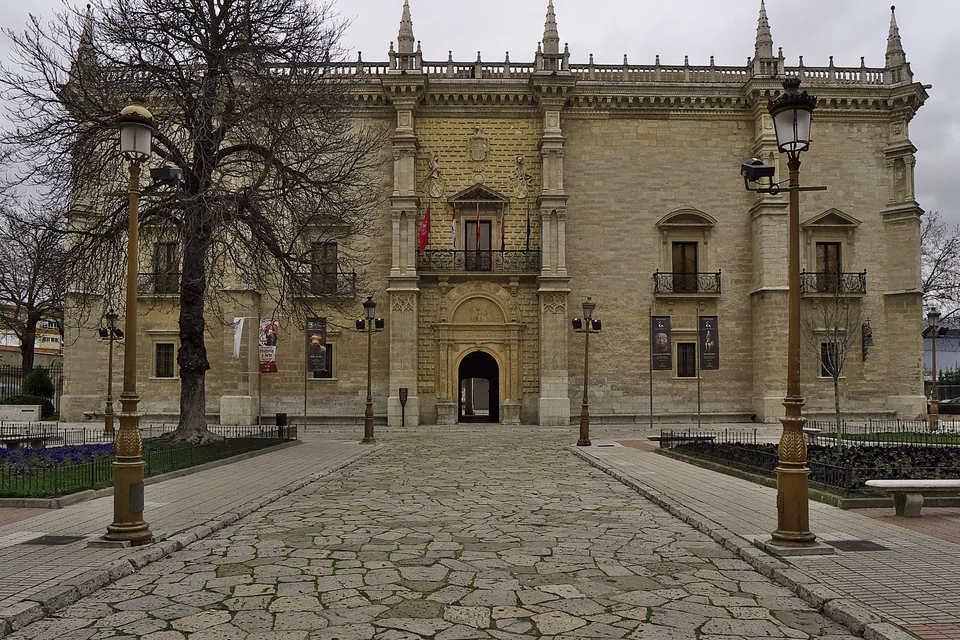
At a glance: what a school leaver needs
| Step | Who decides | When for the 2027 intake | Cost |
|---|---|---|---|
| Spanish B2 (DELE or SIELE) for Spanish-taught programmes | Exam centre | Autumn–winter of grade 11 | Your centre's exam fee |
| UNEDasiss accreditation and PCE exams | UNEDasiss | Application from February, exams late May – June 2027 | From $246 (€215.45) for the access score and four exams |
| Apostille and translation of the certificate | Russian authorities; sworn translator | Right after graduation | Apostille: 2,500 roubles (about $30) per document |
| Recognition of the certificate | Spain's Ministry of Education | Apply in summer 2027; decision within 3 months | Fee 790-079 |
| University applications (preinscripción) | Universities | Until early July 2027 | Free or a university fee |
| Study visa | Spanish consulate | July–August 2027 | Consular fee; $8,180 (€7,200) in funds for a year |
Is an 11-year certificate recognised?
Yes. In the Ministry of Education's reference sheet for Russia, grade 10 corresponds to the Spanish compulsory secondary certificate (ESO) and grade 11 to recognition as a Título de Bachiller. This applies both to the current "certificate of secondary general education" and to the older "secondary (complete) general education" certificate issued before 2013. No twelfth year, foundation course or year at a Russian university is required.
Recognition requires the certificate and official transcripts for the last three grades — 9, 10 and 11. Every document needs an apostille and an official Spanish translation. The Ministry has up to three months from the date the file is complete, and with the application you generate a volante de inscripción condicional, which, once the application is registered, lets you take part in admissions and exams conditionally. If recognition is refused, conditional enrolment and exam results obtained with the volante are cancelled.
Russian unified state exam (EGE) scores play no part in Spanish admissions: universities look at school grades and PCE results. You still need to pass the final exams, because without them there is no certificate.
How your grades become a Spanish score
The Ministry converts the five-point Russian scale with its formula for scales with three passing grades: 5.75 + (average − 3) × 1.75, rounded to two decimals. The access score below uses the UNEDasiss formula applied, for example, by UC3M and other Madrid universities.
| Transcript average | Spanish average | Access score without exams |
|---|---|---|
| 3.5 | 6.63 | 5.326 |
| 4.0 | 7.50 | 5.50 |
| 4.5 | 8.38 | 5.676 |
| 5.0 | 9.25 | 5.85 |
Two conclusions. Even a straight-A student gets 9.25, not 10. And without exams almost everyone's public-university access score lands between 5 and 6. Four passed PCE add up to 4 points to the access score, and relevant exams add up to 4 more when places are allocated. For a grade-11 student the decisive resource is PCE preparation, not the school average. Formulas and Catalonia's different calculation are explained in Applying to Spanish Universities.
Five scenarios for a 2027 school leaver
| Scenario | Best for | Main risk |
|---|---|---|
| A. Public university in the year you graduate | Students ready to sit PCE in the spring of grade 11 who already know Spanish | Tight timing: certificate, recognition and application in one summer |
| B. Early admission for international students | Strong students with Spanish B2 | Few places; priority for native speakers of Spanish, English, Portuguese |
| C. Private university | Students who want English and predictable dates | From about $16,000 a year |
| D. Preparation year in Spain or at home | Students who cannot finish language or exams in time | An extra year of costs |
| E. A year at a Russian university, then transfer | Students already admitted at home | At least 30 ECTS must be recognised |
Scenario A: a public university straight after school
The cheapest route to an official degree, with no slack in the schedule.
- September–December 2026 (grade 11). Choose programmes and regions, list PCE and language requirements. Sit DELE or SIELE at B2 for Spanish-taught programmes. Apostille the grade-10 transcript and order its translation.
- February 2027. Open your UNEDasiss application (in 2026 it opened on 4 February). Students still at school may send their latest available grades plus legalised grades from the previous year and the rest later. The missing year is temporarily counted as 5, and final grades can be submitted until 31 October.
- Mid-March to late April 2027. Register for the May–June PCE session, choose a centre and subjects. You will see your exact exam dates in your account after payment — compare them with your school's final-exam schedule.
- Late May – June 2027. Sit PCE; results by the end of June.
- As soon as you receive the certificate. Apostille, translation, homologación application and volante.
- By early July 2027. Submit preinscripción with the provisional UNEDasiss accreditation and the volante. This gets you into the main round in Madrid and other regions.
Catalonia is harder in your graduation year. In its June round places are allocated only on final homologación; a volante does not replace it. You can apply on time with passed PCE and upload the credential once the Ministry issues it, but the decision may arrive only in autumn — too late for September enrolment and a visa.
Scenario B: early admission for international students
Complutense and UC3M run separate selections for international students living abroad. UCM's 2026–27 round took applications from 22 January to 1 April, up to three programmes, with no PCE. It looked at grades (at least 60% of the final score), a motivation letter and Spanish B2 — the certificate could be provided by 15 September. Students who had not yet finished school could attach last year's and current grades. How to handle homologación before you have a certificate is something to confirm with UCM's admissions office: the offer stays conditional until all requirements are met.
The drawbacks are quotas of a few places in popular programmes and priority for native speakers of Spanish, English and Portuguese. Use it as an additional option, not the only one.
Scenario C: a private university
Private universities take applications long before graduation. IE University's early round for 2027–28 closed on 18 September 2026; the next deadlines are 6 November 2026, 15 January and 5 March 2027. Grades for the last two years are enough to apply; transcripts in Cyrillic need an English translation. Conditional offers pending final grades are possible. For official enrolment IE needs homologación by 15 October of the starting year. First-year prices range from $16,318 (€14,300.40, 2026–27) for biology at the University of Navarra to $34,096 (€29,880, 2027–28) for IE's BBA. The difference between private universities and business schools is explained in Public or Private Universities in Spain.
Scenario D: a preparation year
After school you complete homologación calmly, learn Spanish and prepare for PCE, then apply the following year in the main round with final recognition — including Catalonia's June round. You can prepare at home or in Spain: the consulate issues study visas for in-person language courses at schools accredited by the Instituto Cervantes. Only a higher-education permit gives the automatic right to work up to 30 hours a week; language-course students need a separate authorisation to work. See Spanish Language Courses in Spain and DELE and SIELE Spanish Exams.
Scenario E: a Russian university first
Spanish law allows entry with unfinished foreign university studies if a Spanish university recognises at least 30 ECTS. The university decides based on your curriculum, syllabi and an apostilled, translated transcript. With fewer credits recognised you apply as a school leaver.
If you are under 18
Many school leavers move at 17. In that case the Spanish Consulate in Moscow asks for:
- consent from both parents (or the sole legal guardian) for studies in Spain, naming the institution and the period, translated into Spanish;
- documents from a guardian in Spain: a notarial statement (acta de manifestaciones) that they take responsibility for the student and where the student will live, a copy of their ID and a certificate of no convictions for certain offences, unless the guardian is a relative or staff of the institution;
- the visa application submitted by one of the parents.
There is also a money nuance. Madrid's fee decree applies the higher rate to foreigners without residence over 18. Ask the university before paying how this rule applies to a student who is 17 at enrolment. The full document list is in Student Visa for Spain.
Documents to collect in grade 11
- A passport issued no more than 10 years ago and valid for at least one more year (a consulate rule), plus the internal passport.
- Transcripts for grades 9 and 10 certified by the school, with apostilles.
- The certificate and its transcript after graduation, with apostilles.
- Official Spanish translations of everything.
- DELE or SIELE; IELTS, TOEFL or Cambridge for English-taught programmes.
- For private universities: a motivation letter, sometimes teacher references and SAT or an internal test.
- For the visa: an apostilled criminal-record certificate (if you are 18 when applying and the course lasts more than 180 days), a medical certificate, insurance and proof of funds.
Money for the first year
A non-resident non-EU student at a Madrid public university pays $7,785–9,341 (€6,823–8,186) for 60 credits; at UPC in Catalonia about $2,054 (€1,800), while other Catalan universities set their own rate. For the visa you must show 100% of the IPREM index for each month — currently $680 (€600), i.e. $8,180 (€7,200) a year. Add housing, UNEDasiss, translations and apostilles. The full calculation is in Cost of Studying in Spain and the big picture in Bachelor's Degree in Spain.
Common mistakes
- Starting with the certificate. If you wait for it before doing anything else, there is no time left for PCE: registration closes at the end of April.
- Counting on "admission without exams". Without PCE you end up at the back of the queue, where popular programmes have no places.
- Counting on Catalonia for September of your graduation year. Its June round allocates places only on final homologación, and the decision can take up to three months after you graduate.
- Leaving Spanish for the summer. B2 is needed for Spanish-taught programmes and for PCE, which you answer in Spanish.
- Forgetting grade 9 and 10 transcripts. The Ministry wants grades for the last three years, each apostilled.
- Assuming a 17-year-old is treated like an adult. A minor needs parental consent and a guardian in Spain for the visa.
What StudyU does
Only the initial consultation is free. Choosing a scenario, planning grade 11, shortlisting programmes, checking requirements, preparing documents, homologación, applications and the visa file are provided under an agreement with StudyU. The Ministry of Education decides on recognition, UNEDasiss on exam results, the university on admission and the consulate on the visa. For the country overview see Study in Spain.
FAQ
Yes. A Russian certificate is recognised as a Spanish Título de Bachiller without an extra year. A public university also requires UNEDasiss accreditation and PCE; Spanish-taught programmes need a B2 certificate.
Spanish universities do not use EGE scores. But you need to pass the final exams to receive the certificate, and without the certificate there is no recognition.
There is no formal minimum: after recognition every applicant gets an access score of at least 5. But a Russian 5 converts to at most 9.25, and the competitive score comes mostly from PCE. For popular programmes look at previous years' cut-offs.
Legally up to three months from the date the file is complete. The volante is generated with the application and, once it is registered, lets you sit exams and apply conditionally.
Yes. For the visa you need consent from both parents and documents from a guardian in Spain; a parent submits the application.
Apply to a private university, to early admission for the following year, or take a preparation year: complete recognition, learn Spanish and pass PCE. With final homologación every round is open, including Catalonia's June round.
Sources
- Ministry of Education: country sheet for Russia, other country sheets, recognition procedure and documents, FAQ, grading scales and formulas (BOE-A-2024-14142) — checked 24.09.2026
- UNEDasiss: key dates, sessions and centres, fees, homologation-route guide (PDF) — checked 24.09.2026
- BOE-A-2026-9696: pre-registration deadlines; Royal Decree 534/2024, articles 4 and 7 — checked 24.09.2026
- UCM: early admission 2026–27 (PDF), undergraduate fees and the over-18 rule — checked 24.09.2026
- Catalonia: access with a foreign certificate; UPC: fees for non-residents; Catalonia fee Decree 96/2026, point 1.5 — checked 24.09.2026
- IE University: 2027–28 rounds, requirements, BBA fees; University of Navarra 2026–27 fees — checked 24.09.2026
- Spanish Consulate in Moscow: study visa and documents for minors; Royal Decree 1155/2024, article 57; IPREM (BOE-A-2022-22128) — checked 24.09.2026
- Russian Tax Code, art. 333.33: apostille fee — checked 24.09.2026
- Exchange rates: ECB reference rate of 29.09.2026, €1 = $1.1355; roubles at the Central Bank of Russia rate of 24.09.2026, $1 = 84.40 roubles
Next steps
- Bachelor's Degree in Spain: How to Get In from Abroad and What It Costs in 2027
- DELE and SIELE Spanish Exams: 2026–2027 Dates, Fees and the Level You Need to Study in Spain
- Public or Private University in Spain? A 2027 Guide for International Students
- Applying to Spanish Universities: A Step-by-Step Plan for Non-EU Applicants in 2027
- Studying in Spain for international applicants
- Cost of Studying in Spain in 2026/27: Public Credit Prices, Non-EU Surcharges, Private Universities and Living Costs
