
TU Delft does not admit holders of most post-Soviet school certificates straight into a bachelor's programme: the Russian attestat, for example, is not considered equivalent to the Dutch VWO diploma, so you first need at least one completed year (60 ECTS) of a related bachelor's at an accredited university with an average of 75% or more. Only four bachelor's programmes are taught in English. Master's entry is direct with a four-year bachelor's or five-year specialist degree — for Russian graduates a grade average of at least 4.0/5 — plus IELTS 7.0. Non-EU fees for 2027/28 are $23,370 (€20,563) a year for a bachelor's and $30,100 (€26,479) for a master's. The key 2027 deadlines are 1 December 2026 for scholarships, 15 January 2027 for selective programmes and 1 April for the rest.
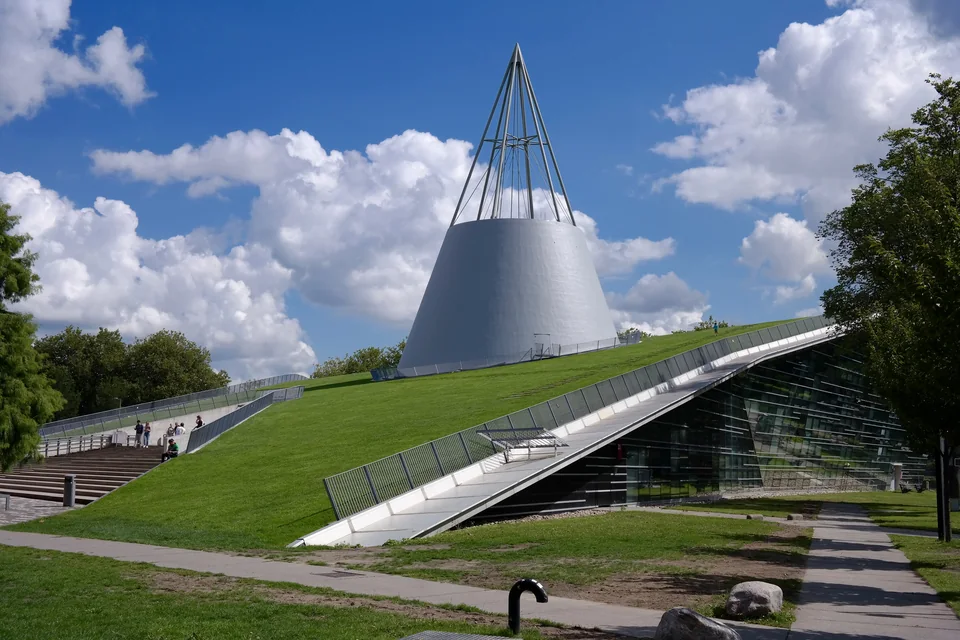
TU Delft traces its history to 1842, when King Willem II founded the Royal Academy to train engineers. Today it is the largest university of technology in the Netherlands, with more than 26,000 students and eight faculties. It ranks 57th in the THE World University Rankings 2026 and in the 151–200 band of ARWU 2026.
| At a glance | Details |
|---|---|
| Location | Delft, South Holland, between The Hague and Rotterdam |
| Focus | engineering, technology, architecture, design and applied sciences only; 8 faculties |
| Rankings | THE 2026: 57th; ARWU 2026: 151–200 |
| Russian school certificate | not accepted for direct bachelor's entry; first year of a related degree with 75%+ required |
| Kazakhstan | NIS (Nazarbayev Intellectual Schools) Grade 12 Certificate accepted with the required subjects |
| English-taught bachelor's | Aerospace Engineering; Computer Science and Engineering (English track); Earth, Climate and Technology; Nanobiology |
| Master's | all programmes in English; Russian degree: 4.0/5 average |
| Non-EU fees 2027/28 | bachelor's $23,370 (€20,563), master's $30,100 (€26,479) a year |
| Master's application fee | $110 (€100), non-refundable |
| English | master's IELTS 7.0 (6.5 per section); bachelor's IELTS 6.5 |
| Scholarships | Justus & Louise van Effen: 16 full master's scholarships, apply by 1 December 2026 |
| Housing | the university's housing service places roughly 40–45% of new international students; rent $570–1,530 (€500–1,350) a month |
Bachelor's entry from a Russian or CIS school
Not directly. TU Delft states that the Russian secondary school certificate is not equivalent to the Dutch VWO diploma. To be considered you must have completed at least the first year (60 ECTS) of a Bachelor of Science or Bachelor of Engineering at an accredited academic university, in the same or a closely related discipline, with a first-year average of at least 75%.
In practice:
- School leavers study one year at a technical university at home (or elsewhere) in a related field and then apply to Delft's first year.
- Foundation courses do not replace that year. TU Delft runs no foundation year of its own and does not accept programmes from Holland ISC, OnCampus Amsterdam, EF or other non-Dutch providers.
- Subjects matter. Most programmes require maths and physics; Nanobiology also chemistry and biology; Computer Science and Engineering requires maths.
Kazakhstan. The NIS Grade 12 Certificate is accepted with the required exam subjects. Other Kazakh certificates are not listed; TU Delft assesses unlisted qualifications individually after a complete application, so the safest plan is the same first-year route. Applicants with IB or A-levels follow the separate rules for those diplomas — see bachelor's in the Netherlands.
Bachelor's: English-taught programmes and selection
Four of the 16 bachelor's programmes are taught in English:
| Programme | Selection | Deadline | Required subjects |
|---|---|---|---|
| Aerospace Engineering | numerus clausus (capped intake) | 15 January | maths, physics |
| Computer Science and Engineering, English track | numerus clausus | 15 January | maths |
| Earth, Climate and Technology (Applied Earth Sciences) | regular | 1 April | maths, physics, chemistry |
| Nanobiology | regular, with mandatory matching | 1 April | maths, physics, chemistry, biology |
All other programmes — Architecture, Civil, Mechanical and Electrical Engineering, Applied Physics and more — are taught in Dutch at VWO level. Without Dutch you first take TU Delft's one-year Dutch preparatory course, open only after (conditional) admission.
Numerus clausus. Aerospace Engineering, Architecture, Clinical Technology and Computer Science and Engineering accept applications from 15 October to 15 January (23:59 CET). Results come in mid-April. Non-EU applicants can take part in placement only until 15 June. You may add one backup application: to another capped programme by 15 January or to a regular one by 1 April.
English for bachelor's: IELTS Academic 6.5 (IELTS Online not accepted), TOEFL iBT 90 or 5 on the new scale (tests from 21 January 2026), or Cambridge C1 Advanced; certificates no older than two years.
After admission: confirmation statement by 1 June, full payment by 1 July, classes from the first week of September.
Master's: requirements and selection
Every TU Delft master's programme is taught in English, and this is the main route for graduates from Russia and the CIS.
Degree and grades. A relevant degree comparable to a Dutch research-university bachelor's. Russia: 4-year Bakalavr or 5-year Specialist Diploma with 4.0/5 or a significant number of "excellent" grades; Kazakhstan: 80%; Georgia and Azerbaijan: 75%. No rounding, and updated transcripts are not considered after you apply. You may apply in your final year, but proof of graduation is due by 31 August.
English. IELTS Academic 7.0 with 6.5 per section (One Skill Retake accepted); TOEFL iBT 100 with 22 per section, or 5 with 4.5 per section for tests from 21 January 2026; Cambridge C1/C2 185. Certificates must be no more than two years old when you apply. Only nationals or graduates of Australia, Canada, Ireland, New Zealand, the UK and the USA are exempt — English-taught degrees elsewhere do not count.
Documents. Degree or statement, transcript with grading scale, translation by your university or a sworn translator, a 1,000–1,500-word motivation essay (programme and specialisation choice, three possible thesis topics, a summary of your bachelor's thesis in up to 250 words), a CV of up to three pages and your passport. A reference letter is required only for scholarship applicants. GRE is required for Aerospace Engineering (strict minimums: Verbal 154, Quantitative 163, Analytical Writing 4.0), Computer Science, Computer & Embedded Systems Engineering and Data Science and AI Technology. Architecture and design programmes need a portfolio.
One application per year. TU Delft accepts only one master's application per academic year. The application fee is $110 (€100), non-refundable.
Selection. Eleven programmes run a selection with a 15 January non-EU deadline: Aerospace Engineering, Applied Mathematics, Architecture, Urbanism and Building Sciences, Computer Science, Computer & Embedded Systems Engineering, Data Science and Artificial Intelligence Technology, Design for Interaction, Electrical Engineering, Integrated Product Design, Management of Technology, and Strategic Product Design; decisions come at the end of March. Other programmes close on 1 April for non-EU applicants and admit eligible candidates until capacity is reached, so applying late is risky. Decisions follow within 12 weeks of a complete application.
For the national picture see master's in the Netherlands.
Tuition and costs
TU Delft charges one rate for all master's programmes and one for all bachelor's programmes.
| Rate | 2026/27 | 2027/28 |
|---|---|---|
| Bachelor's, non-EU | $22,630 (€19,906) | $23,370 (€20,563) |
| Master's, non-EU | $29,140 (€25,633) | $30,100 (€26,479) |
| Statutory fee (EU/EEA, Swiss, Surinamese) | $3,060 (€2,694) | $3,150 (€2,771) |
For a two-year master's starting in 2027, year one costs $30,100; year two follows the 2028/29 rate, not yet announced. The transitional rate for continuing students does not apply to new entrants.
What first-year non-EU students actually pay. In 2026/27 master's students received one bill of $45,280 (€39,833): tuition, a $16,140 (€14,200) living-cost deposit based on IND rules, the $290 (€254) residence-permit fee and the $320 (€285) housing-service fee, the last two deducted from the deposit. The balance is refunded to a SEPA bank account about three weeks after the programme starts, so bring money for the first weeks. For bachelor's students the total was $38,770 (€34,106).
Paying. In the first year there is no direct debit or instalments if you need visa or housing help: transfer the full amount by 1 July, allowing for bank charges. For lawful routes from Russia see how to pay for studies abroad from Russia.
Living in Delft. Study in NL estimates $1,140–1,710 (€1,000–1,500) a month. Rooms through the university's housing service cost $570–1,530 (€500–1,350) a month including utilities.
Scholarships
| Scholarship | Covers | Conditions |
|---|---|---|
| Justus & Louise van Effen Excellence Scholarship | full tuition at your rate plus a living allowance; year two if you earn 48 of 60 ECTS | 16 awards, about two per faculty; two-year MSc programmes only; roughly top 10% of graduates; programme and scholarship application by 1 December 2026, 23:59; results by end of March 2027 |
| Microelectronics Scholarship (EEMCS) | partial tuition | up to two awards; MSc Electrical Engineering, Microelectronics track; 80%+ average; year two if you keep an 8/10 average |
Scholarship applicants must upload their English certificate by 1 December. TU Delft warns that demand far exceeds funding and advises planning for two years without one. TU Delft did not take part in the NL Scholarship in 2026/27. More options: scholarships abroad in 2026.
Housing
Housing is the biggest practical risk. TU Delft advises against arriving without a room: you must register an address with the municipality within 5 days, and for non-EU students registration is a condition of keeping the study permit.
TU Delft Housing Service is for international students not yet living in the Netherlands who have completed enrolment. Rooms from partner providers in Delft and Rijswijk are offered through ROOM University Housing. There is capacity for roughly 40–45% of new international students, and portal access is granted in order of full payment, between mid-May and mid-June. The service costs $320 (€285), refundable if you cancel before your details are uploaded.
- master's students get two-year contracts, bachelor's students one-year; no extensions;
- rooms are single occupancy; the few couple rooms require both partners to be registered TU Delft students;
- the first invoice usually covers three months' rent plus a contract fee and cannot be paid from the living-cost deposit.
If you miss out, search the private market, including nearby towns, check that the lease allows registration, and beware of scams asking for payment for unseen rooms.
Visa and residence permit
For Russian and Kazakh nationals TU Delft applies to the IND for an MVV entry visa and study permit. Request this by 1 July and pay by 11 July for a September start. The IND decides within 60 days; Russians collect the MVV at the Dutch embassy in Moscow, Kazakhs in Astana. Neither nationality needs a TB test. Details: Dutch student residence permit.
Work and life after graduation. On a study permit you may work as an employee if the employer has a TWV permit — up to 16 hours a week or full-time in June–August. Self-employment and programme internships need no TWV. Within three years of graduating you can apply for an orientation-year permit ($290, €254) and work freely for that year. More in master's in the Netherlands.
Restrictions for Russian nationals
TU Delft's master's admission page states that all nationalities are welcome to apply, and its rules contain no ban on Russian applicants. But several of its strongest areas overlap with sensitive technology — microelectronics, quantum technology (QuTech), aerospace — which matters for two reasons.
- Knowledge security. TU Delft's policy is based on Dutch and EU law and the national knowledge-security guidelines. When recruiting staff, hosting researchers or entering partnerships it checks EU sanctions, export controls, links to military organisations outside the EU and NATO, and research sensitivity. For master's students this mainly affects thesis projects in restricted research groups.
- EU sanctions. Regulation 833/2014 prohibits technical assistance — including training — related to dual-use goods and technology for persons in Russia or for use in Russia. The European Commission's guidance says such assistance to Russian nationals outside Russia is not prohibited unless there is evidence it would be used in Russia.
The knowledge-security screening law had not been adopted as of September 2026. In a letter to parliament of 11 June 2026 the education minister confirmed the law should allow screening of researchers and PhD candidates from outside the EU where needed, but called the consulted broad version unfeasible; the government is looking for a narrower form and gives no timetable. If your programme or thesis is in a sensitive field, ask admissions before applying. TU Delft decides on admission; the IND decides on your permit.
Faculties
Nearly 40 disciplines are grouped into eight faculties. When choosing a master's, the programmes a faculty runs matter more than its name:
| Faculty | Focus | Example master's programmes |
|---|---|---|
| Aerospace Engineering (AE) | aircraft, spacecraft, wind energy | Aerospace Engineering |
| Applied Sciences (AS) | physics, chemistry, biotechnology, quantum and nanotechnology | Applied Physics, Chemical Engineering, Life Science and Technology, Nanobiology |
| Architecture and the Built Environment (ABE) | buildings, cities, landscape | Architecture, Urbanism and Building Sciences |
| Civil Engineering and Geosciences (CEG) | infrastructure, water, the subsurface | Civil Engineering, Earth, Climate and Technology, Applied Geophysics |
| Electrical Engineering, Mathematics and Computer Science (EEMCS) | electronics, power systems, mathematics, software, AI | Electrical Engineering, Computer Science, Applied Mathematics, Computer & Embedded Systems Engineering, Quantum Information Science & Technology |
| Industrial Design Engineering (IDE) | products, services, user interaction | Integrated Product Design, Design for Interaction, Strategic Product Design |
| Mechanical Engineering (ME) | mechanics, robotics, ships, materials | Mechanical Engineering, Robotics, Marine Technology |
| Technology, Policy and Management (TPM) | economics, law and governance of technical systems | Management of Technology, Engineering and Policy Analysis, Complex Systems Engineering and Management |
Some programmes are inter-faculty (Transport, Infrastructure and Logistics, or Sustainable Energy Technology, for example), and the line-up changes over time, so check the TU Delft master's catalogue before applying. The university also hosts the QuTech research institute and the TU Delft Reactor Institute. Compare with other Dutch institutions in universities in the Netherlands.
Is TU Delft right for you?
| Why students choose it | What to know first |
|---|---|
| One flat master's fee: $30,100 (€26,479) in 2027/28 | Only four English-taught bachelor's programmes |
| All master's programmes in English | From a Russian school you need a first university year first |
| 16 full van Effen scholarships | Highly competitive; apply by 1 December |
| Two-year housing contracts for master's students via the housing service | Rooms for only about 40–45% of new internationals |
| Strong engineering, architecture and design | IELTS 7.0 and strict GRE minimums on some programmes |
| Clear country rules (4.0/5 for Russian degrees) | Only one master's application per year |
TU Delft suits applicants committed to an engineering or technical field. If you want a broad research university spanning economics, law and medicine, look at the University of Amsterdam. Country overview: study in the Netherlands; budgets: cost of studying in the Netherlands.
Costly mistakes
- Applying with a school certificate alone — without a related first university year the bachelor's application will not be considered.
- Counting on third-party foundation courses — Holland ISC, OnCampus Amsterdam and EF are not accepted.
- Choosing a Dutch-taught bachelor's without a language plan — you will need the preparatory Dutch year.
- Applying to two master's programmes — only one per year.
- Missing 1 December — later van Effen applications are not reviewed.
- Scoring below the Aerospace GRE minimums — they are strict thresholds.
- Paying late — housing-service access is allocated by payment date.
FAQ
Can I enter TU Delft straight after school?
Not with a Russian school certificate alone: you need a completed first year (60 ECTS) of a related bachelor's with 75%+. From Kazakhstan, the NIS Grade 12 Certificate is accepted.
How much does TU Delft cost for international students?
In 2027/28 non-EU students pay $23,370 (€20,563) a year for a bachelor's and $30,100 (€26,479) for a master's, plus living costs of $1,140–1,710 (€1,000–1,500) a month and at least $15,420 (€13,569) in proof of funds for the IND.
What GPA do I need for a master's?
With a Russian bachelor's or specialist degree, 4.0/5 or a significant number of "excellent" grades; from Kazakhstan, 80%.
Is the GRE required?
Only for Aerospace Engineering (strict minimums: Verbal 154, Quantitative 163, Writing 4.0), Computer Science, Computer & Embedded Systems Engineering and Data Science and AI Technology.
When do I apply for 2027?
Applications open on 15 October 2026. Scholarship applicants by 1 December 2026; the 11 selective master's programmes and capped bachelor's programmes by 15 January 2027; others by 1 April 2027.
Can I count on a place in university housing?
No. The housing service places about 40–45% of new international students, in order of full payment; master's students get two-year contracts.
Does TU Delft admit Russian citizens?
Yes, all nationalities may apply. Programmes linked to sensitive technology may involve extra questions due to EU sanctions and knowledge-security policy.
How can StudyU help?
Under a service agreement we help choose a programme and route, check country and grade requirements, prepare your essay, CV and immigration documents. TU Delft decides on admission and the IND on your permit.
Sources
- TU Delft: MSc admission requirements, country requirements, required documents, procedure, deadlines
- TU Delft: BSc admission requirements, country-specific requirements, deadlines, numerus clausus programmes
- TU Delft: tuition and finances, scholarships, housing, housing service, visa and residence permit
- TU Delft: knowledge security, faculties and institutes, master's catalogue, about TU Delft
- THE World University Rankings 2026: TU Delft, ARWU 2026: TU Delft
- Study in NL: NL Scholarship, living costs
- IND: required amounts 2026, fees 2026
- European Commission: consolidated FAQs on Russia sanctions, letter to parliament on screening, 11 June 2026
Dollar amounts use the ECB reference rate of 24 September 2026 (€1 = $1.1367), rounded to $10.
If you want to know which route into TU Delft is realistic for you — a first university year and then a bachelor's, or straight into a master's — send us a request.
During the free initial consultation, we clarify your goal, profile, timing, and budget and identify the next realistic step.
Next steps
- Bachelor's in the Netherlands for International Students: 3 or 4 Years, Entry Routes and the Cost of a Degree
- Master's in the Netherlands: Admission, Costs and Deadlines for 2027/28
- Dutch Student Residence Permit: MVV Entry Visa and Study Permit Explained
- Universities in the Netherlands for International Students: Types, the 14 Research Universities and Real Entry Routes
- How to Pay for Studies Abroad from Russia: What Works in 2026
- Scholarships abroad 2026: where international students study for free
