
A Dutch bachelor's comes in two forms: a three-year academic degree at a research university (180 ECTS) and a four-year professional degree at a university of applied sciences (240 ECTS) with built-in internships. Research universities require a diploma equivalent to the Dutch pre-university VWO; universities of applied sciences accept the HAVO level. Nuffic rates Russia's school-leaving certificate as "at least HAVO" and Kazakhstan's as HAVO, which means direct entry to an applied university but usually an extra year of university or a foundation programme before a research university. For non-EU students a year costs from $10,640 (€9,360) at an applied university to $22,627 (€19,906) at TU Delft and $24,780 (€21,800) for science at UvA in 2026/27, and a full degree costs roughly $42,000–69,000 in tuition alone.
Below: how the two degrees differ, four entry routes with their time and cost, how the first year works and what the degree leads to. For a country overview see study in the Netherlands; to compare institutions, see universities in the Netherlands.
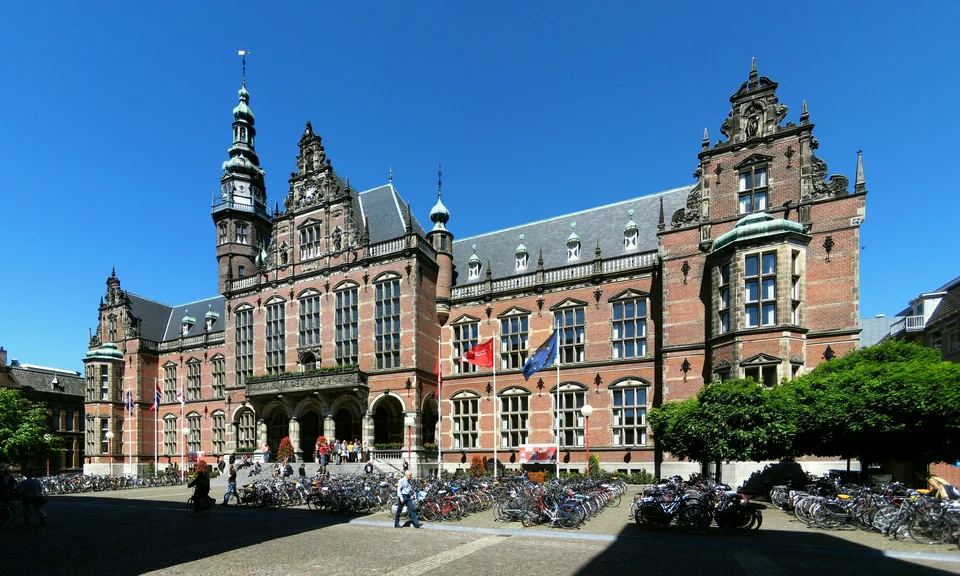
Two bachelor's degrees compared
| Feature | Academic bachelor's (WO) | Professional bachelor's (HBO) |
|---|---|---|
| Where | 14 research universities | 36 government-funded universities of applied sciences and accredited private institutions |
| Length | Usually 3 years, 180 ECTS | 4 years, 240 ECTS; the first year is the propedeuse |
| Degree | BA, BSc, LLB | Professional degrees such as Bachelor of Engineering |
| Teaching | Lectures, seminars, research methods, bachelor's thesis | Company projects, internships, group work |
| Entry with a HAVO-level diploma | Usually needs an extra year | Often direct, based on grades and subjects |
| Non-EEA fee, 2026/27 | $15,004–24,780 (€13,200–21,800) for most programmes | $10,640–11,967 (€9,360–10,528) at Saxion and THUAS |
| Language | Most bachelor's programmes are in Dutch; English ones exist but must be sought out | Many English programmes in business, IT, engineering, tourism |
| Next step | Direct entry to a master's in the same field | Work, or a research master's often via a pre-master |
The biggest trap is assuming every Dutch bachelor's is available in English. Universities of the Netherlands states that most research-university bachelor's programmes are taught in Dutch. At TU Delft only four are fully in English: Aerospace Engineering, the English track of Computer Science and Engineering, Earth, Climate and Technology, and Nanobiology.
Four routes from school or college
| Route | Time to degree | Extra cost | Best for |
|---|---|---|---|
| 1. Applied university straight after school | 4 years | None | Students who know their profession and want practice; tuition budget under $12,000 a year |
| 2. One year of university at home, then a research university | 1 + 3 years | A year of study at home | Students aiming at TU Delft, VU and other strong research universities |
| 3. Foundation year in the Netherlands, then a research university | 1 + 3 years | $21,029–21,597 (€18,500–19,000) at Twente Pathway College plus a year of living costs | Students who want early adaptation, if the target university recognises the programme |
| 4. First year at an applied university (propedeuse), then a transfer | 1 + 3 years | One year of applied-university fees | Undecided students; UvA and Groningen consider an HBO propedeuse diploma, but admission is not automatic |
Route 1: an applied university directly
HAVO is the entry level for universities of applied sciences, so HAVO-rated certificates are usually assessed without an extra year. Each programme sets subject, grade and English requirements. StudyU has profiles of Saxion and Fontys.
Route 2: a year of university at home
Research universities compare your diploma with VWO. VU Amsterdam, for instance, requires Russian applicants to add at least one year of academic credits at a recognised university. TU Delft asks applicants from Russia, Ukraine, Japan and several other countries for at least 60 ECTS of a BSc or BEng in the same or a closely related field, with an average of 75% or higher. Choose first-year subjects that match the target programme — mathematics and physics for engineering, mathematics for economics.
Route 3: a foundation year
A Dutch foundation year closes the academic and language gap. Twente Pathway College costs $21,597 (€19,000) for the engineering stream and $21,029 (€18,500) for business and social sciences in September 2026, leading to University of Twente bachelor's programmes. Check recognition: TU Delft does not accept Holland ISC or OnCampus Amsterdam foundation years.
Route 4: transferring after the applied propedeuse
The first HBO year ends with a separate propedeuse diploma. UvA asks holders to check their eligibility on a dedicated page, and the University of Groningen states plainly that it does not give automatic admission: the programme looks at which first year you completed. The route suits students who want to start in the Netherlands at once and move to a research university later, but agree the transfer with the target programme before you enrol at the applied university.
After vocational college. Nuffic compares Russia's second-level secondary vocational diploma with HAVO for its general-education part, so the same logic applies.
How the degree works
- Interactive teaching. Study in NL describes Dutch teaching as interactive and team-based: you are expected to form and voice your own opinion and question lecturers. Contributions to group work often count towards your grade.
- Grading. Grades run from 1 to 10 with 6 as a pass. Most grades fall between 6 and 8, and an 8 is already very good.
- Binding study advice (BSA). Many programmes decide at the end of year one whether you may continue. The programme sets the threshold — 45 of 60 ECTS at Utrecht University's humanities faculty, where a negative BSA bars re-enrolment for four years.
- Progress and your permit. A student residence permit requires at least 50% of the credits in each academic year; if progress is insufficient without good reason, the institution reports it to the IND.
- Internships. Built into applied bachelor's; an internship that is part of the curriculum needs no TWV work permit.
- Associate degree. Some applied universities offer a two-year Associate degree (120 ECTS) that can be continued into a bachelor's.
What a full bachelor's costs
| Programme | Length | Tuition for the whole degree, known fees |
|---|---|---|
| Saxion | 4 years | $42,558 (€37,440) |
| THUAS | 4 years | $47,869 (€42,112) |
| Erasmus University, most schools | 3 years | $46,036 (€40,500) |
| University of Groningen, most faculties | 3 years | $47,741 (€42,000) |
| TU Delft | 3 years | $69,375 (€61,032), including 2027/28 fees |
This is tuition only. The IND requires proof of at least $1,285 (€1,130.77) a month for living costs, so a fourth year at an applied university adds about $15,000. Add a foundation year and its living costs if you need one. Full budgets are in our cost of studying in the Netherlands guide.
The NL Scholarship helps: $5,684 (€5,000) once, in the first year, for non-EEA students without a Dutch degree at participating institutions. In 2026/27 these included Saxion, Fontys, THUAS, Hanze, HAN and other applied universities, as well as Groningen, Maastricht, Radboud, Twente, Utrecht, VU, Wageningen and TU/e. The list changes every year.
Applying in brief
- Shortlist four to six programmes of varying difficulty, at least one without a fixed quota.
- Submit Studielink requests from 1 October; by 15 January for numerus fixus programmes and by 1 May for others — but by 1 April if you need a visa.
- Upload documents to the university portal: diploma with sworn translation and apostille, a language test (typically IELTS Academic 6.0–6.5 or TOEFL iBT, which uses a new 1–6 scale from 21 January 2026), and a motivation letter if requested.
- Complete the study-choice check (studiekeuzecheck or the university's own version).
- After admission, the university applies for your MVV and residence permit; you arrange funds, insurance and housing.
The full procedure, dates and numerus fixus rules are in applying to Dutch universities; the permit in the Dutch student residence permit. Russian citizens collect the MVV only at the Dutch embassy in Moscow. There is no general ban on Russian students; possible sanctions-related limits in technical programmes are covered in universities in the Netherlands.
Housing: sort it out before the visa
Study in NL warns of a severe student housing shortage and advises finding a room before arrival; an average room costs about $625 (€550) a month. Universities do not guarantee housing: UvA has no campus housing and UvA Housing cannot place everyone. Factor the city into your choice, start searching as soon as you apply and never pay for a room you have not seen at least by video.
Where the degree leads
- Master's. WO graduates enter a master's in their field directly; HBO graduates often via a pre-master. See master's in the Netherlands.
- Orientation year. Within three years of an accredited Dutch bachelor's you can apply for a 12-month orientation year permit and work without a TWV; the fee is $289 (€254).
- Work while studying. Employment requires a TWV arranged by the employer: up to 16 hours a week or full-time in June, July and August. Self-employment is allowed without a TWV, with Chamber of Commerce (KvK) registration, tax and possibly Dutch health insurance.
When a Dutch bachelor's is not the right fit
- Your annual budget for tuition and living is below about $25,000 without a scholarship.
- You need an English-taught bachelor's in a technical field that your target university only offers in Dutch.
- You need a research university straight after school and your diploma is rated HAVO-level.
- You plan to fund living costs entirely through part-time work.
Common mistakes
- Choosing by ranking without checking whether the university accepts your diploma.
- Paying for a foundation year the target university does not recognise.
- Taking an unrelated first year at home when TU Delft requires the same or a closely related field.
- Ignoring the BSA and the 50% credit rule for the permit.
- Budgeting per year instead of per degree.
FAQ
Yes, especially at a university of applied sciences. If Nuffic rates your diploma at VWO level, research universities are also open; if it is rated HAVO-level, most research universities ask for an extra year of university or a recognised foundation year.
Usually 3 years (180 ECTS) at a research university and 4 years (240 ECTS) at a university of applied sciences. With an extra preparatory year, both paths take four years.
In 2026/27, from $10,640 (€9,360) a year at Saxion to $22,627 (€19,906) at TU Delft and $24,780 (€21,800) for science at UvA; roughly $42,000–69,000 in tuition for the whole degree, plus at least $15,424 a year in living costs under the IND norm.
Yes, especially at universities of applied sciences and university colleges. Most research-university bachelor's are in Dutch, so check the language of the specific programme and track.
A first year at home is cheaper and accepted by many research universities if the field is related. A Dutch foundation year costs about $21,000 plus living costs but offers language and academic adaptation — provided your target university recognises it.
After a Dutch bachelor's you can obtain the orientation year permit and work without a TWV. Staying longer requires switching to a work-based permit, which depends on an employer and the IND.
Sources
- UvA: applying with an HBO propedeuse diploma, Groningen: HBO propedeuse — checked 28 Sep 2026
- Nuffic: Russia, Kazakhstan — checked 24 Sep 2026
- TU Delft: bachelor's admission requirements, fees — checked 24 Sep 2026
- VU Amsterdam: diplomas per country, UvA: applying for a bachelor's — checked 24 Sep 2026
- Twente Pathway College: fees — checked 24 Sep 2026
- Universities of the Netherlands: language of instruction — checked 24 Sep 2026
- Study in NL: bachelor's, Associate degree, teaching style, grading, NL Scholarship, housing — checked 24 Sep 2026
- Fees: Erasmus, Groningen, Maastricht, UvA, THUAS, Saxion — checked 24 Sep 2026
- IND: student residence permit, orientation year, required amounts 2026 — checked 24 Sep 2026
- Utrecht University: BSA, Studielink: 2027/28 deadlines — checked 24 Sep 2026
- Exchange rate: ECB, 24 Sep 2026, €1 = $1.1367
Next steps
- Universities in the Netherlands for International Students: Types, the 14 Research Universities and Real Entry Routes
- Cost of Studying in the Netherlands in 2026/27: Tuition, Living Costs, Permit Funds and the Full-Degree Budget
- Applying to Dutch Universities for 2027/28: Deadlines, Studielink, Documents and the Residence Permit
- Dutch Student Residence Permit: MVV Entry Visa and Study Permit Explained
- Studying in the Netherlands for international applicants
- Saxion University of Applied Sciences
