
The Netherlands has two main kinds of public higher education institutions: 14 research universities (WO), which teach academic research skills and lead to PhD level, and 36 government-funded universities of applied sciences (HBO), which prepare students for a profession through projects and internships. Students from outside the EU/EEA pay an institutional fee set by each institution: in 2026/27 a bachelor's year costs from $10,640 (€9,360) at a university of applied sciences to $22,000–25,000 for engineering and science at research universities ($22,627, or €19,906, at TU Delft), and medicine runs to about $36,000–39,000 a year. With a school-leaving certificate that Nuffic rates below the Dutch pre-university level, such as the Russian or Kazakh certificate, you can usually enter a university of applied sciences directly, while research universities tend to ask for a year of university study or a foundation programme first.
This guide explains how the system works, how institutions differ, which diploma gets you where, and how to build a shortlist of four to six programmes without taking unnecessary risks. For a country overview with housing and work, see study in the Netherlands.
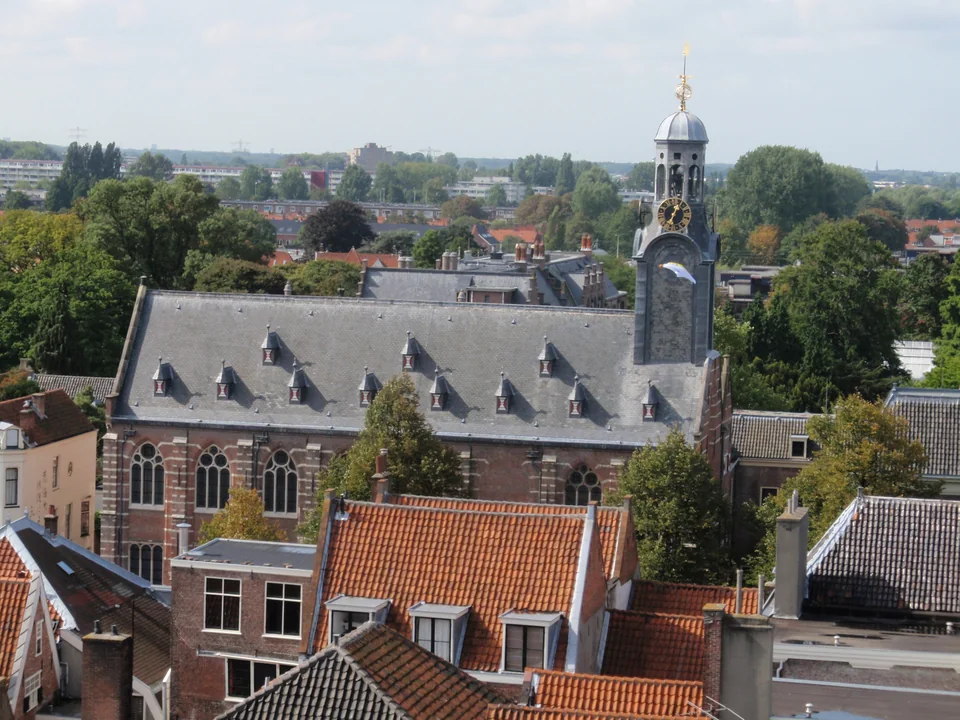
The Dutch higher education system at a glance
| Item | How it works | What it means for you |
|---|---|---|
| Research universities (WO) | 14 universities in the Universities of the Netherlands association; more than 340,000 students | Bachelor's 3 years (180 ECTS), master's 1–2 years, PhD. Entry level: Dutch VWO |
| Universities of applied sciences (HBO, hogescholen) | 36 government-funded institutions | Bachelor's 4 years (240 ECTS) with internships. Entry level: Dutch HAVO |
| University colleges | Liberal arts and sciences colleges inside research universities, since 1997 | 3 years in English, holistic selection |
| Institutes for international education | Small institutes for mid-career professionals | Mostly master's and short courses |
| Fee for EU/EEA, Swiss and Surinamese students | Set by the government: $3,062 (€2,694) in 2026/27, $3,150 (€2,771) in 2027/28 | Not available to other nationalities |
| Fee for everyone else | Set by each institution (institutional fee) | Varies by university, faculty and intake year |
| Applications | Studielink, then the institution's own portal | 15 January for fixed-quota programmes, 1 May for most others; many universities advise non-EU applicants to finish by 1 April |
Figures were checked against official sources on 24 September 2026; dollar amounts use the ECB rate of that day.
Research university or university of applied sciences?
In the Netherlands the type of institution matters more than the city or the ranking. It determines how long you study, what you pay, which school diploma is accepted and where you can go next.
| Criterion | Research university (WO) | University of applied sciences (HBO) |
|---|---|---|
| Focus | Scientific method, theory, preparation for a master's and research | A profession: projects, cases, company internships |
| Bachelor's length | Usually 3 years, 180 ECTS | 4 years, 240 ECTS; the first year is a foundation year (propedeuse) |
| Entry with a non-VWO-equivalent diploma | Usually requires extra study | Often assessed directly |
| Bachelor's fee per year, 2026/27 | $15,004–24,780 (€13,200–21,800) for most programmes; medicine $36,000–39,000 | $10,640–11,967 (€9,360–10,528) at Saxion and The Hague University of Applied Sciences |
| After the bachelor's | Direct route to a master's in the same field | Master's at a research university often via a pre-master |
| Rankings | Present in global rankings | Rarely ranked; strength is industry links |
The 14 research universities: profile, city and fees
| University | City | Main profile | Non-EEA bachelor's fee, 2026/27 |
|---|---|---|---|
| University of Amsterdam (UvA) | Amsterdam | Broad: economics, social sciences, law, humanities, sciences | $15,800 (€13,900) economics and business; $19,892 (€17,500) humanities and law; $24,780 (€21,800) science |
| Vrije Universiteit Amsterdam (VU) | Amsterdam | Broad comprehensive university | Check the programme page |
| Leiden University | Leiden, The Hague | Oldest in the country (1575): law, humanities, international relations | Check the programme page |
| Utrecht University | Utrecht | Broad; the country's only veterinary medicine faculty | Check the programme page |
| University of Groningen | Groningen | Broad; founded 1614 | $15,914 (€14,000) most faculties; $22,507 (€19,800) science and engineering |
| Erasmus University Rotterdam | Rotterdam | Economics, business (RSM), medicine, law | $15,345 (€13,500) most schools; $15,914 (€14,000) RSM |
| Maastricht University | Maastricht | Problem-based learning, European law, business | $15,004 (€13,200) low tier; $20,915 (€18,400) high tier; in 2027/28 $15,232 (€13,400) and $21,256 (€18,700) |
| Radboud University | Nijmegen | Broad comprehensive university | Check the programme page |
| Tilburg University | Tilburg | Economics, social sciences, law | Check the programme page |
| TU Delft | Delft | Engineering, architecture, applied sciences | $22,627 (€19,906); $23,374 (€20,563) in 2027/28 |
| Eindhoven University of Technology (TU/e) | Eindhoven | Engineering, industrial design, data | $21,143 (€18,600); $25,462 (€22,400) in 2027/28 |
| University of Twente | Enschede | Technology combined with social and management sciences | Check the programme page |
| Wageningen University & Research | Wageningen | Life sciences, food, agriculture, environment | Check the programme page |
| Open Universiteit | Heerlen | Distance learning | Not suitable for a student residence permit, which requires full-time study |
We only list fees an institution has already published for 2026/27. Medicine is priced separately everywhere: $39,443 (€34,700) at UvA, $36,602 (€32,200) at Erasmus, $36,374 (€32,000) at Groningen and Maastricht. In-depth profiles: TU Delft and the University of Amsterdam.
Two lessons from the table. Fees for the same type of degree differ by $7,000–9,000 a year between universities, and within one university they depend on the faculty. And fees move fast: TU/e has already announced a rise from $21,140 (€18,600) to $25,460 (€22,400) for 2027/28. Our cost of studying in the Netherlands guide adds housing, insurance and permit costs.
Universities of applied sciences: who they suit
Hogescholen do not run large research programmes, so they barely appear in global rankings. Instead, programmes are built around a profession: projects for real companies, internships and sometimes work-study formats. The first year (propedeuse) tests whether you can keep up; the main phase lasts three more years.
Non-EEA fee examples for 2026/27:
- Saxion (Enschede, Deventer): $10,640 (€9,360) a year; the university arranges first-year insurance for non-EU students at $774 (€681) a year.
- The Hague University of Applied Sciences (THUAS): $11,967 (€10,528) a year; English-taught master's $15,914 (€14,000).
StudyU also has profiles of Saxion and Fontys. An applied bachelor's is not a dead end, but a research master's often requires a pre-master first — see master's in the Netherlands.
University colleges and institutes for international education
University colleges are small honours colleges inside research universities, such as Amsterdam University College, University College Groningen and University College Maastricht. Students design an interdisciplinary curriculum across the arts, humanities, sciences and social sciences, all in English. Admission is holistic — grades, motivation, extracurricular activity, sometimes an interview — and fees are higher: $23,223 (€20,430) at AUC, $19,551 (€17,200) at UCG and $22,858 (€20,109) at UCM.
Institutes for international education target professionals with work experience and offer short courses and master's programmes; they rarely suit school leavers.
Private institutions: check accreditation and sponsor status
Private schools and business schools exist, for example Nyenrode Business University. Before paying, check two things the student residence permit depends on: the programme is accredited by NVAO (or registered in EQAR), and the institution is a sponsor recognised by the IND. Without sponsor recognition the school cannot apply for your permit; without accreditation your degree will not qualify you for the post-study orientation year.
Language of instruction: fewer English bachelor's than you might think
Universities of the Netherlands states that most bachelor's programmes at research universities are taught in Dutch, while English dominates at master's level. TU Delft is a clear example: only four bachelor's programmes are fully English-taught (Aerospace Engineering, the English track of Computer Science and Engineering, Earth, Climate and Technology, and Nanobiology). The rest require Dutch at VWO level.
Policy has shifted as well. For several years a law was discussed that would have forced some English programmes to switch to Dutch. In February 2026 the universities' association reported that the new coalition agreement plans to scrap the compulsory language-of-instruction test and keep the current range of foreign-language programmes. Universities can still cap intake on an English track separately — at UvA, for instance, the English tracks of Business Administration, Economics and Business Economics and Political Science, as well as Psychology, have a 15 January deadline. Always check the language and intake rules of the specific track for your intake year.
Which diploma gets you in
Nuffic compares school-leaving certificates with Dutch diplomas. HAVO gives access to universities of applied sciences, VWO to research universities. Russia's certificate of secondary general education is rated "at least HAVO" and Kazakhstan's certificate of general secondary education is rated HAVO. Typical routes:
| Situation | Where you can apply | Examples |
|---|---|---|
| Diploma rated HAVO-level | Universities of applied sciences; some research universities after individual review | Subject and grade requirements are set per programme |
| Diploma plus one year of university | Most research universities | VU Amsterdam (Russia): certificate plus at least one year of academic credits; TU Delft: at least 60 ECTS of a related bachelor's with a GPA of 75% or higher |
| Diploma plus a Dutch foundation year | Universities that recognise that specific programme | Twente Pathway College, September 2026: $21,597 (€19,000) engineering stream, $21,029 (€18,500) business and social sciences. TU Delft does not accept Holland ISC or OnCampus Amsterdam foundation years |
Nuffic's comparison is advisory: the university decides and can set entrance exams in missing subjects (at TU Delft, VWO-level exams must be passed before 1 September). For routes after school see bachelor's in the Netherlands; for the application itself, applying to Dutch universities.
Nationality-specific restrictions
There is no general ban on Russian or any other nationality: admission is decided by the university and the residence permit by the IND under the usual rules. The restrictions that exist are targeted and mostly affect technical fields.
| What applies | What it means for a student |
|---|---|
| EU sanctions on technical assistance related to dual-use technology | A university may exclude a student from specific projects. The University of Twente states that students from Russia, Belarus, Iran and Myanmar are welcome and eligible for scholarships, but in technical master's programmes they may be barred from projects with external partners under non-disclosure agreements that involve sanctioned technology, and from projects with defence organisations — typically internships and thesis work |
| National Knowledge Security Guidelines (revised July 2026) | Universities use them to assess risks of international cooperation in sensitive fields. This is institutional policy, not a separate procedure for applicants |
| Knowledge security screening bill (Wet screening kennisveiligheid) | Not enacted as of 24 September 2026; the legislative calendar lists it at the preparation stage. In a letter to parliament of 11 June 2026 the education minister said the law should make it possible, where necessary, to screen researchers and PhD candidates from outside the EU who work with sensitive knowledge |
In practice: if you are considering microelectronics, aerospace, quantum technology or a similar field, read the programme page and ask the admissions office before applying whether your nationality could limit projects, internships or thesis topics. For business, economics, humanities and social science bachelor's these rules rarely matter.
Russian citizens collect their MVV entry visa at the Dutch embassy in Moscow; the consulate-general in St Petersburg is temporarily closed. More in our guide to the Dutch student residence permit.
How to choose: six checks before applying
- Goal. Research, a European master's, a fast start in a profession or relocation — the answer decides the type of institution.
- Diploma. Confirm that the university accepts your certificate directly; if not, plan a year of university or a foundation year the university actually recognises.
- Track language. Check the language of the exact track; bilingual programmes require both languages.
- Fixed quota. A numerus fixus programme means a 15 January deadline and a limited number of attempts.
- Fee for your intake year. Not the current one.
- City and housing. Universities do not guarantee rooms; UvA has no campus housing and its UvA Housing allocation does not cover all international students.
| Your goal | Start with |
|---|---|
| Engineering and technology | TU Delft, TU/e, University of Twente; applied engineering programmes |
| Economics and business | UvA, Erasmus (incl. RSM), Maastricht, Tilburg, Groningen; international business at applied universities |
| Life sciences, food, environment | Wageningen, Utrecht |
| Broad liberal arts | University colleges, Leiden, UvA |
| A profession in 4 years with tuition under $12,000 | Saxion, THUAS, Fontys and other applied universities |
Rankings: where they actually matter
Use rankings for a first filter and compare subject rankings in your field; QS, THE and ShanghaiRanking weigh reputation and research output differently. For graduates of a Dutch accredited bachelor's or master's, rankings play no role in the orientation year permit. The top-200 condition (in at least two of the THE, QS and ShanghaiRanking tables, general or subject) applies only to graduates of foreign universities, and only after a master's, PhD or post-master's programme.
Common mistakes
- Choosing the Netherlands "for English programmes" without checking that the target bachelor's is taught in Dutch.
- Planning direct entry to a research university without reading the requirements for your country's diploma.
- Paying for a foundation year the target university does not accept.
- Budgeting with last year's fee.
- Enrolling at a private school without checking NVAO accreditation and IND sponsor status.
- Leaving housing until after the visa.
FAQ
There are 14 research universities and 36 government-funded universities of applied sciences, plus university colleges within research universities, institutes for international education and private institutions with accredited programmes.
Yes, if your diploma is rated at VWO level or you apply to a university of applied sciences, which accepts HAVO-level diplomas. If your certificate is rated HAVO-level, research universities usually want a year of university study or a recognised foundation year.
Among the 2026/27 fees we verified, universities of applied sciences are cheapest: Saxion at $10,640 (€9,360) and THUAS at $11,967 (€10,528) a year. Among research universities, some programmes at Maastricht ($15,004), Erasmus ($15,345) and Groningen ($15,914) are the least expensive. There are no tuition-free programmes for non-EEA students.
Not for non-EEA nationals. The reduced statutory fee of $3,062 (€2,694) is for EU/EEA, Swiss and Surinamese nationals. Non-EEA students can apply for the NL Scholarship — $5,684 (€5,000) once, in the first year, at participating institutions — and for university scholarships.
Yes, on English-taught programmes and tracks. Most research-university bachelor's are in Dutch, so check the programme page. English programmes typically require IELTS Academic 6.0–6.5 or TOEFL iBT; since 21 January 2026 TOEFL reports scores on a new 1–6 scale.
A three-year English-taught liberal arts and sciences programme inside a research university, with a self-designed curriculum, small classes and stricter selection. Fees are higher, about $19,500–23,000 a year.
Sources
- Universities of the Netherlands: 14 universities, language of instruction, coalition agreement, 6 Feb 2026 — checked 24 Sep 2026
- Vereniging Hogescholen: 36 universities of applied sciences — checked 24 Sep 2026
- Study in NL: tuition fees, university colleges, bachelor's, NL Scholarship — checked 24 Sep 2026
- Nuffic: Russia, Kazakhstan — checked 24 Sep 2026
- 2026/27 fees: UvA, TU Delft, TU/e, Erasmus, Groningen, Maastricht, THUAS, Saxion, Twente Pathway College — checked 24 Sep 2026
- TU Delft: admission requirements, VU Amsterdam: diplomas per country, UvA: applying for a bachelor's — checked 24 Sep 2026
- IND: student residence permit, orientation year — checked 24 Sep 2026
- University of Twente: sanctions-related restrictions, legislative calendar: knowledge security screening bill, education minister's letter to parliament, 11 June 2026, National Knowledge Security Guidelines, July 2026, NetherlandsWorldwide: MVV in Russia — checked 24 Sep 2026
- Exchange rate: ECB, 24 Sep 2026, €1 = $1.1367
Next steps
- Delft University of Technology (TU Delft)
- University of Amsterdam (Universiteit van Amsterdam, UvA)
- Cost of Studying in the Netherlands in 2026/27: Tuition, Living Costs, Permit Funds and the Full-Degree Budget
- Master's in the Netherlands: Admission, Costs and Deadlines for 2027/28
- Studying in the Netherlands for international applicants
- Saxion University of Applied Sciences
