
For students from outside the EU/EEA, a bachelor's year in the Netherlands costs from $10,640 (€9,360) at a university of applied sciences to $22,000–25,000 for engineering and science programmes at research universities in 2026/27; medicine is $36,000–39,000. Master's programmes typically cost $24,000–30,000 a year. Living costs run to $1,137–1,705 (€1,000–1,500) a month, and the immigration service requires proof of at least $1,285 (€1,130.77) a month. A realistic first year including tuition, housing, insurance and fees comes to roughly $27,000–46,000 depending on the university and city.
This guide lists verified fees for specific universities, living costs, the funds you need for the residence permit, one-off fees and the cost of a full degree. Amounts are for 2026/27 unless stated otherwise, converted at the ECB rate of 29 September 2026. For a country overview see study in the Netherlands; to compare institutions, see universities in the Netherlands.
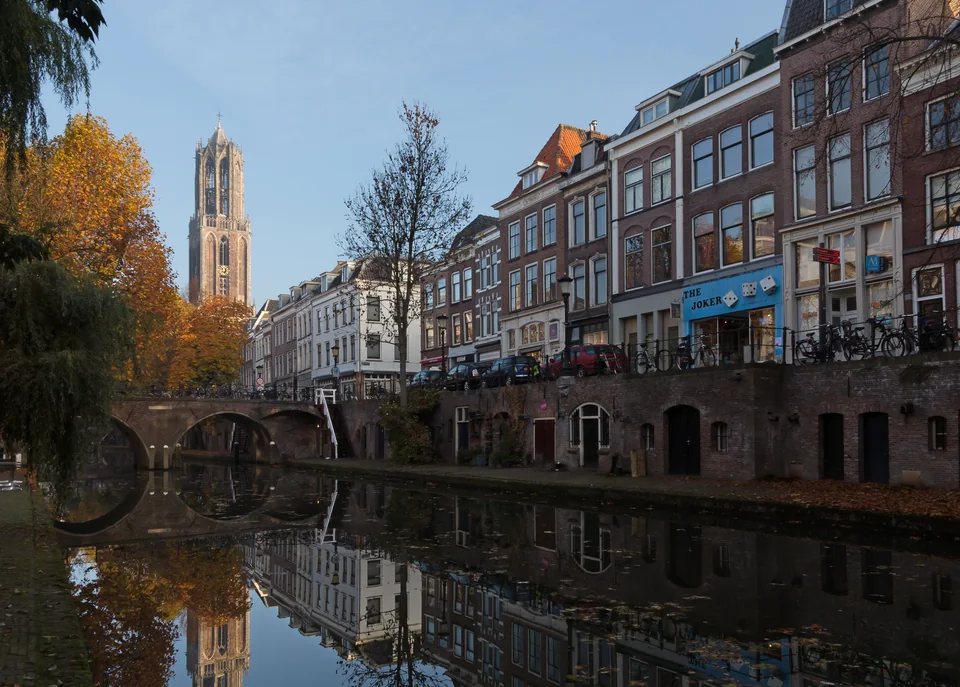
First-year costs at a glance
| Item | Amount | How often |
|---|---|---|
| Bachelor's, university of applied sciences | $10,640–11,967 (€9,360–10,528) at Saxion and THUAS | Per academic year |
| Bachelor's, research university | $15,004–24,780 (€13,200–21,800) for most programmes | Per academic year |
| Master's, research university | $23,871–38,989 (€21,000–34,300) at Erasmus, Maastricht, TU Delft and UvA | Per academic year |
| Medicine and dentistry | $36,374–39,443 (€32,000–34,700) | Per academic year |
| Living costs incl. rent | $1,137–1,705 (€1,000–1,500), Study in NL estimate | Per month |
| Minimum funds for the permit | $1,285 (€1,130.77), i.e. $15,424 (€13,569) for 12 months | Proven before the permit is issued |
| IND fee for the student permit and MVV | $289 (€254) | First application and each extension |
| Application handling fee | $85–114 (€75–100) at some institutions | Per application |
| Insurance for students who do not work | $774 (€681) a year — the policy Saxion arranges for first-year students | Per year |
| Dutch basic health insurance if you take a job | About $151 (€133) | Per month |
Flights, translations and apostilles, language tests, rental deposits and furniture are not included because they depend on your situation.
Who pays about $3,000 and who pays $10,000–40,000
There are two fee levels. The statutory fee is $3,062 (€2,694) in 2026/27 and $3,150 (€2,771) in 2027/28. It applies to EU/EEA, Swiss and Surinamese nationals, and to holders of certain Dutch residence permits, provided they have not already earned the same type of Dutch degree. A student residence permit does not qualify.
Everyone else pays the institutional fee set by the institution. It varies by university, faculty, degree level and intake year. Study in NL quotes $10,220–22,710 (€9,000–20,000) for bachelor's and $13,630–34,060 (€12,000–30,000) for master's, but medicine and some programmes exceed that.
Bachelor's fees for 2026/27 and what is known for 2027/28
| Institution | Programmes | 2026/27 | 2027/28 |
|---|---|---|---|
| Saxion (applied) | Bachelor's | $10,640 (€9,360) | Not yet published |
| The Hague University of Applied Sciences | Bachelor's | $11,967 (€10,528) | Not yet published |
| Maastricht University | Low-tier programmes, e.g. International Business | $15,004 (€13,200) | $15,232 (€13,400) for International Business |
| Maastricht University | High tier | $20,915 (€18,400) | $21,256 (€18,700) |
| Erasmus University Rotterdam | Most schools; RSM | $15,345 (€13,500); $15,914 (€14,000) | Not yet published |
| University of Groningen | Most faculties; science and engineering | $15,914 (€14,000); $22,507 (€19,800) | Not yet published |
| University of Amsterdam | Economics and business; social sciences; humanities and law; science | $15,800; $18,949; $19,892; $24,780 (€13,900; €16,670; €17,500; €21,800) | Not yet published |
| TU Eindhoven | Bachelor's | $21,143 (€18,600) | $25,462 (€22,400) |
| TU Delft | Bachelor's | $22,627 (€19,906) | $23,374 (€20,563) |
| University colleges | AUC, UCG, UCM | $19,551–23,223 (€17,200–20,430) | Not yet published |
Within one university fees can differ by $9,000 a year, so budget from the specific programme page. Increases are uneven: TU Delft raises its bachelor's fee by about 3%, TU/e by 20%.
Master's fees
| Institution | Programmes | 2026/27 |
|---|---|---|
| The Hague University of Applied Sciences | English-taught full-time master's | $15,914 (€14,000) |
| TU Eindhoven | Master's | $24,666 (€21,700); $25,462 (€22,400) in 2027/28 |
| Erasmus University Rotterdam | Most schools; RSM | $23,871 (€21,000); $29,327 (€25,800) |
| Maastricht University | Low and high tier | 2026/27: see the programme page; in 2027/28 $24,780 (€21,800) and $28,986 (€25,500) |
| University of Amsterdam | Economics (Amsterdam School of Economics); science, 2-year; science, 1-year | $24,780 (€21,800); $29,554 (€26,000); $38,989 (€34,300) |
| TU Delft | Master's | $29,137 (€25,633); $30,099 (€26,479) in 2027/28 |
A one-year master's can cost more per year but less in total: at UvA one year of science is $38,989, two years $59,108. See master's in the Netherlands.
Transitional fees
When a university raises fees sharply, current students often keep an indexed lower rate. At TU Delft, bachelor's students who started in 2025/26 at $19,660 (€17,310) pay $20,640 (€18,175) in 2026/27 and 2027/28, while new students pay $22,600 (€19,906). At TU/e, bachelor's students who started in 2024/25 or earlier pay a reduced fee until 31 August 2028 ($16,120 (€14,200) in 2026/27). UvA keeps the rate of enrolled students with 3.62% indexation. New students do not benefit, but it shows how fast base fees are rising.
Living costs
Study in NL puts student spending at $1,137–1,705 (€1,000–1,500) a month. The average breakdown from the budget institute Nibud (2024):
| Item | Per month |
|---|---|
| Rent | $638 (€561) |
| Groceries | $277 (€244) |
| Leisure and sport | $272 (€239) |
| Transport | $76 (€67) |
| Books and materials | $47 (€41) |
| Dutch basic health insurance, if you work | $151 (€133) |
Without insurance that is about $1,309 (€1,152) a month, close to the IND norm. A room costs $512–1,137 (€450–1,000) a month, about $625 (€550) on average; Amsterdam is at the top of the range, smaller university towns such as Enschede at the bottom. TU Delft estimates $1,033 (€909) a month for a student in student housing. An off-peak rail discount card saves 40%, and a bike replaces local transport.
Housing is the biggest budget risk: Study in NL warns of a severe shortage and advises arranging a room before arrival. Never pay for a room you have not seen at least by video, and never pay brokerage fees.
Permit funds: how much to show and how universities handle it
The IND requires proof of living funds at the 2026 higher-education rate of $1,285 (€1,130.77) a month. The rate is reviewed every year; the 2027 amount will be published in early 2027. These funds come on top of tuition.
Universities handle the proof differently:
- TU Delft sends non-EU students a first invoice of $38,768 (€34,106): bachelor's tuition, $16,141 (€14,200) for living costs, the IND fee and a housing fee. The living-cost amount is refunded to a SEPA bank account about three weeks after the programme starts, minus fees.
- Saxion asks for proof of $14,735 (€12,963) and arranges first-year insurance at $774 (€681) a year.
If you pay from a country where euro transfers are restricted, settle early which bank account will be used for tuition and proof of funds, and use only lawful routes — see how to pay for studies abroad from Russia. The permit procedure is covered in our Dutch student residence permit guide and deadlines in applying to Dutch universities.
One-off and hidden costs
- IND fee: $289 (€254) for the first application and each extension, paid via the institution.
- Application handling fee: $85–114 (€75–100) at some institutions; UvA's $114 (€100) is non-refundable.
- University housing fee: $324 (€285) at TU Delft.
- Insurance: if you only study, you may not take out Dutch public health insurance and need private or home-country cover. Once you take a job, Dutch basic insurance becomes compulsory — about $151 (€133) a month. If the CAK agency writes to you, respond within 3 months or face a fine of $602 (€529.72).
- Foundation year, if your diploma is not enough: Twente Pathway College, September 2026 — $21,597 (€19,000) engineering, $21,029 (€18,500) business and social sciences.
- Documents and tests: translations, apostilles, IELTS or TOEFL, and travel to the embassy for the MVV sticker.
Three first-year scenarios
Twelve months: 2026/27 tuition, living costs at the IND norm ($15,424) or at the top of Study in NL's range — $1,700 (€1,500) a month, $20,461 a year, a more realistic base for Amsterdam, insurance as in the Saxion example, the IND fee and application fees. Flights, deposits and furniture are excluded.
| Scenario | Tuition | Living | Fees and insurance | First-year total |
|---|---|---|---|---|
| Bachelor's at Saxion, Enschede | $10,640 | $15,424 | $1,063 | about $27,126 (€23,864) |
| Bachelor's at Groningen, most faculties | $15,914 | $15,424 | $1,177 | about $32,514 (€28,604) |
| Bachelor's at TU Delft | $22,627 | $15,424 | $1,387 | about $39,438 (€34,695) |
| Science at UvA, Amsterdam | $24,780 | $20,461 | $1,177 | about $46,417 (€40,835) |
The full degree: count every year
| Programme | Length | Tuition only, known fees |
|---|---|---|
| Saxion bachelor's | 4 years | $42,558 (€37,440) at 2026/27 rates |
| THUAS bachelor's | 4 years | $47,869 (€42,112) at 2026/27 rates |
| Erasmus bachelor's, most schools | 3 years | $46,036 (€40,500) at 2026/27 rates |
| Groningen bachelor's, most faculties | 3 years | $47,741 (€42,000) at 2026/27 rates |
| TU Delft bachelor's | 3 years | $69,375 (€61,032): year one at 2026/27, years two and three at 2027/28 rates |
Four years at a university of applied sciences cost about as much in tuition as three at an affordable research university, but the fourth year adds another ~$15,000 of living costs. Fees are indexed every year, so add a buffer. For comparison, see the cost of studying in Austria or bachelor's in Germany.
How to reduce costs
- Match the institution type to your goal. Applied universities are cheaper per year; research universities are one year shorter. See bachelor's in the Netherlands.
- Compare cities. A year's rent difference between Amsterdam and a smaller university town can equal a sizeable share of tuition.
- Apply for the NL Scholarship. $5,684 (€5,000) once, in the first year, for non-EEA students without a Dutch degree. Participants in 2026/27 included TU/e, Maastricht, Radboud, Groningen, Twente, Utrecht, VU and Wageningen, plus Saxion, THUAS, Fontys, Hanze and other applied universities. The list changes every year, and each institution sets its own deadline.
- Look for university scholarships. Usually partial fee waivers; apply together with your programme application. Overview: scholarships abroad in 2026.
- Do not rely on part-time work. On a student permit, employment requires a TWV permit arranged by the employer and one of two regimes: up to 16 hours a week, or full-time in June, July and August. Your first paycheck also triggers compulsory insurance of about $151 a month.
Common budgeting mistakes
- Using a national average instead of the fee for your programme and intake year.
- Treating the IND norm as the real cost of living in Amsterdam.
- Forgetting that TU Delft and some other universities collect living-cost funds upfront with tuition.
- Planning to cover rent with part-time work.
- Ignoring fee increases in years two and three.
- Leaving the payment route until the last month.
FAQ
Tuition from $10,640 (€9,360) at a university of applied sciences to $22,000–25,000 for technical programmes at research universities; medicine $36,000–39,000. With living costs, insurance and fees, the first year is roughly $27,000–46,000.
Not for non-EU/EEA nationals. The reduced $3,062 (€2,694) fee is for EU/EEA, Swiss and Surinamese nationals. The NL Scholarship and university scholarships reduce costs for others but cover only part of them.
In 2026, $1,285 (€1,130.77) a month, or $15,424 (€13,569) for 12 months. The university checks the proof: some collect the amount upfront (TU Delft), others accept bank statements or a sponsor.
Often yes, by direct debit, but that usually requires a bank account in the SEPA zone (Hanze says so explicitly). TU Delft offers nine instalments for a $27 (€24) fee. Some institutions require the first year to be paid before the permit application — TU Delft's first invoice and Twente Pathway College work this way.
Only partly. You are limited to 16 hours a week or full-time in summer, your employer needs a TWV, and working makes Dutch health insurance compulsory. Expected earnings do not count towards the IND funds requirement.
At research universities usually $24,000–30,000 a year, up to $39,000 for some one-year science programmes; applied universities are cheaper, e.g. $15,914 (€14,000) at THUAS.
Sources
- Study in NL: tuition and application fees, living costs, housing, health insurance, NL Scholarship — checked 24 Sep 2026
- Fees: UvA, TU Delft, TU/e, Erasmus, Groningen, Maastricht: fee tiers, Maastricht: International Business, THUAS, Saxion, Twente Pathway College, Hanze: payment — checked 24 Sep 2026
- TU Delft: student costs in Delft — checked 24 Sep 2026
- IND: required amounts 2026, fees, student permit and work — checked 24 Sep 2026
- UvA: application fee — checked 24 Sep 2026
- Exchange rate: ECB, 29 Sep 2026, €1 = $1.1355
Next steps
- Universities in the Netherlands for International Students: Types, the 14 Research Universities and Real Entry Routes
- Master's in the Netherlands: Admission, Costs and Deadlines for 2027/28
- Dutch Student Residence Permit: MVV Entry Visa and Study Permit Explained
- Applying to Dutch Universities for 2027/28: Deadlines, Studielink, Documents and the Residence Permit
- Studying in the Netherlands for international applicants
- How to Pay for Studies Abroad from Russia: What Works in 2026
