
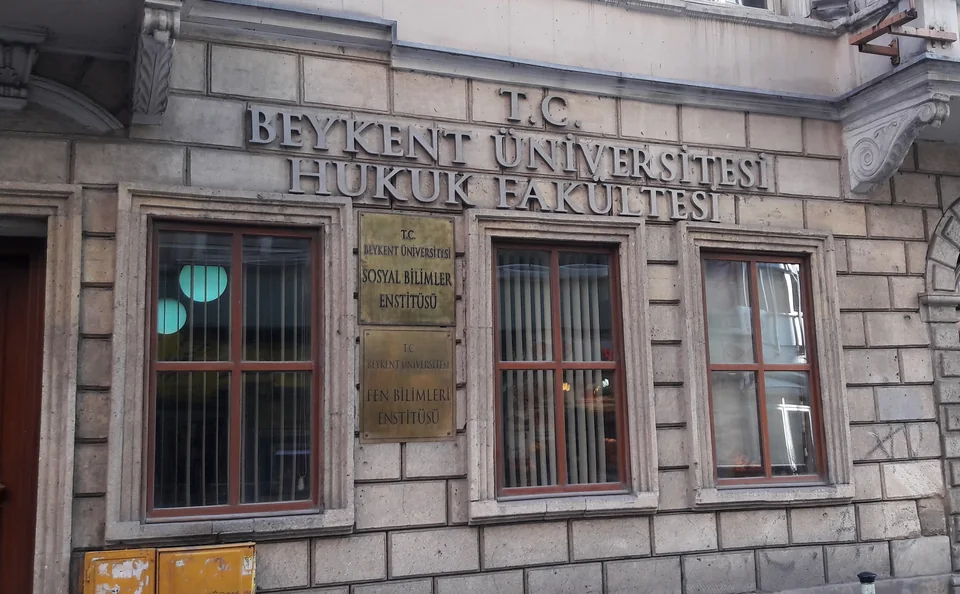
İstanbul Beykent Üniversitesi is a private foundation (vakıf) university in Istanbul, founded by the Adem Çelik–Beykent Education Foundation in 1997. For international applicants it is one of the lower-cost private options in the city: the university's own fee calculator for 2026/27 lists most bachelor's programmes at $2,500–2,700 a year and Medicine and Dentistry at $11,000. You apply with your school-leaving certificate (or as a final-year student), and no entrance exam is listed as compulsory for the international quota. The real filters are the language of the programme and the quota: English-taught degrees ask for TOEFL iBT 90 or a preparatory year, while Medicine and Dentistry are taught in Turkish only, and the admission rules ask for a C1 Turkish certificate.
| At a glance | As of 1 October 2026 |
|---|---|
| Status | Private foundation university, established by Law No. 4282 of 9 July 1997 |
| Location | Istanbul, European side: Ayazağa–Maslak, Beylikdüzü, Hadımköy and Taksim campuses |
| Size | 30,000+ students, 9 faculties, 71 bachelor's and 55 associate (önlisans) programmes, 111 student clubs |
| Fees 2026/27 | Bachelor's $2,500–2,700 per year; Medicine and Dentistry $11,000 per year; master's $1,400–2,100 for the whole programme |
| Languages | Turkish and English; a Russian translation and interpreting degree |
| Bachelor's intake | Autumn semester only |
| Dormitory | Ayazağa: $5,400–11,050 for ten months in 2026/27 (monthly payment) |
| Ranking | THE World University Rankings 2027: 2001+ band |
Beykent is not the same institution as Beykoz Üniversitesi, a separate private university in Istanbul with its own fees and programmes. The Beykent schools (kindergarten to high school) share a founder with the university but play no part in university admission. Since 9 February 2023 the official name has been İstanbul Beykent Üniversitesi; older documents still say "Beykent Üniversitesi".
Who Beykent suits
| Strengths | Limitations |
|---|---|
| Low published fees: most bachelor's degrees cost $2,500 a year | Modest ranking position (THE 2027: 2001+) |
| Over 20 English-taught bachelor's programmes in engineering, business, psychology and design | Medicine and Dentistry are Turkish-medium only, with a C1 requirement |
| Admission on school results, with no SAT or TR-YÖS on the mandatory document list | One bachelor's intake a year, in the autumn |
| Erasmus+ links with more than 90 institutions in about 25 European countries | Four campuses far apart; the university dormitory is only at Ayazağa |
| A Russian translation degree and a Russian preparatory course | The English exemption table starts at TOEFL iBT 90 and does not list IELTS |
Beykent fits students who want an English-taught degree in Istanbul on a small budget and do not need a research-intensive university. If ranking and research matter more, compare it with Koç University and Yeditepe: both charge considerably more, and their current fees are listed on their profiles. Altınbaş and Gelişim sit in a similar price range. For the wider picture, see our guide to Istanbul universities and the full Turkey university catalogue.
Programmes and teaching language
Beykent has nine faculties: Medicine; Dentistry; Engineering and Architecture; Economics and Administrative Sciences; Law; Communication; Fine Arts; Arts and Sciences; and Health Sciences. There is also a vocational school offering two-year associate degrees, a language school (the School of Foreign Languages) and a graduate institute.
| Field | English-taught bachelor's programmes | Turkish-taught |
|---|---|---|
| Engineering and IT | Computer, Civil, Industrial and Mechanical Engineering; Management Information Systems | Electrical and Electronics, Chemical and Software Engineering; Software Development |
| Business and economics | Business Administration, Economics, Finance and Banking, International Trade and Finance, Logistics Management | Capital Markets, Tourism Management, Health Management |
| Architecture and design | Architecture, Interior Architecture, Industrial Design, Graphic Design, Visual Communication Design, Digital Game Design | Textile and Fashion Design, Gastronomy, Acting |
| Social sciences and media | Psychology, International Relations, Political Science and Public Administration, New Media, Radio, Television and Cinema | Law, Sociology, Media and Communication, Public Relations and Advertising, History, Mathematics |
| Languages | English Language and Literature, English Translation and Interpreting | Turkish Language and Literature; Russian Translation and Interpreting (Russian and Turkish) |
| Medicine and health | — | Medicine, Dentistry, Nursing, Physiotherapy, Nutrition and Dietetics, Midwifery |
The 2026/27 fee table also lists newer degrees in Artificial Intelligence and Machine Learning, Mathematics and Computer Sciences, and Statistics and Computer Sciences without a language tag, so confirm the teaching language on the faculty page before you apply. The admission rules describe Logistics Management as a mixed ("karma") programme, meaning part of the teaching is in Turkish.
Entry requirements for school leavers
Final-year school students and school graduates can apply for the international quota. International nationals must not be studying at, or have graduated from, a high school in Türkiye; embassy schools and international schools registered in the MOBİS system are the exceptions. Turkish citizens by birth and dual nationals follow separate rules set out in the admission directive.
For the online application you need:
- your school-leaving certificate with an English or Turkish translation certified by an embassy or notary (or, if you have not graduated yet, a school letter confirming you are in your final year);
- your transcript;
- the personal-data page of your passport;
- SAT, Abitur, International Baccalaureate or GCE results, if you have them (SAT and similar entrance tests are valid for two years; school-leaving exams have no time limit);
- a Turkish proficiency certificate for Turkish-taught programmes.
A note for Russian applicants: the International Baccalaureate organisation is designated undesirable in Russia.
None of these exams is compulsory, but meeting the conditions is not an offer. The directive states that applicants are assessed against the accepted exams, the minimum scores in its annex and the available quota. The university senate sets the international quotas every year and submits them to the Council of Higher Education (YÖK) for approval. Only YÖK can move unfilled places in Medicine, Dentistry and Law.
Turkish. Two official documents disagree here. The online application page asks for a B1 Turkish certificate. The admission directive (senate decision of 27 March 2026) lists a different requirement among the application documents: C1 for Medicine and Dentistry and B2 for other Turkish-taught programmes. A separate article of the same directive lets students start any Turkish-taught bachelor's or associate programme at B2, certified by TÖMER or a YÖK-accredited test centre. Students without that certificate sit the BU-TÖMER exam: those who pass start their degree, the rest join the Turkish preparatory year. Plan by the stricter document, B2 and C1 for Medicine and Dentistry; the university assesses the final level. Applicants who spent at least their last three school years in Turkish-medium schools in Türkiye are exempt. International students admitted to Russian Translation, English Translation and Logistics Management must also prove their Turkish: without a Turkish certificate they complete Turkish preparation first and then English preparation.
English. Any one of these results exempts you from the English preparatory year:
| Test | Minimum |
|---|---|
| TOEFL iBT | 90 |
| PTE Academic | 75 |
| Cambridge C2 Proficiency (CPE) | Grade C |
| Cambridge C1 Advanced (CAE) | Grade A |
| YDS, e-YDS or YÖKDİL (Turkish national tests) | 75 |
IELTS does not appear in the table. Without one of these certificates you take the School of Foreign Languages proficiency exam (BULET), and if you do not pass you spend a year in English preparation. The Russian translation degree has its own thresholds: TORFL 84 or YDS Russian 75.
Programmes that admit through a talent exam also require the university's own aptitude test, BÜÖYS.
Application dates
Under YÖK rules, Beykent admits international students to bachelor's and associate programmes for the autumn semester only. In the 2026/27 academic calendar, international student registration ran from 1 July to 30 November 2026, and autumn classes began on 21 September. The 2027/28 calendar is published separately, so expect the window to open in summer and apply early if you need a preparatory year or a dormitory place. BU-TÖMER Turkish courses run year-round in blocks of about nine weeks; the autumn 2026 block ran from 31 August to 30 October.
How the application works
- Choose a programme, confirm its teaching language and complete the online form at apply.beykent.edu.tr.
- Upload your translated certificate, transcript, passport and any language results.
- Receive the decision. Once an admitted student pays the advance instalment, the university can issue an acceptance letter on request for the student visa application.
- Register in person with the apostilled originals of the documents you uploaded, the original translations, the apostilled school-leaving certificate, a passport copy and four colour photos. Students living abroad may be asked for a Turkish student visa and the equivalence certificate (denklik). Registration is not accepted by post or with missing documents, and it is not completed if the fee is not paid within the announced period.
- Within one month of entering Türkiye, apply for a student residence permit and take out health insurance valid in Türkiye.
Denklik is the Turkish Ministry of National Education's confirmation that your school education equals a Turkish high-school diploma. Beykent may register you without it, but you must hand it to Student Affairs before graduation or the university will not process your diploma. Our denklik guide explains how to obtain it.
Tuition fees for 2026/27
Beykent publishes international fees in US dollars through its 2026/27 calculator. Bachelor's and associate fees are per year; master's and doctoral fees cover the whole programme.
| Programme | Fee |
|---|---|
| Medicine, Dentistry (Turkish) | $11,000 per year |
| Business Administration (English), Computer Engineering (English and Turkish), Software Engineering | $2,700 per year |
| Nursing, Midwifery, Nutrition and Dietetics, Physiotherapy (Turkish) | $2,700 per year |
| All other bachelor's programmes, including Architecture, Psychology, Law, Economics, Civil and Mechanical Engineering | $2,500 per year |
| Two-year associate programmes | $1,600–1,900 per year |
| Master's: non-thesis / thesis / distance learning | $1,600 / $2,100 / $1,400 per programme |
| Master's in Clinical Psychology | $12,000 per programme |
| Doctorate | $4,500 per programme |
The preparatory year for bachelor's and associate programmes costs the same as one year of the chosen programme, so $2,500 or $2,700. Medicine and Dentistry are the exception, with a preparatory fee of $3,950. Switching from a non-thesis to a thesis master's costs an extra $1,000. The Board of Trustees sets fees every year.
Some agency listings show a higher "full" price, such as $3,500 or $18,000 for Medicine, followed by a "discount" down to $2,500 or $11,000. Plan with the figure in the official calculator, which is the fee the university publishes for international students in 2026/27; your acceptance letter confirms the final amount. Beykent's website sets out no separate scholarship scheme for international students. The government's Türkiye Bursları scholarship is a separate competition, covered in our Türkiye Scholarships guide. If you pay from Russia, our guide to legal payment routes from Russia explains the options.
When you compare Beykent's Medicine ($11,000 a year, Turkish only) with other private universities in Istanbul such as Medipol, use fees for the same academic year and the same teaching language. The low price is largely a language trade-off: the rules ask for C1 Turkish, and without it you usually add a preparatory year at $3,950. Our guide to studying medicine in Turkey covers the wider route.
Preparatory year and Turkish courses
The School of Foreign Languages (YDYO) runs English and Russian preparatory programmes plus an English support programme for degree students. The preparatory year is taught in modules, and students who pass the BULET proficiency exam move on to the first year.
Turkish is taught by BU-TÖMER at the Beylikdüzü and Taksim campuses. Each level from A1 to C1 lasts about nine weeks and costs $425; a group opens once at least eight students enrol, and the fee is paid by bank transfer to the university's US-dollar account before the course starts. Note the directive's rule that students in Turkish preparation can obtain a residence permit only if they hold a student visa.
On the BU-TÖMER scale, B2 is 75–84 out of 100 and C1 is 85–94; the directive allows students to start a Turkish-taught degree from B2.
Master's and doctoral study
The Institute of Graduate Studies offers master's degrees with and without a thesis, distance-learning master's programmes and doctorates. English-taught master's options include Business Management, Economics and Finance, Industrial Engineering, Mechanical Engineering, International Relations, Political Science and Public Administration, and English Language and Literature.
To apply, you upload your bachelor's diploma or a graduation letter, transcript, passport and any language certificate. At registration you add the originals, a recognition certificate from YÖK (tanınma belgesi), six photos and, for health programmes, an equivalence certificate. Turkish-taught programmes require a TÖMER certificate at B1. If a preparatory stage is required, the calculator lists it at $1,600, or $1,800 on English-taught programmes. For the general process, read our guide to master's programmes in Turkey.
Dormitory and first-year budget
Beykent runs one dormitory, at Ayazağa, within walking distance of the Ayazağa–Maslak campus. It has 121 rooms, each with its own bathroom, a mini fridge and air conditioning; rooms are cleaned on weekdays and breakfast is included. For 2026/27 the stay is charged for ten months, from 15 September 2026 to 15 July 2027, with VAT included.
| Room | Per month | Ten months | Paid upfront (10% off) |
|---|---|---|---|
| Single (types A–E) | $880–1,110 (₺43,200–54,200) | $8,810–11,050 (₺432,000–542,000) | $7,930–9,950 (₺388,800–487,800) |
| Double (types A–E) | $560–670 (₺27,500–33,000) | $5,610–6,730 (₺275,000–330,000) | $5,050–6,060 (₺247,500–297,000) |
| Triple (types B, D, E) | $540–590 (₺26,500–29,000) | $5,400–5,910 (₺265,000–290,000) | $4,860–5,320 (₺238,500–261,000) |
The deposit is ₺15,000 ($310). Siblings get a 10% discount, and staying during summer school costs one extra month. Priority goes to students whose families live outside Istanbul, and applications open on dates set by the Directorate of Dormitories. Before you book, check which campus your faculty uses: the campuses are spread across the European side, and Maslak is an awkward base if your classes are in Beylikdüzü or Hadımköy.
A sample year: English-taught Computer Engineering ($2,700) plus a double room paid upfront ($5,050–6,060) comes to about $7,750–8,760, before meals beyond breakfast, transport and personal spending. If you need the English preparatory year, add another $2,700 and a further year of housing. For private rentals and city prices, see student accommodation in Turkey and cost of living in Turkey.
Entry, residence permit and insurance
Türkiye's Ministry of Foreign Affairs lets Russian ordinary-passport holders enter visa-free for tourism and business for up to 60 days; Kazakhstan citizens get up to 90 days in any 180, and Belarus citizens up to 30 days. That does not cover study. Beykent's rules allow the university to ask foreign students living abroad for a student visa from a Turkish consulate at registration, and students in Turkish preparation must have one. After registering, students apply for a study residence permit at the Provincial Directorate of Migration Management (İl Göç İdaresi) within one month and cover the costs themselves; the migration authority makes the decision. The directive also lets the university ask for proof of funds, with the amount reset every year. Health insurance valid in Türkiye is required for the whole period of study. See our Turkish student visa guide for details.
Degree recognition
Beykent is a state-recognised university within the YÖK system and awards Turkish degrees. In Russia, foreign degrees are recognised through the National Information Centre (nic.gov.ru); in Kazakhstan, through ENIC-Kazakhstan. For Medicine and Dentistry graduates, recognition does not by itself grant the right to practise: Russia and Kazakhstan each require a separate licensing route.
Common mistakes
- Preparing for IELTS instead of TOEFL iBT. IELTS is not in the exemption table; without TOEFL iBT 90, PTE 75 or a Cambridge exam you will sit BULET.
- Choosing Medicine at Beykent expecting English teaching. Medicine and Dentistry here are Turkish-medium and require C1.
- Planning a February start. International bachelor's and associate students are admitted for the autumn only.
- Arriving for registration without apostilles on your certificate and translations. Incomplete files and postal registrations are refused.
- Booking the Ayazağa dormitory before checking where your faculty teaches.
- Leaving denklik until the end: without it, the university will not issue your diploma.
FAQ
Can I get into Beykent without an entrance exam?
Yes. The international quota lists no compulsory entrance exam: you submit your translated school certificate, transcript and passport, and add SAT or similar results only if you have them. The university decides on admission within the quota approved by its senate and YÖK.
How much does Beykent University cost for international students?
According to the 2026/27 calculator, most bachelor's programmes cost $2,500 a year, while English-taught Business Administration, Computer Engineering and the health programmes cost $2,700. Medicine and Dentistry are $11,000 a year, and most master's degrees cost $1,400–2,100 in total.
Does Beykent teach Medicine in English?
No. The fee table lists Medicine and Dentistry as Turkish-medium only, and the admission directive requires C1 Turkish. Students without a certificate sit the BU-TÖMER exam and, if they fall short, take a preparatory year that costs $3,950 for these programmes.
Is IELTS accepted for English-taught programmes?
IELTS does not appear in the list of results that exempt students from the preparatory year, which names TOEFL iBT (90), PTE Academic (75), Cambridge CPE and CAE, and the Turkish YDS and YÖKDİL tests. Whether another certificate is accepted in your case is decided by Beykent's School of Foreign Languages.
When should I apply to Beykent?
Beykent admits international bachelor's students for the autumn semester only. For 2026/27, international registration was open from 1 July to 30 November, and teaching began on 21 September. The university will announce 2027/28 dates in its next academic calendar.
Does Beykent have a dormitory for international students?
Yes. The Ayazağa dormitory near the Maslak campus is open to all Beykent students. In 2026/27 a double room costs $560–670 a month and a single $880–1,110, charged for ten months with a ₺15,000 deposit and breakfast included. The Directorate of Dormitories allocates places.
Do Russian citizens need a student visa?
Russian citizens can enter Türkiye visa-free for up to 60 days, but students must apply for a residence permit within a month of arrival. Beykent may ask for a student visa at registration, and it is compulsory for Turkish preparatory students. A Turkish consulate issues the visa, and the migration authority decides on the residence permit.
Sources
- Beykent: international student tuition calculator 2026–2027
- Beykent: requirements for associate and bachelor's applicants, for master's and doctoral applicants
- Beykent: directive on admission of international students, senate decision of 27.03.2026 (PDF, Turkish)
- Beykent: 2026–2027 academic calendar (Turkish)
- Beykent: Ayazağa dormitory prices 2026–2027 (Turkish), dormitory facilities, allocation rules
- Beykent: campuses, history (Turkish), international office and Erasmus+
- BU-TÖMER: Turkish course schedule and fee, School of Foreign Languages
- YÖK, Study in Türkiye: Beykent profile
- Republic of Türkiye Ministry of Foreign Affairs: visa information
- Times Higher Education: Beykent University
Checked on 1 October 2026. ECB reference rate for 01.10.2026: €1 = $1.1298 = TRY 55.3993, so $1 ≈ TRY 49.03; amounts rounded to the nearest $10.
If you want to work through your route to Beykent, send a request: programme choice, document preparation and submission are provided under an agreement with StudyU, and the university makes the admission decision.
During the free initial consultation, we clarify your goal, profile, timing, and budget and identify the next realistic step.
