
Koç University is a private non-profit research university in Istanbul, founded in 1993. Its undergraduate programmes are taught in English and admission is selective: international applicants need a strong SAT, ACT, A-level or accepted national exam result, English at TOEFL iBT level and a full application with a video interview. Tuition is $38,000 a year and medicine $59,000 (rates for students admitted in fall 2025/26). All international bachelor's applicants outside Medicine are screened for a merit tuition waiver of a quarter up to the full fee, with no separate form.
| At a glance | Status on 30 September 2026 |
|---|---|
| Type | Private non-profit (foundation, or vakıf) university |
| Location | Sarıyer, Istanbul, on the road to the Black Sea coast |
| Undergraduate | 22 programmes in 7 colleges and schools |
| Language | English; Law also requires Turkish at C1 |
| Undergraduate tuition | $38,000 per year; Medicine $59,000 (2025/26 intake) |
| Koç scholarships | Merit-based tuition waivers of 25%, 50%, 75% or 100%; none for Medicine |
| Fall 2026 deadlines | Early 1 Jan–1 Mar, regular 2 Mar–31 May, late 1 Jun–15 Jul; Medicine 15 Apr–31 May |
| International seats | 380 places in 2025/26 under quotas approved by Türkiye's Council of Higher Education (YÖK) |
| Ranking | THE World University Rankings 2027: 326–350 band |
Who Koç suits, and when to look elsewhere
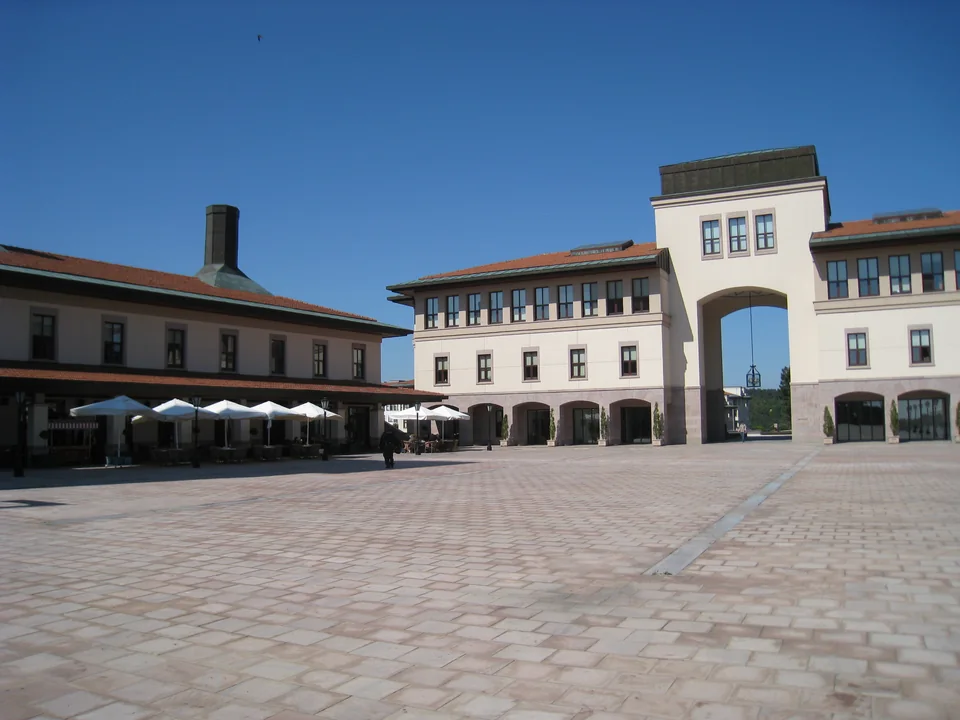
Koç makes sense for academically strong students who want an English-taught degree from a Turkish research university and who can either pay the full fee or compete for a large merit waiver. The campus is self-contained and suburban: teaching, housing and sport sit together, but central Istanbul is a long ride away.
If your budget is closer to $10,000–20,000 a year and you have no strong SAT, compare other private Istanbul universities such as Sabancı, Özyeğin, Kadir Has and Yeditepe. Public universities like İTÜ and METU ask for comparable scores but charge about $2,000 a year. Wider overviews: universities in Istanbul and top-ranked universities in Turkey for international students. All our Turkish university profiles are listed in the Turkey hub, and the Istanbul city guide covers districts, transport and prices.
Undergraduate programmes
All programmes last four years except Medicine (six). Students can add a double major, minor or certificate track.
| College / school | Programmes |
|---|---|
| Administrative Sciences and Economics | Economics, Business Administration, International Relations |
| Engineering | Computer, Electrical and Electronics, Industrial, Chemical and Biological, Mechanical Engineering |
| Sciences | Physics, Chemistry, Mathematics, Molecular Biology and Genetics |
| Social Sciences and Humanities | Archaeology and History of Art, Comparative Literature, History, Psychology, Philosophy, Sociology, Media and Visual Arts |
| Law School | Law (LLB) |
| School of Medicine | Medicine (MD), six years |
| School of Nursing | Nursing (BSc) |
International quotas are small and uneven. In 2025/26 Psychology had 45 places, Business Administration 40 and Media and Visual Arts 30, while each engineering programme, Economics and Medicine had 20. Archaeology, Philosophy, Physics and Chemistry took five students each. Koç said fall 2026 quotas would follow on the same page, but as of 30 September 2026 only the 2025/26 figures were posted, so use those as the guide.
Entry qualifications and minimum scores
You apply with one qualifying result: an international exam or an accepted national qualification for your country. Scores below the minimum are rejected outright; scores above it only get the file a full holistic review of grades, references and interview.
| Qualification | Economics, social sciences, nursing | Sciences | Engineering | Law | Medicine |
|---|---|---|---|---|---|
| SAT (out of 1600) | 1200 | 1260 | 1300 | 1420 | 1450 |
| ACT (out of 36) | 25 | 27 | 28 | 32 | 33 |
| TR-YÖS (out of 500) | 425 | 450 | 450 | not accepted | 475 |
| Russia, EGE (Unified State Exam) | 220 across three related subjects | 230 | 230 | 240 | 240 |
| Kazakhstan, ENT | 110 | 120 | 120 | 125 | 130 |
EGE rules. Three subjects related to the programme count, and Russian language is excluded. Engineering and Science prefer Mathematics, Computer Science, Physics, Chemistry or Biology; Medicine prefers Mathematics, Biology, Physics and Chemistry.
ENT rules. The total combines three compulsory blocks (reading literacy, mathematical literacy, history of Kazakhstan) and two electives. There are sub-thresholds too: engineering needs at least 40/50 in the core blocks and 80/90 in the electives. Graduates of Nazarbayev Intellectual Schools can apply with the NIS Grade 12 certificate and three NIS A-levels.
Other routes. Koç accepts A-levels from Cambridge International, Oxford AQA or Pearson Edexcel (engineering needs an A in Mathematics plus two Bs), at least four AP exams, the IB Diploma at 33–41 points depending on college, the European Baccalaureate and, for Medicine, an MCAT at the 70th percentile. SAT, ACT, EGE and ENT scores are valid for two years. SAT sections must come from one sitting; superscores are refused.
Only the central TR-YÖS run by ÖSYM counts; YÖS exams set by individual universities are not accepted. See our YÖS exam guide.
A note for applicants from Russia: the International Baccalaureate Organization is on Russia's list of undesirable organisations; this does not affect how Koç evaluates the IB Diploma.
English and Turkish requirements
Minimum scores to skip the preparatory year:
- TOEFL iBT: 4.5 out of 6 for tests taken from 21 January 2026; before that, 80 overall with at least 20 in Writing (Home Edition and MyBest not accepted);
- Cambridge CAE grade C (180) or CPE grade C (200), valid three years;
- PTE Academic 67;
- Oxford Test of English Advanced 141–145 out of 170;
- e-TEP 74.
IELTS is not accepted, citing YÖK rules. TOEFL or PTE taken inside Türkiye only counts if sat in a state university building. Applicants who are academically admissible but lack an English score may be offered the one-year English Language Center (ELC) programme.
Turkish. Law requires CEFR C1 from TÖMER or the Yunus Emre Institute. Medicine is taught in English, but patients speak Turkish: students need B1 before year two and a C1 certificate before year four.
Application dates for fall 2026
| Round | Dates |
|---|---|
| Early | 1 January – 1 March 2026 |
| Regular | 2 March – 31 May 2026 |
| Late | 1 June – 15 July 2026, extended to 5 August |
| Medicine | 15 April – 31 May 2026 |
| Decision | About 4–6 weeks after submission |
Koç's housing policy covered applications received by 15 July; the university allocates on-campus rooms. Dates for fall 2027 will appear on the How to Apply page late in 2026, so check them there rather than in last year's articles.
Planning tip. If your EGE or ENT happens in the final school year, the early round is out of reach because results arrive in summer. Either sit the SAT or ACT in year 10–11 and apply in January–February, or apply in the regular round as soon as national results are published. Medicine has a single, short window.
What goes into the application
- Online form at apply.ku.edu.tr; you can list more than one programme and set their priority order in the form before submitting.
- Transcripts for every high-school year (grades 9–11, and 12 if applicable) or predicted grades.
- Referee contacts: Koç emails each referee a form; letters in English or Turkish must come from the referee, not from you.
- A one-to-two-page motivation letter; plagiarism means automatic rejection.
- A pre-recorded video interview with one random motivation question and no retakes.
- Official score reports sent directly by the testing body (College Board code 1931, ETS code 0163).
- A non-refundable application fee, published in the portal and paid by a card that works abroad (a family member's card is fine).
Everything is uploaded as PDF; nothing is posted. Admission and scholarship decisions are final with no appeals.
Tuition fees and what they cover
As of 30 September 2026, the international admissions page still showed the 2025/26 intake rates:
| Programme | Annual tuition |
|---|---|
| Medicine (MD) | $59,000 (TL 2,520,000) |
| Law, Nursing, Engineering, Sciences, Social Sciences, Business, Economics, International Relations | $38,000 (TL 1,700,000) |
The fee covers the fall and spring semesters plus library, labs, sports centre and infirmary. Housing, meals, books, insurance and travel are extra. The Board of Trustees sets fees, dorm prices and scholarships each year, so for 2026/27 and later intakes rely on the figure in your offer letter.
Four years of tuition without a scholarship come to roughly $152,000, plus an English preparatory year if you are placed in one. Fees are paid per semester, with a deposit due by the date in the offer letter. For legal payment routes from Russia, see how to pay for studies abroad from Russia.
Scholarships
Koç merit awards. All international undergraduate applicants are automatically assessed for 25%, 50%, 75% or 100% tuition waivers, except in Medicine. No particular score triggers an award; the whole file counts and the result appears in the offer letter. The waiver runs for the full programme with no GPA condition, but holders cannot receive other Koç-funded aid for housing, books or living costs.
Türkiye Scholarships. Koç urges international applicants to also apply for the Turkish government's Türkiye Bursları (all programmes except Medicine and Law). It covers full tuition, dormitory, health insurance, a Turkish language year, flights and a monthly stipend of TL 6,500 (about $133) for bachelor's students. Applications run from 10 January to 20 February each year; details in our Türkiye Scholarships guide.
Before accepting a partial award, check that your family can cover the remaining tuition every semester and Istanbul living costs: the award will not be revised.
Master's and PhD
Thesis-based master's programmes in the Graduate School of Sciences and Engineering and the Graduate School of Social Sciences and Humanities, and PhDs there and in business, are fully funded: tuition is $0 and a stipend offer comes with admission. Paid professional programmes for 2025:
| Programme | International tuition per programme (paid in instalments each semester) |
|---|---|
| MBA and 24-month MBA (Tech, Health, Design) | $24,300 |
| CEMS / Koç MSc in International Management | $28,700 |
| MSc in Finance, non-thesis master's | $24,300 |
| Executive MBA | $51,800 |
| Health Sciences thesis master's and PhD | $30,800 |
You need a degree and transcript, TOEFL iBT of 80+ (no IELTS), GRE or GMAT where required, a statement of purpose, CV and two referees for a master's or three for a PhD. Fall deadlines are announced around mid-February; only Sciences and Engineering runs a spring intake. PhD applicants in science and engineering are encouraged to contact a potential supervisor first. See also master's programmes in Turkey.
After admission: denklik, entry and residence permit
Denklik is the Turkish equivalence certificate for your school diploma; you cannot register without it. It is not issued online: apply in person at a Turkish consulate at home or, after arrival, at the Istanbul education directorate in Sultanahmet, booking through edenklik.meb.gov.tr. Our denklik guide explains the paperwork.
Entry. Türkiye's foreign ministry exempts ordinary Russian passport holders from visas for tourist and business trips of up to 60 days, and Kazakh citizens for up to 90 days in any 180. Study requires a student residence permit (ikamet) applied for through e-ikamet. Whether you need a student visa before travelling depends on your nationality; confirm with the Turkish consulate and Koç's international office, and see our Turkey student visa guide.
Insurance and work. If you enrol in Türkiye's general health insurance (GSS) within three months of registration, no private policy is needed for the permit. Undergraduates may work only with a work permit and not before their second year.
Where do Koç students live?
Koç aims to house every new international undergraduate from outside Istanbul who requests it on the application and completes the housing form after the offer. Room prices are published on dorms.ku.edu.tr, are separate from tuition and change every year. For off-campus options see student accommodation in Turkey.
Is a Koç degree recognised in Russia and Kazakhstan?
Koç awards Turkish state degrees (lisans, yüksek lisans, doktora) as a YÖK-accredited university. In Russia foreign degrees are recognised through the National Information Center of Rosakkredagentstvo (nic.gov.ru); in Kazakhstan through ENIC Kazakhstan. For medicine, recognition alone is not enough: practising requires a licence under the rules of the country where you plan to work.
Common mistakes
- Applying with IELTS, which Koç does not accept.
- Counting Russian language as one of the three EGE subjects.
- Sending a SAT superscore or sections from different sittings.
- Taking TOEFL at a private centre in Türkiye.
- Leaving denklik until arrival, when appointments in Istanbul can take time.
- Expecting the scholarship level to change after the offer letter.
FAQ
Can I apply to Koç straight after Russian school?
Yes. Koç accepts EGE results: at least 220 over three related subjects for economics and social sciences, 230 for engineering and sciences, and 240 for law and medicine, with Russian language excluded. SAT, ACT or A-levels are alternatives.
How much does Koç University cost?
For students admitted in fall 2025/26, $38,000 a year on every programme except Medicine, which costs $59,000. Housing and meals are extra. Later intakes pay the rate set by the Board of Trustees and stated in the offer letter.
Does Koç offer scholarships to international students?
Yes. Apart from Medicine, each international undergraduate file is reviewed for a waiver of 25% to 100% of tuition without any extra form. You can also apply for Türkiye Bursları, which Koç recommends for all programmes except Medicine and Law.
Does Koç accept IELTS?
No. Accepted tests are TOEFL iBT, PTE Academic, Cambridge CAE and CPE, Oxford Test of English Advanced, e-TEP, and Turkey's YDS for holders of a Turkish ID number. There is no longer an internal English exam for international students.
Do I need Turkish?
Not for most programmes. Law requires Turkish C1 at application. Medical students need B1 before year two and C1 before year four because clinical work is in Turkish.
When should I apply for 2027?
Use the 2026 pattern as a guide: early round January–March, regular until the end of May, late until mid-July, and Medicine from mid-April to the end of May. Official 2027 dates will be on the How to Apply page.
Does applying through an agency improve my chances?
No. Koç states that admission and scholarship decisions are made by the college admissions committee on the documents alone. Programme selection, requirement checks, document preparation and submission are provided under an agreement with StudyU; Koç decides on admission and scholarships, and Türkiye's migration authority issues the residence permit.
Sources
- Koç University: How to Apply — dates, quotas, minimum scores, English, documents
- Koç University: undergraduate tuition and scholarships
- Koç University: application FAQs
- Koç University Registrar: eligibility, ELC, English certificates
- Koç University: undergraduate programmes
- Koç University: graduate tuition and scholarships and how to apply
- Türkiye Scholarships: full-time programmes, dates and stipends
- Türkiye Ministry of Foreign Affairs: visa information for foreigners
- Presidency of Migration Management: residence permit types
- Ministry of National Education: e-Denklik
- Times Higher Education: Koç University
Checked on 30 September 2026. ECB reference rate on 30 September 2026: €1 = $1.1355 and TRY 55.6596, so $1 ≈ TRY 49.02.
If you want to know whether your profile is competitive for Koç, or whether to apply in parallel to Sabancı and public universities, send us a request.
During the free initial consultation, we clarify your goal, profile, timing, and budget and identify the next realistic step.
Next steps
- Yeditepe University: Admission and Fees for International Students
- Istanbul Technical University (İTÜ): How International Students Get In
- Middle East Technical University (METU, ODTÜ): Admission for International Students
- Study in Turkey: universities, tuition and admission
- Sabanci University
- Ozyegin University
